Operations Manager Resume Template with Process Chevrons
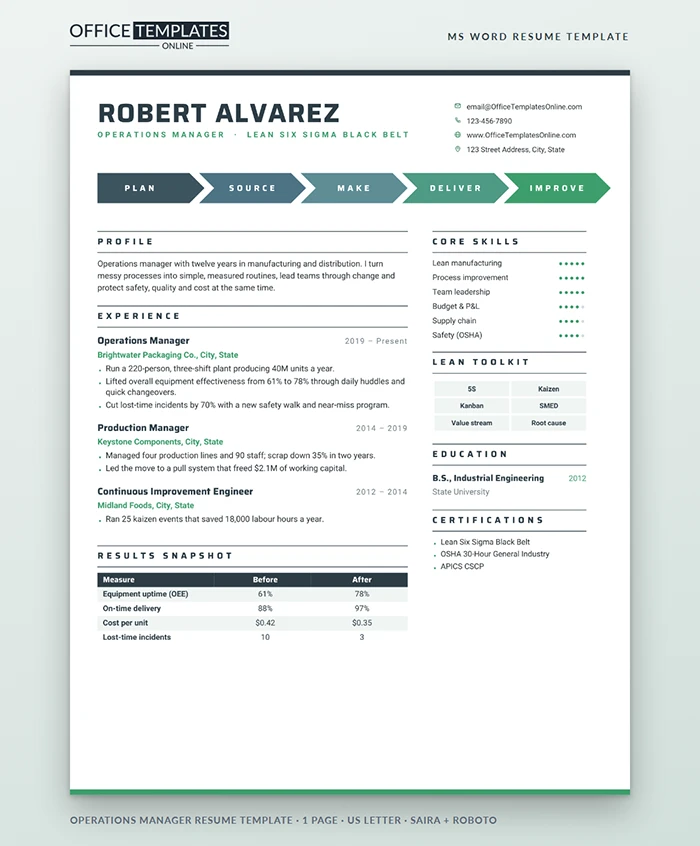
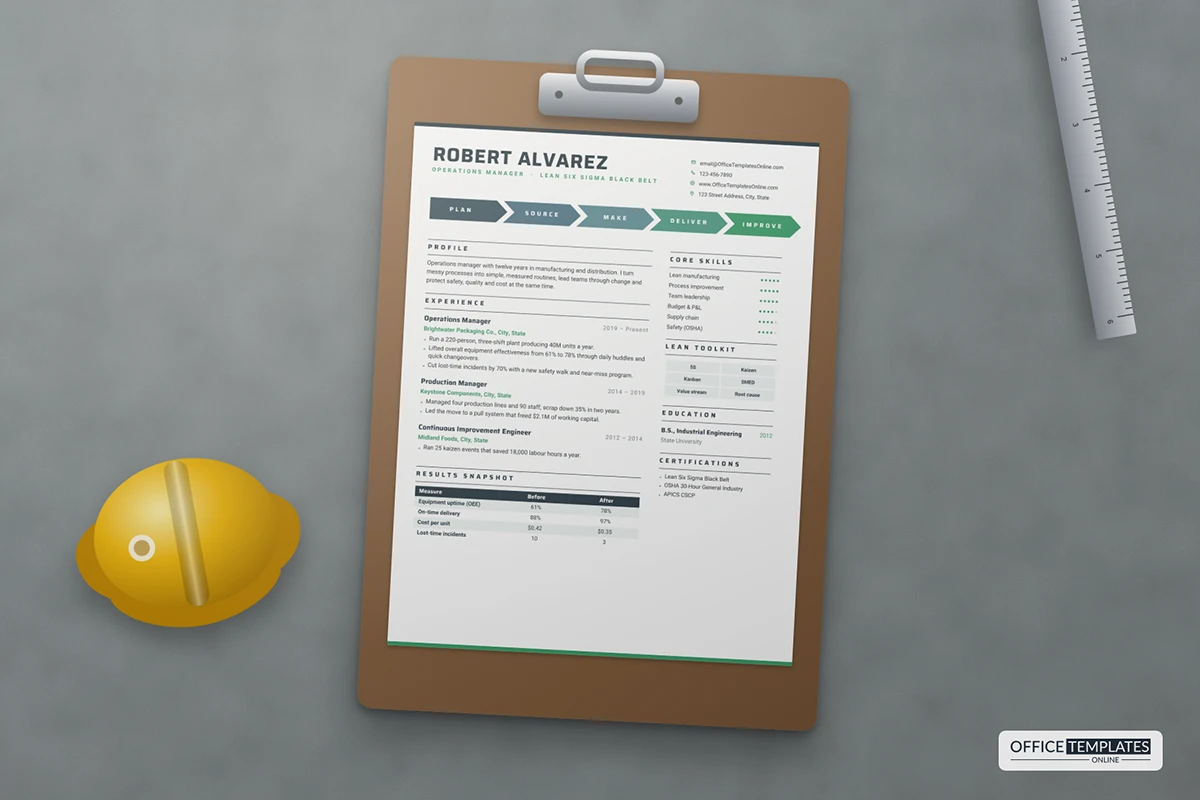
Operations is a chain of steps, and good operations managers can see the whole chain at once. This template puts that chain across the top of the page: five chevron arrows running from Plan to Improve, shading from slate to green. It tells a plant manager or COO exactly what you do before they read a word of your experience.
The Process Arrow
Under your name, which is set in bold Saira capitals with your title and Lean Six Sigma belt in spaced green letters, a full-width row of five chevrons reads Plan, Source, Make, Deliver, and Improve. The colors move from dark slate on the left to fresh green on the right, mirroring a process getting better as it flows. A thin slate edge runs along the top of the page and a green edge along the bottom, framing the sheet.
Standard Work: The Body Layout
Section headings sit inside fine boxed outlines with widely spaced capitals, like labels on a production board. The main column holds your profile, three roles, and a Results Snapshot table comparing before and after figures. The narrower right column lists core skills with five-dot ratings, your lean toolkit as shaded chips, education and certifications.
Before-and-After Figures That Persuade
The results table is the strongest part of this page, so choose its rows carefully. Pick four measures that matter to the business you are applying to, show where they started and where you took them, and keep the time frame realistic.
| Industry | Good measures to show |
| Manufacturing | OEE, scrap rate, cost per unit, lost-time incidents |
| Distribution and logistics | Order accuracy, on-time shipping, cost per order, dock-to-stock time |
| Service operations | First-time fix rate, response time, customer satisfaction, overtime hours |
| Food production | Yield, waste, audit scores, changeover time. |
Rename the Chevrons for Your World
The five steps are editable text boxes in the page header, so you can rename them to match your field. A warehouse manager might use Receive, Store, Pick, Pack, and Ship. A service operations lead might use Request, Plan, Dispatch, Resolve, and Review. Keep each word short so it fits inside its arrow.
Maintenance Guide for the File
- Double-click near the top of the page to open the header. Click a chevron to recolor it with Shape Fill, or click into its label to retype the step.
- The results table has a slate header row; add or remove rows from the Layout tab.
- Skill dots are characters. Change their color to switch a dot on or off.
- Lean toolkit chips are cells in a two-column table; type over any chip.
Talking About Safety Without Sounding Generic
Every operations resume says safety first, so make yours specific. Give a starting and ending incident rate, name the program you introduced, and say how you kept people involved, such as daily safety walks led by operators or near-miss reporting with quick feedback. If your site earned a recognized safety rating or went a long stretch without a lost-time incident, say so with the dates. Hiring managers read safety results as proof that you lead people well, because nothing improves on a shop floor without trust.
Who Should Use It
Operations managers, plant and production managers, continuous improvement leads, distribution center managers and supply chain managers. Supervisors stepping up can use the results table for the line or shift they ran, and engineers moving into management can lead with the improvement projects they delivered.
Typefaces and Shop-Floor Printing
Saira and Roboto are free on Google Fonts; install them so the chevron labels and name keep their shape. The template is one US Letter page and prints cleanly on standard office printers. Send a PDF when you apply online.