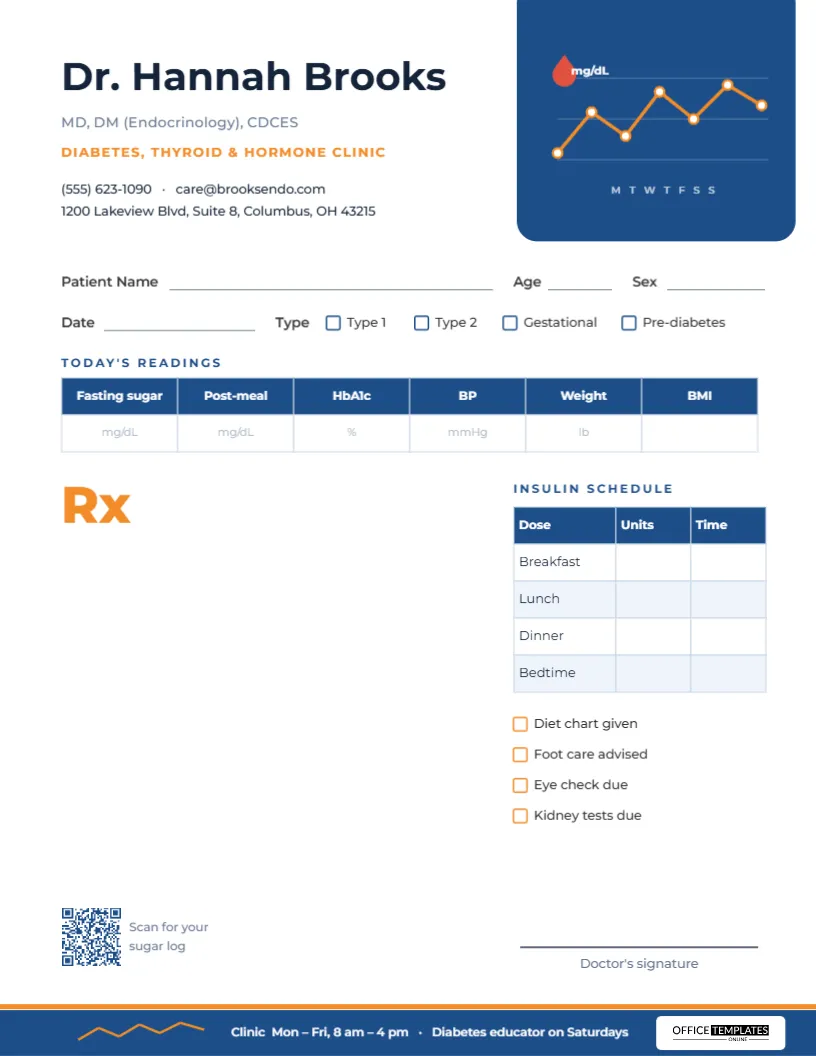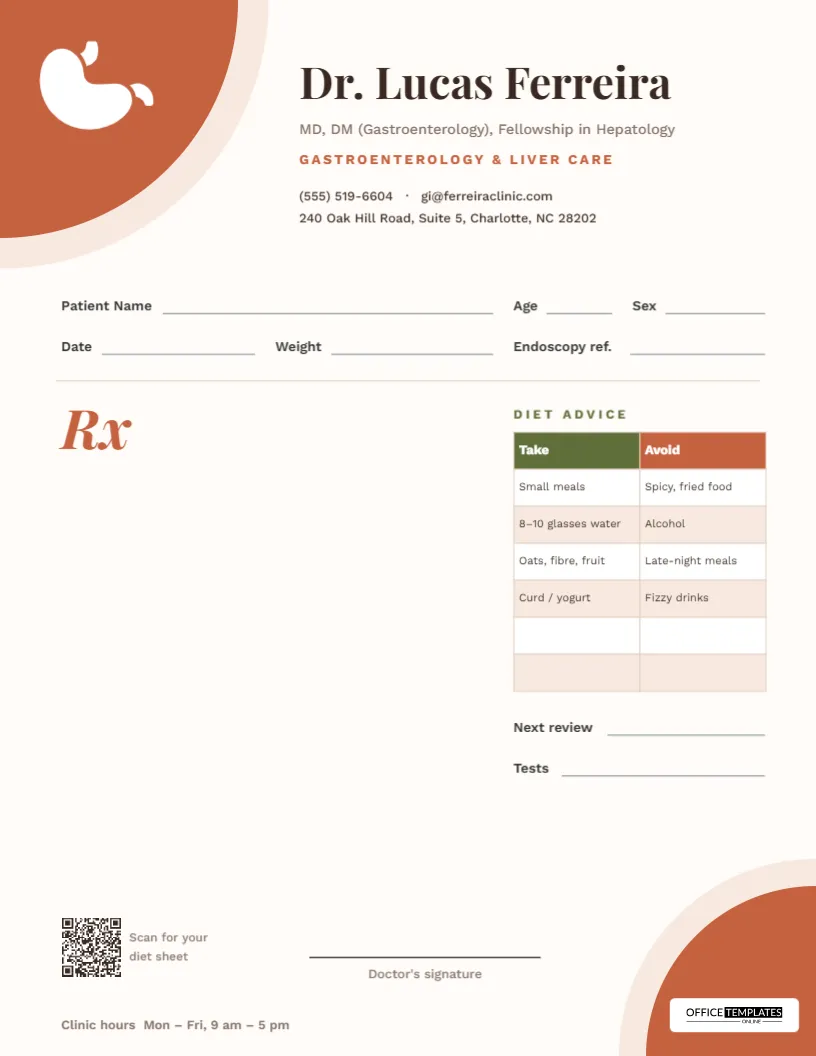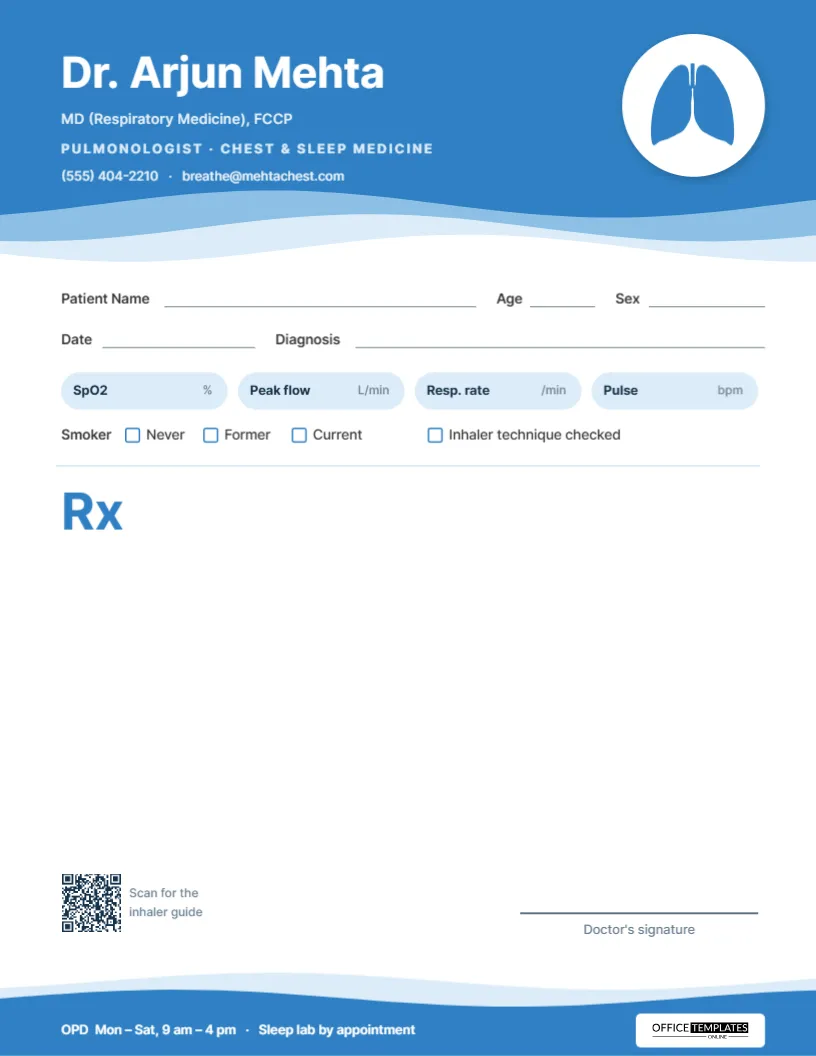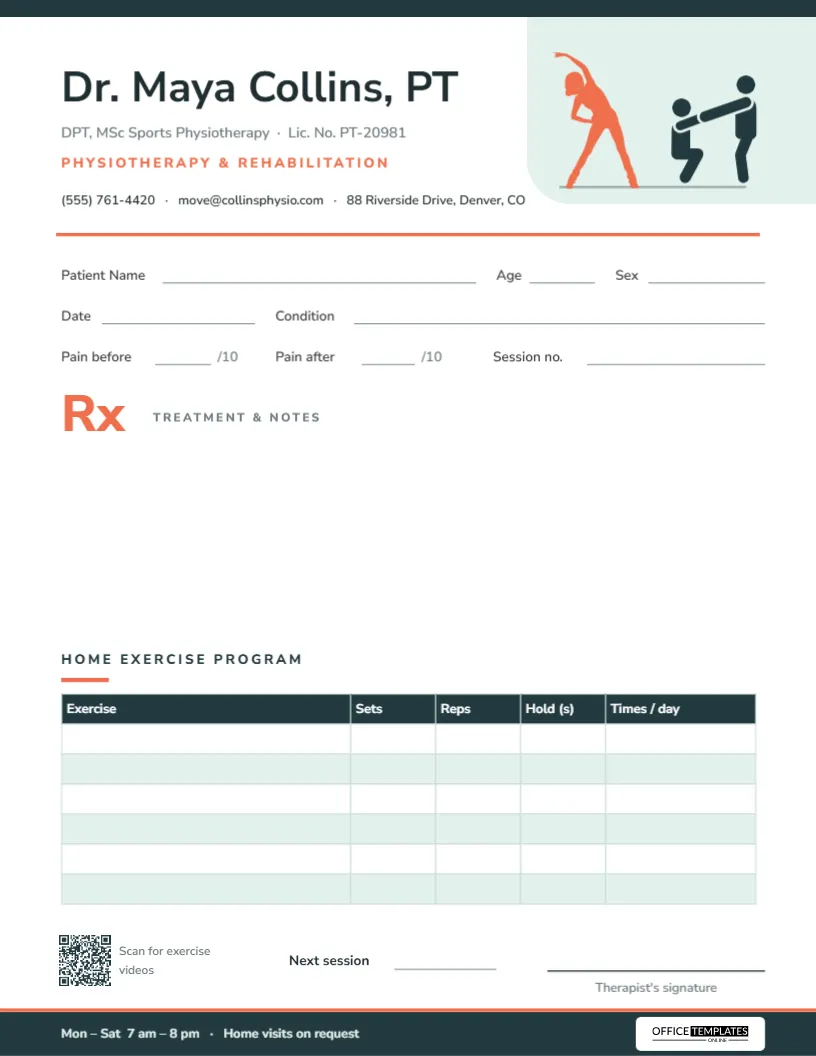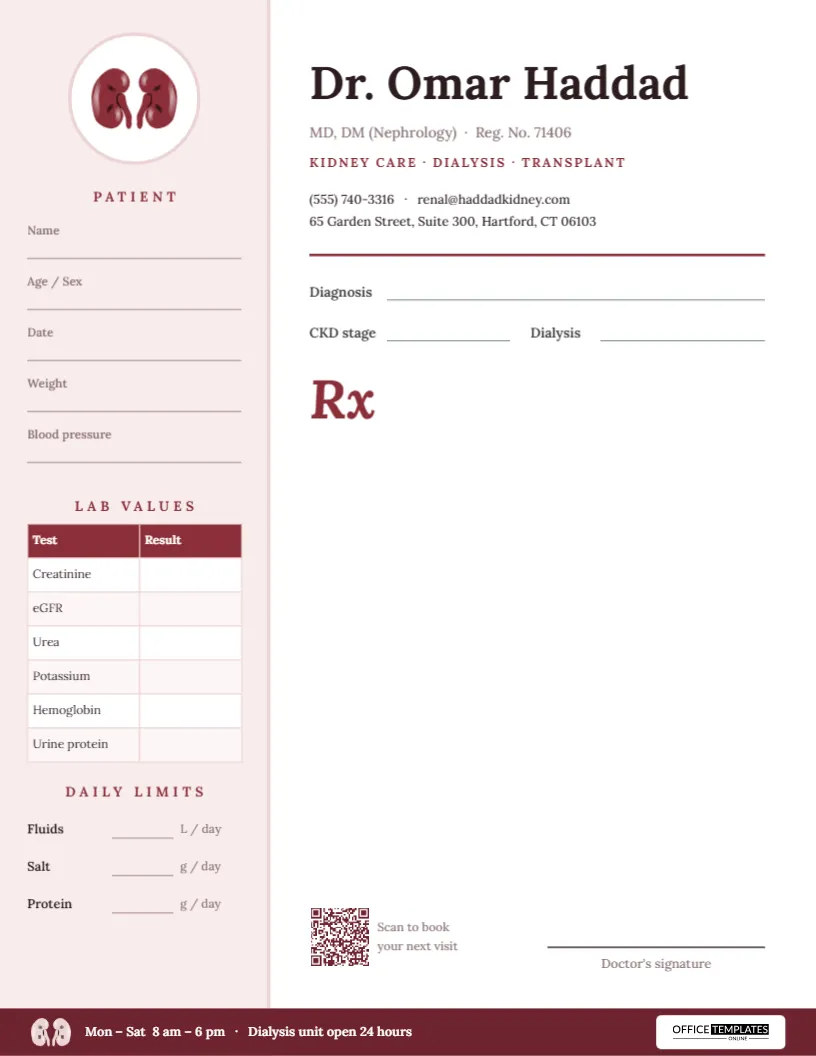
Kidney care is about trends and limits. Creatinine creeping up, eGFR drifting down, potassium that has to stay within a safe range, and a daily allowance of fluid, salt, and protein that the patient must keep to at home. This nephrologist prescription pad template gives all of that a permanent place: a full-height column on the left for the patient’s details, lab values, and daily limits, and a clean space on the right for the doctor’s prescription.
Two Columns, Two Jobs
The page is split vertically. The narrow left column, in pale rose with a slightly darker edge line, is the patient’s record for the visit. The wider right side belongs to the doctor: identity, diagnosis, the prescription itself, and the signature. The split makes the sheet easy to scan: a nurse can fill the left column while the patient waits, and the doctor writes on the right.
At the top of the left column, a white circle ringed in blush holds a pair of kidneys drawn in deep wine. Under it, Patient appears in spaced wine capitals above five labelled writing lines: Name, Age/Sex, Date, Weight, and Blood pressure.
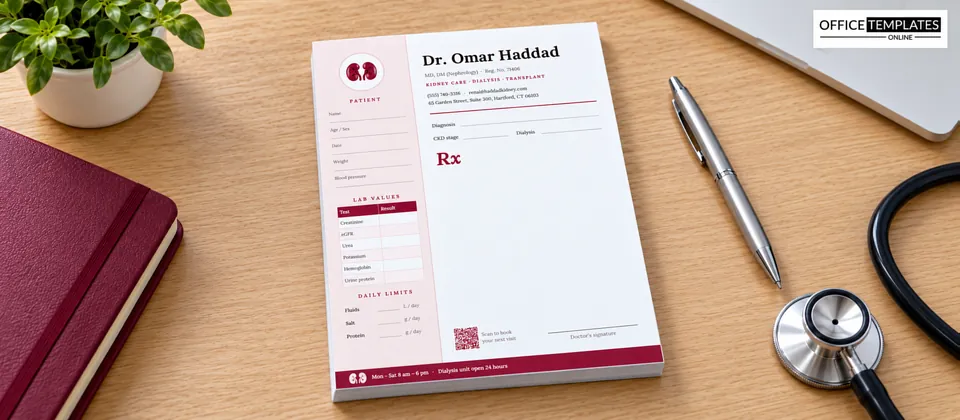
At the top of the right side, the doctor’s name is set in Lora, an elegant book serif, with qualifications and registration number in grey, Kidney Care · Dialysis · Transplant in wine capitals, and two lines of contact details, closed by a wine rule. The footer is a deep wine strip across the whole page with a small blush kidney icon, the clinic and dialysis unit hours, and the Office Templates Online logo on a white plate.
The Lab Values Table Explained
Midway down the left column is a compact editable table titled Lab Values, with a wine header (Test, Result) and six rows. Here is why each one is there:
| Test | What it tells you |
|---|---|
| Creatinine | A waste product cleared by the kidneys; rising levels suggest falling function |
| eGFR | An estimate of filtration rate, used to stage chronic kidney disease |
| Urea | Another marker of waste clearance, also affected by diet and hydration |
| Potassium | Can rise dangerously as kidney function falls and with some medicines |
| Hemoglobin | Anemia is common in kidney disease and may need treatment |
| Urine protein | A sign of kidney damage and a guide to treatment response |
Double-click the table (or use Edit Table Data) to rename a test, for example Phosphate, Calcium, Bicarbonate or uACR, and + Add Row to add more.
Daily Limits the Patient Can Follow
Below the lab table, a section called Daily Limits has three short lines: Fluids (L/day), Salt (g/day), and Protein (g/day). These are the instructions kidney patients most often need to follow at home, and the ones most often forgotten when they are only spoken. Writing a number on each line gives the patient something concrete to stick to, and keeps the advice consistent from visit to visit.
On the Doctor’s Side
- Diagnosis: a full-width line.
- CKD stage and Dialysis: two short lines for the stage and the dialysis type or schedule, if any.
- Rx: a large, wine-colored italic Rx mark and generous blank space for medicines, doses, and changes.
- QR code: captioned Scan to book your next visit.
- Signature line.
Talking Patients Through Their Limits
Numbers on a page only help if the patient understands them. A few practical ways to make the Daily Limits section work in everyday life:
- Translate fluids into cups or bottles.1.5 L means more to most people as six cups, including tea and soup.
- Remind them that fluid hides in food. Soups, ice cream, fruit and gravies all count towards the limit.
- Point to the salt shaker and the packet. Most salt comes from processed and restaurant food, not the table.
- Set protein by the plate. A palm-sized portion per meal is easier to picture than grams.
- Weigh daily on dialysis. Sudden gains between sessions usually mean too much fluid, which is why Weight is also printed in the patient column.
Pairing these tips with the numbers on the prescription gives the patient a plan they can actually follow.
How to Customize It
- Replace the name, degrees, registration number, and specialty line.
- Update the contact details under the name and the hours in the footer.
- Edit the lab table to match the tests you order routinely.
- Change the units in the Daily Limits section if you use ounces or cups.
- Link the QR code to your appointment page or a patient education page.
- Export the pad as a PDF.
Who Else It Suits
The same layout works for dialysis centres, transplant follow-up clinics, urologists who manage stone disease, and internal medicine doctors who look after patients with chronic kidney disease. For a urology practice, rename the lab rows to PSA, urine culture, and ultrasound findings, and change the specialty line.
Printing the Split Layout
This template uses US Letter paper, 8.5 x 11 inches, in portrait. The rose column is a light tint, so it uses very little ink and handwriting on its lines stays easy to read. The wine footer is the only solid dark area. Print at actual size on 24 lb paper; for dialysis units that go through many sheets a week, a local printer can supply glued pads of 100.
Kidney Clinic FAQ
Can I swap the kidney emblem for my hospital logo?
Yes. Delete the kidney image and upload your logo inside the white circle.
Can I move the patient column to the right?
You can, by selecting the column and its contents and moving them, then shifting the doctor’s section left.
Can I record results from two dates?
Yes. Select the table and set Columns to 3 in the Table panel, then label the new column in Edit Table Data, so the previous and current results sit side by side.
Does it print well in black and white?
Yes. The rose column becomes a very light grey, and all lines remain clear.
Protecting kidney function is a long-term effort that depends on clear, repeated instructions. This pad keeps the numbers and the limits in view at every visit.