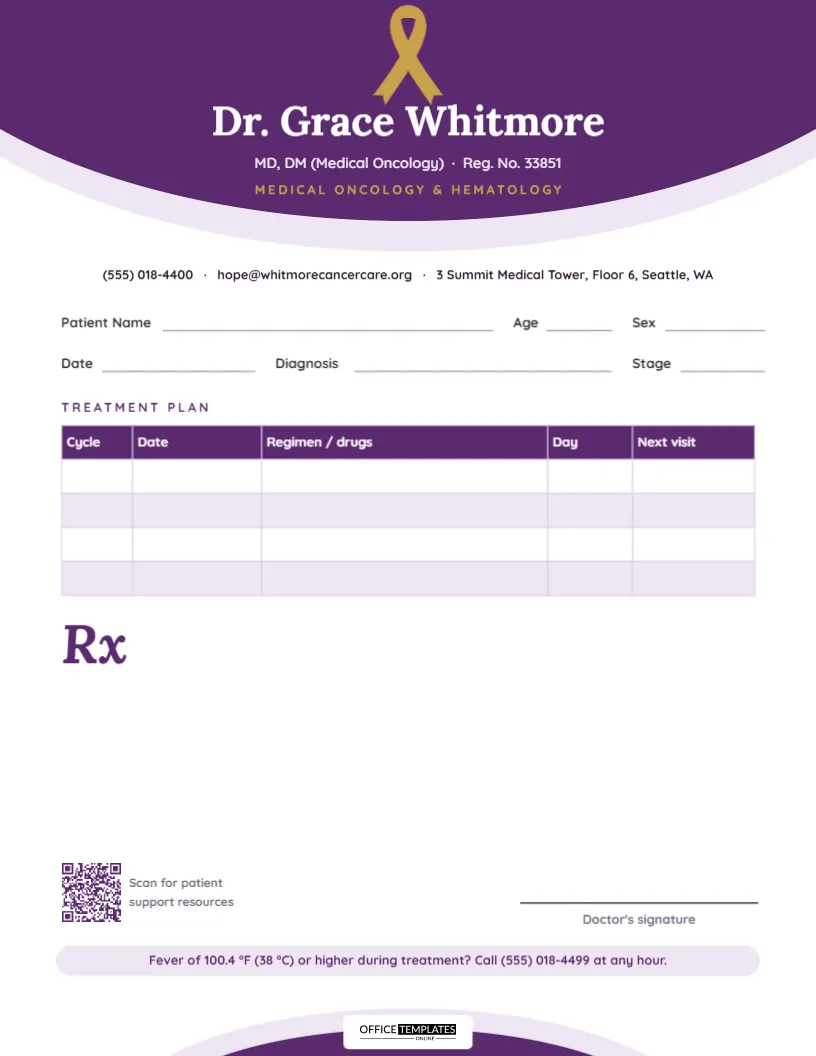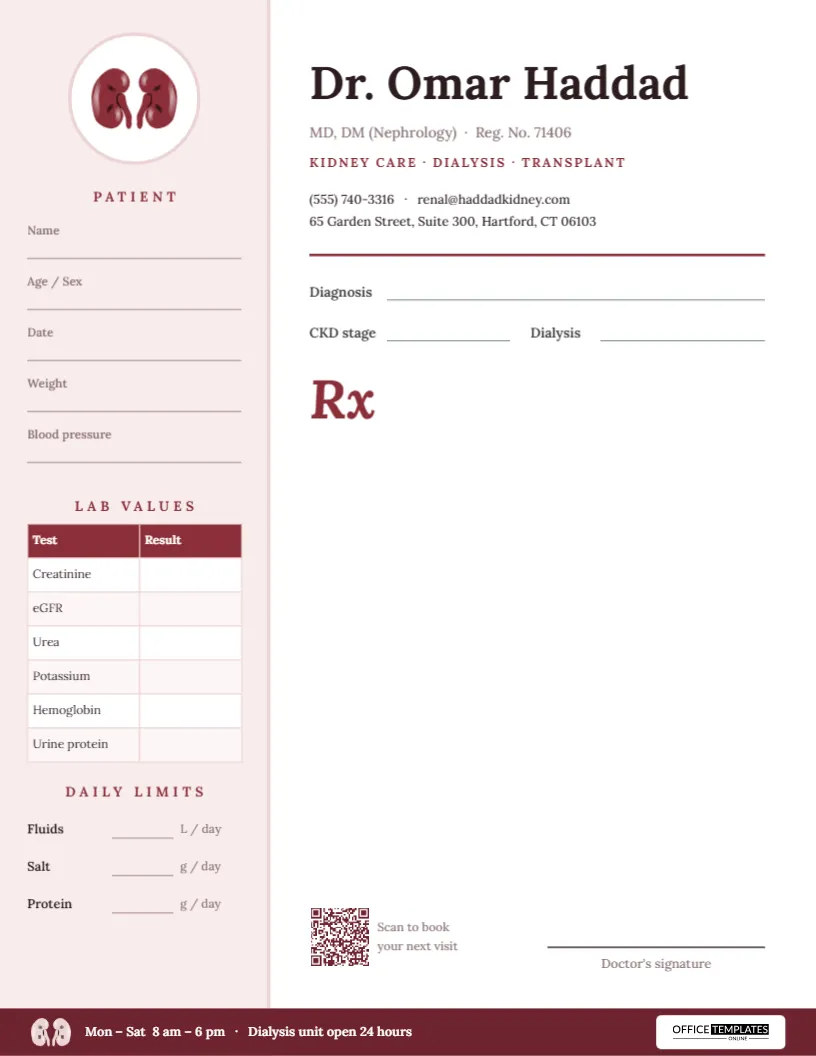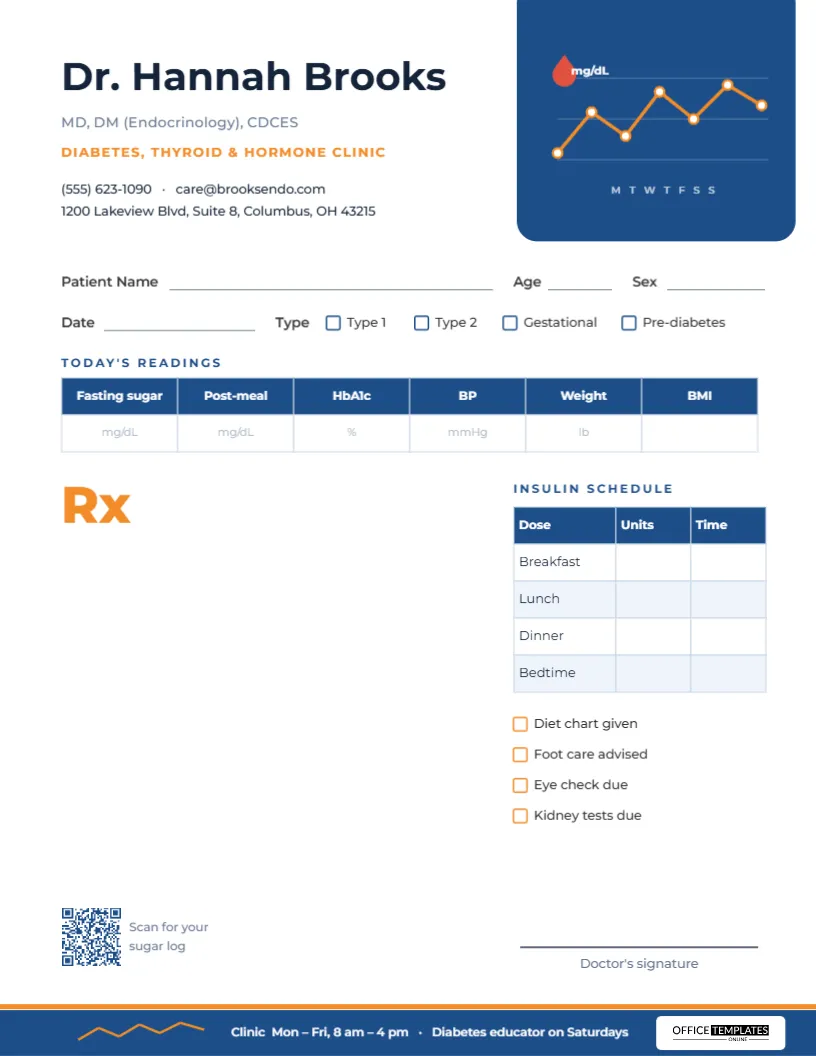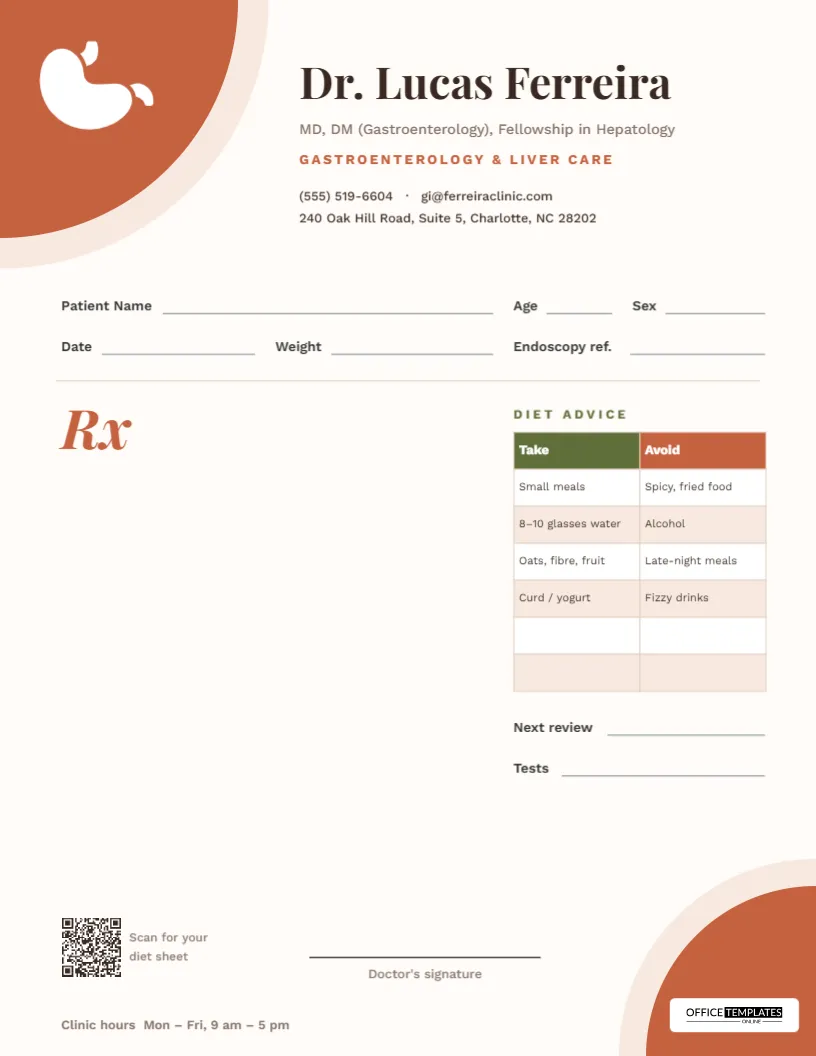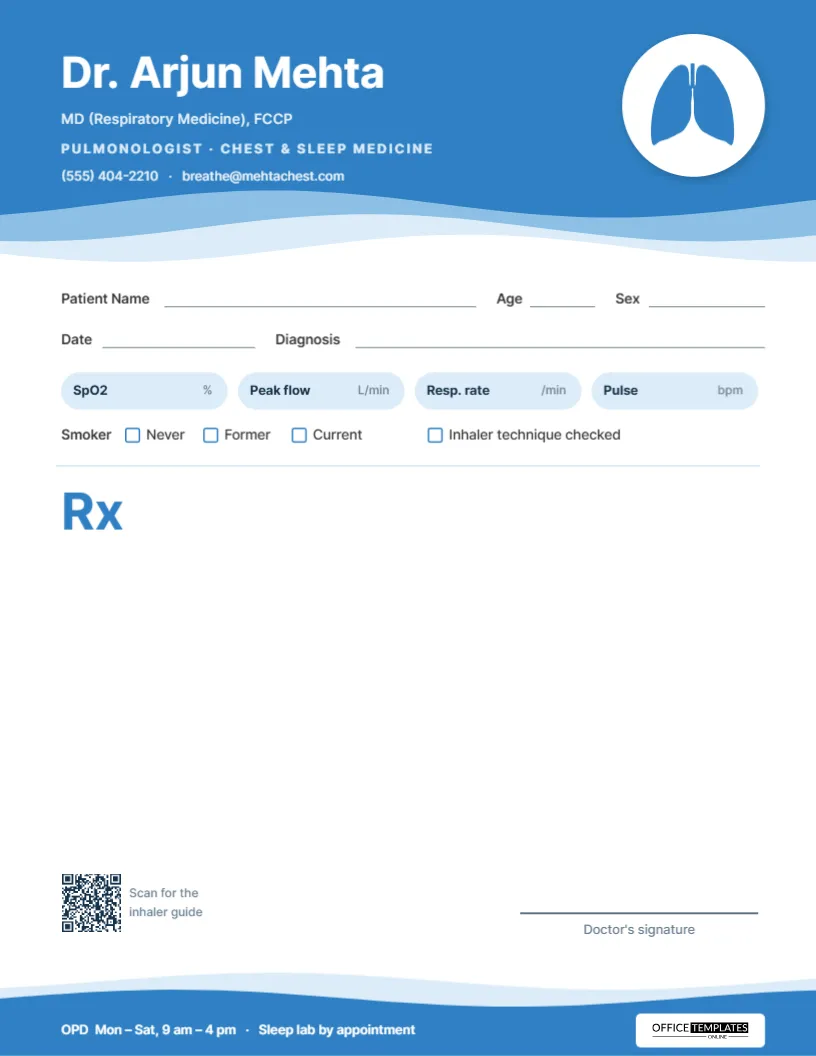
Respiratory medicine runs on a handful of numbers: oxygen saturation, peak expiratory flow, breathing rate, pulse. They are measured at nearly every chest clinic visit, and they belong next to the prescription because they explain it. When the peak flow drops, the inhaler dose goes up; when saturation recovers, the steroid course can stop. This pulmonologist prescription pad template prints those vitals as four labelled boxes right under the patient’s name, adds smoking status and an inhaler-technique check, and wraps everything in a calm, airy blue design.
A Header Shaped Like a Breath
Instead of a straight band, the top of the page ends in three layered waves: a strong sky blue, a softer mid blue, and a pale blue edge, each offset slightly so they ripple like air moving in and out. The waves are grouped into one object. On the right, a white circular medallion with a soft shadow holds a blue illustration of the lungs and trachea.
The doctor’s name sits on the blue in white Inter, a crisp modern sans-serif, followed by qualifications, Pulmonologist · Chest & Sleep Medicine in pale blue capitals and a phone and email line. At the bottom of the page, two smaller waves rise from the footer edge to echo the header, carrying the OPD hours and “Sleep lab by appointment” in white, with the Office Templates Online logo on a white plate.

The Four Vitals Boxes
Below the Patient Name, Age, Sex, Date, and Diagnosis lines, four rounded pale blue boxes sit in a row. Each has its label on the left and its unit on the right, with space in between to write the reading:
| Box | Unit printed | Why it helps on a prescription |
|---|---|---|
| SpO2 | % | Shows oxygenation at the time the treatment was chosen |
| Peak flow | L/min | Tracks airway narrowing in asthma and guides step-up or step-down |
| Resp. rate | /min | A simple marker of breathing effort during flare-ups |
| Pulse | bpm | Useful alongside bronchodilators, which can raise heart rate |
If your clinic records something different, such as FEV1 or temperature, click the label text and type the new name and unit.
Smoking Status in Three Ticks
The next row records smoking status with three boxes: Never, Former, and Current. It is one of the most important facts in any respiratory history, relevant to COPD, lung cancer screening and how well inhaled steroids work, and it is easier to keep up to date when it is asked at every visit. Next to it, a single box reads Inhaler technique checked.
A Quick Inhaler Technique Review
Poor technique is one of the most common reasons an inhaler seems not to work. The tick box is a reminder to watch the patient use their device during the visit. A typical check for a pressurised metered-dose inhaler covers these steps:
- Shake the inhaler and remove the cap.
- Breathe out gently, away from the mouthpiece.
- Seal the lips around the mouthpiece, or use a spacer.
- Press once while starting a slow, deep breath in.
- Hold the breath for up to ten seconds, then breathe out slowly.
- Wait before a second puff if one is prescribed, and rinse the mouth after steroid inhalers.
Dry powder inhalers need a quick, forceful breath instead, so the steps vary by device. The QR code at the bottom of the pad, captioned Scan for the inhaler guide, is an ideal place to link a video for each device you prescribe.
The Prescription Space
A light rule separates the vitals from a large blue Rx and a clear area that runs down to the QR code and signature line. There is room for inhalers with dose and frequency, oral medicines, nebulisation, oxygen instructions, and a written asthma or COPD action plan summary.
Where Structured Chest Notes Pay Off
Respiratory patients are often seen by several people: the pulmonologist, a respiratory therapist, the family doctor, the emergency department during a flare-up, and the sleep lab. A prescription that carries the saturation, peak flow, and smoking status of the day tells each of them where the patient stood when the treatment was chosen. It is particularly helpful when an asthma patient’s peak flow is compared with their personal best, when a COPD patient’s oxygen needs are reviewed before a flight, and when a smoker’s quit attempt is followed from one visit to the next. Filled in every time, the boxes turn a stack of old prescriptions into a simple record of the patient’s lung health over months.
Making It Yours
- Type your name, degrees, and specialty line on the blue header.
- Replace the phone and email.
- Edit the footer hours; delete Sleep lab by appointment if you don’t run one.
- Rename any vitals box to suit your clinic.
- Click the QR code and paste the link to your own inhaler videos or booking page.
- Export the pad as a PDF for printing.
To change the blue scheme, ungroup the header waves and recolor them from dark to light; a green or teal set works just as well and keeps the airy feel.
Printing the Wave Design
This is a US Letter template, 8.5 x 11 inches, in portrait. The waves at the top and bottom run to the edge of the page, so on a desktop printer you will see a narrow white border around them; a print shop can print full-bleed and trim for a cleaner finish. Choose a bright white 24 lb paper so the blues stay fresh. For respiratory clinics that hand out many prescriptions a day, glued pads of 100 sheets are the practical choice.
Chest Clinic Pad Questions
Can a general physician use this pad?
Yes. It suits any doctor who manages asthma or COPD. Change the specialty line to Internal Medicine or Asthma Clinic.
Can I print it without the vitals?
Yes. Delete the four boxes and the smoking row, and the Rx area moves up to fill the space.
Does the lung illustration print in black and white?
Yes, it turns grey on a white circle and remains clear.
Every breath counts in a chest clinic, and so does every reading. Add your details to this pad and keep the numbers that guide your prescriptions right where they belong.