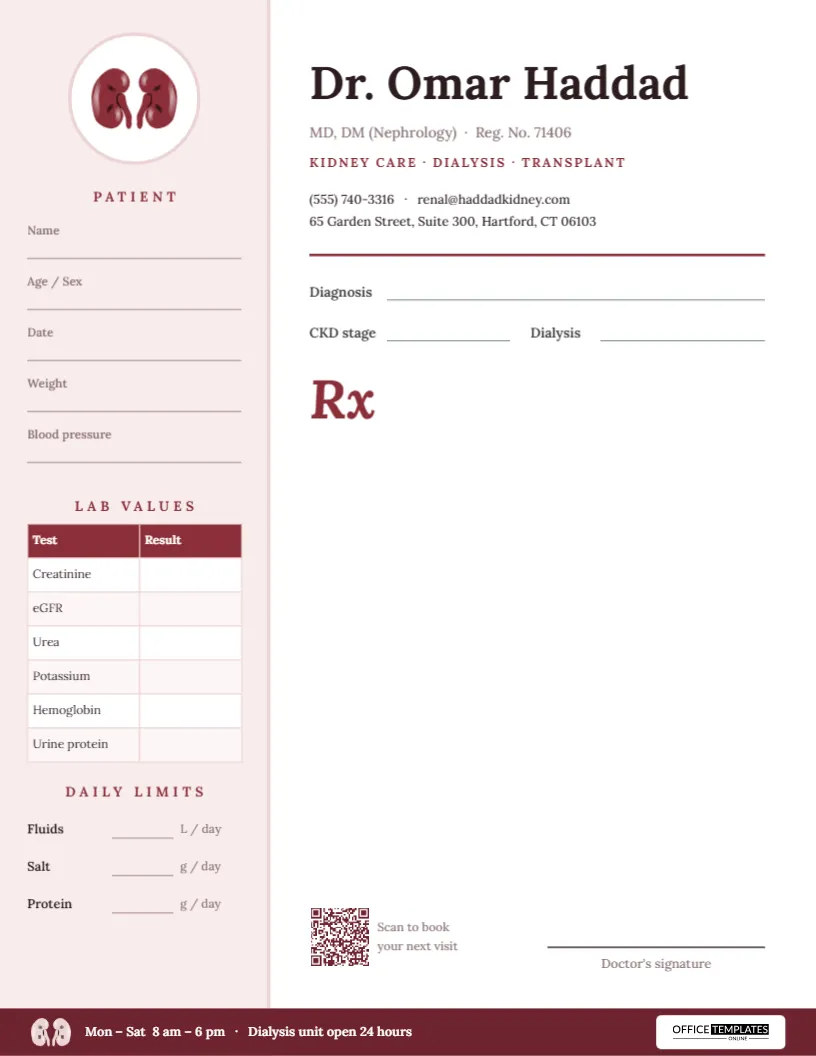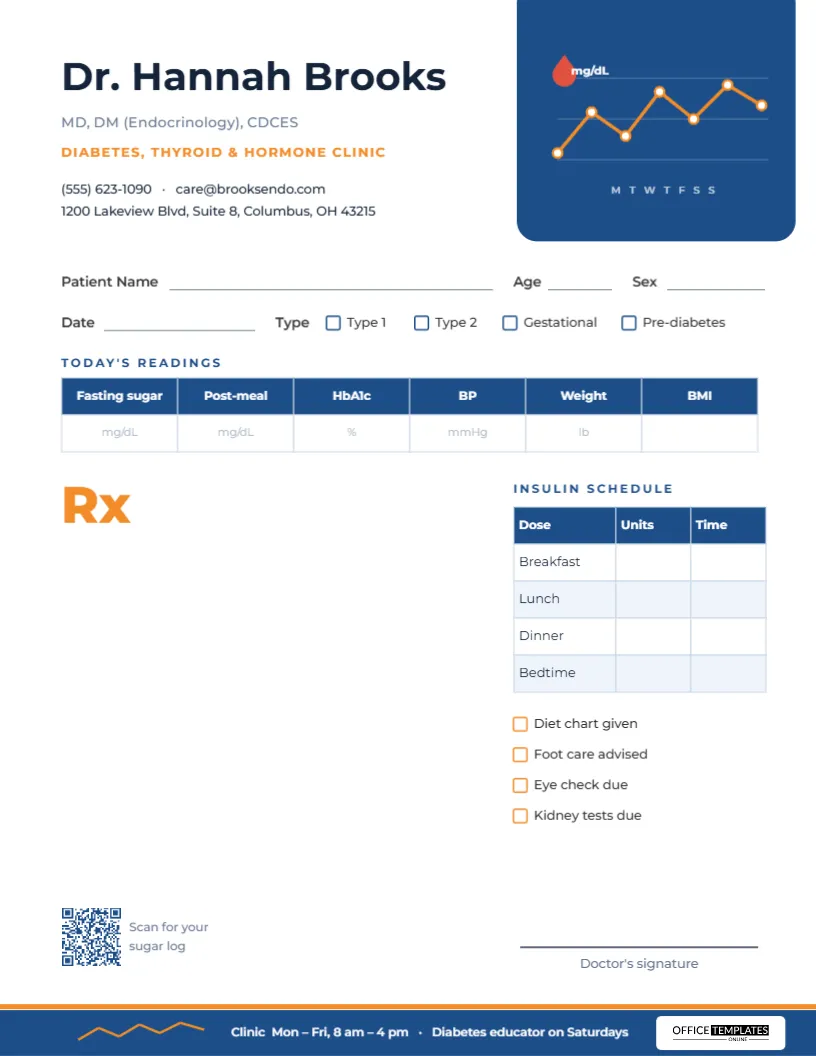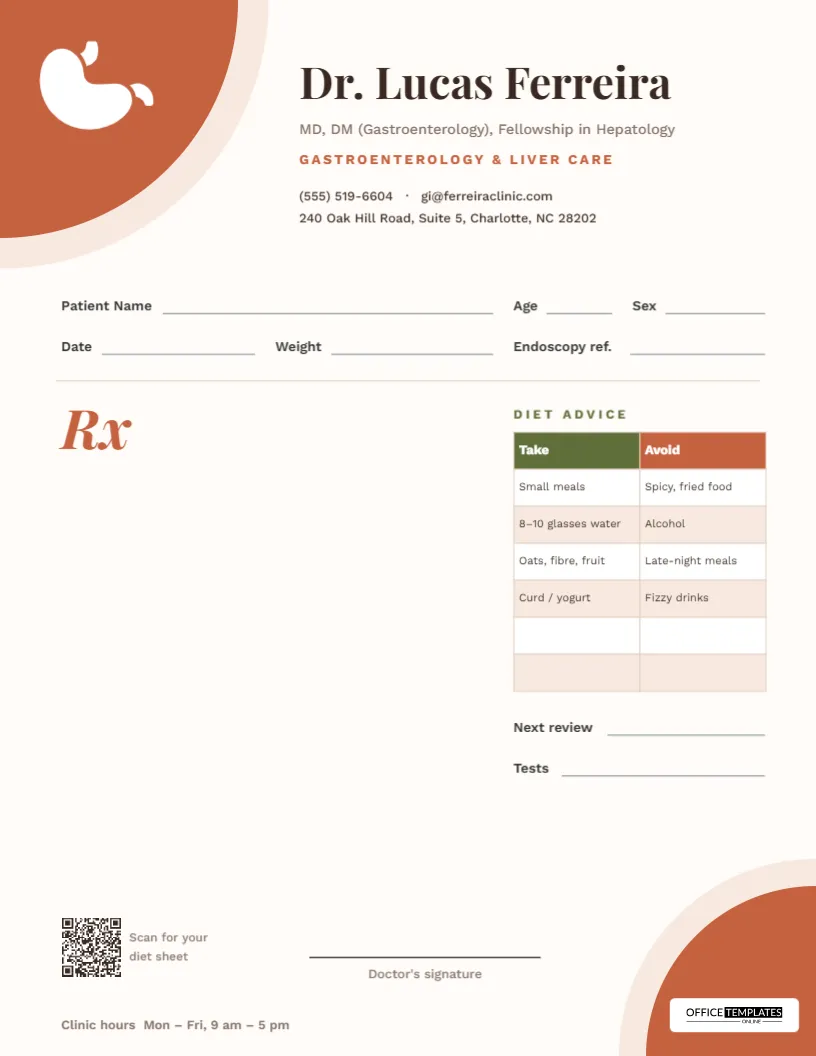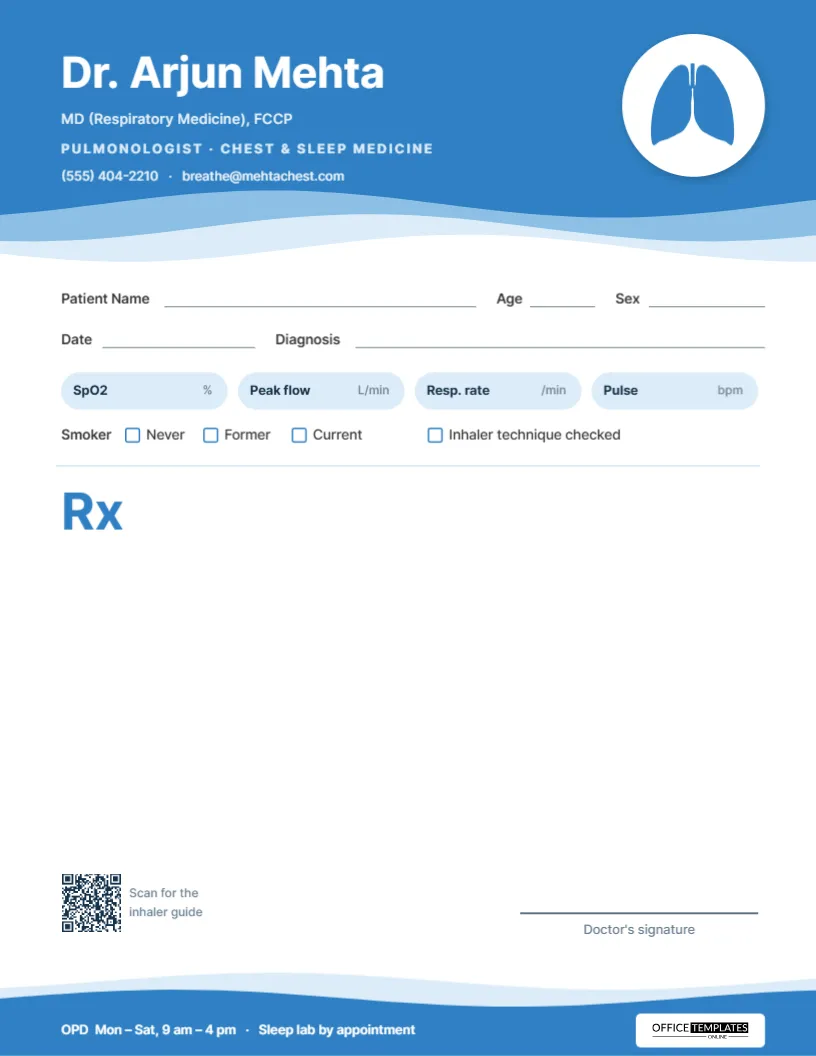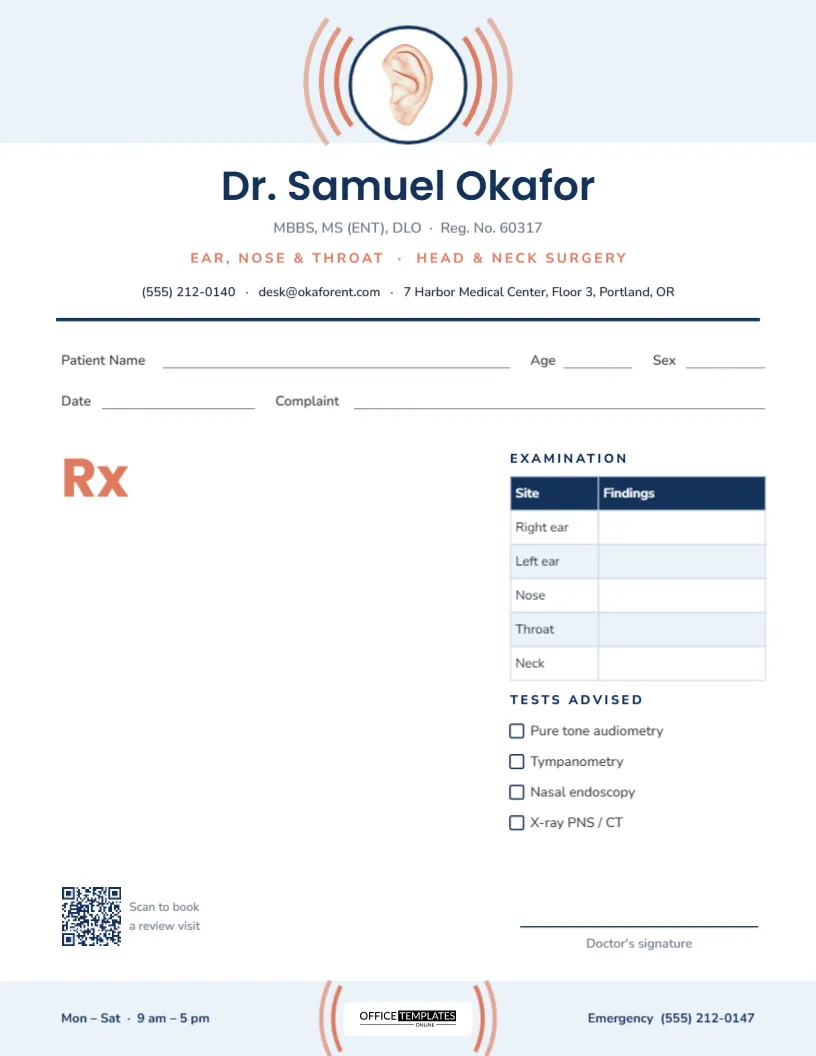
An ear, nose and throat consultation moves quickly: an otoscope in one ear, then the other, a look at the nasal passages, a glance down the throat, a feel of the neck. The findings from each site matter, and they are easy to lose in a paragraph of shorthand. This ENT prescription pad template gives each site its own row in a small examination table next to the prescription, so your notes stay organised and the patient, the pharmacist and the next doctor can all read them.
Sound Waves Around the Ear
The header is centered and symmetrical. A pale blue band runs across the top of the page, and in its middle sits a white medallion with a navy ring holding a detailed, full-color illustration of a human ear. On both sides of the medallion, three coral arcs spread outward like sound waves, fading as they move away from the ear. It is a simple image that says hearing at a glance.
Below the band, the doctor’s name is centered in Poppins, a friendly geometric sans-serif, with the degrees and registration number in grey, then Ear, Nose & Throat · Head & Neck Surgery in coral capitals, and a single line of contact details. A strong navy rule closes the header.
The footer repeats the idea on a smaller scale: a pale blue strip with two short coral arcs on each side of the Office Templates Online logo plate, the clinic’s opening days on the left and an emergency number on the right.
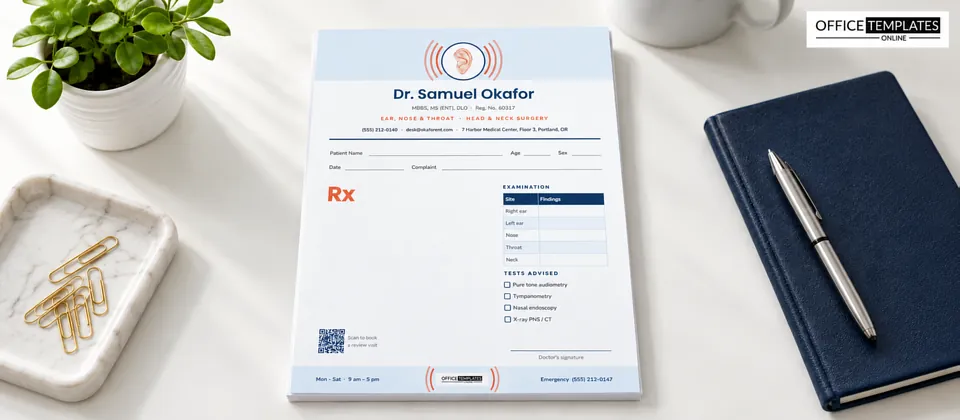
A Worked Example: Filling In One Visit
To show how the pad is meant to be used, here is how a typical visit for a middle-ear infection might be recorded:
- Patient Name, Age, Sex: filled in at reception or by the doctor.
- Date and Complaint: Right ear pain and reduced hearing for 3 days.
- Examination table: Right ear, TM bulging, red; Left ear, Normal; Nose, Mild congestion; Throat, Normal; Neck, no nodes.
- Rx area: the antibiotic, pain relief, and any nasal spray, with dose and duration.
- Tests advised: pure-tone audiometry for a hearing check after the infection settles.
- Signature: signed and stamped above the Doctor’s signature line.
Written this way, the page doubles as a compact clinical note that the patient can bring back to the follow-up visit.
Inside the Examination Table
The table on the right of the page has a navy header with two columns, Site and Findings, and five rows: Right ear, Left ear, Nose, Throat and Neck, on alternating white and pale blue backgrounds. It is a real table object in the editor, not a drawing of one, which makes it easy to adapt:
- Double-click it, or use the Edit Table Data button in the Table panel, to change the row labels or type default findings.
- Use + Add Row for sites you examine often, such as Oral cavity, Larynx, or Sinuses.
- Change the header color or the row colors to match your clinic branding.
Why Findings Deserve Their Own Rows
ENT conditions often involve more than one site at once. A blocked nose can lead to a middle-ear problem; a sore throat may come with tender neck nodes; allergies can affect the nose, ears and throat together. When each site has a separate row, it is obvious at a glance which areas were examined and which were normal, and nothing is left to memory. It also helps at review visits: you can compare today’s findings with the last sheet the patient brings in, row by row, and see whether a perforation has healed or a septal deviation is still causing trouble. For referral letters and insurance claims, a structured record is simply easier to read than a line of abbreviations squeezed between prescriptions.
What ENT Doctors Commonly Write Here
The prescription area is left blank so you can write whatever the case requires. In a typical ENT outpatient day, that includes:
- ear drops and instructions for keeping the ear dry;
- nasal sprays with the correct spraying technique noted;
- antihistamines for allergic rhinitis;
- antibiotics and pain relief for acute infections;
- steam inhalation, saline rinses or gargles;
- voice rest advice for singers, teachers and callers.
Tests Advised
Below the table, four tick boxes cover the investigations ENT surgeons request most often: Pure tone audiometry, Tympanometry, Nasal endoscopy and X-ray PNS/CT. Each label can be rewritten, so an audiology-focused practice might list BERA or OAE, and a head and neck clinic might add Ultrasound neck or FNAC.
Set Up Your Own Version
- Replace the sample name, qualifications, and registration number.
- Edit the specialty line to describe your practice, for example, Pediatric ENT or Otology & Hearing Care.
- Update the phone, email, and address line under the name.
- Change the footer hours and emergency number.
- Click the QR code and replace its sample link with your booking page.
- Adjust the examination rows and the tests list if you need different ones.
- Export a print-ready PDF.
Print Notes for This Layout
The pad is designed on US Letter paper, 8.5 x 11 inches, portrait. Most of the page is white, with color only in the header and footer bands, so it prints economically even on an office laser printer. Use a smooth, uncoated 24 lb paper so the examination table’s fine lines stay crisp and handwriting in the Findings column doesn’t feather. For pads, a print shop can glue sheets into blocks of 50 or 100 along the top edge.
ENT Pad FAQ
Can I remove the examination table?
Yes. Delete the table and its heading, and the Rx area becomes full width.
Can I swap the ear illustration for my logo?
Yes. Delete the ear, upload your logo, and place it inside the white medallion.
Will the ear illustration print well?
Yes. It is a detailed full-color drawing that stays clear at this size on any color printer.
Clear notes make for better follow-ups. Put your name on this ENT pad, print a stack, and give every ear, nose, and throat finding a place of its own.