When a flood warning, wildfire evacuation, or winter storm arrives, there is no time to work out where the flashlight is, where the family will meet, or who to call. Emergency managers all give the same advice: build a kit, make a plan, stay informed. This Family Emergency Preparedness Plan Template turns that advice into a one-page plan that a household fills in together and posts on the fridge. It is equally useful for community groups, schools, employers and local emergency management offices that want a ready-to-share handout.
Build a Kit, Make a Plan, Stay Informed
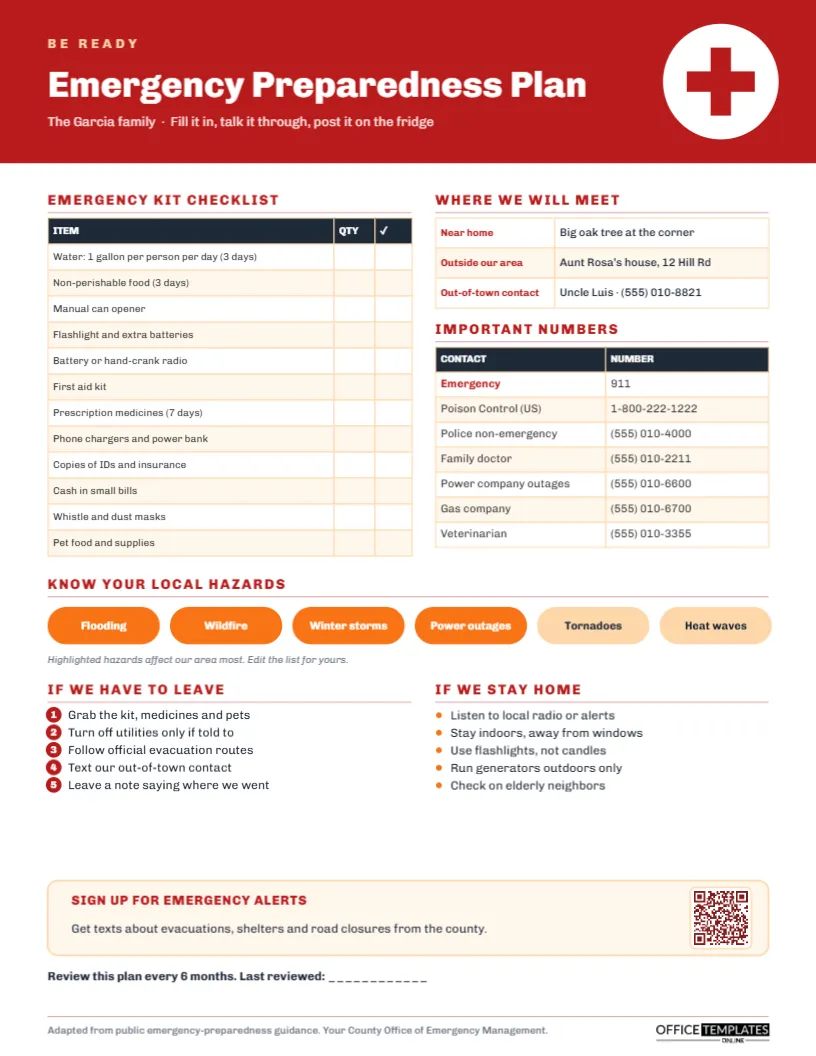
The page is organised around those three steps. The kit checklist on the left covers what to have. The meeting places, numbers, and leave or stay steps cover the plan. The alert sign-up box and the hazard list cover staying informed. A family that fills in every blank has done most of what preparedness agencies recommend.
Red Header, Orange Accents and a Cross
A strong red header with a white circle and red cross, a familiar emergency symbol, introduces the page. BE READY appears in pale orange spaced capitals, the title Emergency Preparedness Plan in heavy white Chivo, and a personal line: The Garcia family · Fill it in, talk it through, post it on the fridge.
On the left, an Emergency kit checklist table lists twelve essentials, from water and food for three days to copies of IDs, cash and pet supplies, with blank quantity and tick columns. On the right, Where we will meet records a place near home, a place outside the neighbourhood, and an out-of-town contact, and Important numbers lists emergency, poison control, police non-emergency, the family doctor, power and gas companies, and the vet. Know your local hazards shows six rounded chips, four highlighted in orange for the hazards that affect the area most. Two lists follow: If we have to leave, as numbered steps, and If we stay home, with orange bullets. A pale orange box encourages the family to sign up for emergency alerts with a QR code, and a line at the bottom records when the plan was last reviewed. It fits on one portrait US Letter sheet, 8.5 x 11 inches.
A 30-Minute Family Planning Session
Most families never make a plan because it feels like a big job. It is not. Use this agenda for a single evening:
| Minutes | Activity | Fills in |
|---|---|---|
| 0-5 | Talk about which emergencies could happen where you live | Know your local hazards |
| 5-10 | Choose two meeting places and an out-of-town contact | Where we will meet |
| 10-15 | Look up and write down important numbers | Important numbers |
| 15-25 | Walk through the house and check the kit items you already have | Emergency kit checklist |
| 25-30 | Agree who grabs what if you leave, and sign up for alerts | Leave and stay lists, alert box |
Personalising the Plan
Change The Garcia family to your household’s name. The kit checklist and important numbers are editor Tables, so select either one and choose Edit Data to change items, or + Row to add things your family needs, such as baby formula, hearing aid batteries, a spare pair of glasses or a mobility aid. The meeting places table works the same way. Recolour the hazard chips so the orange ones match your area’s real risks; the italic note underneath reminds users to do this. Link the QR code, in the Barcodes & QR panel, to your county or city emergency alert sign-up page.
Why an Out-of-Town Contact Matters
During a disaster, local phone lines are often overloaded, but long-distance calls and text messages may still get through. Choosing one relative or friend in another area, whom everyone in the family can contact, creates a central point for updates if you are separated. Make sure every family member, including children, has that number in their phone and written on paper in their backpack or wallet.
Planning for Everyone in the Household
A good plan covers the needs of each person and pet. Older adults may need extra prescriptions, medical devices that need power, or help evacuating. Children need to know the meeting places and how to reach the out-of-town contact, and schools need up-to-date emergency contacts. People with disabilities should plan for accessible transport and shelters. Pets need food, leashes or carriers, vaccination records, and a plan, because many shelters only accept service animals.
For Schools, Employers and Community Groups
Emergency management offices can publish this page with a blank family name and distribute it at preparedness fairs. Schools can send it home during National Preparedness Month in September. Employers can adapt it into a workplace version, replacing the family meeting places with assembly points and the family numbers with facility contacts. Faith communities and neighbourhood associations can run planning evenings where families fill it in together.
Keeping the Kit Ready
A kit that expired years ago is of little use. Set a reminder to check it twice a year, for example when the clocks change. Replace water and food before their dates, test flashlights and radios, refresh medicines and update documents and cash. The template’s Last reviewed line is there to make this a habit.
Guidance Sources
The checklist and steps are adapted from widely published public preparedness advice, such as keeping a gallon of water per person per day for several days. Local advice varies by hazard and climate, so check your local emergency management office’s recommendations and adjust the plan accordingly.
Fridge-Ready Printing
Print in colour on heavier paper, fill it in by hand with a permanent pen, and keep one copy on the fridge and one in the emergency kit in a waterproof bag. Take a photo of the completed plan, so everyone has it on their phone.
Preparedness FAQs
Should children help fill it in?
Yes. Children remember plans they helped make, and it makes emergencies less frightening.
Can I add a floor plan with exits?
Add a second page with a simple floor plan drawn using shapes, showing two ways out of each room.
What if we rent or live in an apartment?
Add your building manager’s number and the building’s evacuation procedures to the important numbers.
Open the template, fill in your family’s details together, and post your plan where everyone can see it.