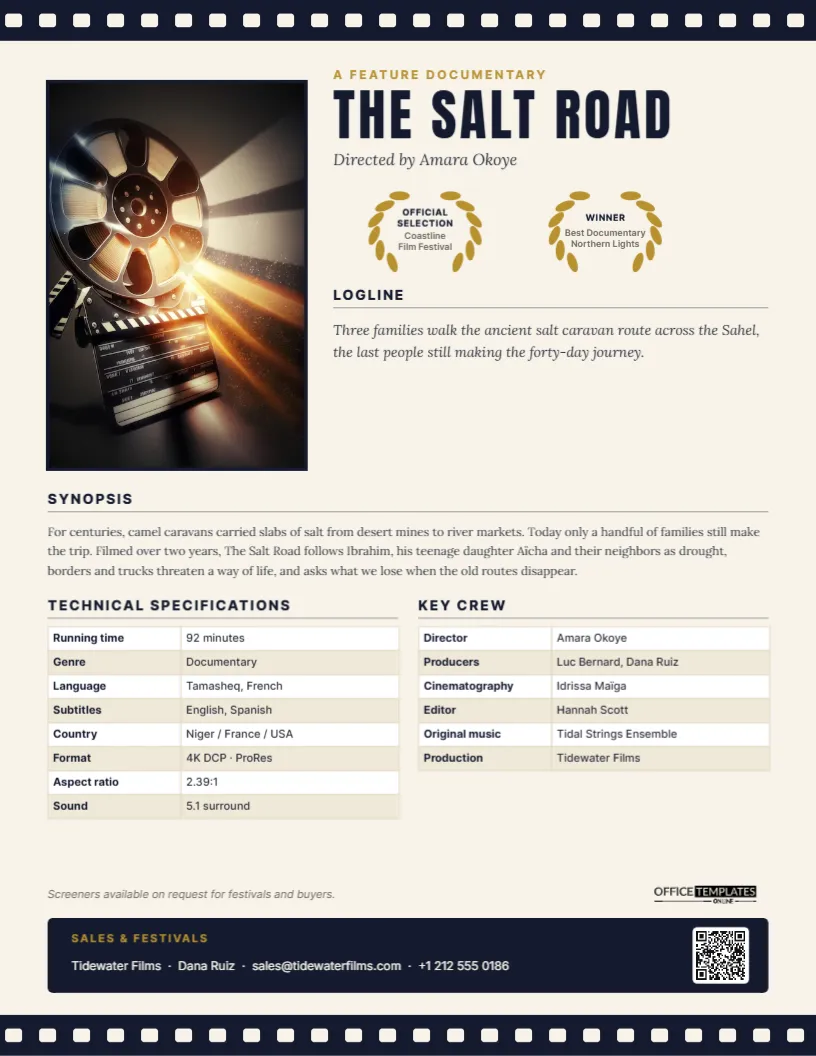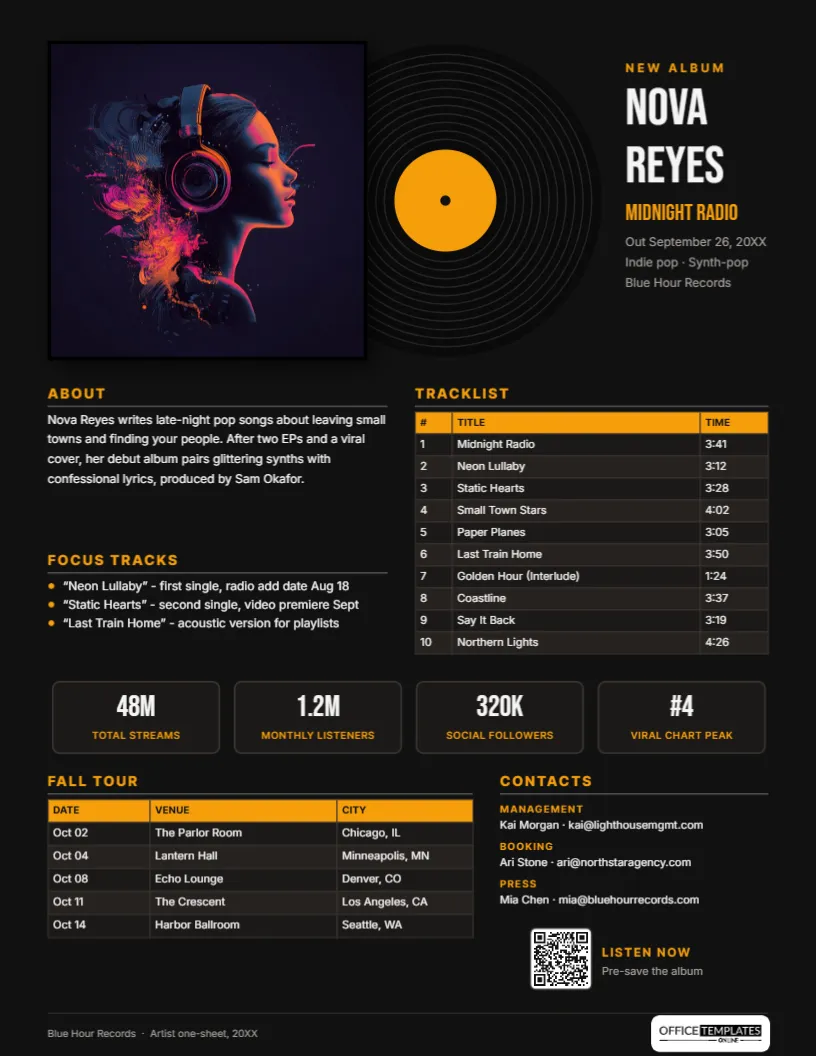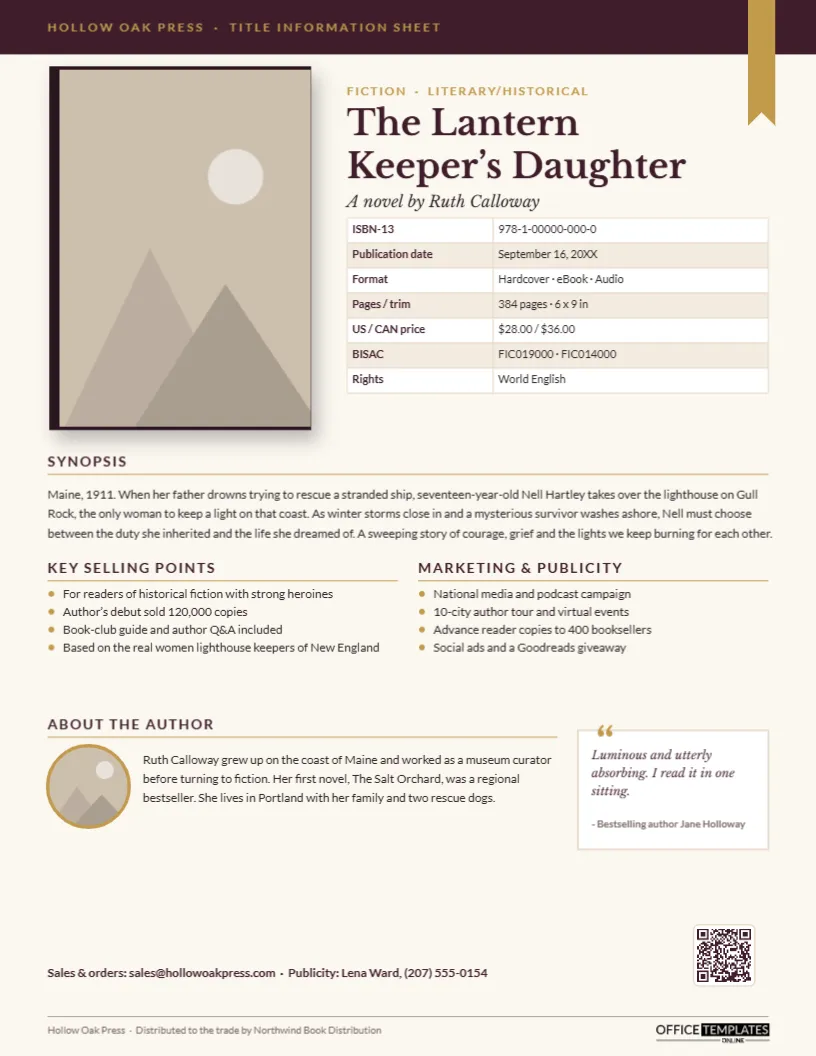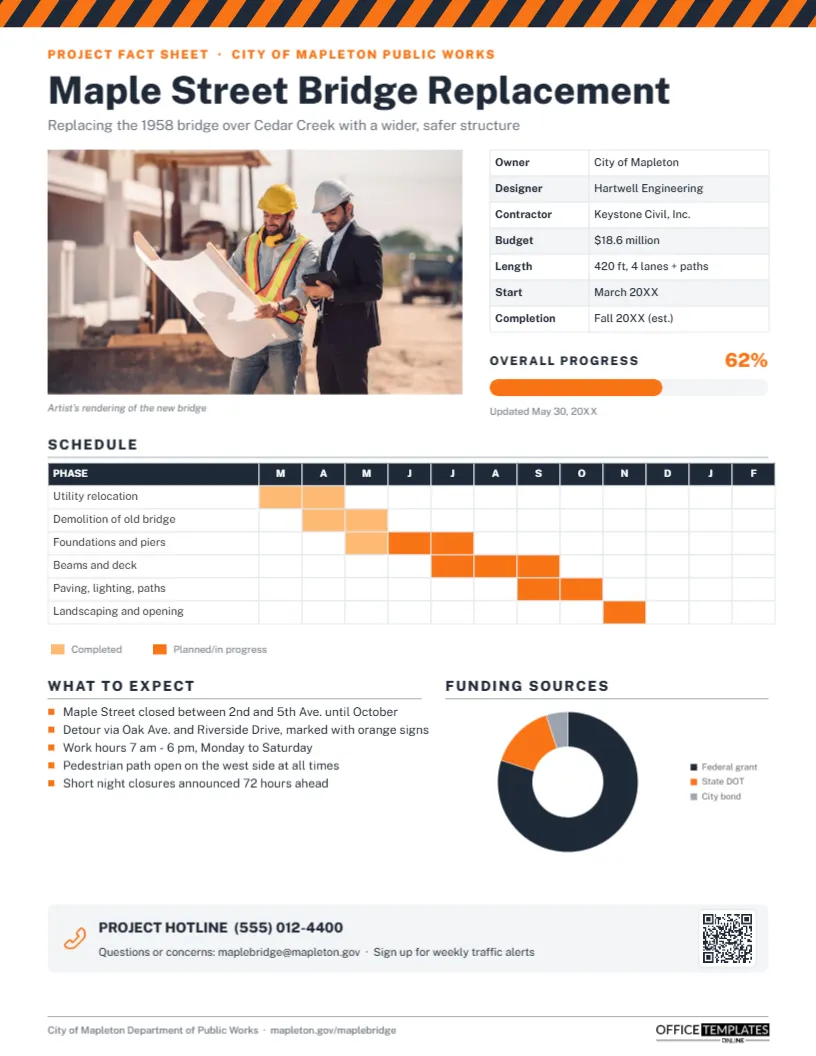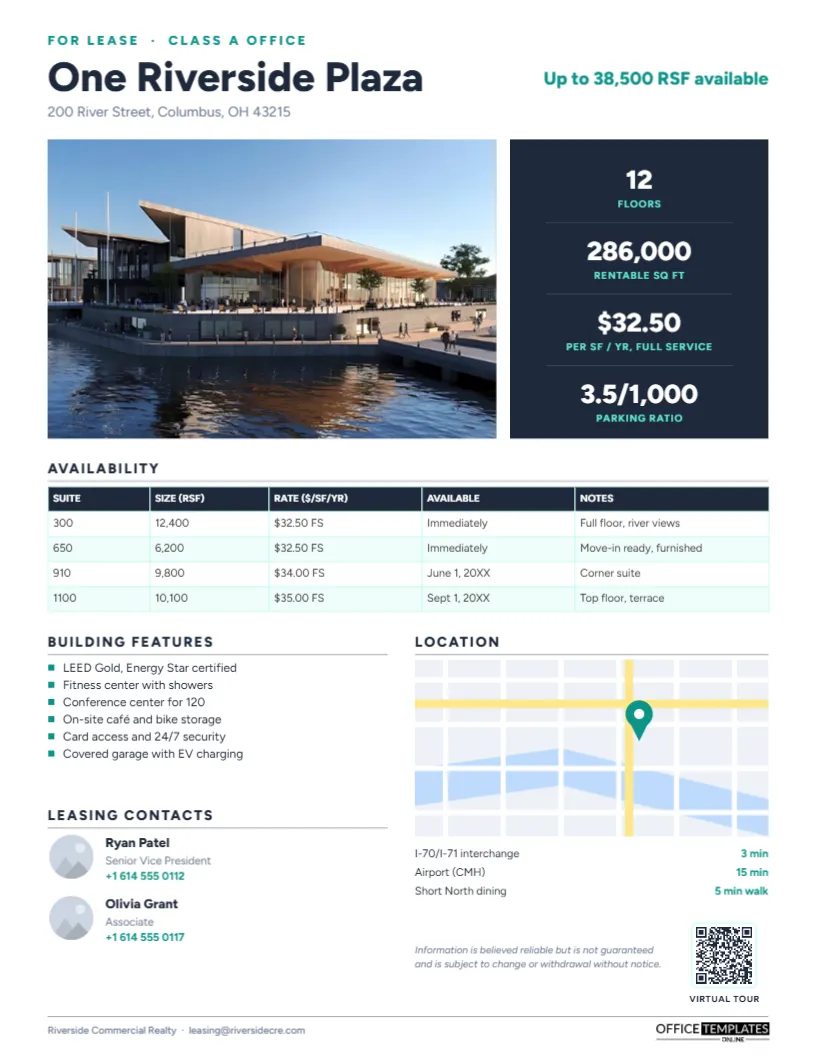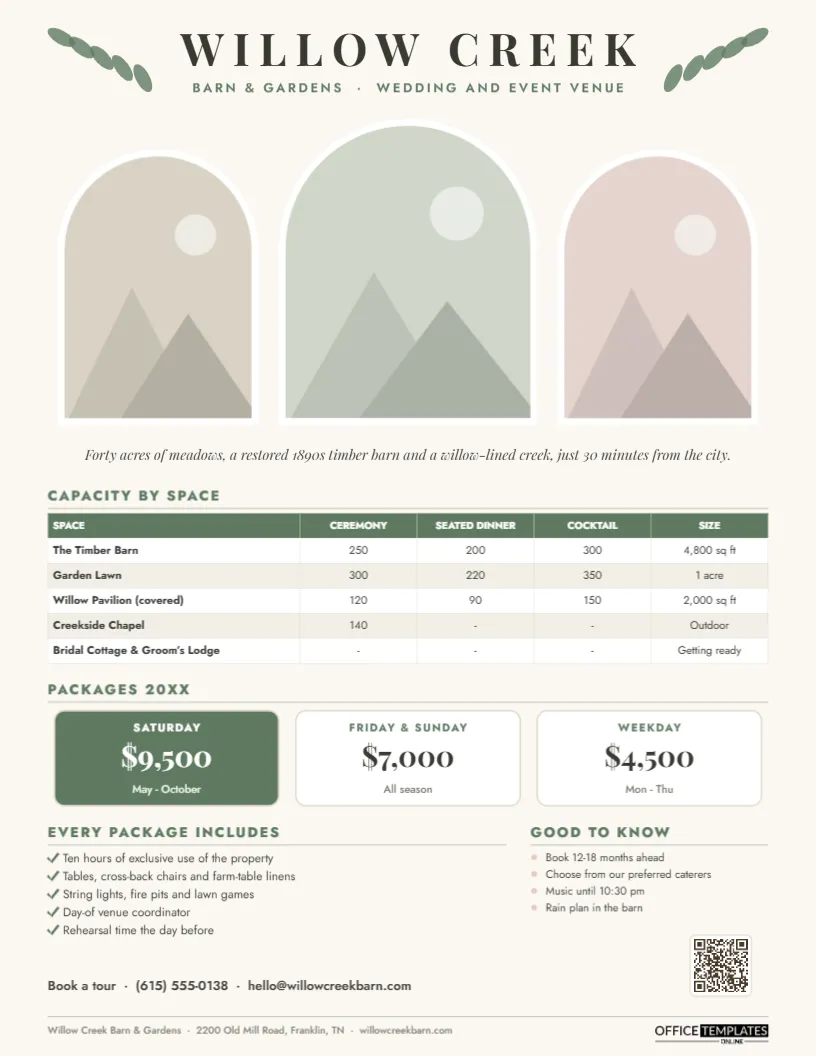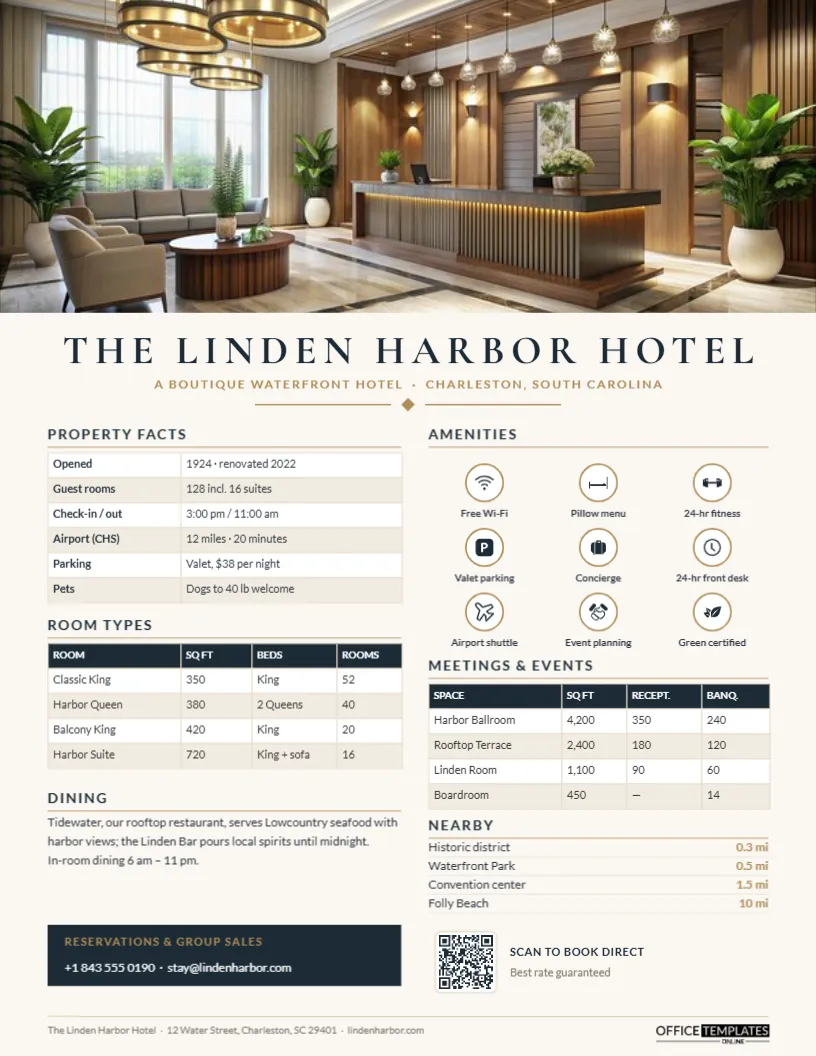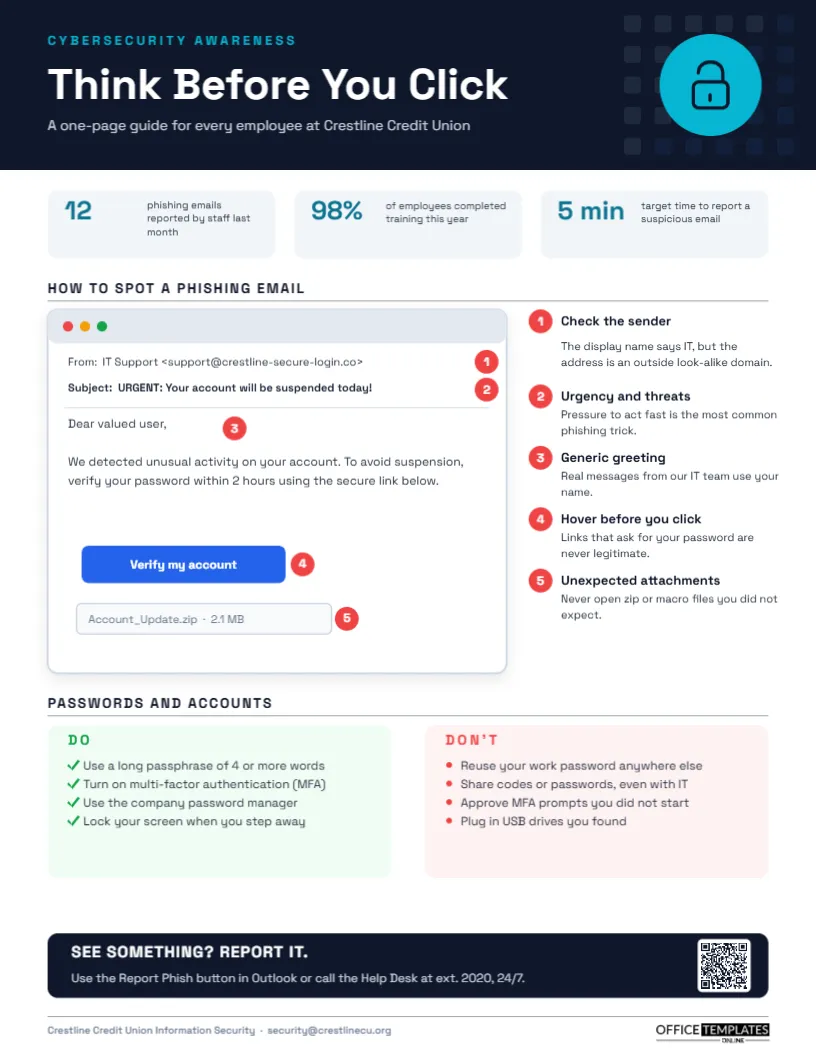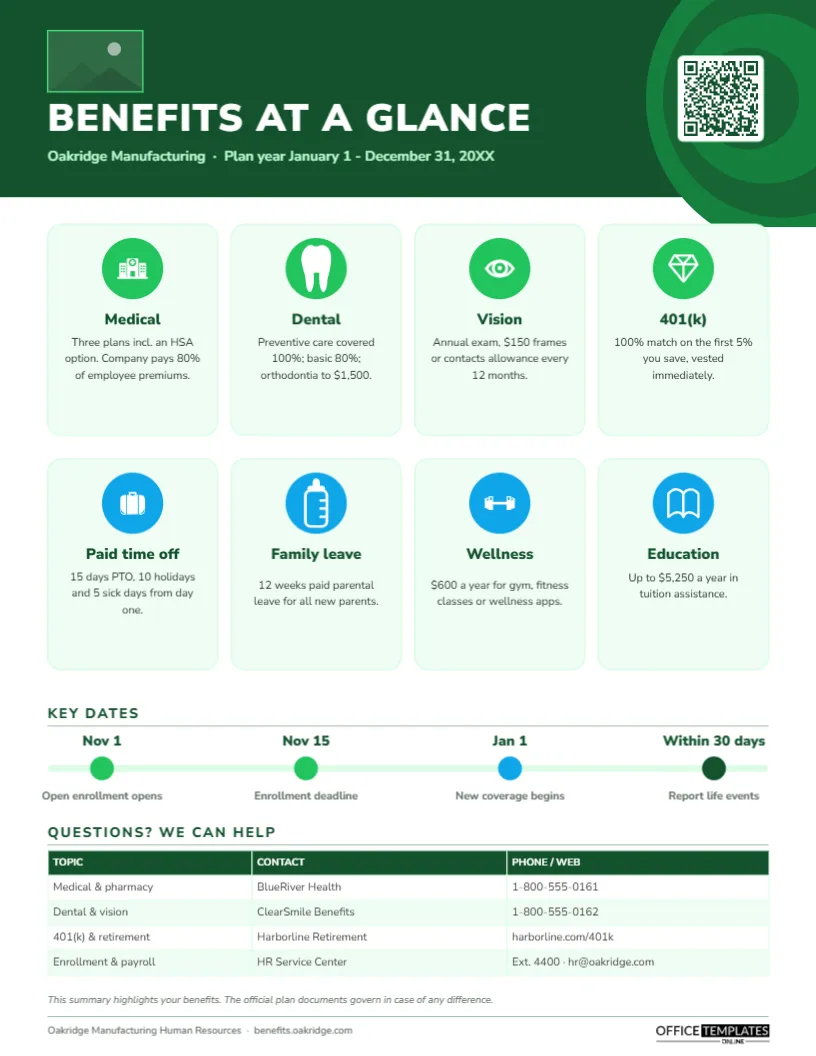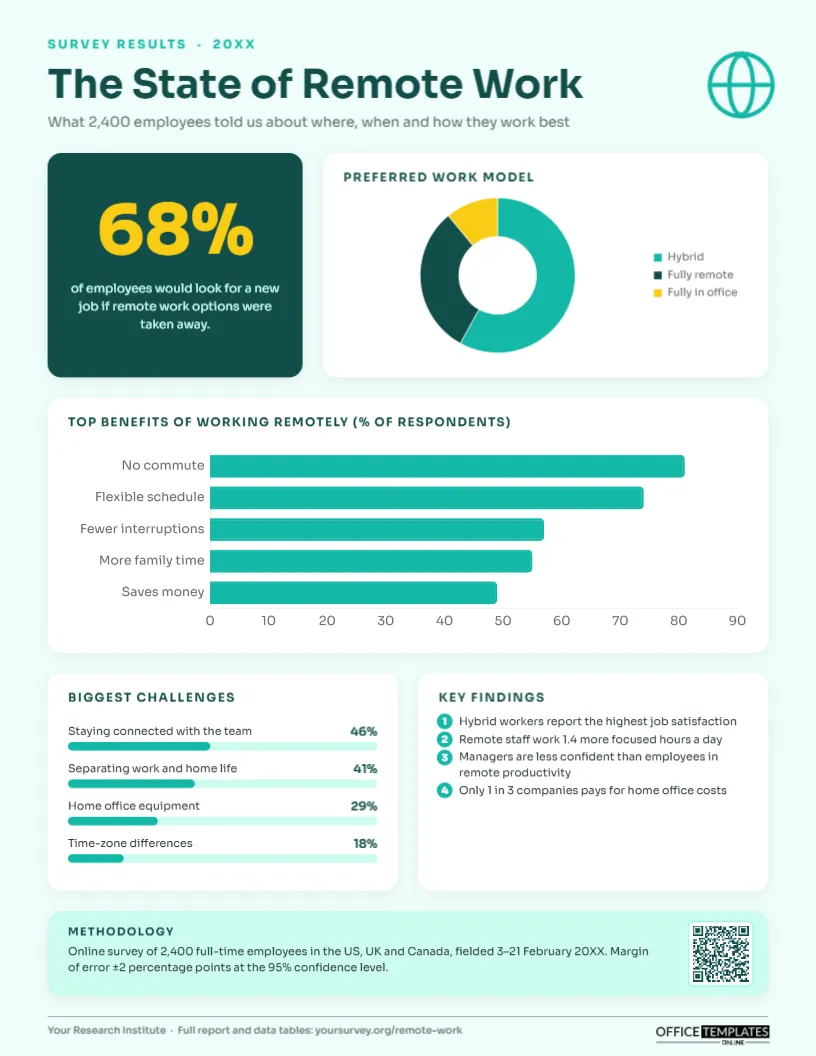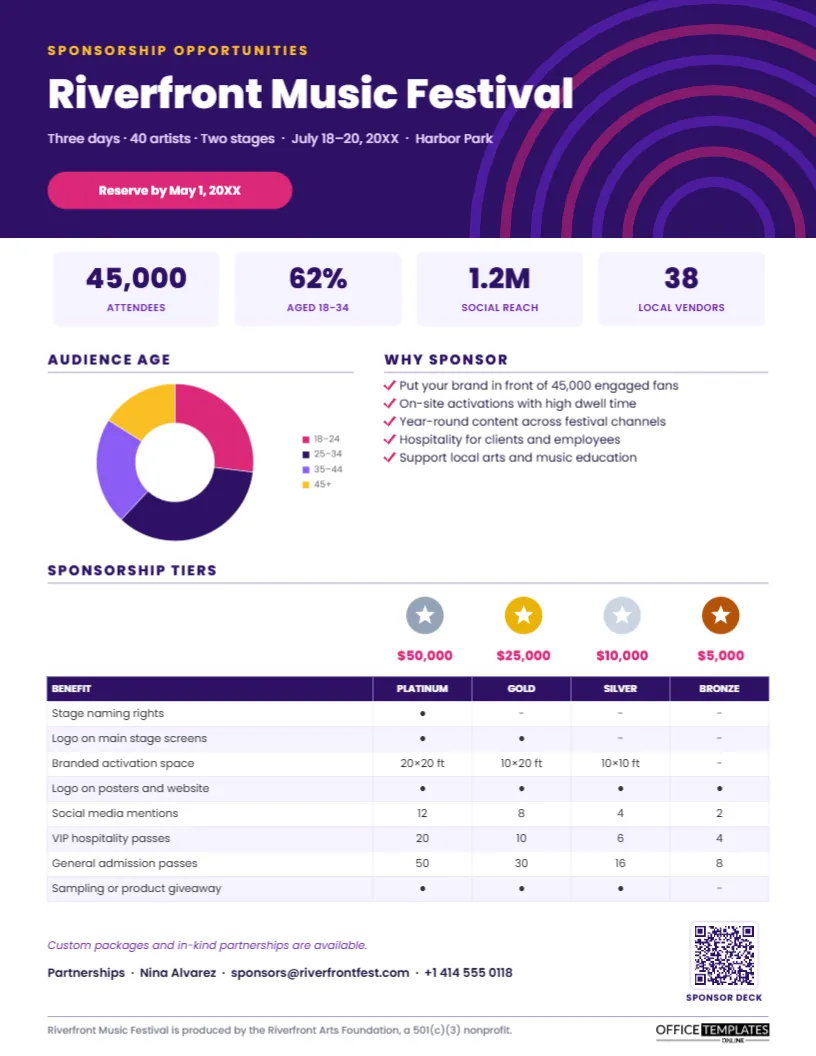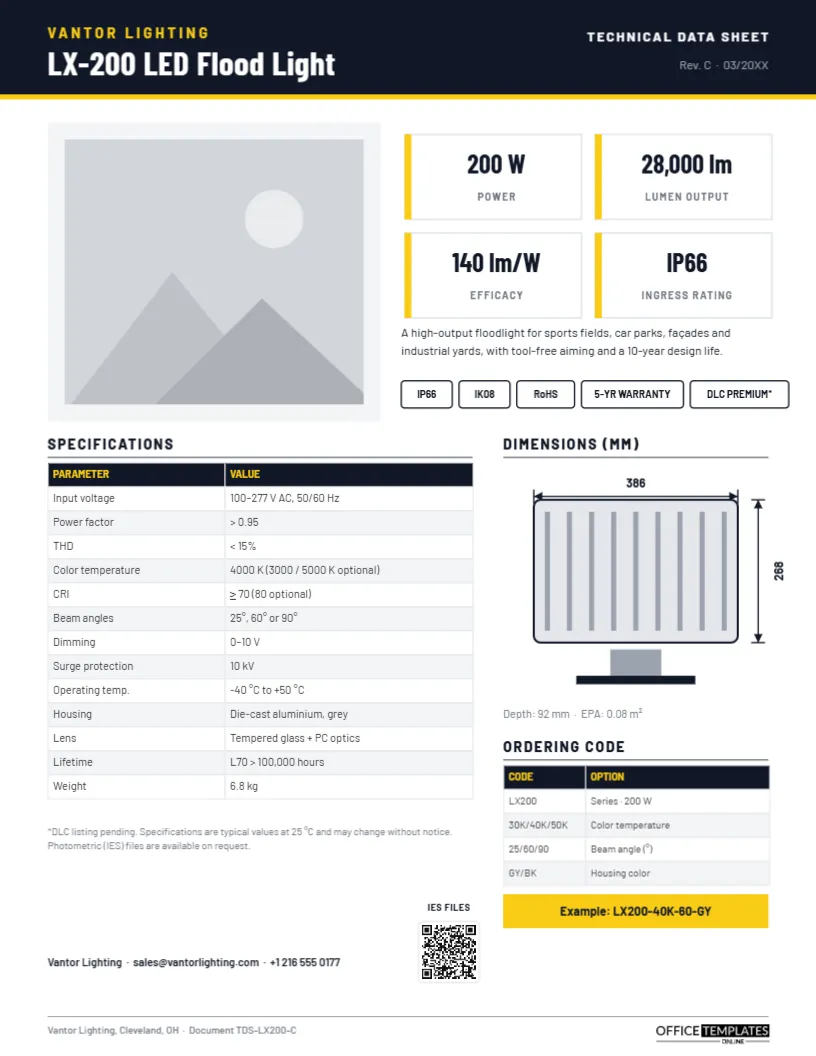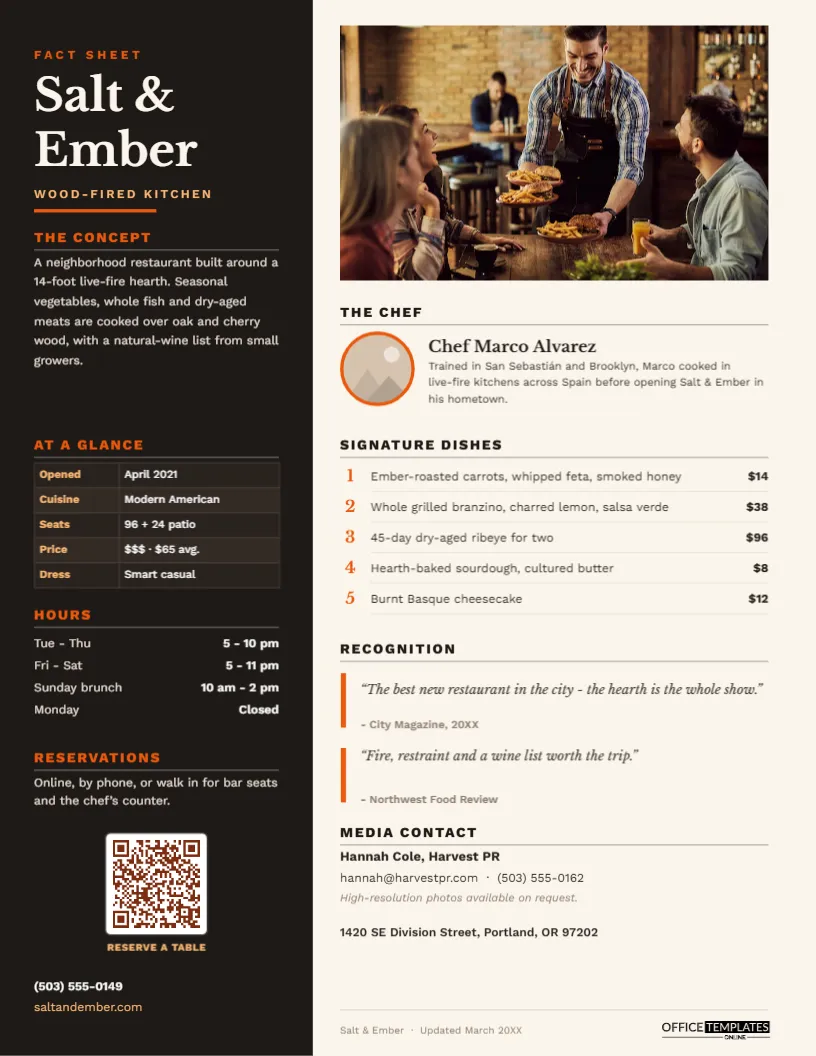
Food writers, bloggers, event planners, hotel concierges, and even delivery platforms regularly ask restaurants for a fact sheet. They need the facts behind the story: who the chef is, what the concept is, when you are open, what the signature dishes cost, and who handles press. A Restaurant Fact Sheet puts all of that on one page, styled to feel like your dining room. This template, designed for a wood-fired kitchen, uses a dark charcoal column and ember orange to capture the warmth of live-fire cooking.
Why Restaurants Need a Press-Ready Page
Restaurants are covered constantly in best new openings lists, neighbourhood guides, awards coverage and food festival programs. Writers on deadline will use whatever information they can find, and if it is wrong (an old chef, last season’s hours, a dish that is no longer served), that error follows you. A fact sheet gives writers accurate information and makes your restaurant easier to include. For restaurant groups and PR agencies, it is a standard part of every media kit.
A Charcoal Column and Ember Orange
The left third of the page is a tall charcoal column that feels like the dining room at night. At the top, an ember-orange FACT SHEET label sits above the restaurant’s name, Salt & Ember, in large cream Libre Baskerville, and WOOD-FIRED KITCHEN in soft orange, underlined with a short ember bar. Beneath come The concept, a short paragraph about the live-fire hearth and natural-wine list; At a glance, a small table of opening date, cuisine, seats, price level, and dress code; Hours, day by day; and Reservations, with a QR code labelled RESERVE A TABLE, the phone number, and the website.
The cream right side opens with a large dish photo. The chef introduces Chef Marco Alvarez with a round orange-ringed headshot and a two-line background. Signature dishes list five dishes with numbered serif figures and prices, separated by fine rules like a menu. Recognition shows two press quotes in italic serif with orange bars on their left edge and the source beneath each. Media contact gives the PR agency’s name, email, and phone, followed by the address and our logo in the footer. The finished page is US Letter size (8.5 x 11 inches) in portrait.
How to Describe Signature Dishes
Menu writing is a craft, and the five signature dishes are the most quoted part of any restaurant fact sheet. Use the pattern on the template: main ingredient, cooking method, one or two supporting flavours. Ember-roasted carrots, whipped feta, smoked honey tell a writer exactly what arrives at the table. Avoid adjectives like delicious or amazing and let the ingredients do the work. Choose dishes that represent the concept and are likely to stay on the menu for months, and include at least one dish at a lower price point to show range.
Swapping In Your Restaurant
| Element | How to change it |
|---|---|
| Restaurant name and tagline | Double-click the text in the dark column |
| Dish photo and chef headshot | Select the image and use Replace Image |
| At-a-glance facts | Select the small table and choose Edit Data |
| Hours | Retype each day and time |
| Signature dishes and prices | Retype each line; keep to one line each |
| Press quotes | Retype the quote and source |
| Reservation QR code | Edit its link in the Barcodes & QR panel |
Writing the Chef’s Bio
Keep it to two sentences on the fact sheet: where the chef trained or cooked, and what brought them to this restaurant. Journalists want the thread of a story, such as a return to a hometown, a signature technique, or a cuisine learned abroad. Put the full biography, awards, and previous restaurants on your website and in a separate document.
Photos That Win Coverage
The dish photograph on the fact sheet should be your most beautiful, most representative plate, shot in natural light from slightly above. Have a folder of high-resolution images ready, including the chef, the dining room, the exterior, and a few dishes, because editors will ask. The template’s media contact section notes that images are available on request.
Using Press Quotes Well
Two short quotes are enough. Choose the most respected outlets and the most specific praise; a line that names a dish or the concept is more useful than general praise. Keep quotes accurate and attributed, and update them as new reviews arrive. If you are newly opened and have no press yet, replace the section with an awards list, a sourcing statement, or a short description of the drinks program.
A Media Kit Checklist for Restaurants
- This one-page fact sheet
- Current menus (food, drinks, dessert)
- Chef and owner bios
- High-resolution photos with photographer credits
- Recent press coverage
- Logo files
- Details on private dining and events
Hours and Reservations Details Writers Check
Hours are the most frequently outdated fact in restaurant coverage. List every day, including closed days, and note seasonal changes. In the reservations section, say which platforms you use, whether walk-ins are welcome, and whether there is a bar or counter for guests without a booking. Guides and concierges rely on these details when they recommend you.
Other Hospitality Uses
The layout also works for bars, cafés, bakeries, wineries, breweries, food trucks and catering companies. A brewery might replace signature dishes with flagship beers and ABV figures; a café might list signature drinks and bakery items. Restaurant groups can create one fact sheet per location with a shared design.
Printing Dark Backgrounds
The charcoal column prints best on a colour laser printer with good coverage. Use a heavier paper, 100 lb or more, so the dark ink does not show through or curl the page. For press email, the PDF keeps the photo and type crisp.
Restaurateur FAQs
Should prices be on the fact sheet?
Yes, for signature dishes. Writers often mention prices, and an accurate average check helps them describe your restaurant.
Can I add a private dining section?
Replace the recognition section with private dining capacity and a contact.
How often should I update it?
With every seasonal menu change and whenever hours, chefs, or prices change.
Open the template, add your restaurant’s story, dishes, and press, and give every writer a fact sheet that captures the heat of your kitchen.