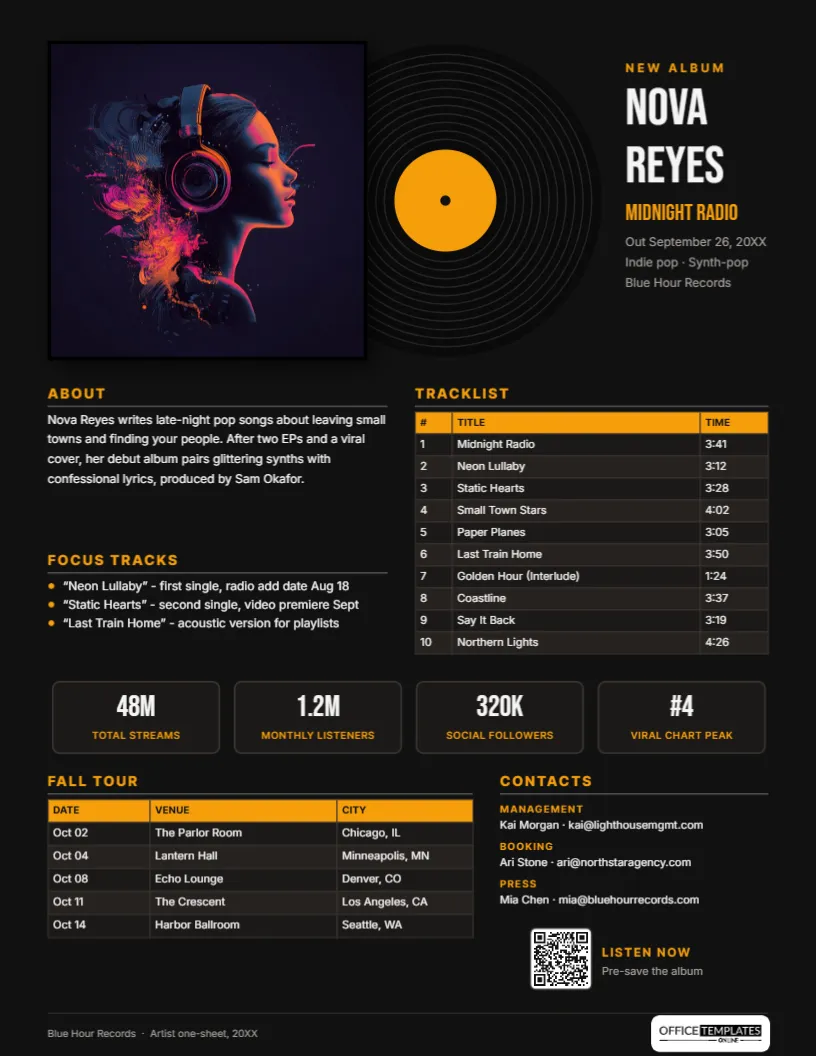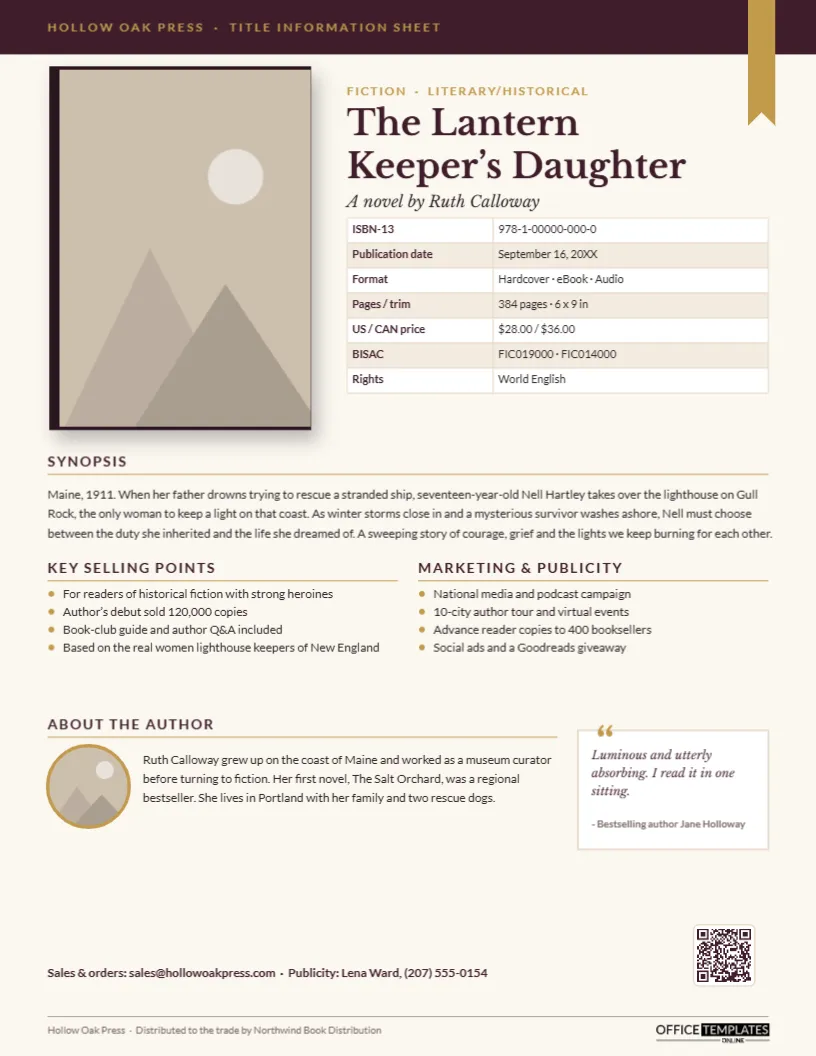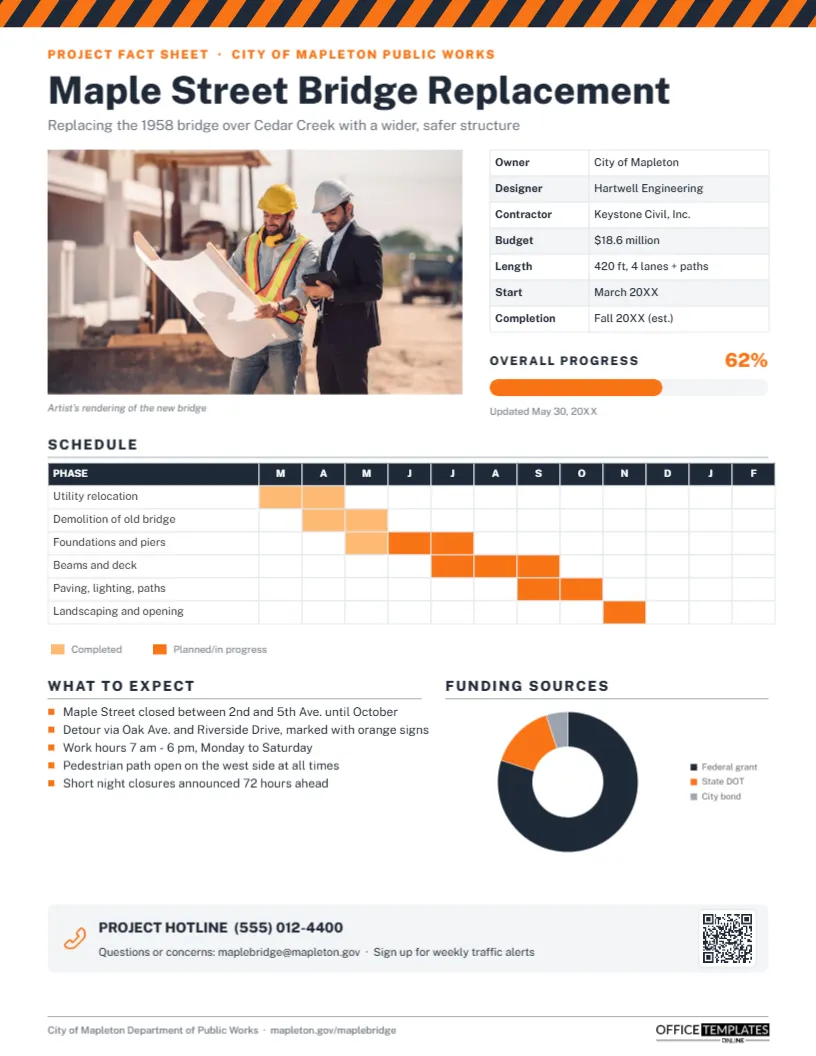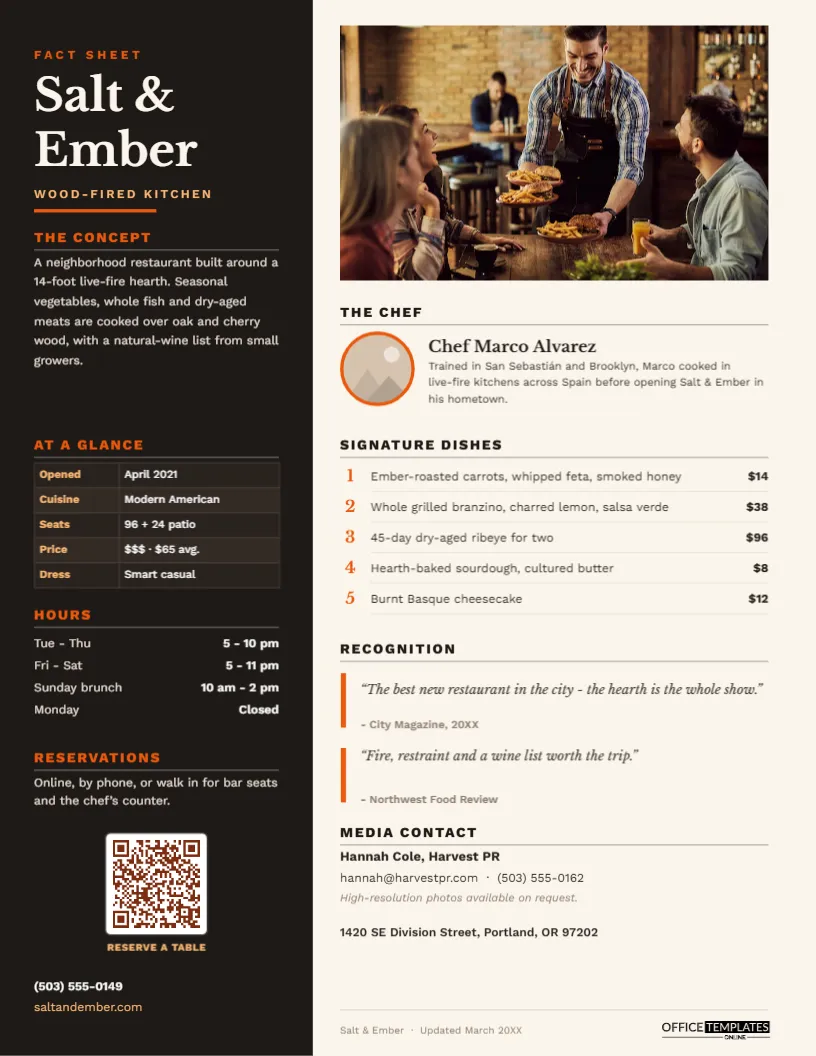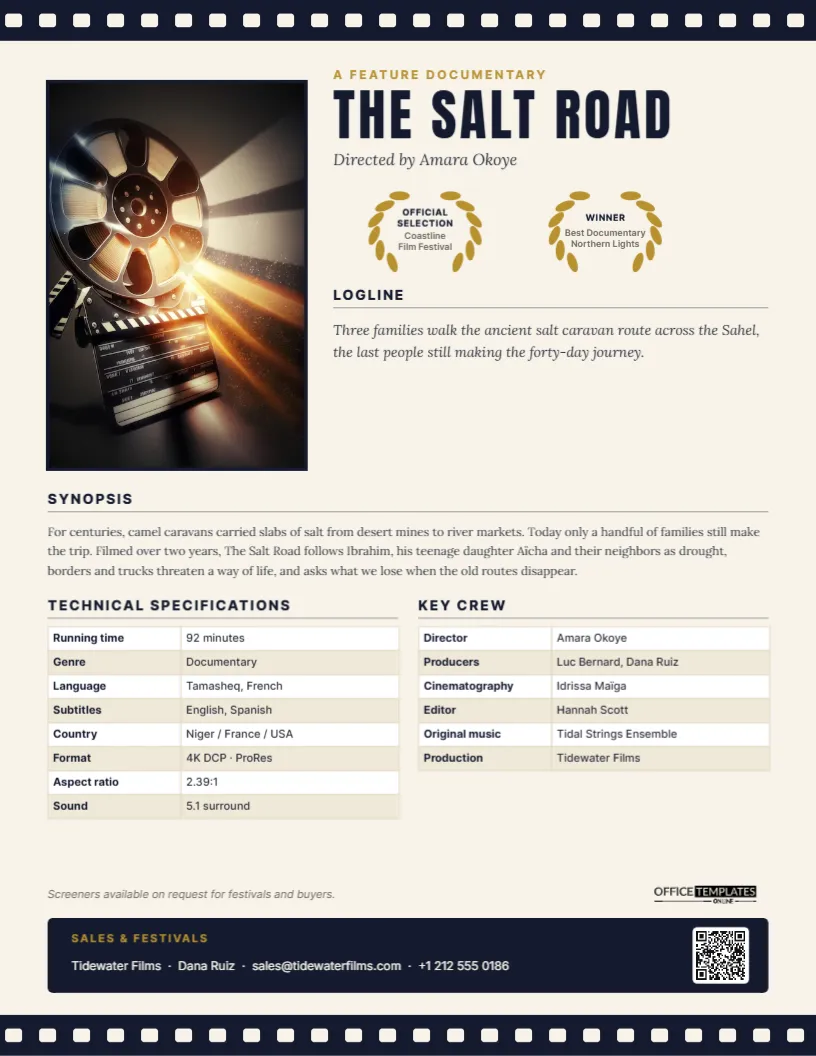
Festival programmers, sales agents, distributors, broadcasters, and journalists all need the same basic facts about a film: its logline, running time, format, language, festival history, and who made it. Filmmakers usually provide them in a film fact sheet, sometimes called a one-sheet or info sheet, as part of the press kit and every festival submission. This Film Fact Sheet Template, shown for a feature documentary, frames that information between two strips of film, with a poster slot and festival laurels to give it cinematic polish.
Where a Film Fact Sheet Travels
| Recipient | What they need from the sheet |
|---|---|
| Festival programmers | Logline, running time, premiere status, format |
| Sales agents and distributors | Genre, awards, languages, rights contact |
| Broadcasters and streamers | Running time, aspect ratio, sound, subtitles |
| Journalists and critics | Synopsis, director, crew credits, screener access |
| Cinemas and community screenings | Format (DCP), running time, booking contact |
Film Strips, Navy and Gold
Navy film strips, complete with cream sprocket holes, run across the very top and bottom of the page, so the whole sheet looks like a frame of celluloid. On the left, a tall poster slot with a navy border holds the key art. To its right, a small gold A FEATURE DOCUMENTARY label introduces the title, THE SALT ROAD, in bold condensed Anton capitals, and Directed by Amara Okoye in italic Lora. Two gold laurel wreaths follow, one for an official selection and one for a festival award. A Logline in italic serif completes the top half.
A full-width Synopsis tells the story in a paragraph. Two tables sit side by side below it: Technical specifications (running time, genre, language, subtitles, country, format, aspect ratio, and sound) and Key crew (director, producers, cinematography, editor, music, and production company). A note says screeners are available on request; our logo sits beside it, and a navy sales bar with a gold SALES & FESTIVALS label gives the production company contact beside a QR code. The page is a portrait US Letter sheet measuring 8.5 x 11 inches.
Logline, Synopsis and Tagline: The Differences
Filmmakers often mix these up, and festival forms ask for all three:
- Logline: one sentence, about 25- 35 words, stating who the film follows and what is at stake. It goes at the top of the sheet.
- Short synopsis: one paragraph of 80-120 words that sets up the story and its central question, as on the template.
- Long synopsis: a full page, for the press kit only.
- Tagline: a short marketing phrase for the poster, not usually on the fact sheet.
Filling In Your Film’s Details
- Replace the poster slot with your key art using Replace Image. A portrait poster with the title legible at small size works best.
- Retype the film type, title, and director credit.
- Edit the laurels: each wreath is a grouped vector with editable text for the selection or award and the festival name. Duplicate one for more festivals, or delete them before your premiere.
- Write your logline and synopsis.
- Select the specifications and crew tables and use Edit Data; add rows such as Premiere status or Year with + Row.
- Update the sales contact and link the QR code, via the Barcodes & QR panel, to your trailer or a password-protected screener request.
Technical Specs Exhibitors Check
Technical errors cause screening disasters, so get the specifications right. List the exact running time in minutes, the exhibition format (DCP for cinemas, ProRes or H.264 for festivals and broadcasters), the aspect ratio (1.85:1 or 2.39:1 for most features), the sound format (stereo or 5.1 surround), languages spoken, and subtitle languages available. If a film has content warnings or a rating, add a row. For premieres, festivals care whether the film is a world, international, or regional premiere, so add that detail too.
Using Laurels Honestly
Festival laurels are powerful signals, which is why they are often misused. Only use a festival’s laurel if the film was officially selected or awarded; use the wording the festival approves (Official Selection, Winner), and use the festival’s own laurel artwork where it provides one. Keep the number to the most prestigious two or three; a page crowded with laurels from little-known festivals looks less credible than two strong ones.
Documentary-Specific Considerations
Documentaries often involve real people, locations and cultures, and a fact sheet should reflect that with care. Name participants as they wish to be named, spell names from other languages accurately, credit local crew and fixers in the key crew table, and include both languages spoken on screen. If the film deals with sensitive subjects, mention any impact campaign, educational version, or discussion guide available.
Adapting It for Narrative Features and Shorts
For a narrative feature, replace Key crew with a cast table and add the principal crew as a second table. For short films, the fact sheet is often the only marketing material, so include festival history and a still in addition to the poster. Series and pilot creators can use the same layout with episode count and runtime per episode.
Screeners and Security
Never print a public screener link on a fact sheet. Use the QR code for the trailer or a request form, and send private, password-protected screener links individually. The template’s note, Screeners available on request, is standard wording for this reason.
Printing for Markets and Festivals
At film markets and festivals, bring printed fact sheets on heavy matte paper; the cream, navy and gold palette looks refined on a soft finish. The film strips print cleanly on laser printers. Always have the PDF ready for email follow-ups.
Filmmaker FAQs
Should the budget be on the fact sheet?
No. Budgets are discussed privately with sales agents and distributors.
Can I add a director’s photo?
Yes. Add a small circular photo slot next to the director credit, or replace one laurel with it before festival selections arrive.
What if my film has no festival history yet?
Delete the laurels and enlarge the logline, or add a short director’s statement in their place.
Open the template, add your poster, logline, and credits, and send programmers a film fact sheet that feels like the opening frame of your film.