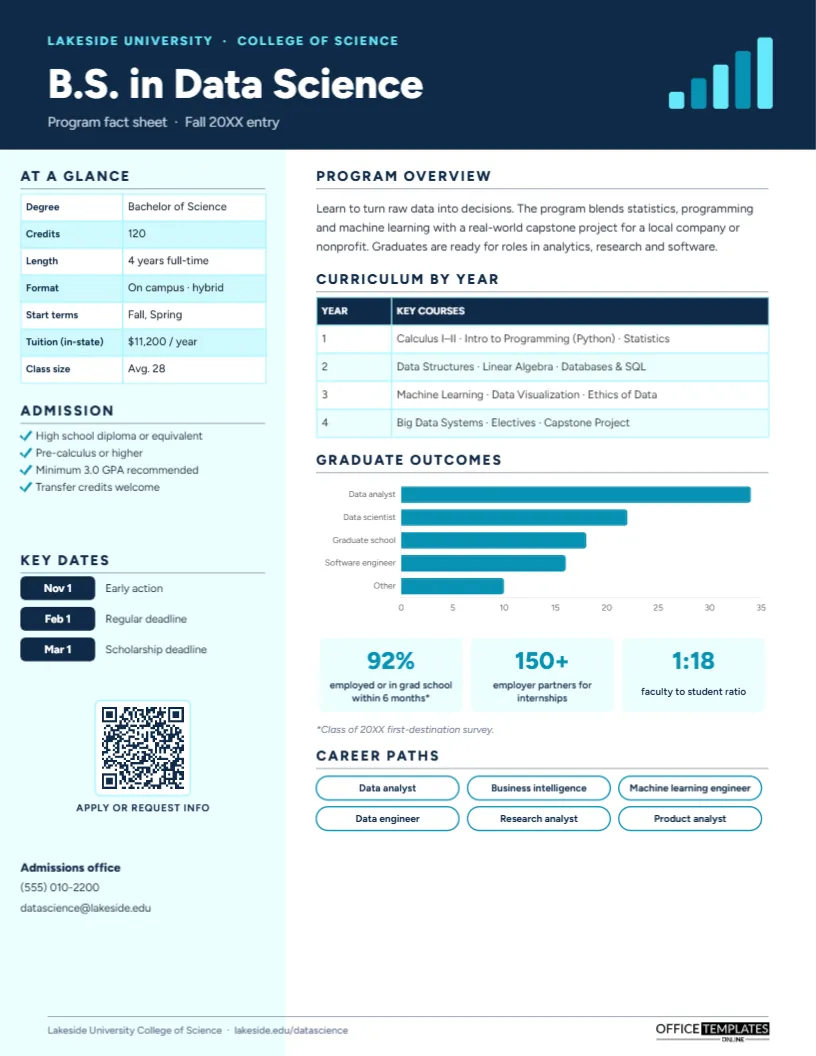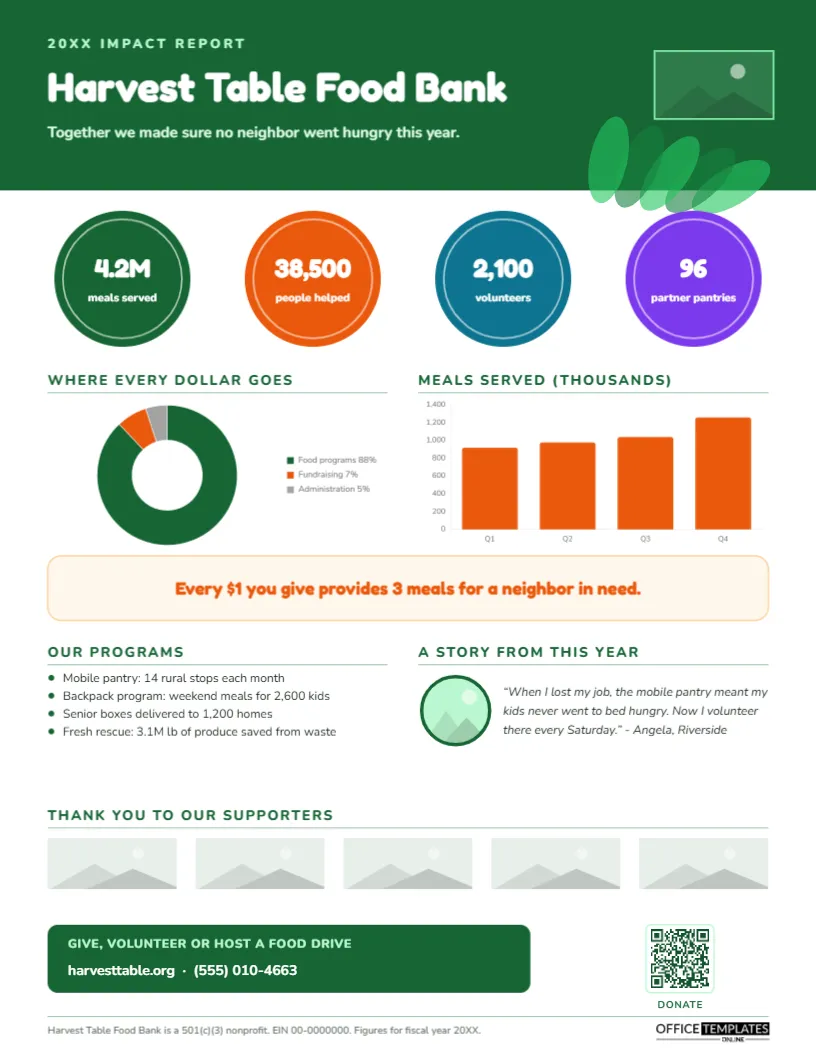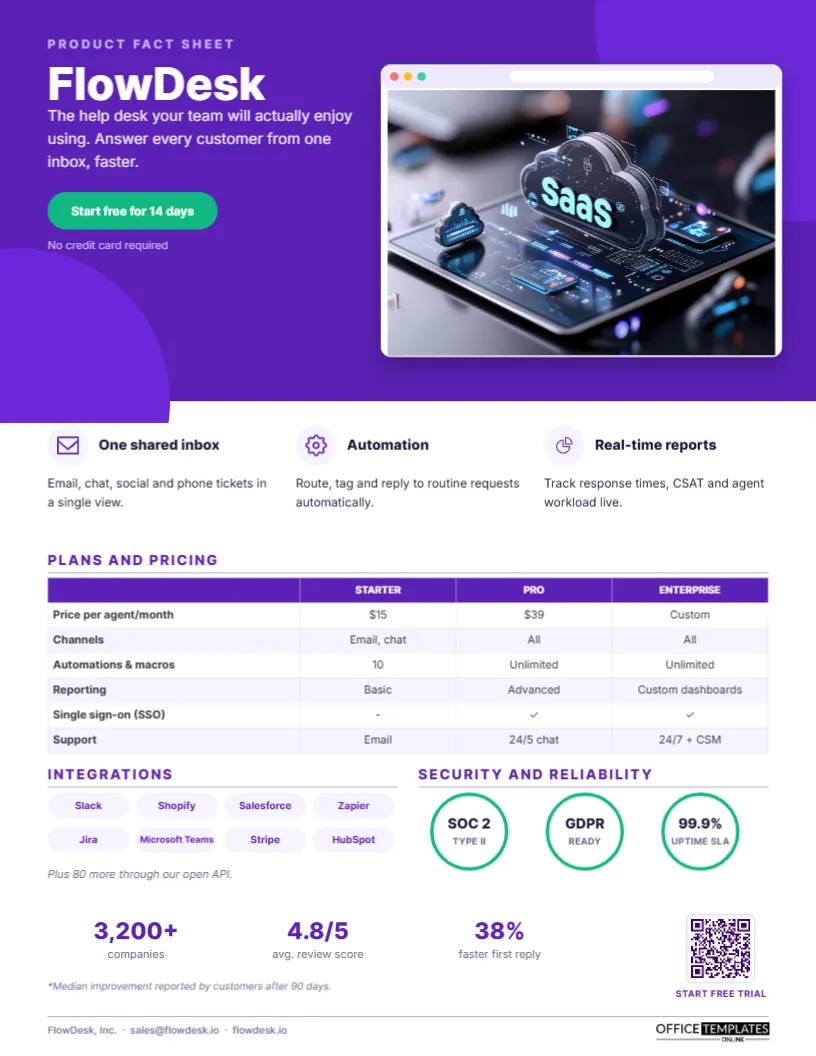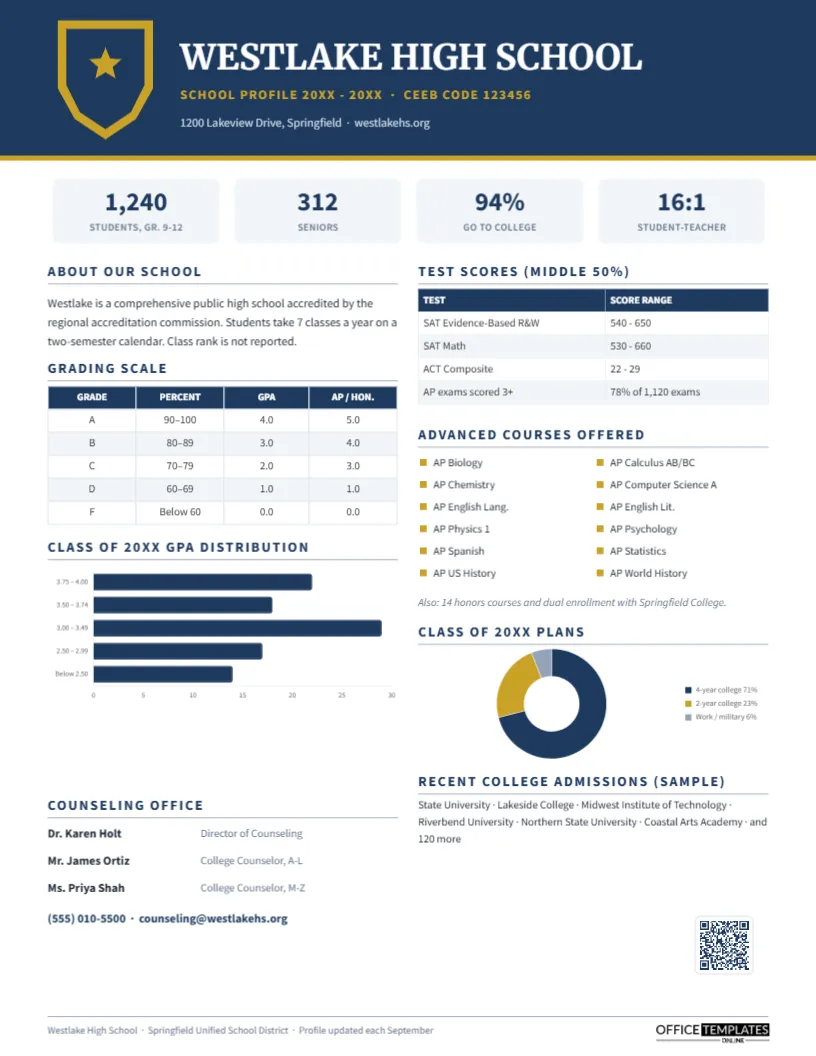
Sponsors are not buying a logo on a banner. They are buying access to an audience, and they want to know exactly who that audience is, how many people it includes, and what they get at each price. An Event Sponsorship Fact Sheet answers those questions on one page, so a brand manager can compare your event with the dozens of other proposals on their desk. This template, shown for a three-day music festival, puts audience numbers and a clear tier comparison at the centre of the pitch.
What Brand Managers Compare
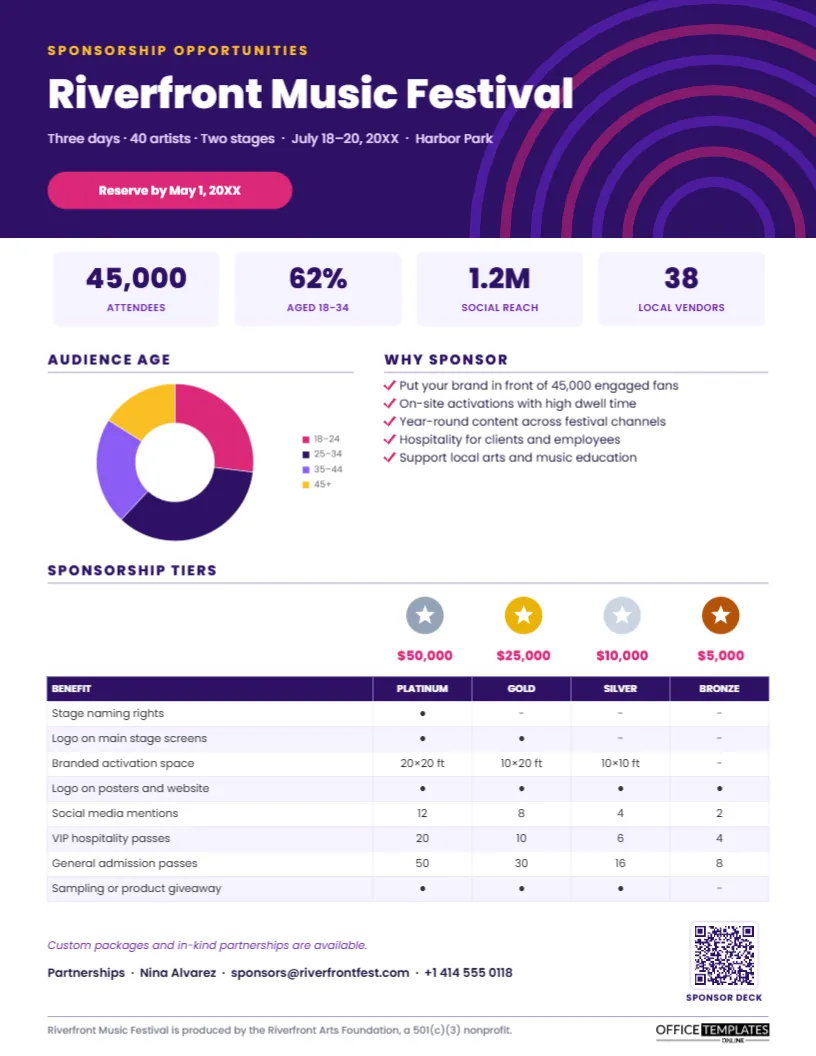
Sponsorship decisions come down to reach, fit and value. Reach is the size of the audience, on-site and online. Fit is how closely the audience matches the brand’s target customer, which is why age and interests matter so much. Value is what each tier includes compared with its price. A strong fact sheet puts all three side by side. Vague promises of exposure are easy to ignore; a matrix that shows twelve social mentions and twenty hospitality passes for $50,000 is easy to evaluate.
Festival Purple, Magenta Rings and Gold Stars
The page opens with a deep purple header decorated with a fan of alternating magenta and violet half-rings rising from the lower right, like stage lights. The event name, Riverfront Music Festival, is set in bold white Poppins under a gold SPONSORSHIP OPPORTUNITIES label, with a line giving the number of days, artists and stages, dates, and venue. A magenta pill says Reserve by May 1, 20XX to create urgency.
Four lavender stat tiles overlap the bottom of the header: 45,000 attendees, 62% aged 18-34, 1.2M social reach, and 38 local vendors. Below them, an Audience age doughnut chart sits beside a Why sponsor list of five checkmarked benefits. The lower half is the Sponsorship tiers section: four coloured medallions with stars (platinum, gold, silver and bronze) show the price of each tier above a benefits matrix. Eight rows compare stage naming rights, screen logos, activation space, print and web logos, social mentions, VIP passes, general admission passes, and sampling rights, with dots for included and dashes for not included. A note about custom packages, the partnerships contact, a QR code for the full sponsor deck, and a footer naming the nonprofit producer complete the design. It uses one US Letter sheet in portrait (8.5 x 11 in.)
Pricing Your Tiers
Price tiers backwards from what they cost you to deliver and what comparable events charge. Then check the ratio between tiers: each step up should add visibly more value than the price difference, or sponsors will cluster at the bottom. A common pattern is a single top tier with exclusive benefits (naming rights, category exclusivity), a mid tier that most brands buy, and one or two entry tiers for local businesses. The table below shows a simple way to plan.
| Tier | Typical buyer | Hero benefit | How many to sell |
|---|---|---|---|
| Platinum | National or regional brand | Naming rights, exclusivity | 1 |
| Gold | Regional brand, large local employer | Screen logos, large activation | 2-4 |
| Silver | Local business with a product to sample | Activation space | 4-8 |
| Bronze | Small local business | Logo on posters and web | 10+ |
Customising the Riverfront Fact Sheet
- Event details: retype the name, dates, venue, and the reserve-by date in the pill.
- Stats: each tile holds a number and label; use verified figures from ticketing and social analytics.
- Audience chart: select the doughnut, click Chart Options, then Edit Chart Data to enter your own age bands, or change it to gender, location, or income.
- Tier prices: the prices under the medallions are text; recolour the medallions if you use different tier names.
- Benefits matrix: it is an editor Table. Edit Data changes any cell, and + Row adds benefits such as Category exclusivity.
- QR code: link it to your full sponsor deck or a booking form via the Barcodes & QR panel.
Proving Audience Value
Sponsors increasingly ask for evidence. Collect data at every event so next year’s fact sheet is stronger: ticket buyer postcodes and ages, a short attendee survey about brand recall and spending, social media reach and engagement during the event, press coverage, and photos of each sponsor’s activation. After the event, send each sponsor a recap report using the same visual style as this fact sheet; it is the best renewal tool you have.
Activation Ideas Sponsors Love
Brands renew when their activation worked. Give them ideas in your follow-up: a branded phone-charging lounge, a shaded chill-out area, a photo booth with branded frames, product sampling at the entrance, a sponsored water refill station, a branded artist interview stream, or a VIP hospitality deck with a view of the main stage. Activations that give attendees something useful create far more goodwill than a banner.
Other Events This Fits
The layout works for conferences, trade shows, charity galas, marathons and fun runs, sports tournaments, food festivals, school fundraisers, esports events and community fairs. Swap the purple for your event colours, retype the tiers and benefits, and change the audience chart to the data your sponsors care about most, such as job titles for a business conference.
The Pitch Email That Goes With It
Email the PDF with a short personal note explaining why this particular brand fits your audience. Mention one specific idea for their activation and one audience statistic that matches their target customer, then suggest a fifteen-minute call. For in-person meetings, print on heavy silk paper so the purple header looks rich, and bring the full deck as a follow-up. Start outreach six to nine months before the event; most brands set sponsorship budgets well in advance.
Sponsorship FAQs
Should prices be on the fact sheet?
Yes for most events; sponsors screen by budget first. Large events sometimes list from prices and negotiate the rest.
Can the matrix show five tiers?
Add a column in Edit Data and narrow the benefit column slightly so everything fits.
What if we are a first-year event without data?
Use projected attendance clearly labelled as a target, plus data from a similar event or your organisers’ track record.
Open the template, add your event, audience and tiers, and give brand managers a sponsorship offer they can evaluate in a minute.