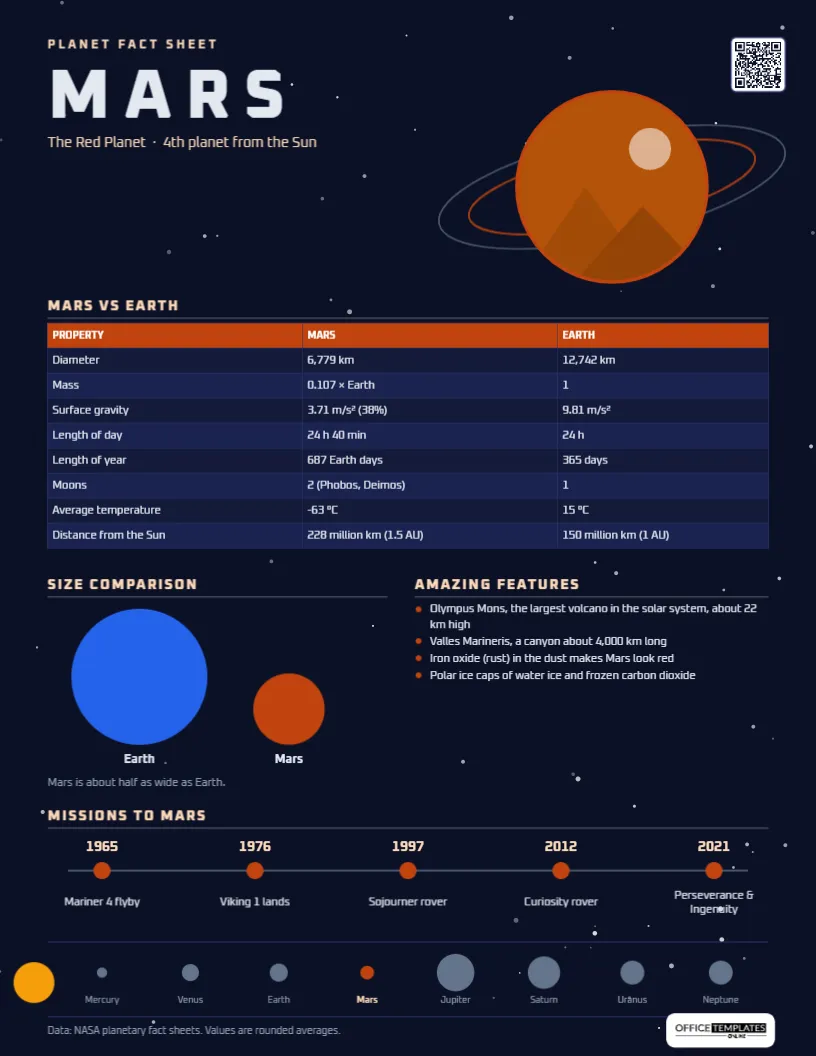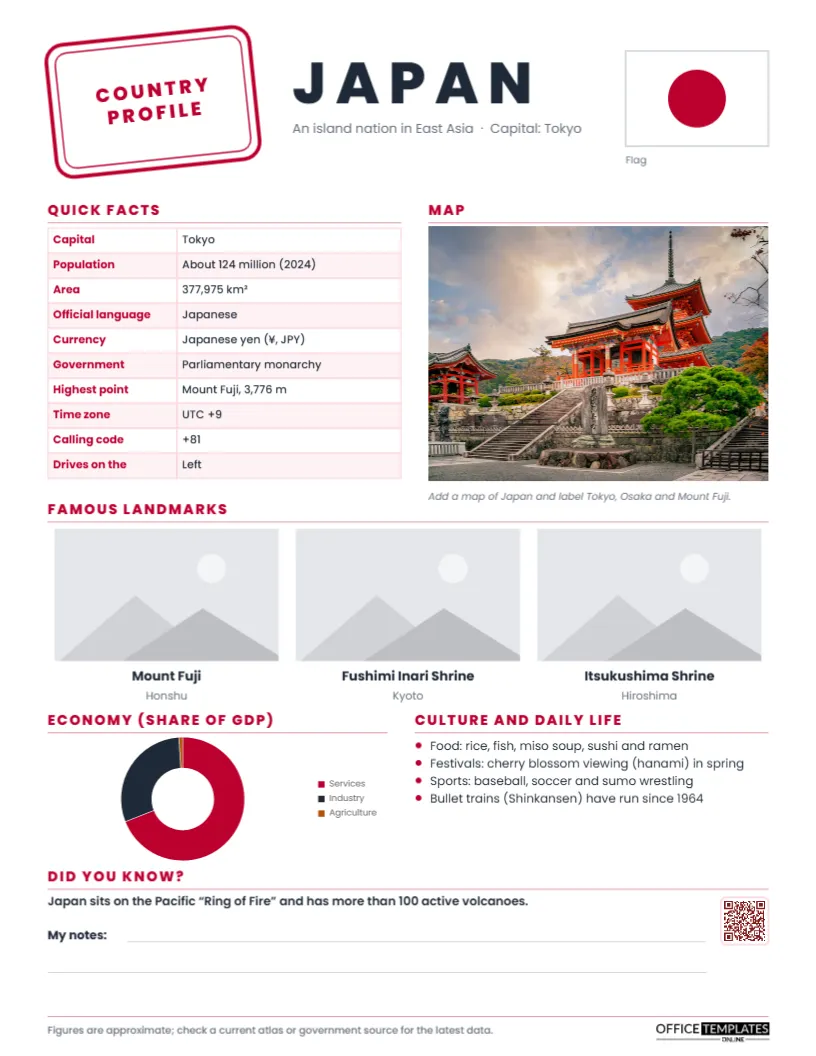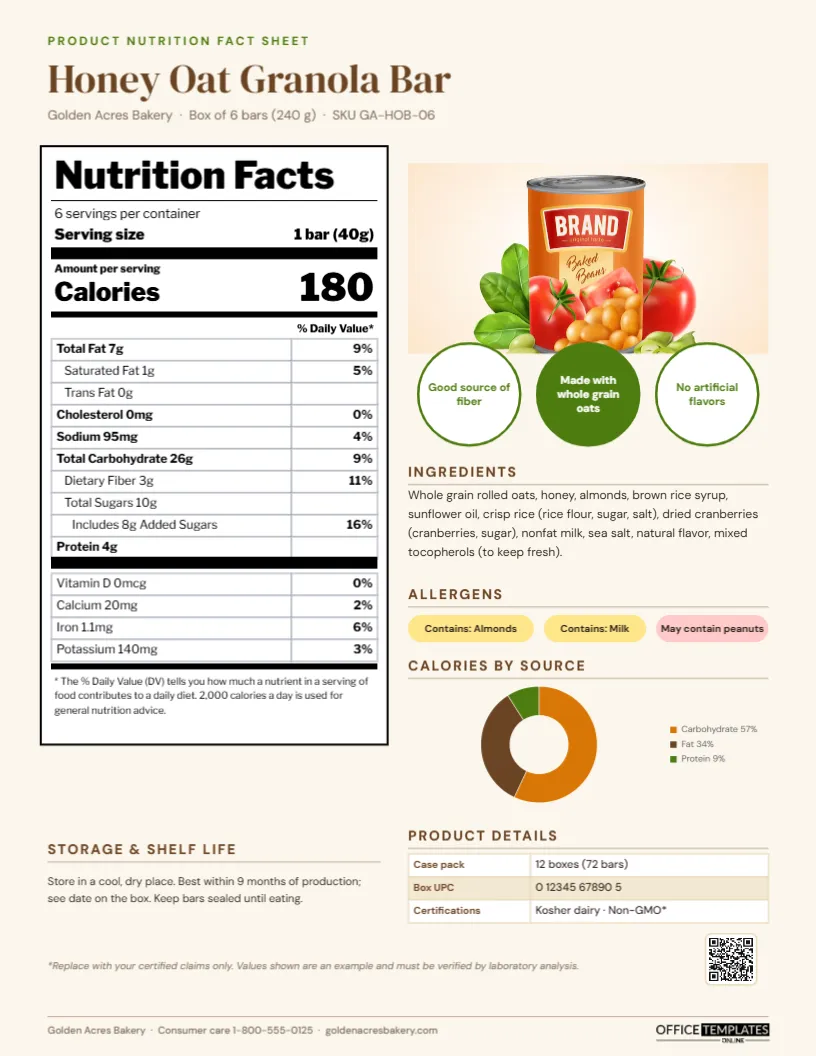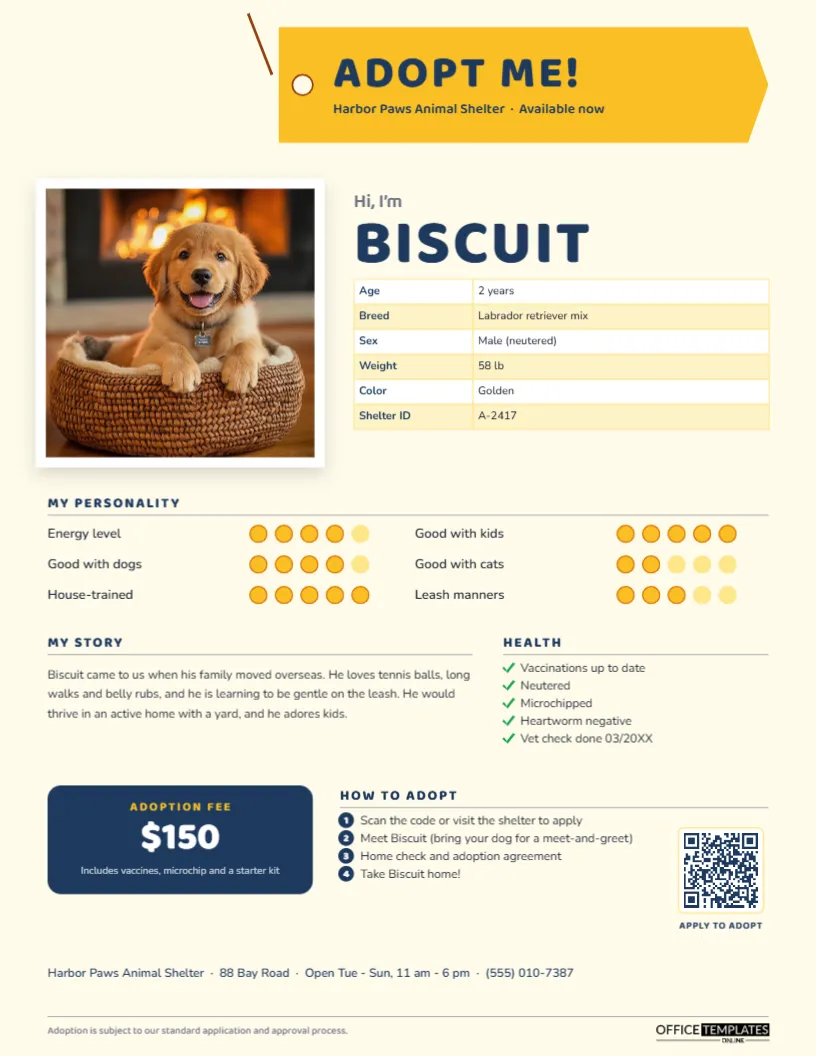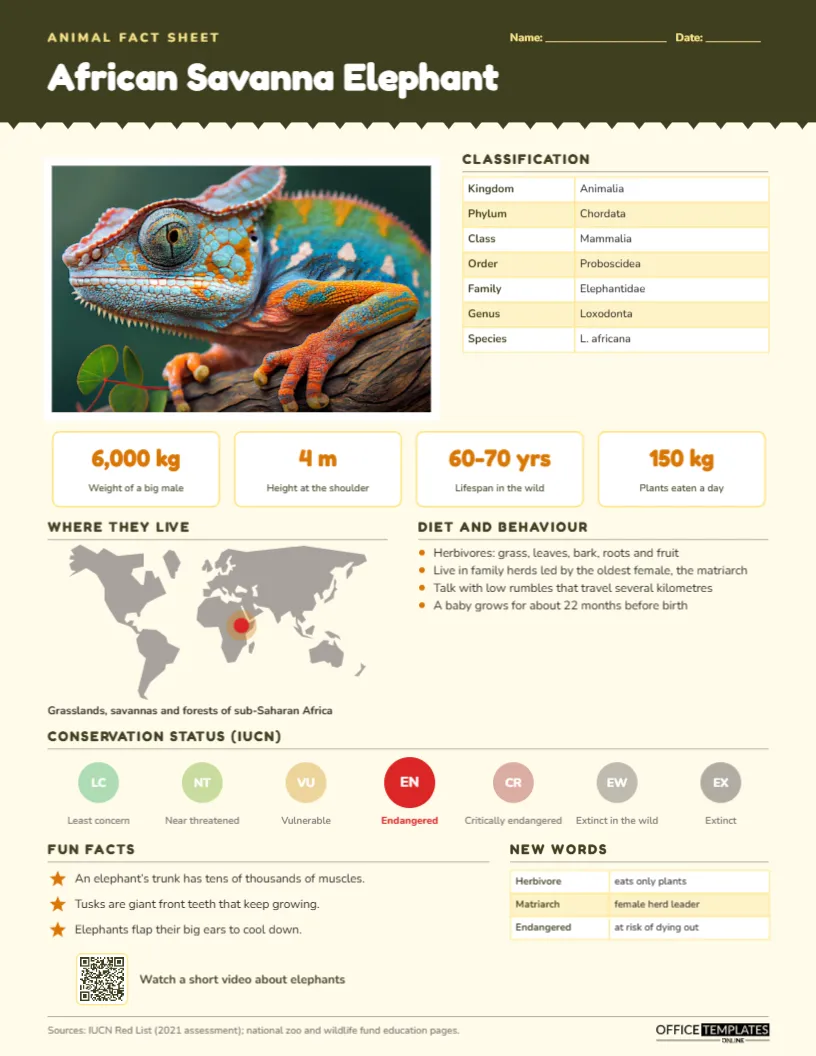
Animal fact sheets are a classroom classic. From kindergarten animal reports to middle-school biology projects, children love researching an animal and presenting what they find. A well-designed fact sheet gives that research a structure: classification, size, habitat, diet, behaviour, conservation status, and fun facts. This Animal Fact Sheet Template, completed for the African savanna elephant, works both as a finished reference for teachers to hand out and as a model students can copy for their own animal.
Two Ways to Use It in Class
Teachers use animal fact sheets in two ways. As a reference handout, the completed elephant sheet supports a lesson on mammals, African habitats, food chains, or endangered species. As a research template, students choose an animal, find the facts and fill in each section themselves, building skills in reading for information, note-taking and citing sources. Because every part of the page is editable, teachers can clear the sample text and hand out a blank version, or keep the headings and let students type their findings.
Savanna Colours and a Zigzag Edge
The page uses the colours of the African savanna: a deep olive header with a zigzag lower edge like tall grass, a warm cream background and amber highlights. ANIMAL FACT SHEET appears in pale yellow capitals above the title, African Savanna Elephant, in friendly rounded Fredoka. A Name and Date line in the header gives students a place to write their name.
A large photo slot with a white border sits on the left, beside a Classification table running from kingdom to species. Four white quick-fact tiles show big amber numbers: the weight of a large male, height at the shoulder, lifespan in the wild, and the amount of plants eaten each day. Where they live shows a world map vector with a red dot and a soft halo over Africa, plus a habitat line. Diet and behaviour lists four bullet points about herbivory, herds led by a matriarch, low-frequency rumbles, and a 22-month pregnancy.
The Conservation status (IUCN) section shows all seven categories from Least Concern to Extinct as a row of coloured circles, with the elephant’s category, Endangered, enlarged and highlighted in red. Fun facts uses amber stars as bullets, New words defines herbivore, matriarch, and endangered, and a QR code invites students to watch a short video. A sources line appears in the footer. The worksheet prints on a single portrait US Letter page (8.5 by 11 inches).
Understanding the IUCN Scale
The IUCN Red List is the world’s most widely used system for assessing the risk of extinction. The template’s seven circles show the main categories in order of risk:
| Code | Category | What it means for students |
|---|---|---|
| LC | Least Concern | Widespread and plentiful |
| NT | Near Threatened | Could become threatened soon |
| VU | Vulnerable | High risk of extinction in the wild |
| EN | Endangered | Very high risk of extinction in the wild |
| CR | Critically Endangered | Extremely high risk |
| EW | Extinct in the Wild | Only survives in zoos or captivity |
| EX | Extinct | No individuals remain |
The African savanna elephant was assessed as Endangered in 2021, mainly because of poaching for ivory and loss of habitat. To show a different animal’s status, enlarge and recolour its circle and fade the others.
Turning It Into a Blank Research Template
- Change the title to My Animal or leave it for students to type.
- Click the photo and use Replace Image, or delete it and let students draw their animal on the printed page.
- Select the classification table, choose Edit Data, and clear the right-hand column.
- Clear the numbers in the quick-fact tiles but keep the labels as prompts.
- Replace the diet, fun facts, and new words text with blank lines or question prompts.
- Move the red dot on the map to show where the animal lives; the world map is an editable vector.
- Link the QR code to a video or article you have checked, using the Barcodes & QR panel.
Research Skills the Sheet Builds
Each section practises a different skill. The classification table introduces taxonomy and scientific names. The quick-fact tiles require reading numbers and units, and comparing sizes. The map develops geography skills. The IUCN scale teaches that scientists measure risk, not just endangered or not. New words build vocabulary, and the sources line models citing information, a habit worth starting early.
Differentiating for Grade Levels
For younger students (grades 2-3), keep the quick facts, habitat, diet, and fun facts, and remove the classification table. For grades 4- 6, use the whole page as shown. For middle school, add a section on adaptations, the food web or threats and conservation actions, and ask students to cite at least three sources. English language learners benefit from the new words box and the visual IUCN scale.
Reliable Sources for Animal Research
Encourage students to use trustworthy sources: the IUCN Red List website, national zoo and aquarium education pages, natural history museums, wildlife conservation organisations and children’s encyclopedias. Teach them to check that numbers agree across two sources. Facts such as weight and lifespan vary between sources and individual animals, so about and ranges are fine.
Cross-Curricular Extensions
Pair the fact sheet with a map activity on African countries, a maths task comparing elephant weights with familiar objects, a writing task in the voice of a young elephant, or an art project on patterns in the savanna. Students can present their completed fact sheets in a class zoo gallery walk.
Classroom Printing Notes
The design prints well in colour, and the olive, amber and cream remain readable in greyscale for bulk copies. Print single-sided so students can add drawings or notes on the back.
Teacher FAQs
Can I make fact sheets for other animals quickly?
Duplicate the page, change the title, photo, and facts, and move the IUCN highlight. The layout stays the same.
Is the elephant information accurate?
It is based on widely published sources, with rounded figures. Check current figures before using it for assessment.
Can students complete it on a computer?
Yes. They can type into every text box in the editor and download their finished sheet.
Open the template to hand out the elephant fact sheet, or turn it into a research page for any animal your students choose.