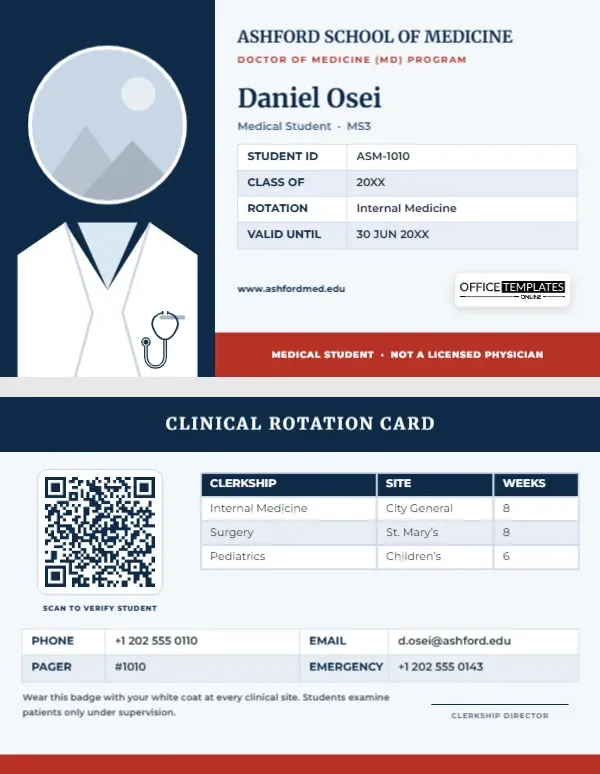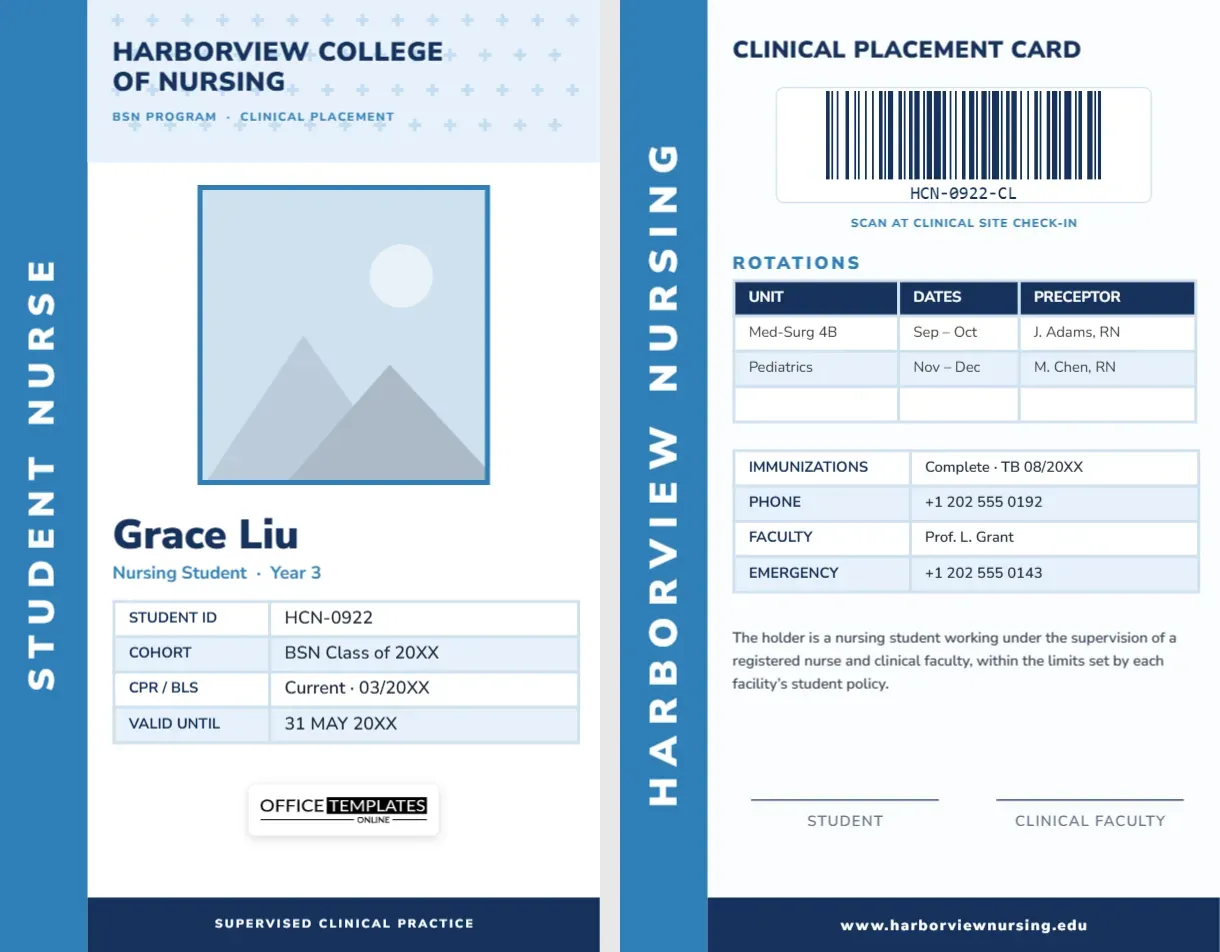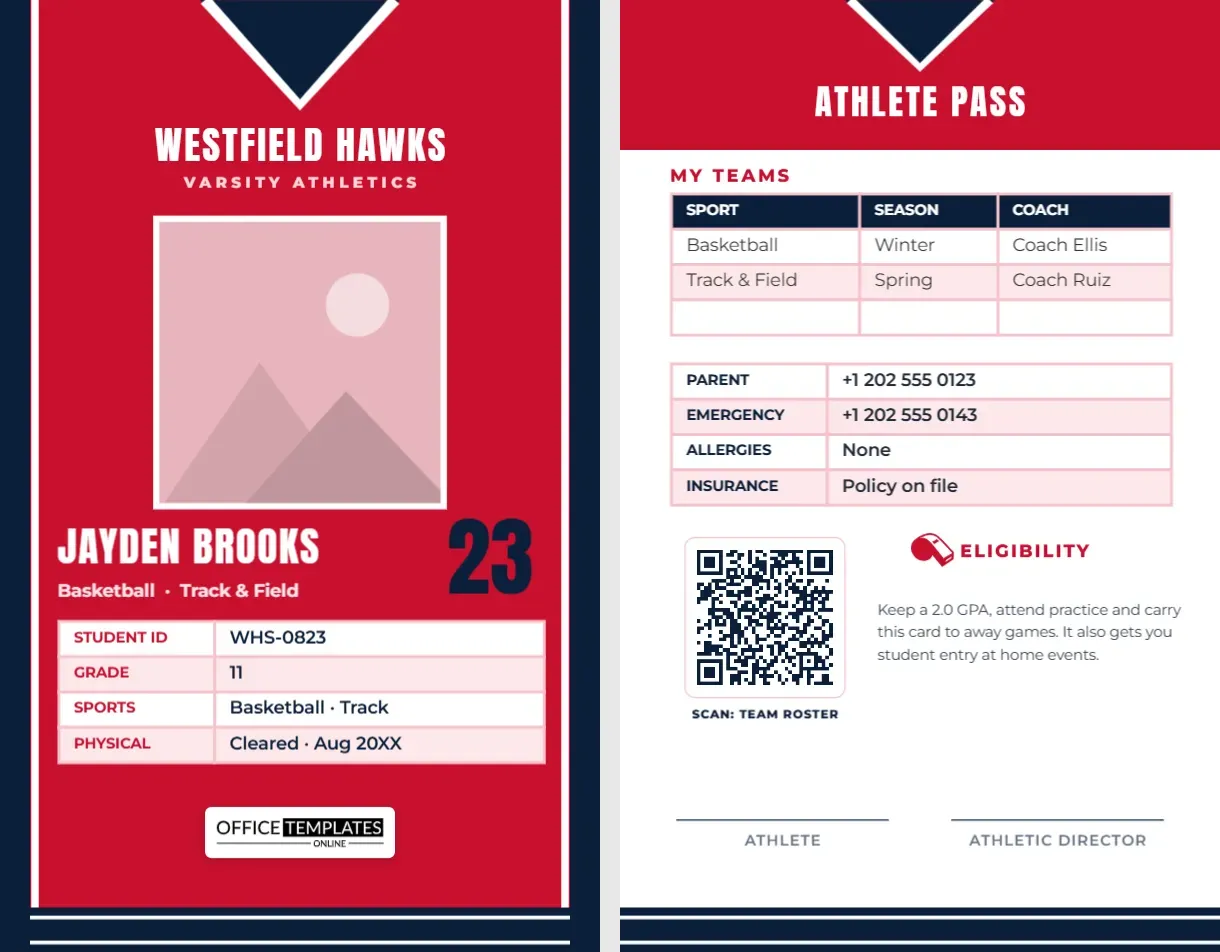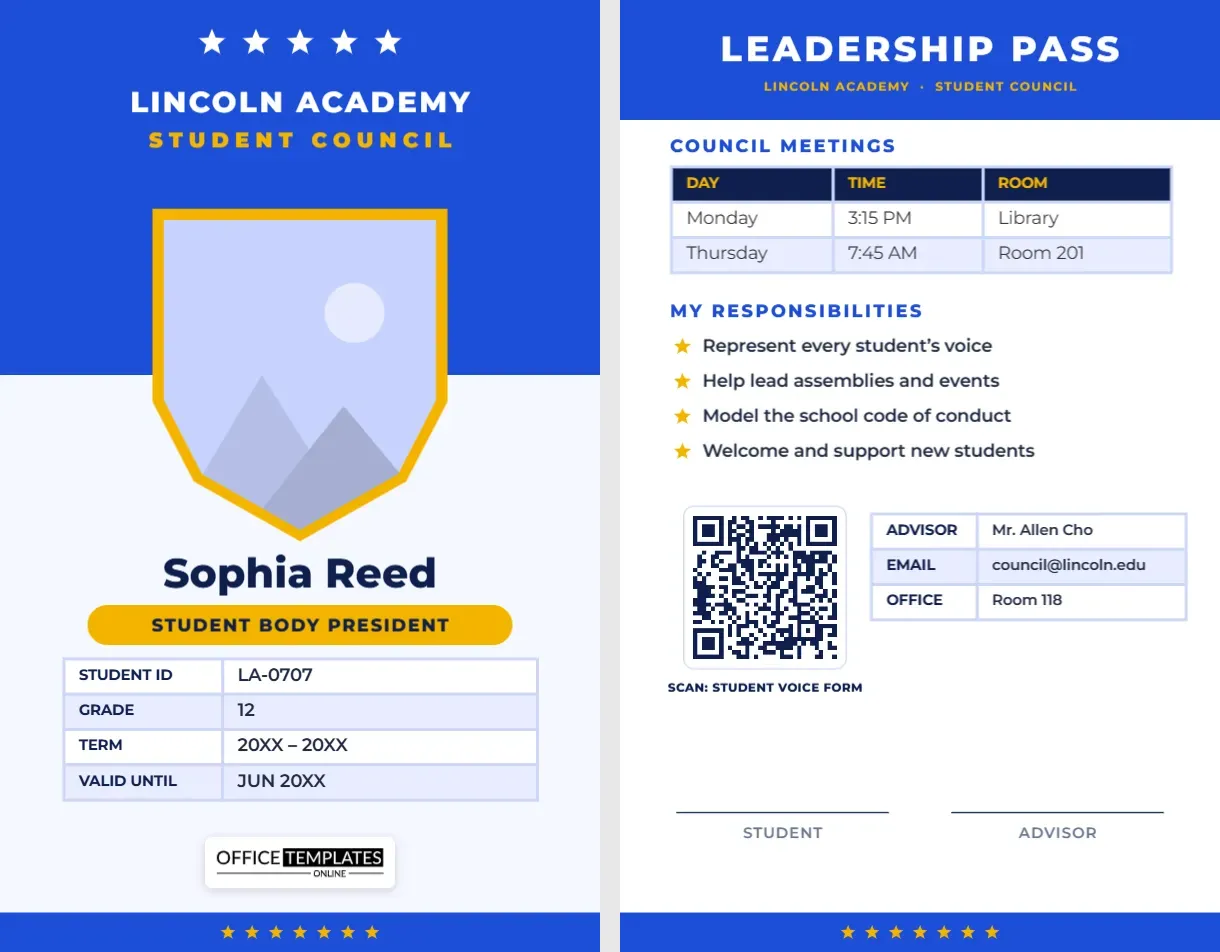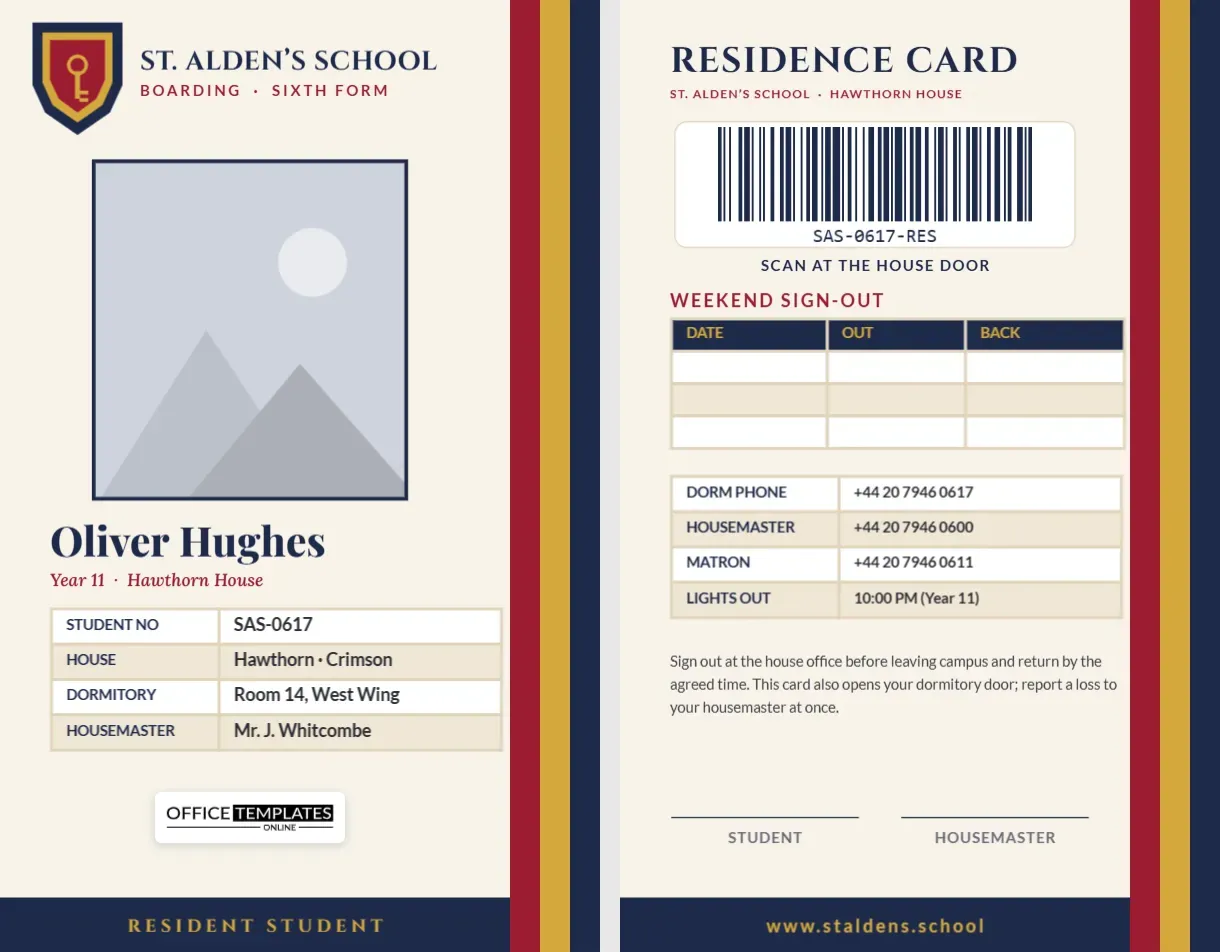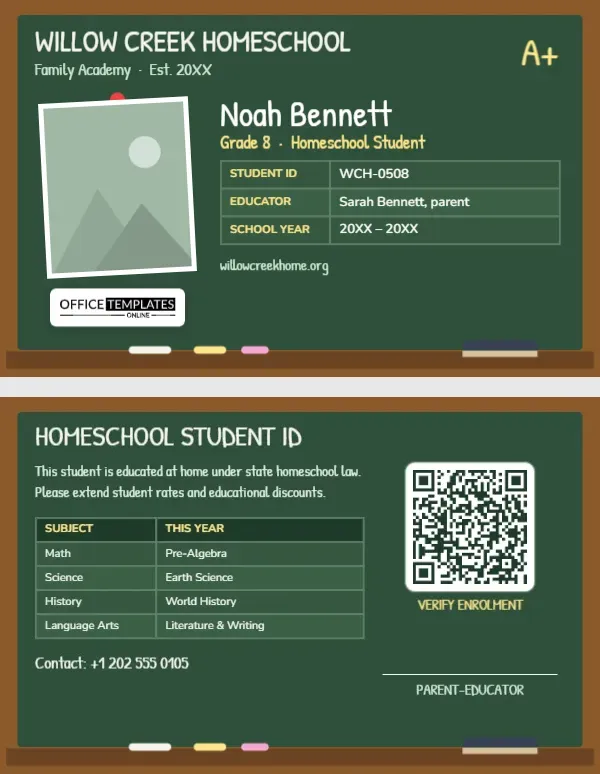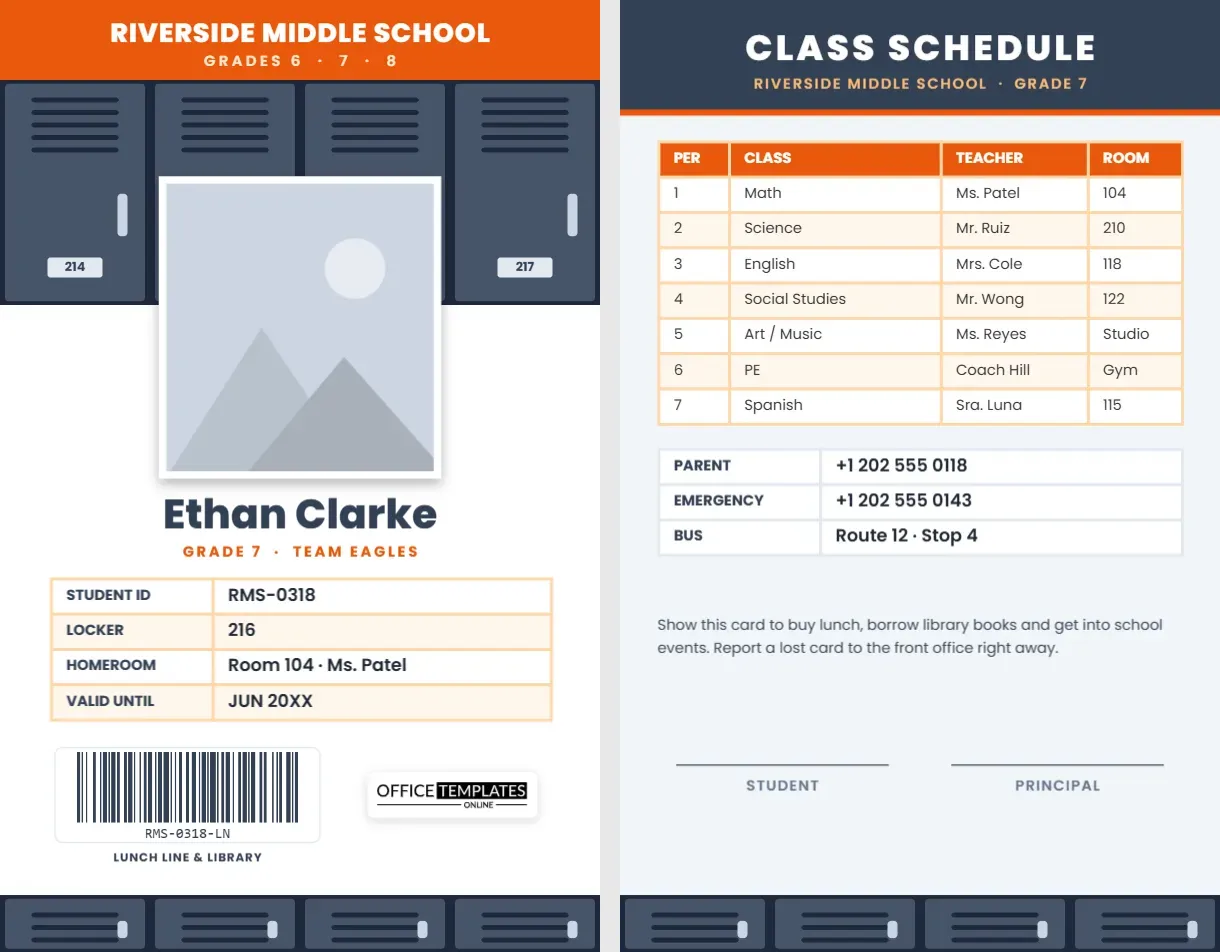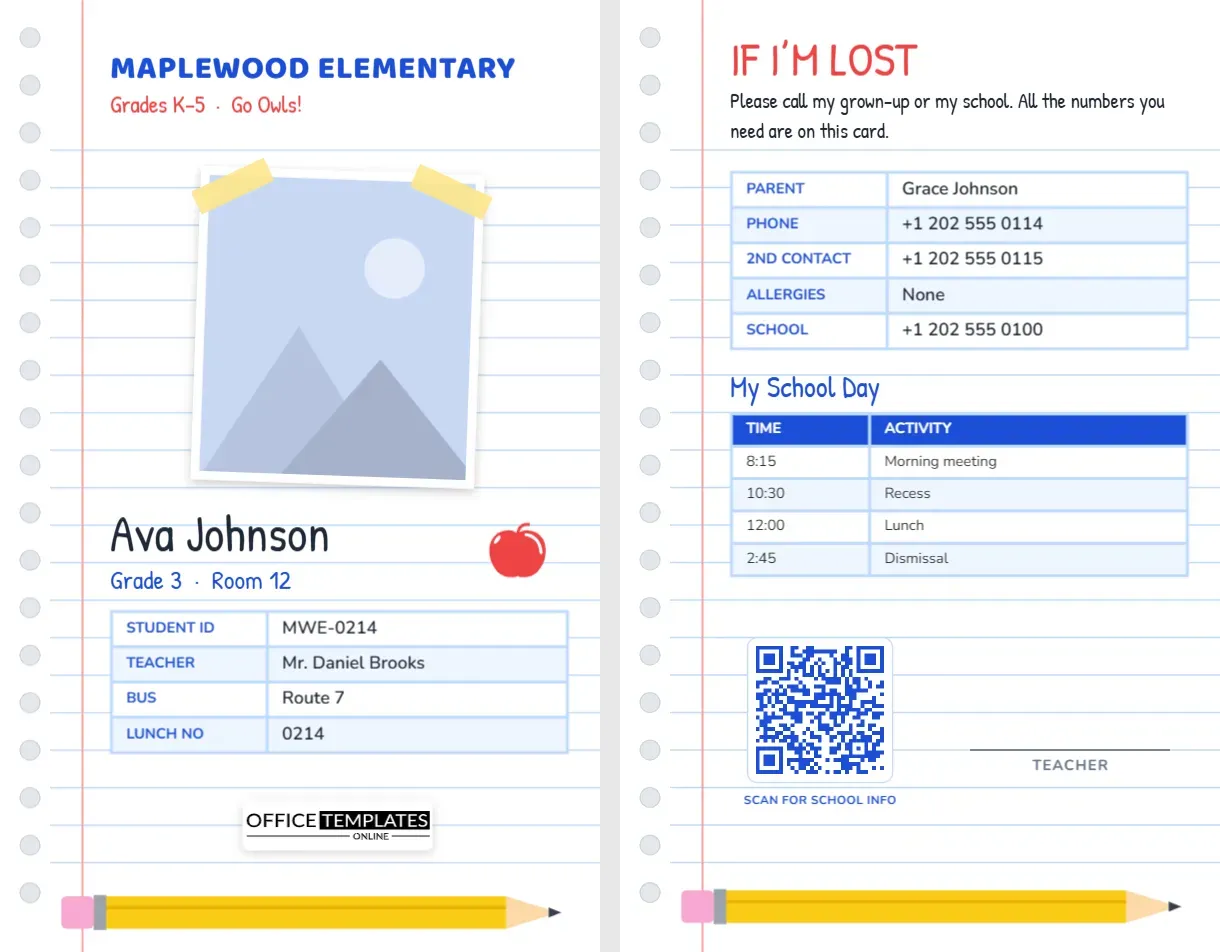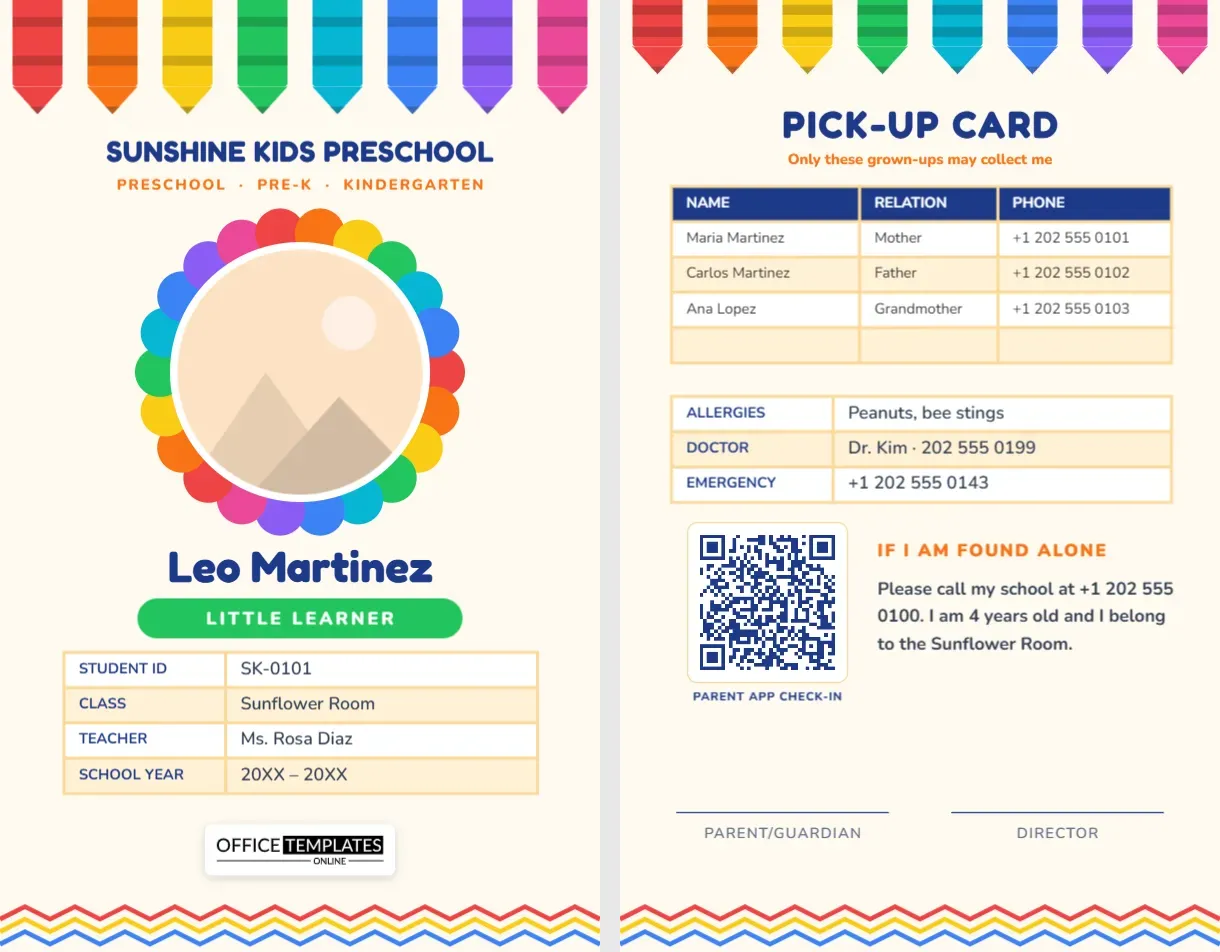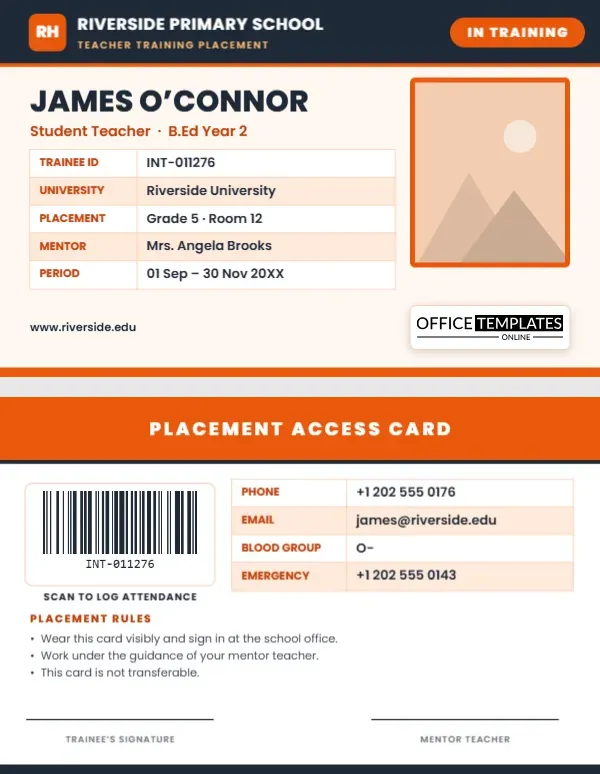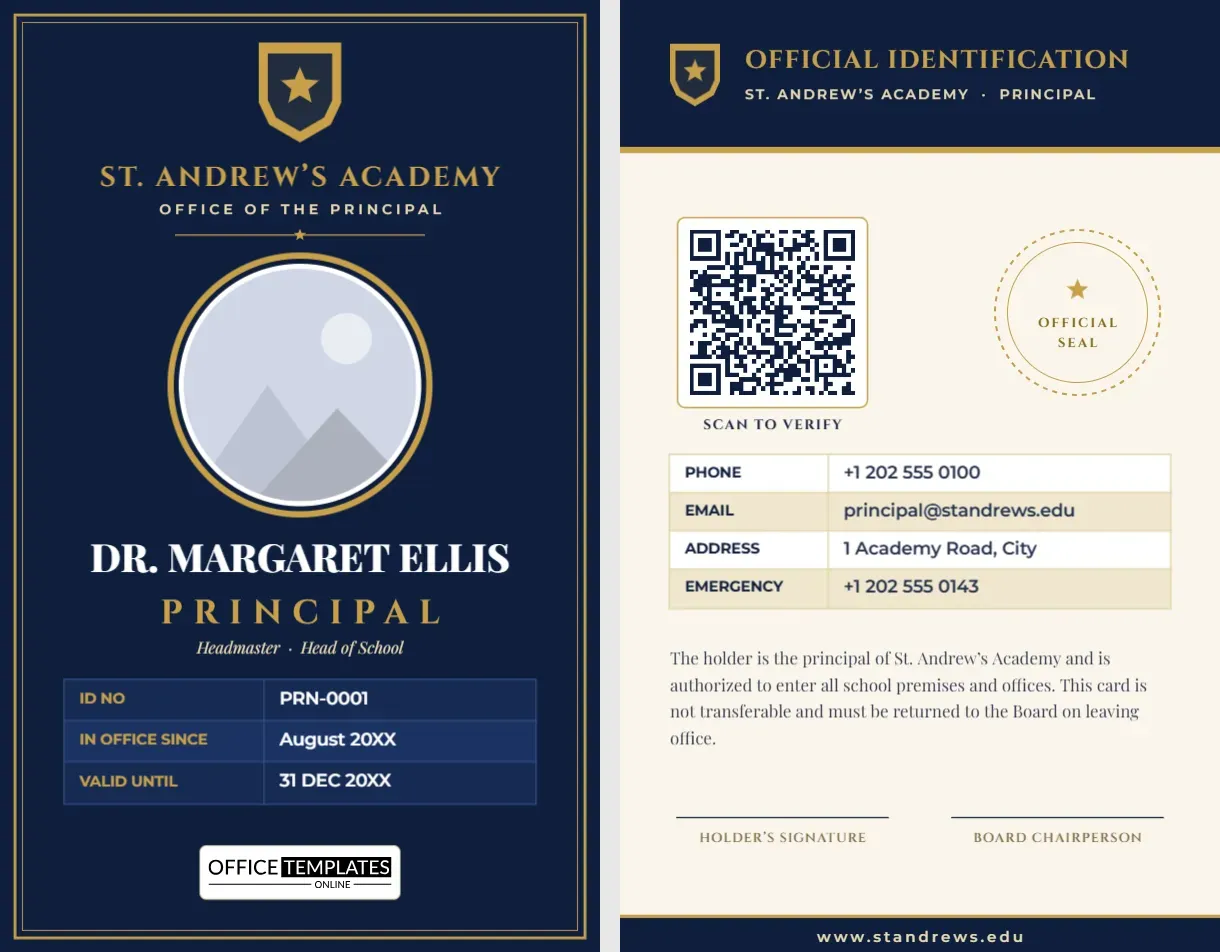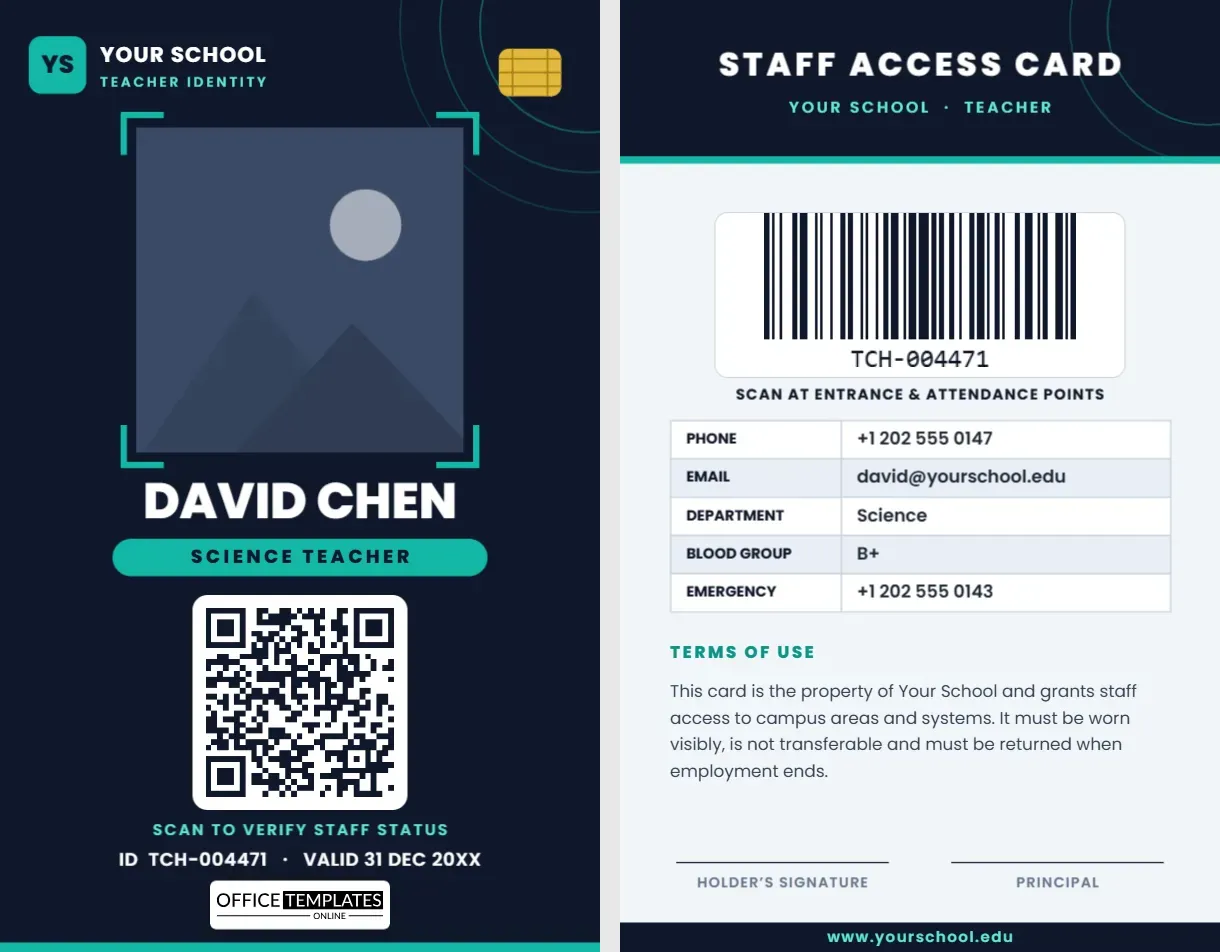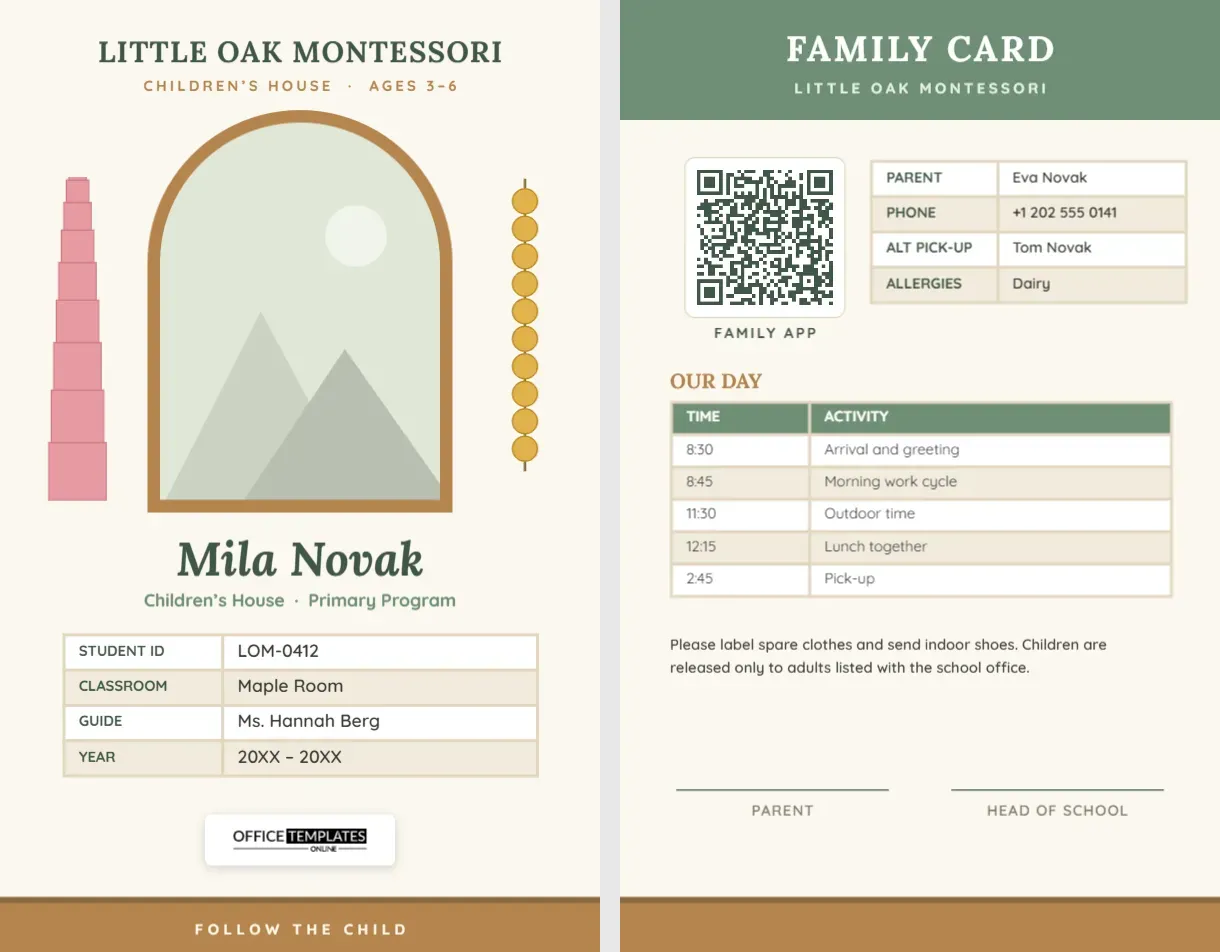
Montessori classrooms are known for their calm: natural wood, soft colours, low shelves and beautiful materials that children can touch and use on their own. A student ID card for a Montessori school should feel the same way. This Montessori student ID card uses a gentle sage, cream, wood, and blush palette, frames the child’s photo in a wooden arch, and places two of the method’s most recognisable materials either side of it: the pink tower and the golden bead bar.
Materials From the Classroom Shelf
At the top of the card, LITTLE OAK MONTESSORI is set in Lora, a warm and readable serif, with Children’s House · Ages 3-6 in wood-brown capitals. Below it, the child’s photo sits inside an arched window with a thick wooden frame, like the arched mirrors and windows found in many Montessori environments.
To the left of the arch stands the pink tower, ten pink cubes stacked from the largest at the bottom to the smallest at the top, one of the first sensorial materials children meet. To the right hangs a golden bead bar, ten gold beads on a wire, the material that introduces the quantity ten in Montessori mathematics. Beneath the arch, the child’s name is written in italic serif, Mila Novak on the sample, with Children’s House · Primary Program in sage. A four-row table lists the student ID, classroom (Maple Room), the guide’s name, and the school year. Our logo sits on a white plate, and a wooden shelf runs along the bottom with the words FOLLOW THE CHILD, Maria Montessori’s well-known guiding principle.
The card is CR80 size in portrait, measuring 2.125 by 3.375 inches.
The Family Card on the Back
The back of the card is designed for families rather than for the child. A sage header reads FAMILY CARD. A QR code labelled FAMILY APP can link to the school’s communication app or photo journal. Beside it, a table lists the parent, phone, alternate pick-up person, and allergies (dairy on the sample). A section called Our Day shows the daily rhythm in a real table: arrival and greeting at 8:30, the morning work cycle at 8:45, outdoor time at 11:30, lunch together at 12:15, and pick-up at 2:45. A short note asks families to label spare clothes, send indoor shoes, and remember that children are released only to adults listed with the office. Signature lines for the parent and head of school sit above the wooden shelf.
A Guide to the Daily Rhythm
| Part of the day | What children do | Why it matters |
|---|---|---|
| Arrival and greeting | Hang coats, change shoes, greet the guide with a handshake | Builds independence and courtesy |
| Morning work cycle | A long, uninterrupted period of freely chosen work | Deep concentration develops over time |
| Outdoor time | Gardening, running, nature exploration | Movement and connection with nature |
| Lunch together | Setting tables, serving, clearing | Practical life skills and community |
| Pick-up | Tidying the environment, goodbyes | Care for shared spaces |
Edit the table to match your own school’s timetable; some programmes run a longer afternoon work cycle for older children.
Making the Card Match Your Environment
- The arched photo: click the picture inside the wooden arch and choose Replace Image; the arch shape trims the child’s photo automatically.
- School name: type your school’s name and the age group of the classroom, such as Toddler Community · 18 months-3 or Lower Elementary · Ages 6-9.
- Classroom details: the ID and family tables open with Edit Data; the daily rhythm table gains extra lines with + Row.
- Materials: the pink tower and bead bar are each a single group. Swap the bead bar for a red rod or remove one if you prefer a simpler card.
- Colours: recolour the sage header and footer to your school’s colours, keeping the soft, natural feel.
- QR code: link it to your family app, newsletter, or photo journal in the Barcodes & QR panel.
Why a Calm Design Matters to Young Children
Montessori education pays close attention to the prepared environment: fewer, better things, chosen for their beauty and purpose. A loud, cluttered ID card would feel out of place. The soft palette and real materials on this card reflect what children see every day, so the card feels like part of their classroom rather than an official document. Children often like to point out the pink tower to their parents, which is a lovely way to start a conversation about their day.
Suitable Programmes
The card works for Montessori Children’s Houses, toddler communities, lower and upper elementary classrooms, Montessori-inspired preschools, home-based Montessori programmes and Montessori summer camps. The family side is also useful for any small, family-centred school that wants a gentle pick-up card.
Printing in Soft, Natural Colours
Muted colours can print darker than expected, so print a test card and check that the cream background stays light and the sage header does not turn grey. A matte finish suits the natural style better than gloss. For young children, laminate the card and attach it to a backpack or cubby rather than a neck lanyard.
Grace and Courtesy at Pick-Up
Montessori classrooms teach grace and courtesy lessons: how to greet someone, how to wait, how to say goodbye. The pick-up routine is a natural place to practise them. Many guides meet each family at the door, shake the child’s hand and hand them over by name, checking the family card only for the first weeks or when a new adult arrives. Keeping the list of approved adults on the back of this card, and updating it whenever arrangements change, makes that calm, personal handover possible even on the busiest afternoon.
Montessori Family Questions
Can I use this for an elementary Montessori class?
Yes. Change the age group line and the daily rhythm; the materials still make sense for older children.
Is “Follow the Child” editable?
It is a simple text line on the shelf; change it to your school’s motto if you prefer.
Can I print a card for each guide as well?
Yes. Duplicate the template and change the child’s details to the guide’s name and role.
Open the template, place the child’s photo in the wooden arch, and share a calm, beautiful family card that reflects your classroom.