Why parishes keep a written record of faith formation
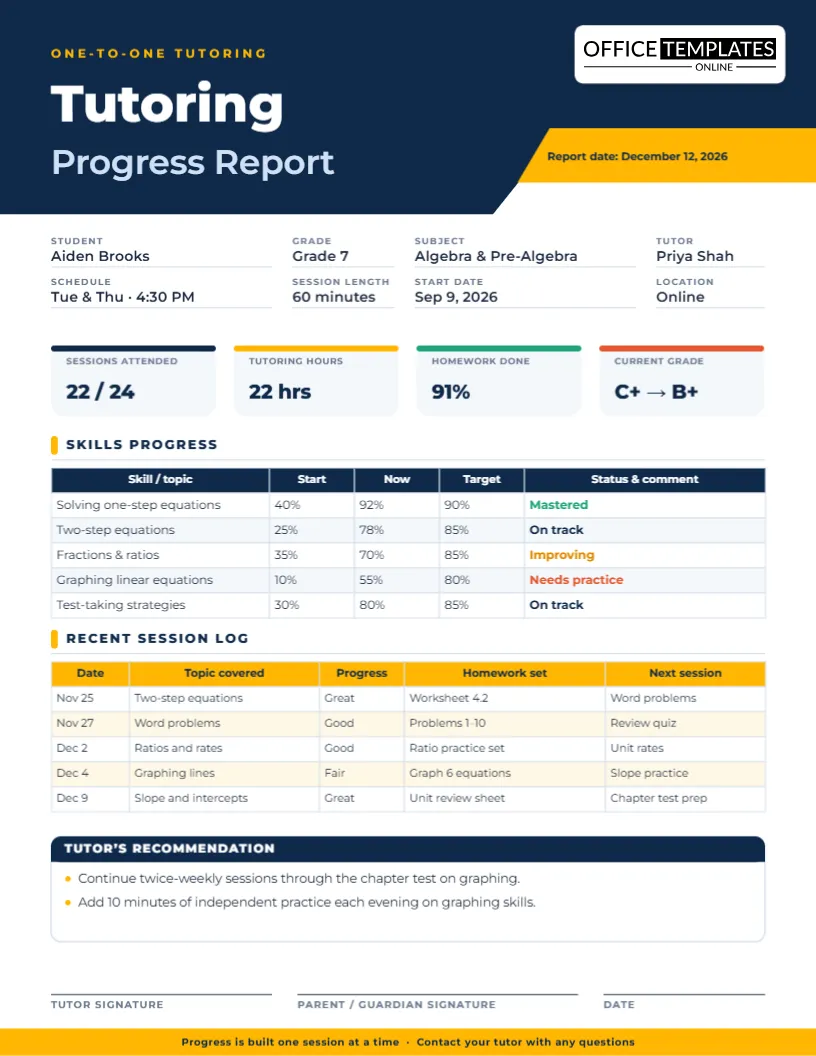
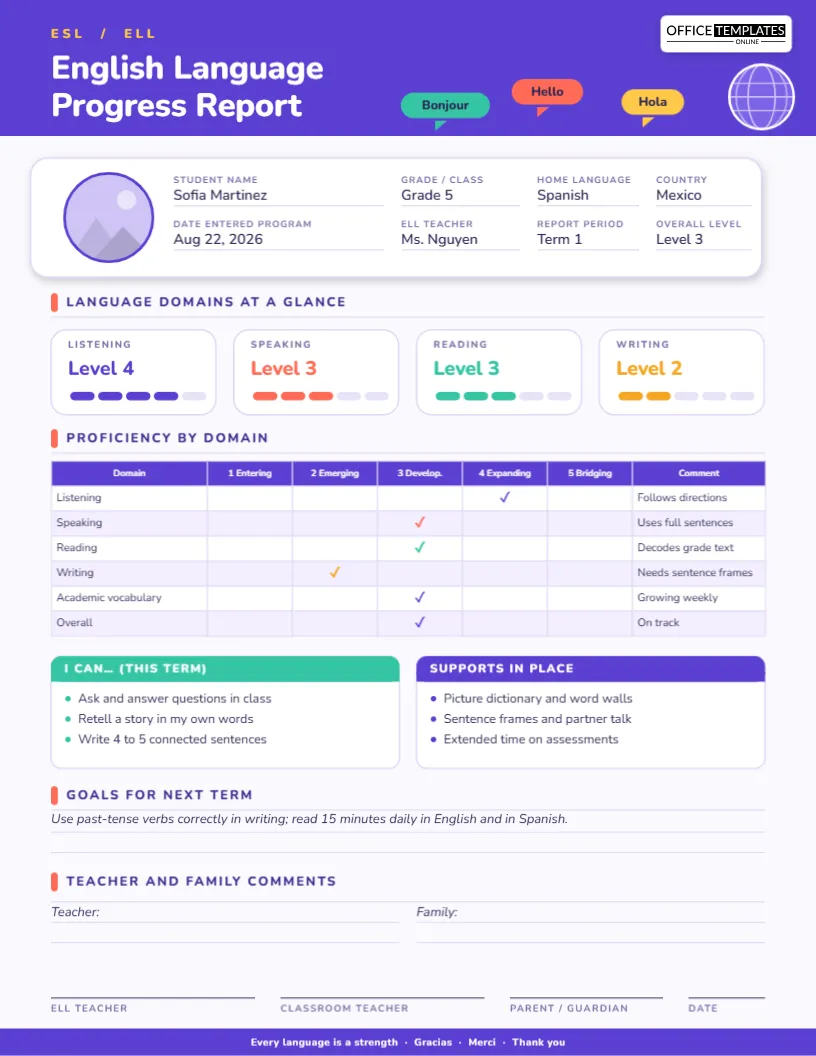
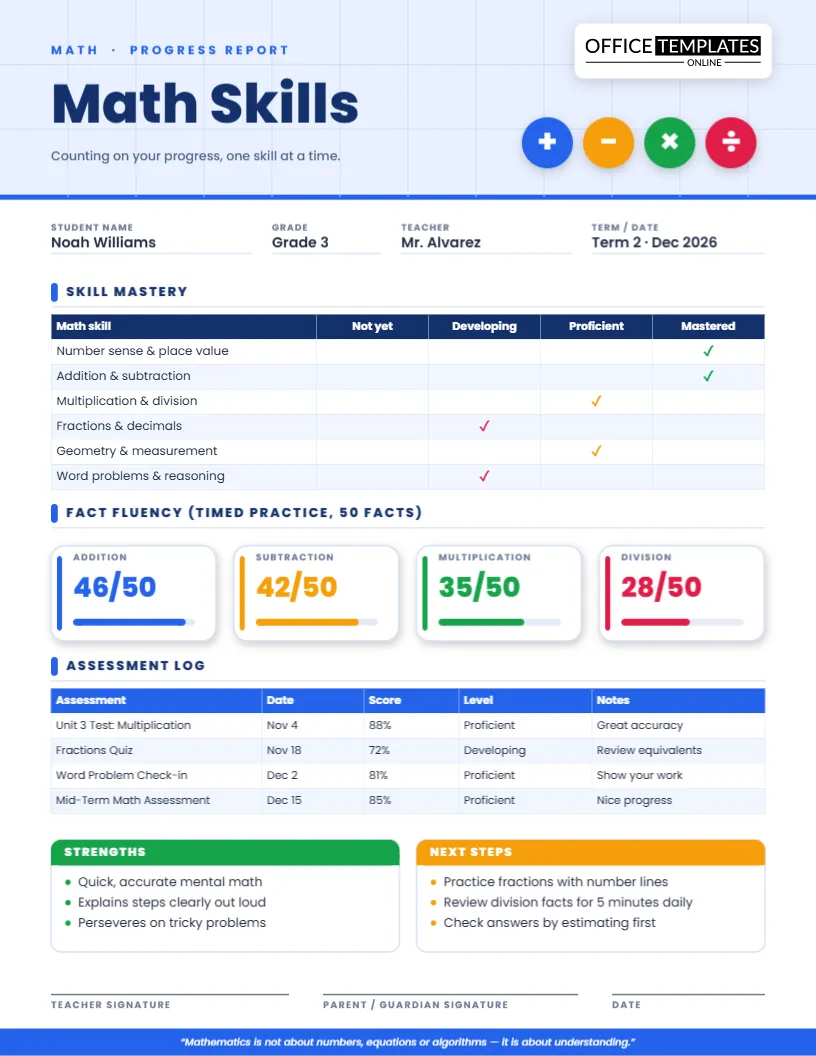
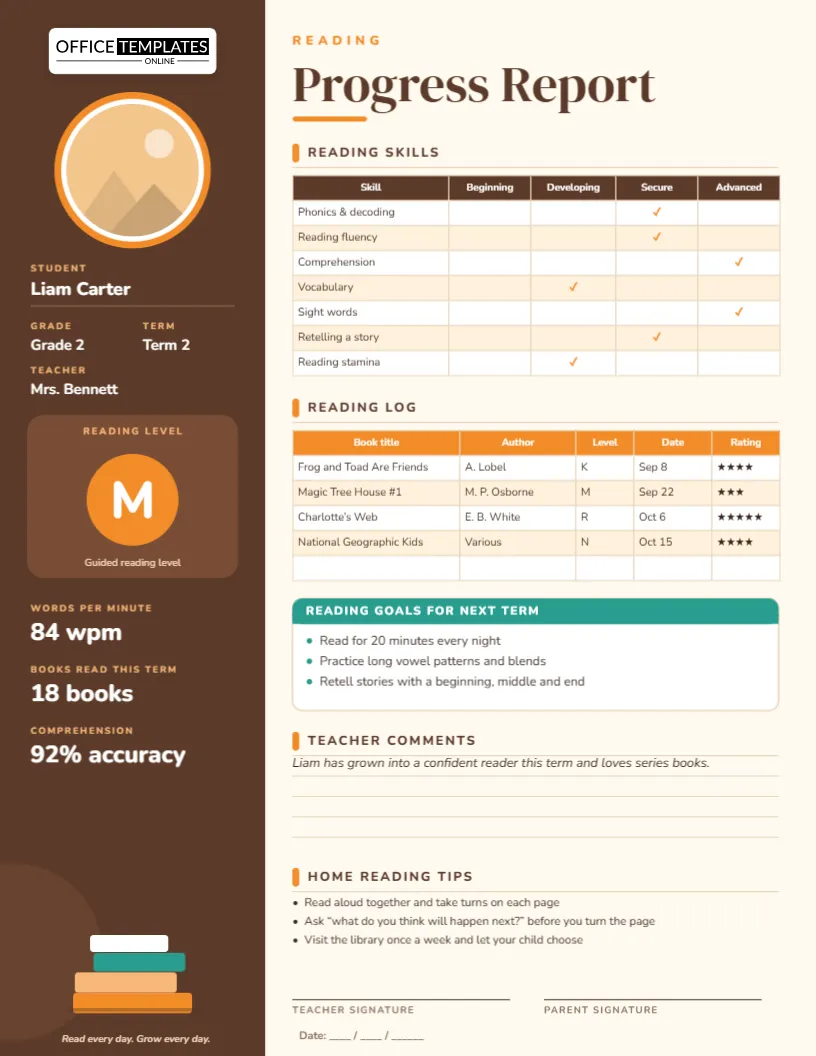
Preparing a young person for First Communion, Confirmation or another milestone is a journey of many months. Catechists, parents, sponsors and clergy all take part, and each of them needs a clear picture of where the student is. A written catechism class progress report gathers that picture in one dignified page: what the student has learned, what preparation is complete and what remains. This template is designed for exactly that purpose, in a formal navy and gold style that suits the seriousness of the occasion.
Anatomy of the page
The header and rose window
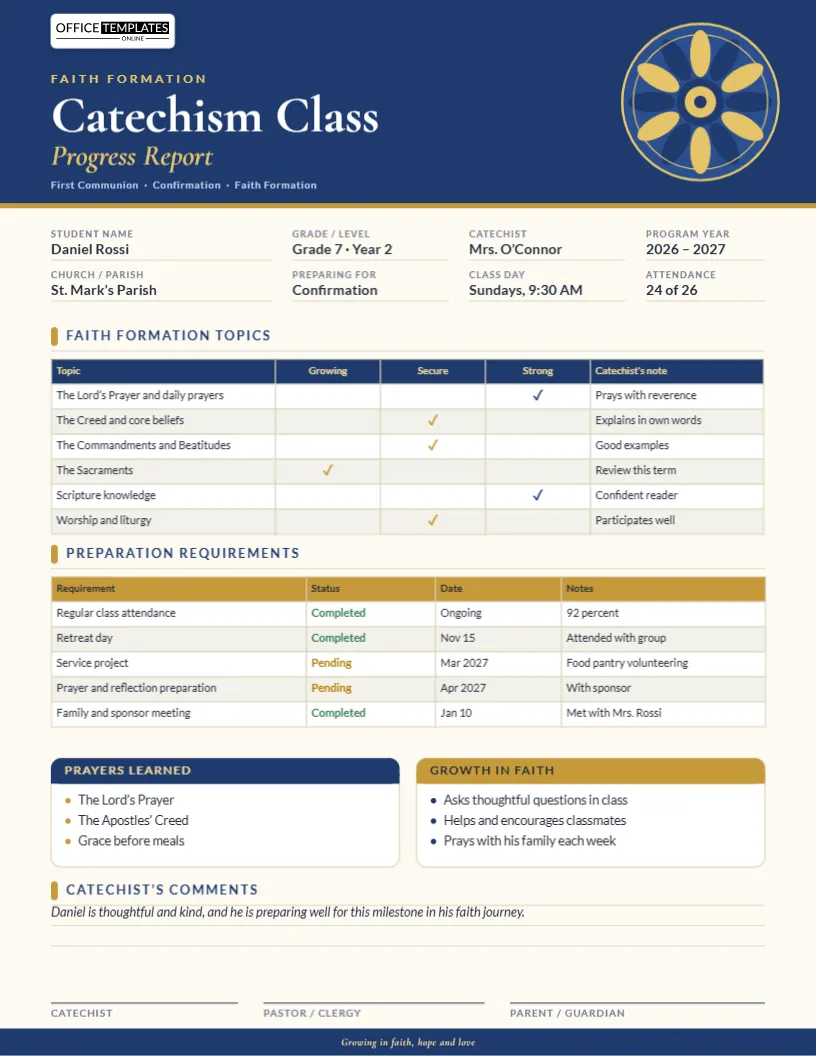
A navy header carries the title “Catechism Class Progress Report” and a small line naming First Communion, Confirmation and faith formation. A geometric rose window in gold and blue sits at the right, and our logo plate sits at the left. Edit the title and subtitle to match your program, for example “Confirmation Preparation” or “Religious Education”.
Student and program details
Eight fields cover the student’s name, grade or level, catechist, program year, church or parish, the milestone they are preparing for, class day and attendance.
Faith formation topics
A table lists six topics: the Lord’s Prayer and daily prayers, the Creed and core beliefs, the Commandments and Beatitudes, the Sacraments, Scripture knowledge, and worship and liturgy. Tick Growing, Secure or Strong for each, and add a short note. These topics are common in many traditions, but every word can be changed, so you can follow your own curriculum, catechism or textbook.
Preparation requirements
A second table works as a checklist of milestones: class attendance, a retreat day, a service project, prayer and reflection preparation, and a meeting with family or sponsor. Each row has a status, a date and a note, and the status is color-coded for quick reading. Add, remove or rename rows to reflect your diocese’s or church’s requirements.
Prayers learned and growth in faith
Two boxes complete the middle of the page. One lists prayers learned, such as the Lord’s Prayer, the Apostles’ Creed and grace before meals. The other describes personal growth, for example asking thoughtful questions or helping classmates.
Comments and signatures
The catechist writes a short reflection, and three signature lines let the catechist, the pastor or clergy and a parent sign. The footer carries a simple message, “Growing in faith, hope and love”, which you can change.
A word about different traditions
Churches prepare their young people in many ways, and terminology varies widely. That is why this template avoids doctrinal claims and leaves every heading and line editable. A Catholic parish can use the sample topics almost as they are, an Anglican or Lutheran church can adjust them for confirmation classes, and other traditions can adapt the layout for baptism or membership classes. Use your own church’s language throughout.
Tips for catechists
- Begin comments with what the student does well before mentioning what to work on.
- Describe growth in faith through actions you have seen, such as kindness, curiosity or reverence.
- Keep requirement dates up to date so parents are never surprised near the milestone.
- Record retreat attendance and service hours as they happen, not at the end of the year.
- Invite the student to set one personal goal and add it to the comments.
Notes for parents and sponsors
Parents can use the report as a conversation starter at home. Ask the student what they enjoyed most in class, which prayer they like best and what question they still have. A sponsor or mentor can look at the requirement table to see where they can help, for example by joining a service project or praying with the student. When the report is shared before the milestone, families feel included and informed.
Filling in the report
- Open the template in the editor and update the title, program and student details.
- Move the ticks in the topics table and add catechist notes.
- Update the requirements checklist with statuses and dates.
- Write the two boxes and the comments, then add signatures.
- Download the report as a PDF, PNG or JPG.
Printing the report
The report is US Letter, 8.5 x 11 inches. Print at actual size on ivory or white paper of around 24 to 28 lb for everyday use, or heavier stock for a formal end-of-year copy. Download the PDF for printing, or the PNG or JPG to email to a family. Keep a copy in the parish’s formation records.
Frequently asked
Can I use it for First Communion and Confirmation alike?
Yes. Change the “Preparing for” field and adjust the topics and requirements.
Can I add a second catechist?
Yes. Add a name to the catechist field or an extra signature line.
Can I remove the rose window?
Yes. Select the shapes and delete them, or recolor them to suit your church.
A sample formation calendar
- September: Parent meeting, class begins and first report started.
- November: Retreat day and mid-year check-in with the catechist.
- January: Family and sponsor meeting; review of topics on the report.
- March: Service project and preparation for reconciliation or reflection, according to your tradition.
- April and May: Final review, signatures and celebration of the milestone.
Working with sponsors and mentors
Many traditions ask a sponsor, godparent or mentor to accompany the student. Share the report with them, and invite them to add a short comment or to attend one session. When students know that a trusted adult is following their journey, they often take their own preparation more seriously.
Keeping records securely
Formation records include personal information about children, so store them with care. Keep digital copies in a password-protected folder, share the report only with parents or guardians and authorized clergy, and follow your diocese’s or church’s record-keeping guidance. Print copies should be filed with the sacramental preparation records and kept for the period your church requires.
Making the end of the year meaningful
When the year of formation ends, invite the family to meet the catechist for a few minutes and read the report together. Thank the student for their effort, mention one moment you will remember and offer a short blessing or prayer. A report handed over with warmth and a personal word is far more than a piece of paper; it becomes a reminder that the whole community walked beside them.
Give every family a dignified record of their child’s preparation. Open the template, add the details and download a polished progress report.