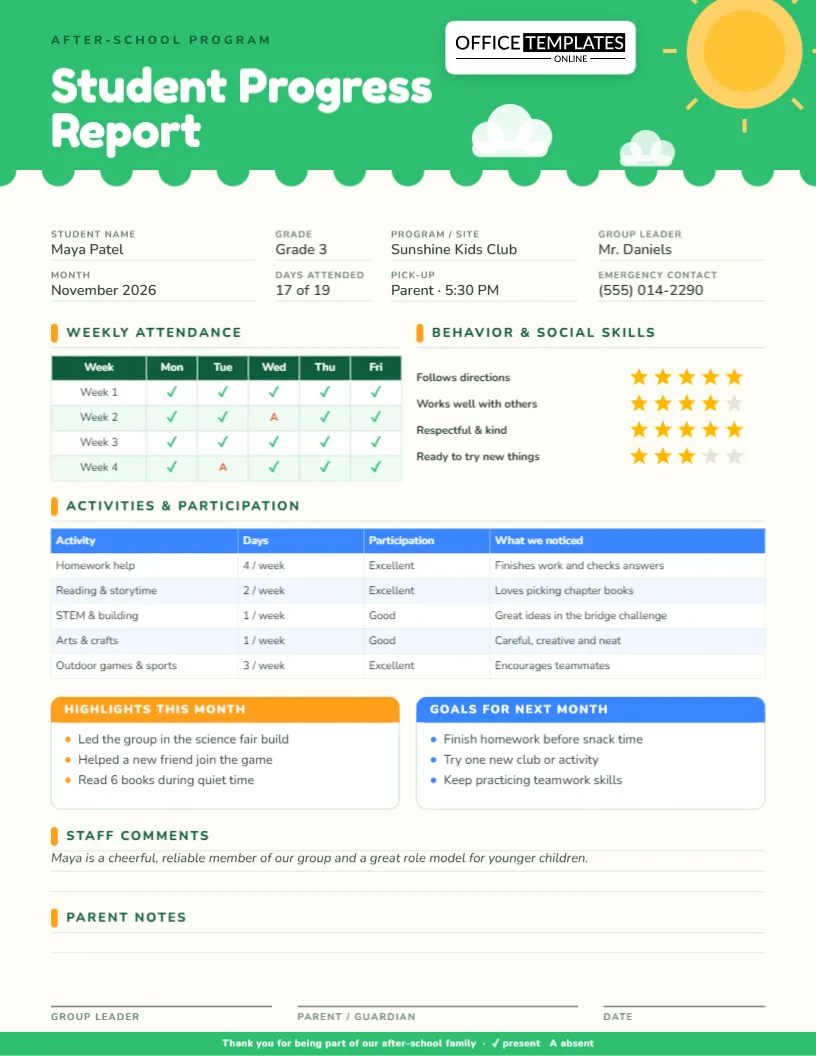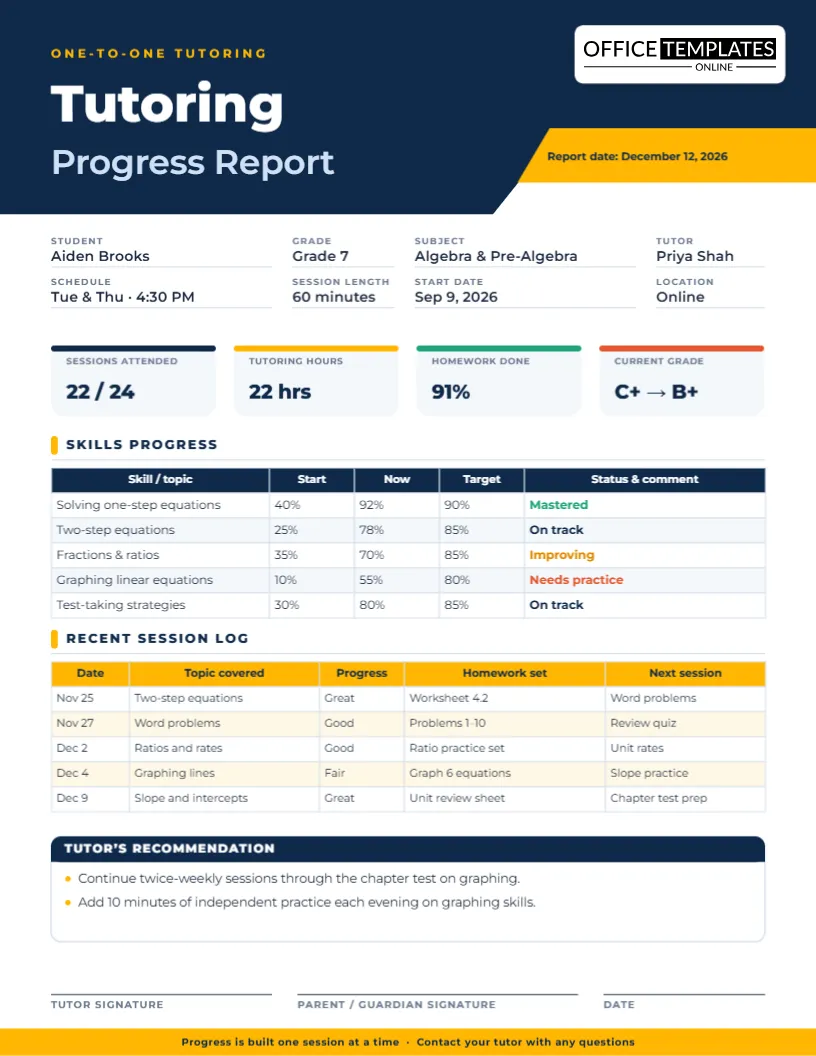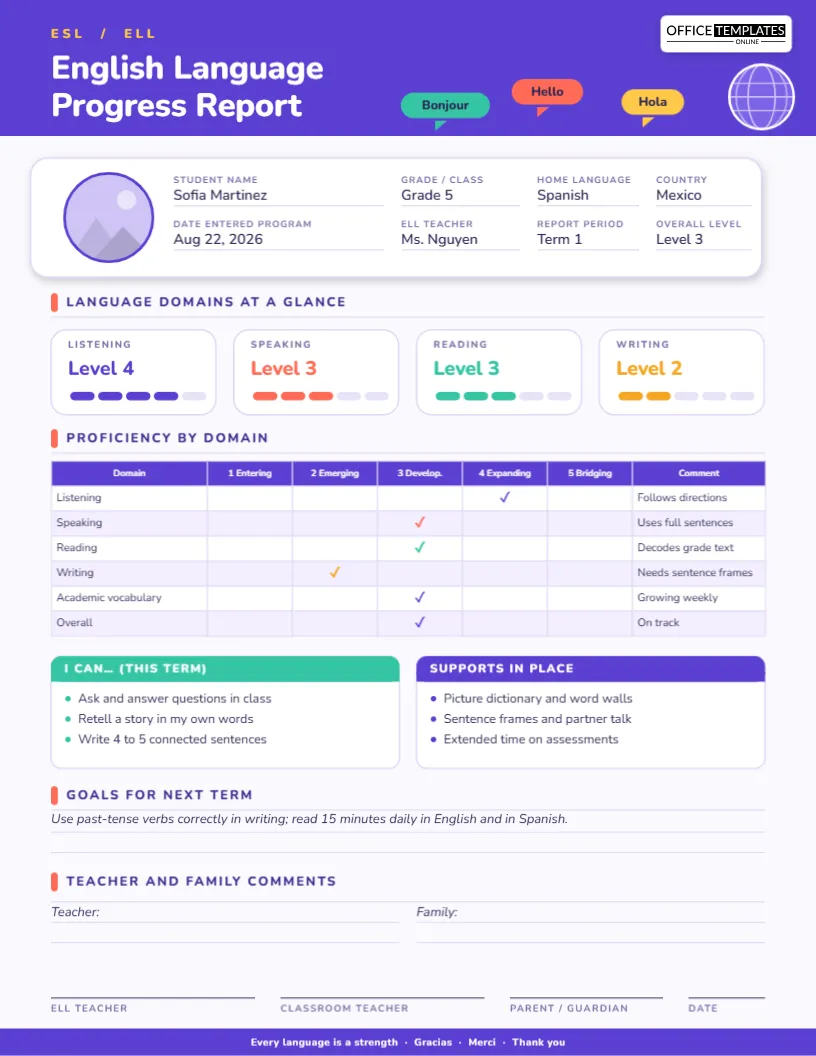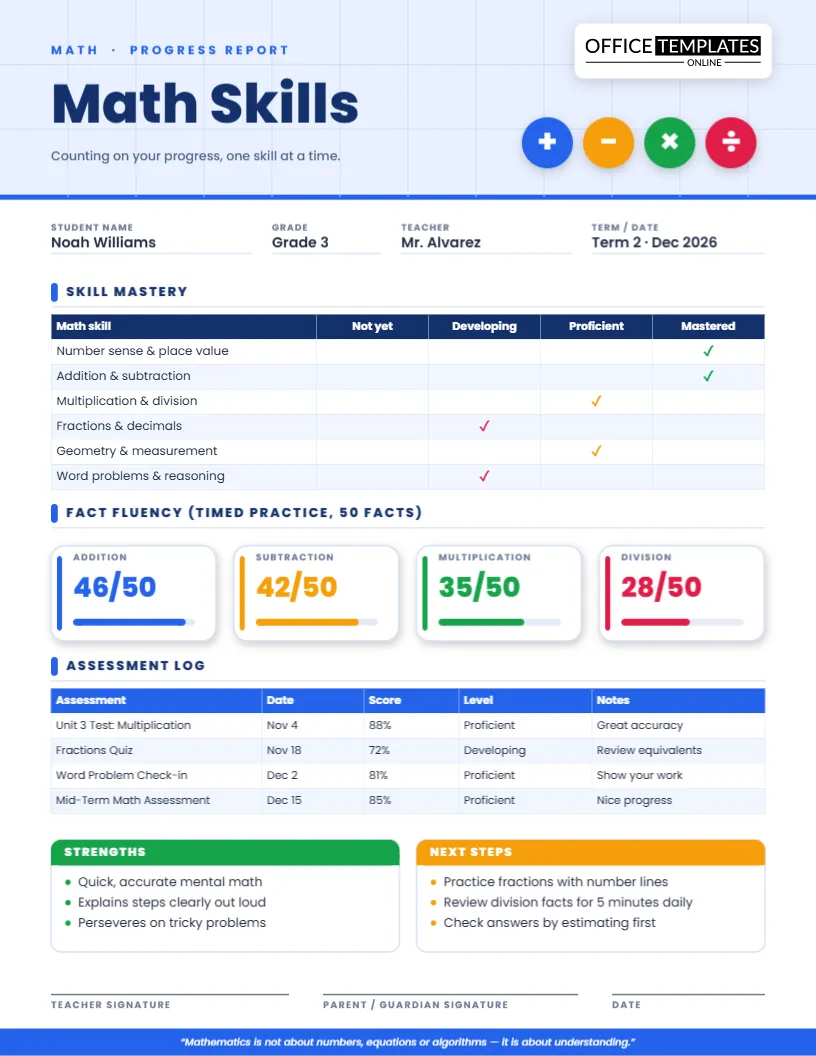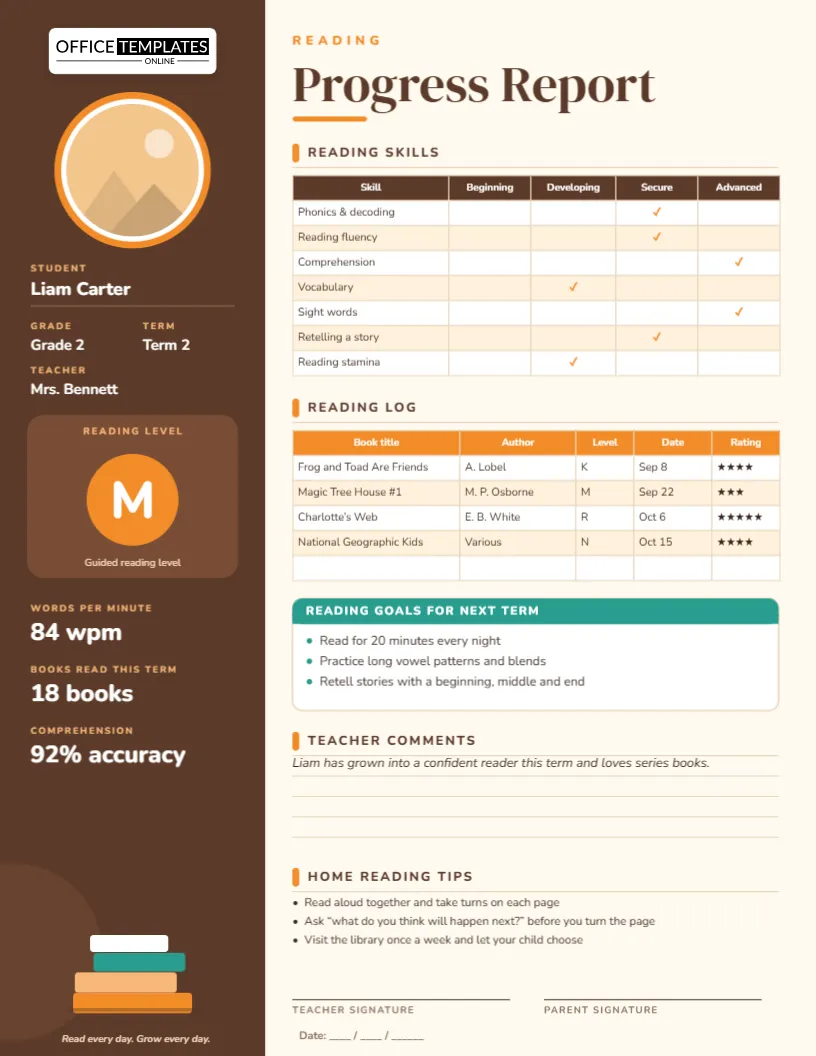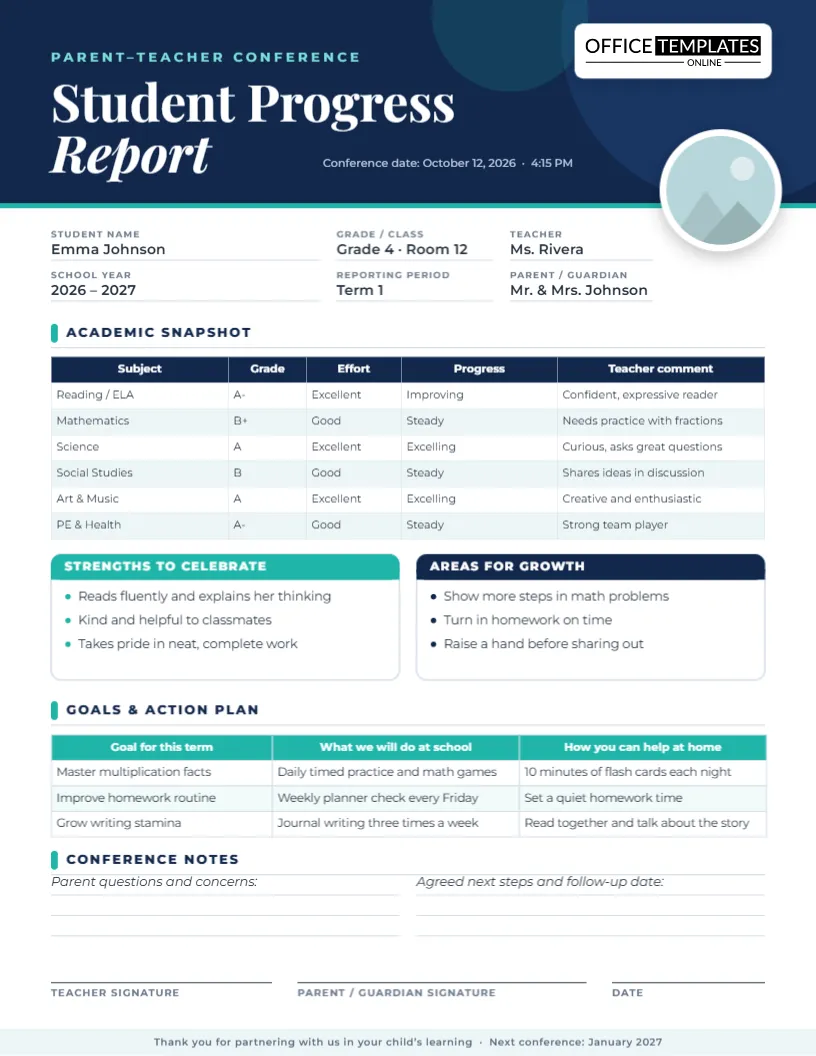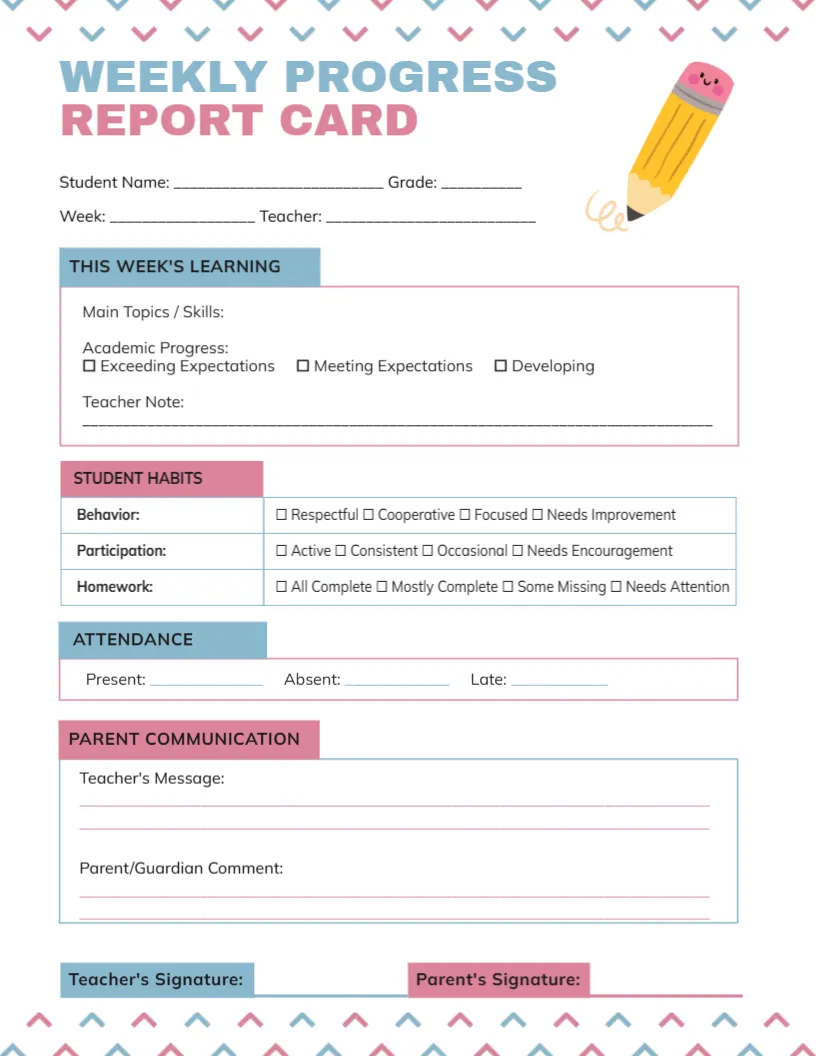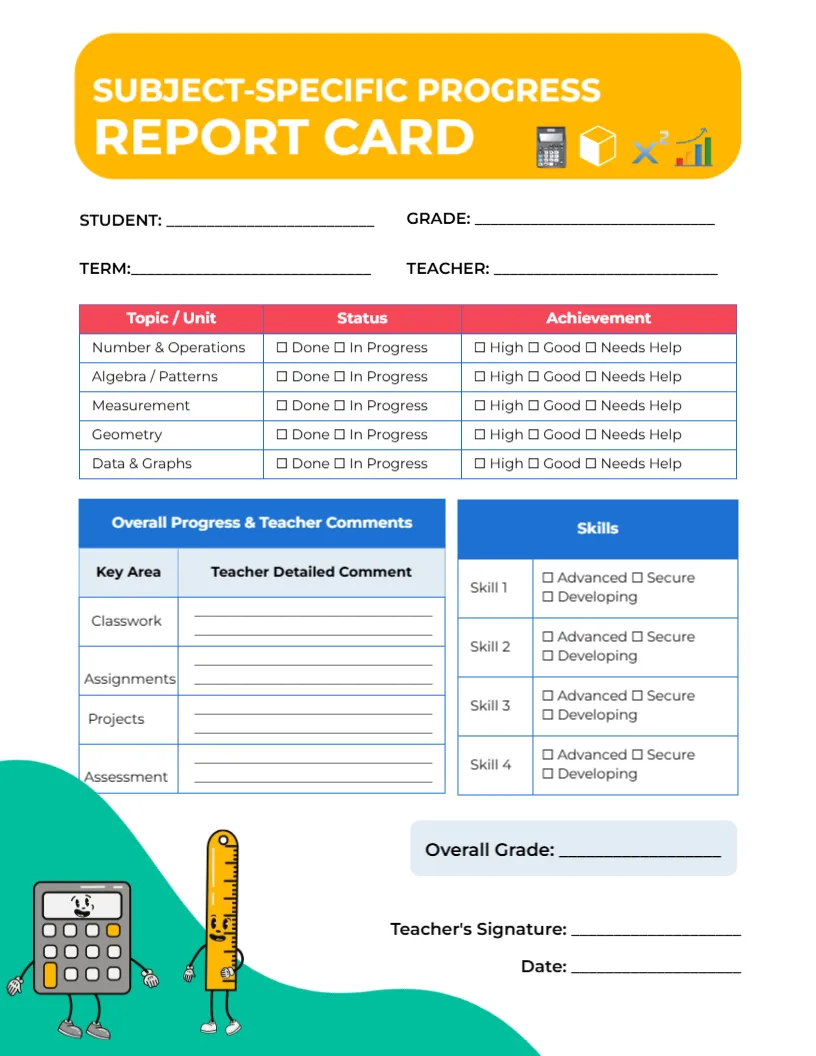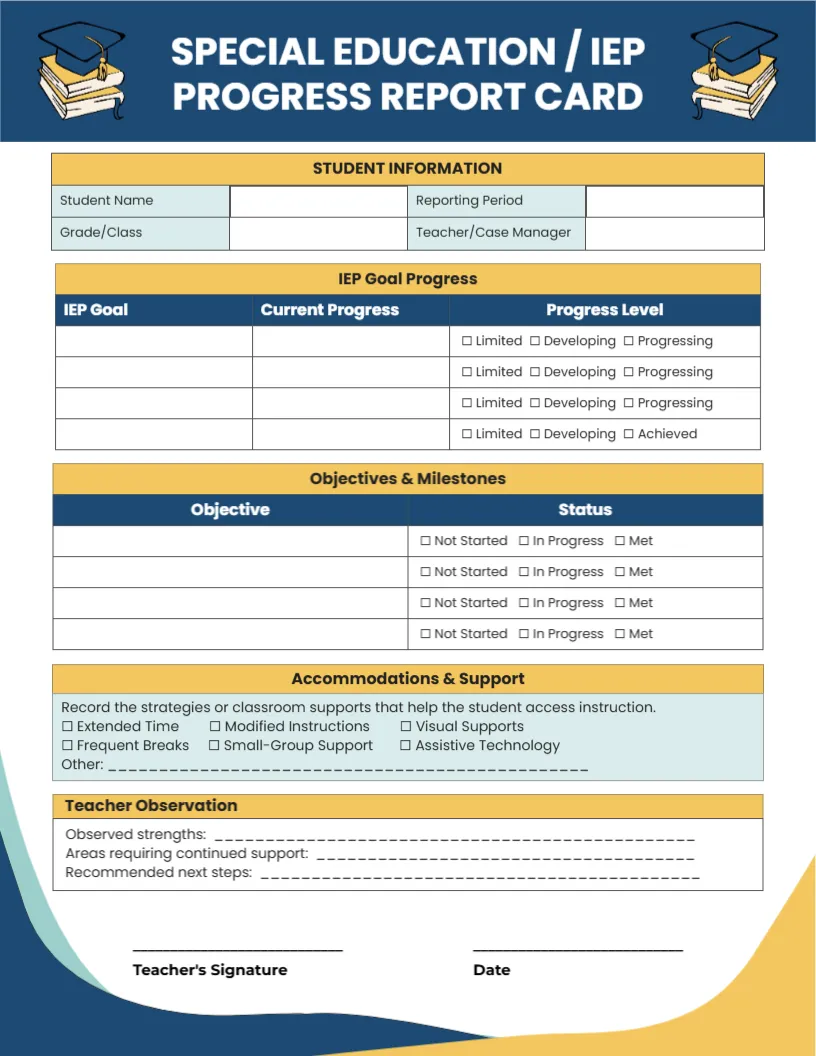
Special Education / IEP Progress Report Card Template
Track individualized achievement with clarity and purpose. The Special Education / IEP Progress Report Card Template gives educators a professional way to document student development according to individualized learning goals. Rather than relying on general grades, it brings attention to measurable objectives, progress levels, accommodations, and teacher observations.
For special education teams, this distinction matters. Every learner has different goals, support requirements, and rates of development. Therefore, progress documentation should reflect the student’s individual plan instead of using a standard approach for every learner.
Turn IEP Goals Into Meaningful Progress Records
An IEP outlines specific educational goals. However, those goals become more useful when progress can be reviewed consistently throughout the year.
This report card provides space to connect each broad goal with related objectives. Teachers can then indicate the student’s current level of achievement and add concise evidence where needed. As a result, the completed report offers a clearer picture of development during the selected reporting period.
A More Focused View of Achievement
Instead of combining multiple skills into one overall grade, educators can review objectives individually. Consequently, it becomes easier to recognize which skills are developing and which ones require additional instruction.
Progress indicators can include:
- Not Yet Demonstrated
- Emerging
- Developing
- Progressing
- Achieved
These concise descriptions help communicate gradual improvement without reducing student development to a single number.
Put Progress Into Context
A progress level alone does not always explain the full picture. For this reason, the template allows educators to document the circumstances surrounding the student’s performance.
Accommodations That Support Learning
Teachers can record the classroom accommodations and instructional supports used during the reporting period. These may include:
- Extended time
- Visual prompts
- Modified activities
- Small-group instruction
- Repeated directions
- Assistive technology
- Guided practice
By recording these details, educators can show how the learning environment supported the student’s participation and skill development.
Evidence From the Classroom
In addition, brief teacher observations can add valuable context. A concise note might describe the level of independence, prompting required, task completion, participation, or application of a particular skill.
For example, a teacher may note that a student completed an activity independently after previously requiring frequent prompts. Such observations make progress easier to understand because they describe an actual change in performance.
Recognize Development Beyond a Grade
Some improvements are difficult to express through traditional grading. A student may communicate more effectively, complete tasks with fewer prompts, participate more consistently, or apply a skill in a new setting.
Therefore, the report makes room for observations that complement measurable progress. These comments can remain brief while still providing useful information for families and educational teams.
Keep Comments Specific
Professional observations are most useful when they focus on what was seen or demonstrated. Instead of broad statements, educators can record a particular skill, behavior, or change that occurred during instruction.
This approach also makes future progress easier to compare.
Identify What Comes Next
Progress reporting should not only describe the past. It can also help inform continued instruction.
If an objective remains in development, teachers can identify the area that needs further attention. For instance, the next instructional focus might involve additional practice, reduced prompting, repeated instruction, or opportunities to apply a skill independently.
Consequently, the report becomes more than a record of completed work. It supports continuity between one reporting period and the next.
Create a Consistent IEP Reporting Process
Special education documentation may involve teachers, case managers, families, specialists, and school administrators. Since several people may review the same information, consistency is important.
The Special Education / IEP Progress Report Card Template organizes essential information in one professional document. Furthermore, its editable format allows educators to adapt goal descriptions, objectives, progress terminology, support information, and observation areas according to their reporting requirements.
It can be used for regular IEP progress updates, parent communication, educational records, and reporting-period documentation.
Keep the Student at the Center
Ultimately, effective progress reporting should show more than whether a student received a passing grade. It should communicate what the student is working toward, how performance is developing, what support has been provided, and where continued instruction may be needed.
With the Special Education / IEP Progress Report Card Template, educators can document these details clearly and professionally. Download the editable template, customize it for individual learning goals, and create focused progress reports that make student development easier to communicate and review.