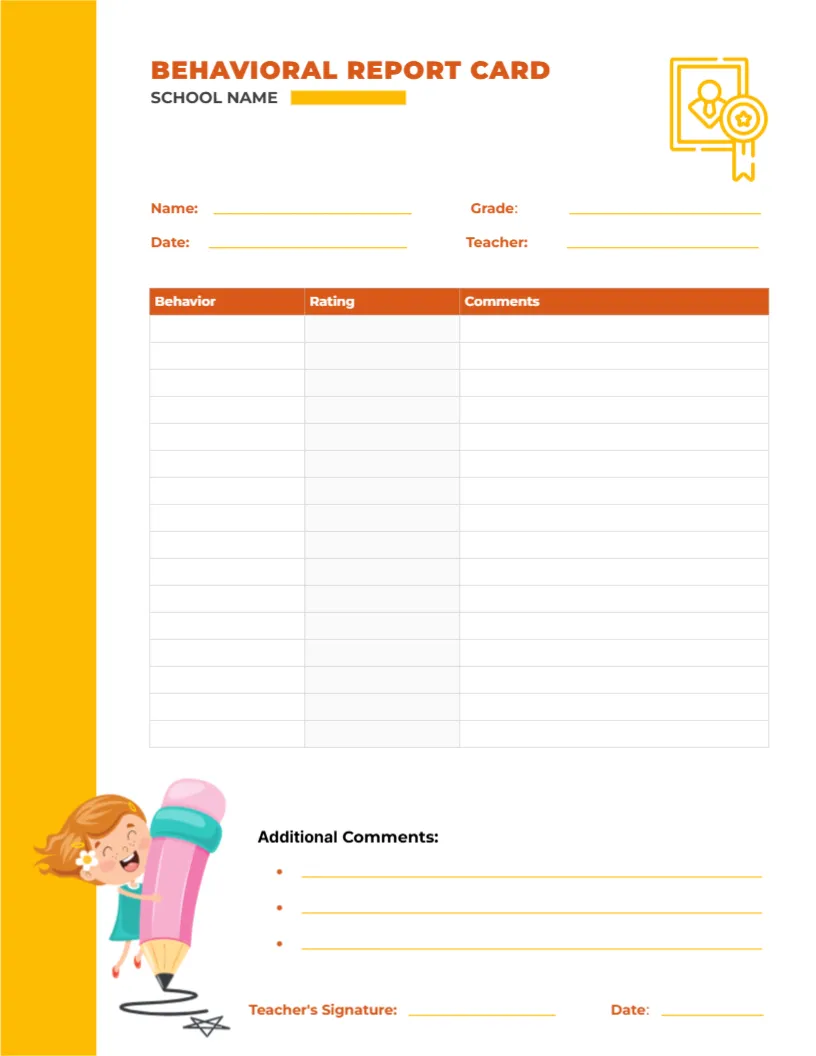
An Orange Behavior Table Beside a Yellow Side Stripe
A tall yellow stripe runs down the left edge of this page, and BEHAVIORAL REPORT CARD is set in bold orange capitals with SCHOOL NAME and a yellow tab below. An award ribbon icon sits on the right. Name, Grade, Date, and Teacher lines lead to an orange-headed table with thirteen rows, and a girl hugs a giant pink pencil at the foot.
A Letter Page With a Tall Table
The page is 8.5 x 11 inches. Thirteen rows are more than most teachers will use, so you can list a full set of behaviours, or trim the rows for a short class conduct note.
Behaviors, Ratings and Comments
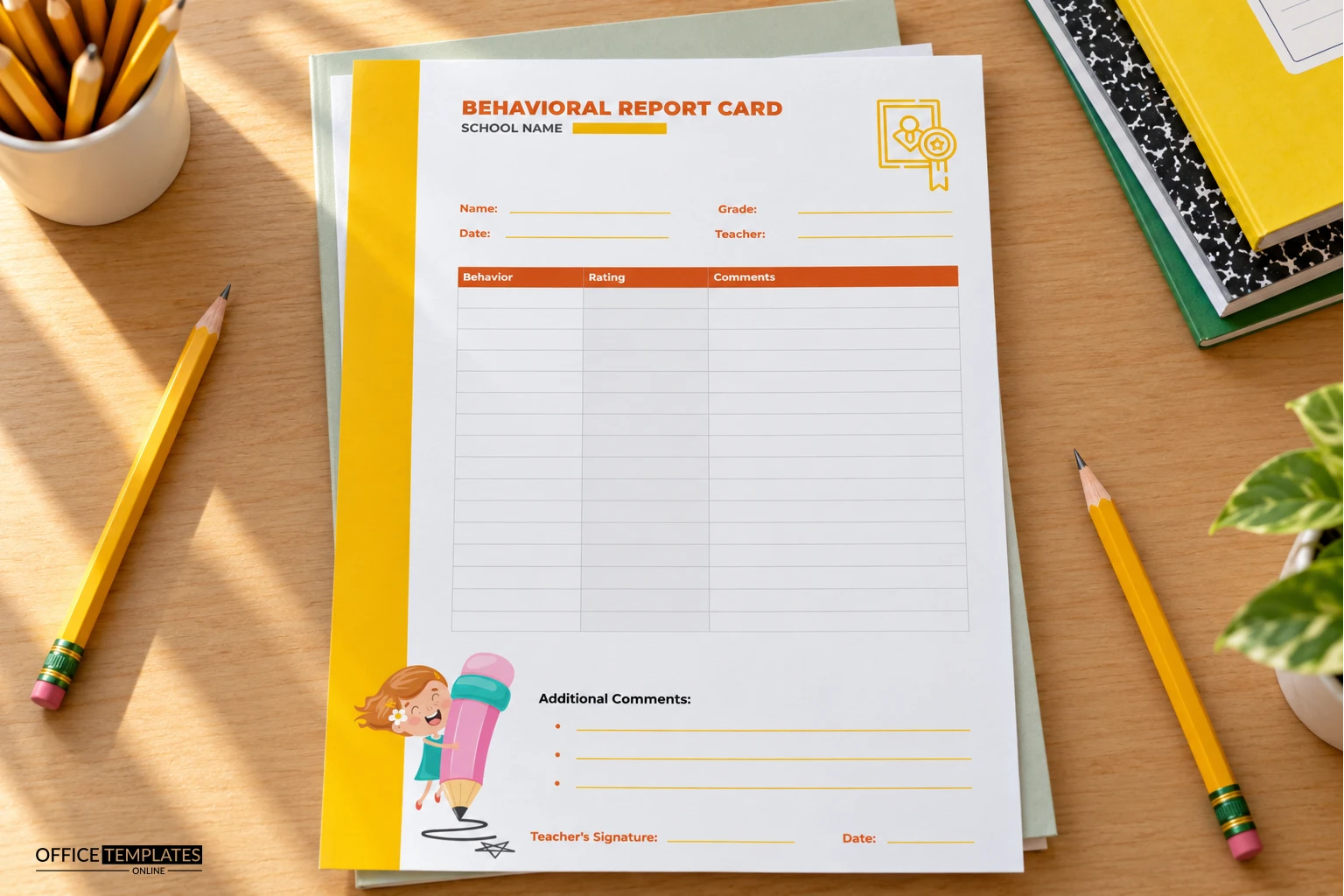
Write each behavior in the left column, such as listens to others, keeps a tidy desk, or finishes work on time. Put a rating word or a number in the middle column, then add an example in Comments. Add the school name and replace the sample header lines.
Completing the Behavior Card
- Add the school name.
- Fill the four header lines.
- List the behaviours.
- Rate and comment on each.
- Sign and date.
Choosing Behaviors Worth Rating
Pick five to eight behaviours that matter in your classroom, and use the same ones all year. A short stable list is fairer to children than a long list that changes each term.
Ratings That Stay Consistent
Decide on your rating scale before you begin, for example, Always, Usually, Sometimes and Rarely. Write the scale in a note on the front of the page so every parent reads the ratings in the same way.
Keeping the Tone Constructive
A behaviour card can feel like a list of faults. Start the comments with something the child does well, and word the concern as a goal, such as working on waiting a turn, instead of a complaint.
Additional Comments With Three Lines
Below the table, Additional Comments has three bullet lines. Use them for patterns across the term, or for an agreement made with the family, so the card works as a record for later meetings.
A Cheerful Orange Palette
Orange and yellow feel energetic and friendly, so the page does not look like a disciplinary letter. The pencil girl at the foot adds a playful touch, and it fills the space beside the comment lines neatly.
Using It Alongside Grades
This card covers conduct only. Many schools attach it to a grade card, or send it home between report cards, when a child has had a rough few weeks, so families hear about it early.
Handling Printed Behavior Records
Keep behavior cards private. Hand them to parents directly or in a sealed envelope rather than leaving them on a desk, and store copies in a locked cabinet or a protected folder.
Step-by-Step Editing of the Behavioral Report Card Rating Column Design
- On the behavioral report card rating column design, click the main headline and type your own words, keeping a similar length.
- Retype every name, date, and contact line on the behavioral report card rating column design, checking each against a trusted source.
- Search the behavioral report card rating column design for the words Lorem and Company so that no placeholder remains.
- Click any logo or photo on the behavioral report card rating column design, choose Replace Image, and resize the new picture to fit.
- Zoom the behavioral report card rating column design to full size and read each line aloud before you save it.
- Keep a clean master of the behavioral report card rating column design without private details, so later versions start tidy.
Similar designs include the conduct and behavior card. Compare it with the attendance card. You may also like the orange quarterly card. Every behavioral report card rating column style alternative sits in report card templates.