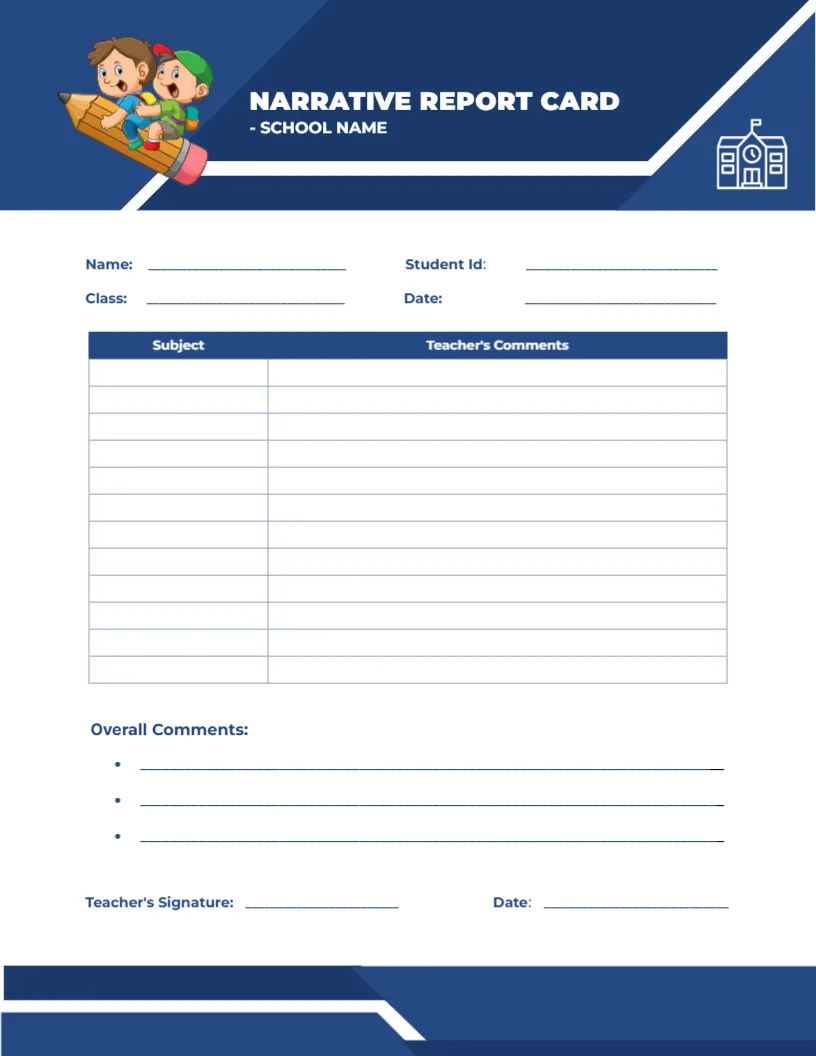
Children on a Flying Pencil Above a Comment Table
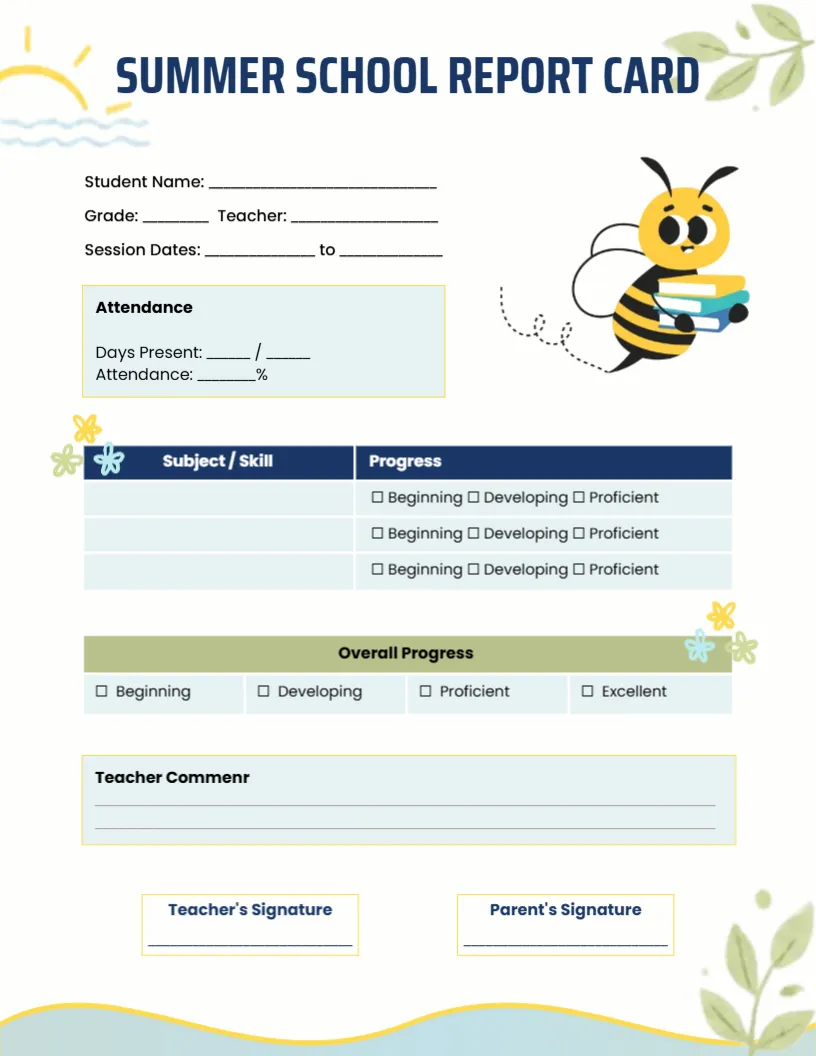
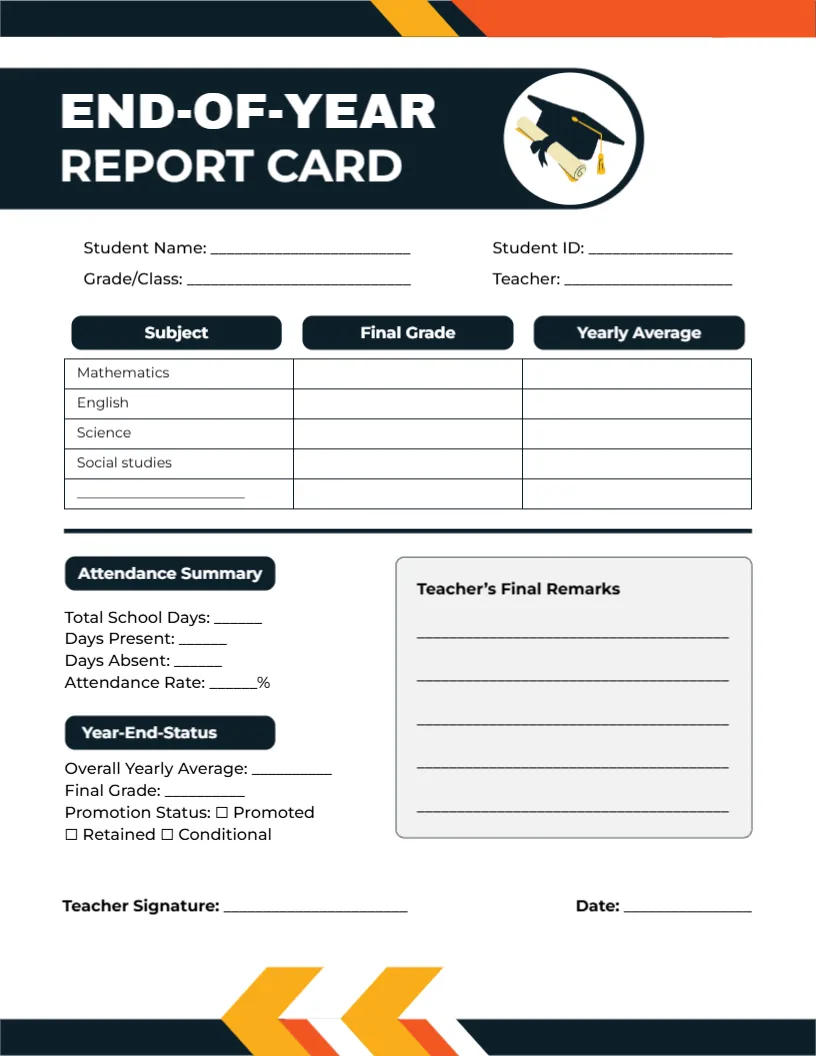
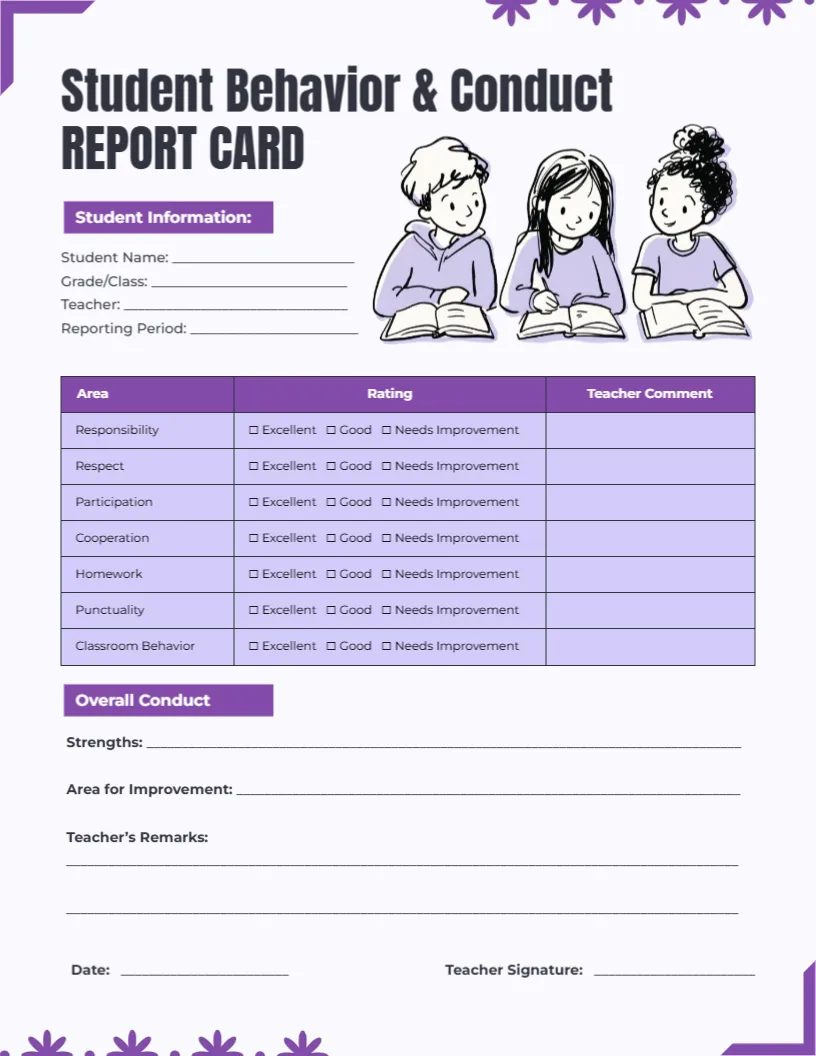
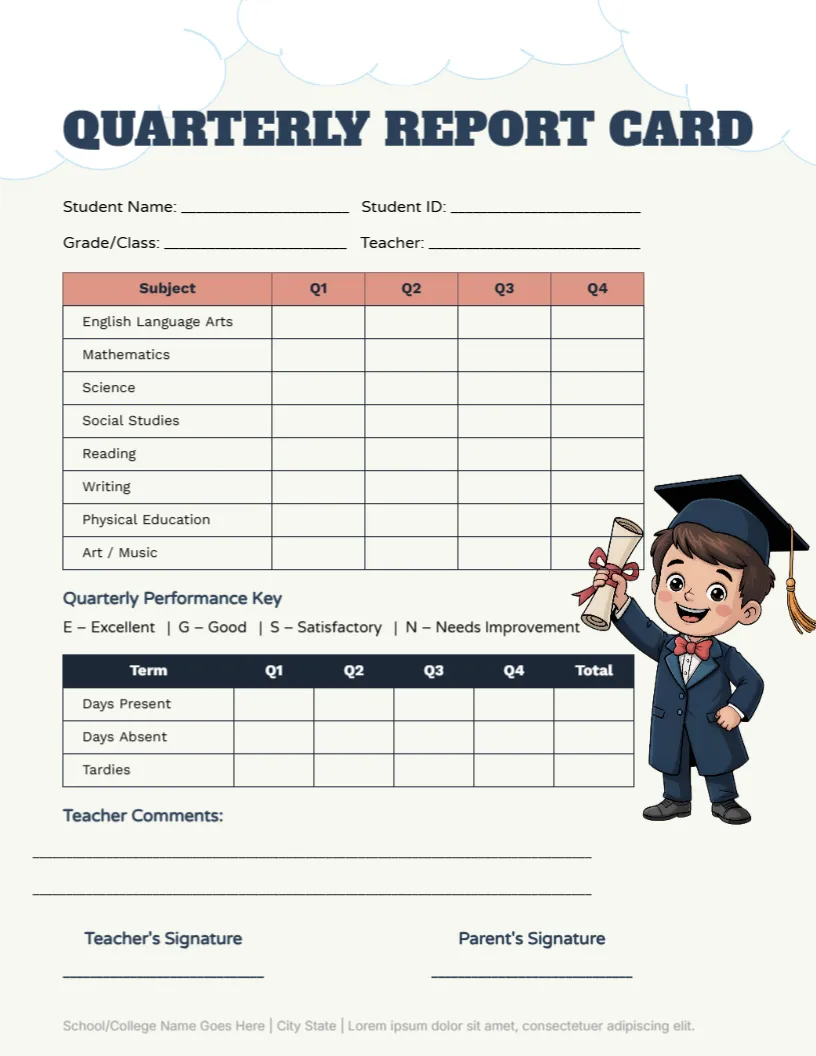
A navy banner with a diagonal white stripe holds NARRATIVE REPORT CARD in white capitals, a school building icon, and an illustration of two children riding a giant pencil. Name, Student ID, Class, and Date lines follow. A wide navy-headed table has just two columns, Subject and Teacher Comments, with eleven rows.
A Letter Page Built for Sentences
The page is 8.5 x 11 inches. With only two columns, the comment column is wide enough for a full sentence or two beside each subject, which is what makes the report narrative instead of numeric.
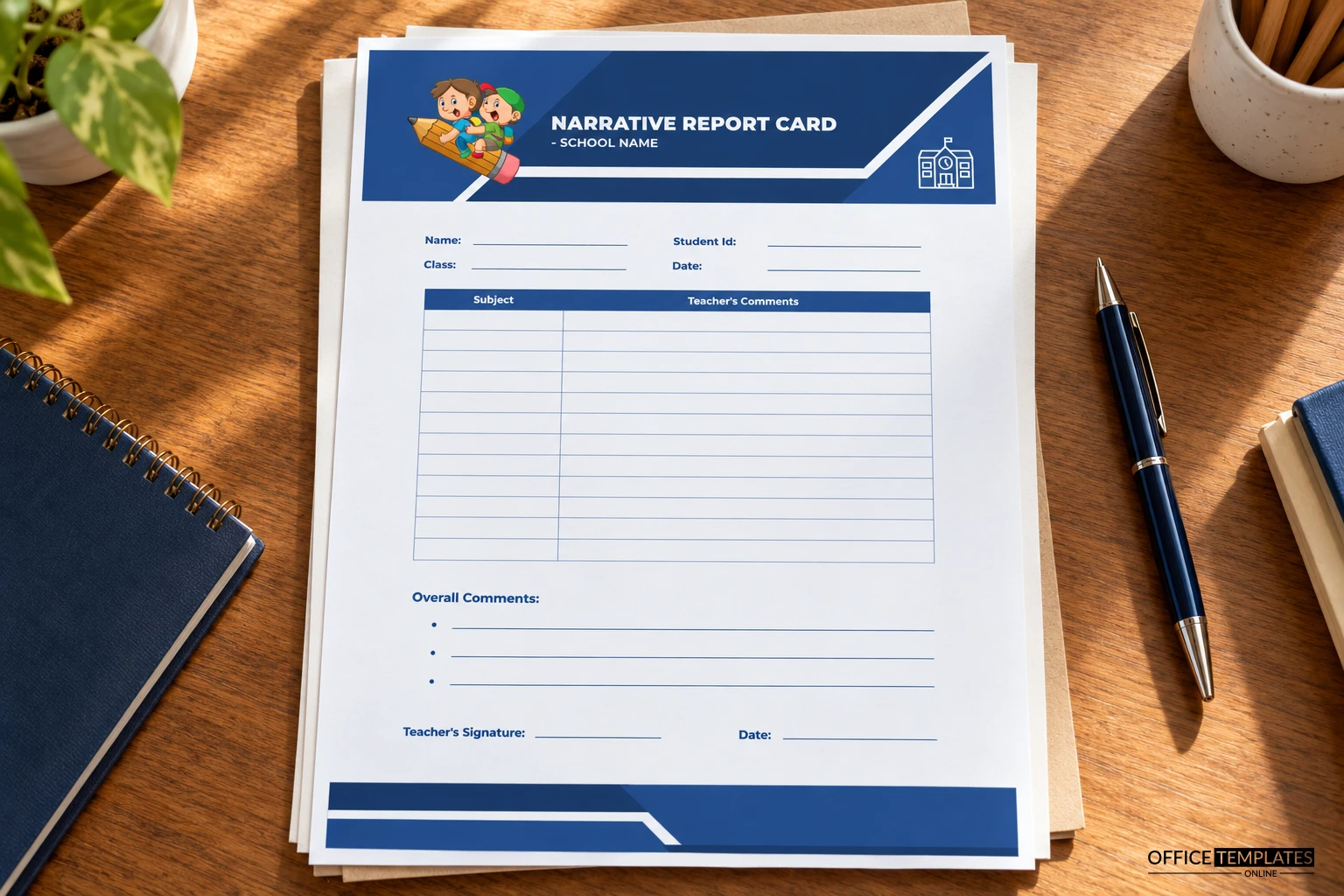
School Name, Subjects and Comment Lines
Replace SCHOOL NAME with your school and fill the four header fields. List the subjects in the left column and write the comments beside them. Nothing on the card itself needs correcting, which makes this one of the cleaner designs in the set.
Writing the Narrative Card
- Add the school name.
- Fill the header fields.
- List the subjects.
- Write each comment.
- Sign and date.
Grades Replaced by Words
Some schools, especially primary and Montessori-style ones, avoid marks and describe progress in words. This layout has no grade column at all, so the comments carry all of the message.
How to Write a Useful Comment
A good comment names what the child can do now, gives an example, and suggests one next step. Two sentences are enough, and writing that way for every subject keeps the card fair across the class.
Eleven Rows and Three Bullet Lines
The table has eleven rows, which is more than most classes need. Delete the extras for a tidy page, or use spare rows for subjects such as library, assembly or a school project.
Overall Comments at the Foot
Overall Comments has three bullet lines under the table. Use them to summarise the term, mention friendships and effort, and say what the family can do at home to help.
Time Needed to Write Narratives
Narrative cards take longer than ticking boxes. Build a bank of sentences for common situations, and then personalise each one, so the result still sounds like you talking about that individual child.
Navy Ink on a Colour Printer
The navy banner is the heaviest area, so use a good quality colour printer. The pencil illustration prints cleanly, and the table lines remain pale, which makes handwritten comments easy to read.
Sharing the Narrative With Families
Hand the card to parents in a meeting where possible, so a conversation can follow the written words. Ask them to sign the line at the foot and keep a copy for themselves.
Step-by-Step Editing of the Narrative Report Card Comment Rows Design
- On the narrative report card comment rows design, click the main headline and type your own words, keeping a similar length.
- Retype every name, date, and contact line on the narrative report card comment rows design, checking each against a trusted source.
- Search the narrative report card comment rows design for the words Lorem and Company so that no placeholder remains.
- Click any logo or photo on the narrative report card comment rows design, choose Replace Image, and resize the new picture to fit.
- Zoom the narrative report card comment rows design to full size and read each line aloud before you save it.
- Keep a clean master of the narrative report card comment rows design without private details, so later versions start tidy.
Next to try is the conduct card. Have a look at the mid-term card. Another option is the standards-based card. Looking beyond the narrative report card comment rows design? See all report card templates.