Some of the most important growth in a young person’s life resists the usual tools of measurement. A steadier pulse on the piano, a braver landing after a leap, a color choice that finally feels bold: none of it fits neatly in a percentage. The music, dance, and art class report card template is an attempt to describe that growth with the care it deserves, on paper that looks as though it belongs in a conservatory.
Measuring what is hard to measure
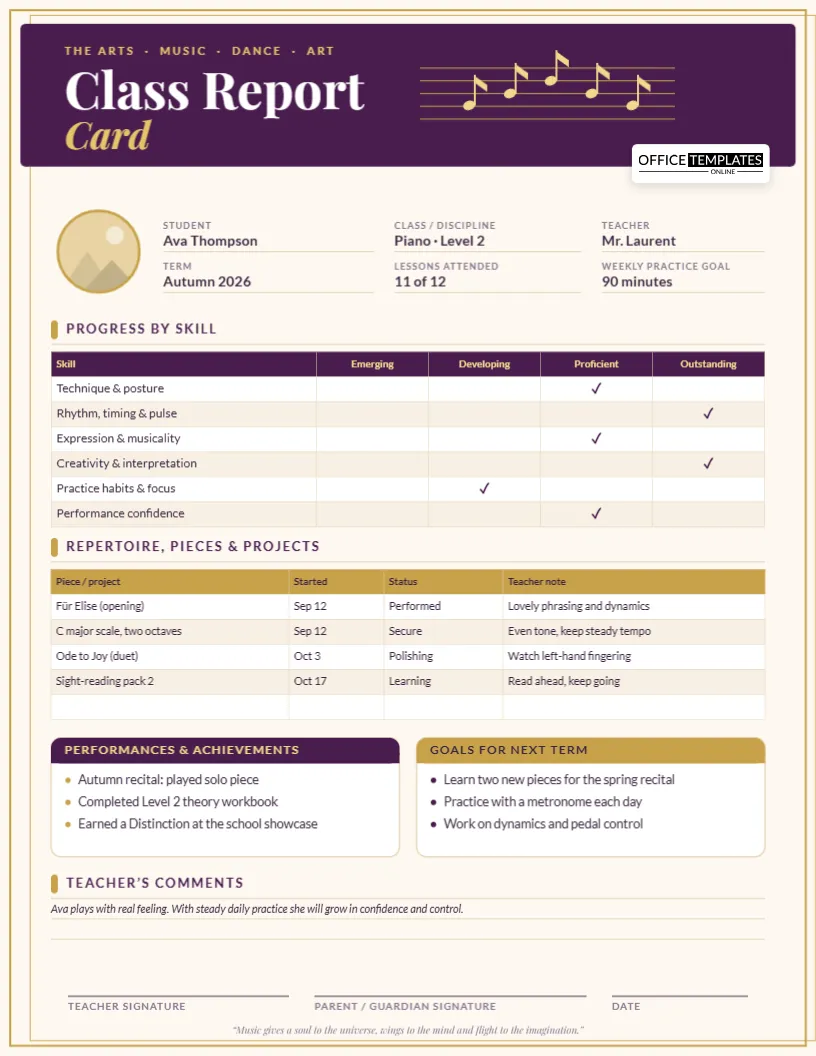
The page organizes judgment into six skills: technique and posture, rhythm, timing and pulse, expression and musicality, creativity and interpretation, practice habits and focus, and performance confidence. Four levels, Emerging, Developing, Proficient, and Outstanding, run across the top, and a plum tick marks each student’s place. The vocabulary is gentle on purpose. Emerging tells a student that something is beginning to appear, which is more encouraging than Below standard.
Anatomy of an elegant page
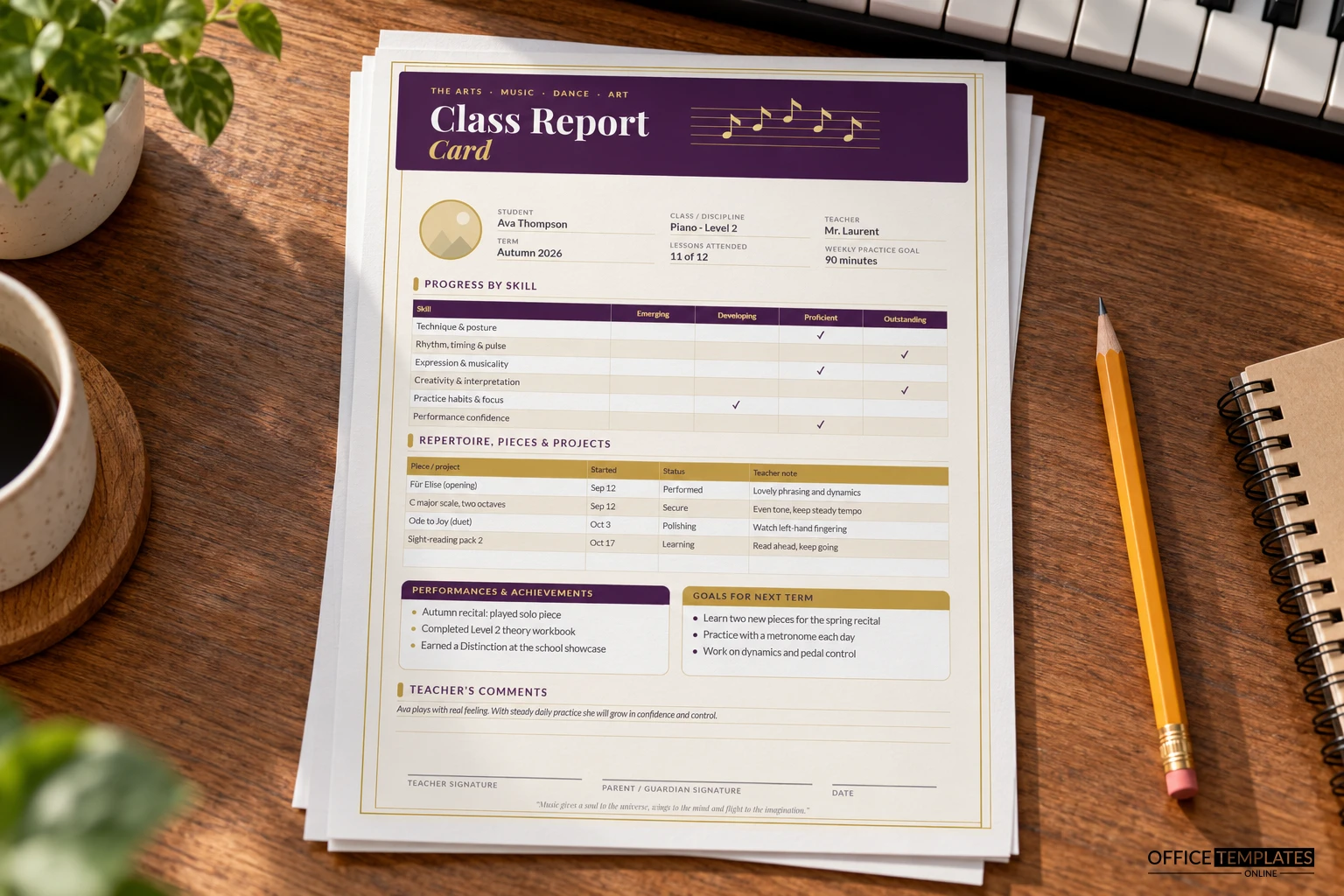
A rich plum header carries a music staff with five golden notes, and a double gold border frames the entire page on warm ivory. A round photo with a gold ring sits beside the student’s name, class, teacher, term, lessons attended, and weekly practice goal. The serif headline, set in Playfair Display, gives the page an heirloom feel that families are happy to keep.
Below the skills table, a repertoire table records what the student has actually worked on: piece or project, date started, status (Learning, Polishing, Secure, Performed), and a line from the teacher. Two boxes then celebrate performances and achievements, and set goals for the next term.
One template, many studios
Piano, guitar and voice
Keep the sample skills. List pieces and scales in the repertoire table, and note recital participation in the achievements box.
Ballet, jazz, tap and hip hop
Rename technique to Alignment and line, timing to Musicality and counts, and repertoire to Combinations and choreography. Delete the staff and notes, or leave them for a musical touch.
Painting and drawing
Replace the skills with line, color, composition, observation, creativity, and studio habits. The repertoire table becomes a list of projects and media.
A note on tone
Arts teachers often say the report card is the one document families will actually keep. Write it accordingly. Describe artistry, not just accuracy: Ava plays with real feeling, which tells a family more than Ava makes few mistakes. Offer one concrete practice suggestion each term, such as using a metronome, and finish on encouragement. A closing line from Playfair italics, such as a quote about music giving wings to the imagination, adds a graceful finish.
Preparing it
In the editor, click the round photo and choose Replace Image to add the student’s portrait. Type each detail line, move ticks to the correct level, and edit the repertoire table, adding rows as the term progresses. Write your comments in the ruled area, then sign. Every color can be changed if your studio has its own palette.
Practical notes on paper
The page is US Letter, 8.5 x 11 inches. Ivory or cream paper of a slightly heavier weight suits the design well, and the thin gold border prints cleanly as long as your printer’s margins are left at their default. Download a PDF for printing, or a PNG or JPG to share with a family who is far away.
Where it is welcome
Private teachers of piano, guitar, violin and voice; dance studios; art classes; school music, band and orchestra programs; drama and theater clubs; conservatories and community arts schools; and homeschool families who need to document fine arts credit.
Words for the comments box
- Ava plays with real feeling and shows lovely phrasing.
- Rhythm and timing are outstanding; she keeps a steady pulse.
- Practice habits are developing; a daily routine will build confidence.
- Performed a solo at the autumn recital and earned a distinction.
Small questions from studio teachers
Can I use it for group classes?
Yes. Make one report per student and change the class name.
Can I add a second teacher?
Yes. Add a name to the teacher field or a second signature line.
Can I remove the notes and staff?
Yes. Select and delete them, or recolor them to suit your discipline.
Rubrics in plain language
The four levels work best when you define them once and share them with students and families.
- Emerging: the skill is beginning to appear and needs frequent guidance.
- Developing: the skill is present in familiar situations with occasional reminders.
- Proficient: the skill is reliable and applied independently.
- Outstanding: the skill is polished and applied with insight, confidence and creativity.
Print the definitions on the back of the page, or keep them in your studio handbook, so everyone reads and ticks the same way.
Using the report around recitals and showcases
Performance is where the arts come together, so plan the report around it. Before a recital, share a mid-term copy that highlights focus areas. After the recital, update the achievements box with the performance and any comments from the audience or judges. Students are often more motivated when they can see a performance recorded as a milestone in a formal document.
Talking to parents about practice
Practice is where most progress happens, and it is where parents can help. Use the weekly practice goal in the header, such as 90 minutes, and explain what it looks like in short sessions across the week. Suggest a regular time and place, and encourage parents to listen or watch and say what they enjoyed. Avoid asking parents to act as teachers; their most valuable role is encouragement.
Keeping the page beautiful
A few small choices help the finished page look intentional. Use the same number of lines in each comment box, keep the repertoire notes short, and check that names and dates are typed consistently. If you add a studio logo, place it beside the title rather than over the staff, and leave space around it so the design keeps its calm elegance.
Honor every young artist’s progress. Open the template, add your student’s details, and download an elegant class report card.