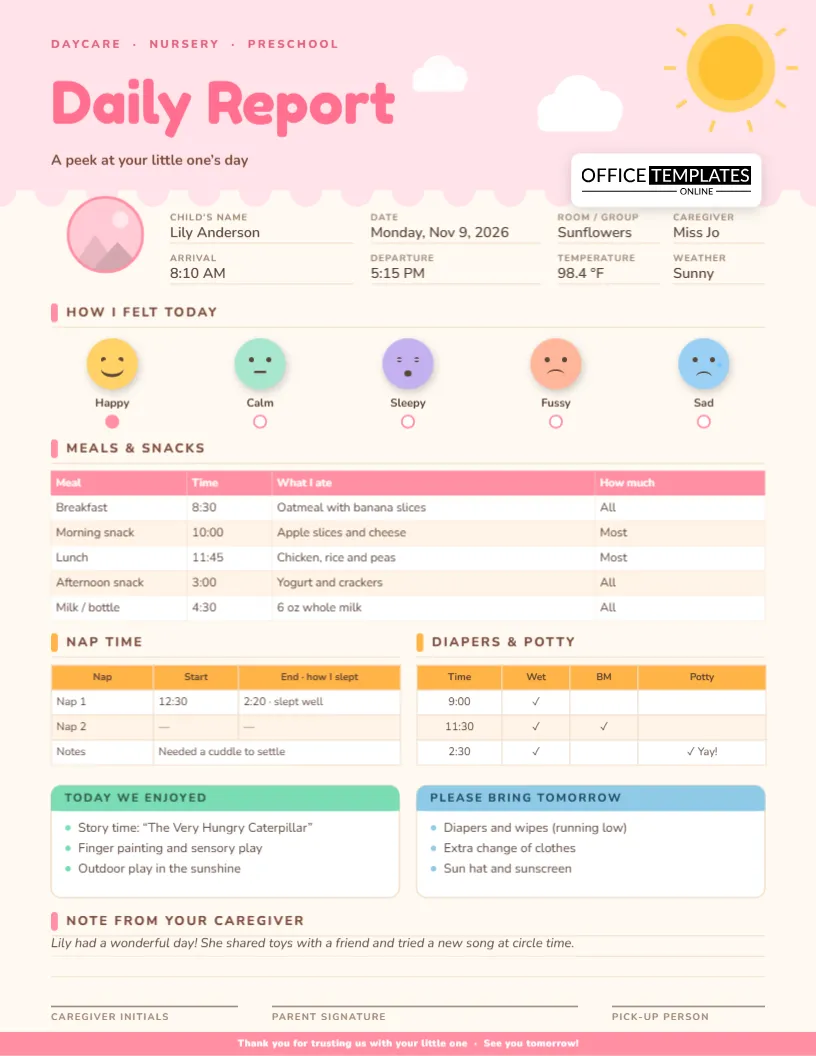
Ask any parent what the hardest part of the day is, and many will say the goodbye at the door. Ask what makes it easier, and the answer is nearly always the same: knowing how their little one is doing. The daycare and nursery daily report template below is designed to answer the questions parents whisper on the way to work.
What parents really want to know at pick-up
- Did they eat, and how much?
- How long did they nap?
- Were they happy?
- Do I need to bring anything tomorrow?
Every one of those questions has a home on this soft pink page.
A day on one page
Morning: arrival and mood
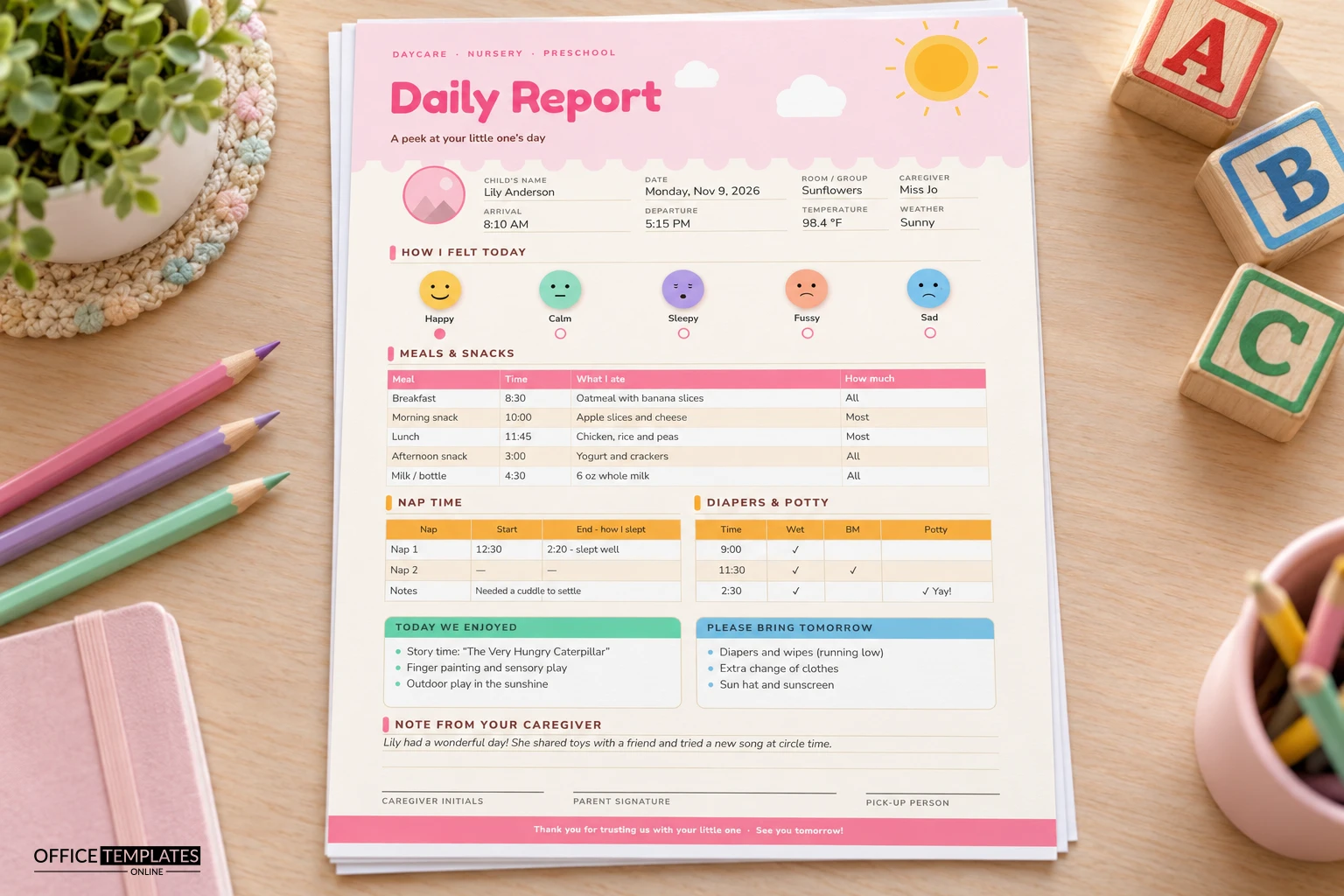
The top of the page records the child’s name, date, room, caregiver, arrival and departure times, temperature and weather. A round photo frame sits beside the name for a friendly, personal touch.
Just below, five smiling faces show Happy, Calm, Sleepy, Fussy, and Sad, each with a small circle underneath. Fill the circle of the right mood and leave the others white. It takes one tap and communicates a great deal.
Midday: meals and snacks
A table with time, what the child ate, and how much (All, Most, Some, None) covers breakfast, snacks, lunch, and milk or bottle feeds. Infant rooms can add an ounce measure; toddler rooms can add new foods tried.
Afternoon: naps and changes
Two small tables sit side by side. The nap table records start, end, and how the child slept. The diaper and potty table records time, wet, BM, and potty successes, and there is room for a cheer such as Yay! for a milestone.
Pick-up: activities and reminders
A mint box lists what the class enjoyed: a story, finger painting, outdoor play. A blue box lists what to bring tomorrow, such as diapers, wipes, spare clothes, or a sun hat. A ruled note area lets the caregiver add a personal message, and three lines record caregiver initials, parent signature, and the pick-up person.
Tips for busy caregivers
- Fill it in as the day goes, not at closing time, so times and amounts stay accurate.
- Keep a blank copy saved so each child’s daily report starts the same way.
- Note new foods and allergies clearly.
- Write one warm, specific sentence in the note area; it is what parents remember.
Customizing it
Click any text to edit it. Choose Replace Image on the photo, add or delete table rows if a child has more diaper changes or fewer meals, and recolor the mood circles. Change the header text to your center’s name, or add your logo next to the title. Every color and font can be changed from the toolbar.
Who benefits
Home daycares, infant and toddler rooms, preschool classrooms, nannies who share a summary with parents, church childcare programs, and hourly drop-in centers all use the same daily rhythm. It also helps early-years educators document routines for licensing and quality reviews.
Keeping records safely
Many providers keep a copy of each daily report for a set period. Download the PDF, store it in a folder per child, and delete it according to your local guidelines. Avoid including details that are not necessary, such as full addresses, on shared copies.
Printing and digital sharing
The page is US Letter, 8.5 x 11 inches. Print one per child for handing over at pick-up, or download the PNG or JPG and send it by text or email. Warm colors and large type keep it readable on a phone screen.
Handy things to know
Is it suitable for infants?
Yes. The tables were designed with infants and toddlers in mind.
Can I use it for older preschoolers?
Yes. Rename the diaper table to Toileting or Learning notes.
Can I add rows to the diaper table?
Yes. It is an editable table.
Age by age: what to emphasize
Infants
Feeding amounts, nap times, and diaper changes are most important. Record the time of each bottle and the ounces taken, and use the note area for milestones such as rolling over or a first smile.
Toddlers
Meals, naps, potty progress, and language are the highlights. Note new words, favorite songs and friendships, and use the mood faces to show the emotional tone of the day.
Preschoolers
Rename the diaper table to toileting or learning notes and use the activities box for letters, counting, art, and pretend play. Parents love a line that they can ask about at dinner.
A sample day, in the caregiver’s words
Lily arrived at 8:10 and settled quickly. She ate all her oatmeal, most of her chicken and rice, and finished her yogurt. Nap one was long and peaceful after a cuddle. We read The Very Hungry Caterpillar, finger-painted, and played outside in the sunshine. She shared toys with a friend and tried a new song at circle time. Every line of that paragraph maps to a section of the report, so writing it takes moments.
Communicating about hard days
Some days include tears, bumps, or a missed nap. Use the fussy or sad face honestly, and add a calm sentence in the note area: what happened, how it was handled, and how the child is now. Parents value honesty delivered with warmth, and a written record protects everyone.
Small habits that make reports easier
- Keep a clipboard or tablet in each room with the blank sheet ready.
- Jot times as things happen and complete the sentences at nap time.
- Write the supply reminder as soon as you notice a low stock.
- Ask parents which details they most enjoy and include more of them.
Celebrating milestones
The note area is the place for firsts: first steps, first words, first time using the potty or sharing a toy. Write them down in a sentence and date them. Parents often save daily reports for exactly this reason, and a year of them becomes a scrapbook of early childhood.
Working with allergies and special diets
Where a child has an allergy or dietary rule, add it to the meals table and highlight it in a bold color so every caregiver sees it. Keep the information short and accurate, and confirm changes with parents in writing.
Give parents the peace of mind they crave. Open the template, add today’s details, and download a sweet daily report.