Capture the Full Picture of Elementary Learning
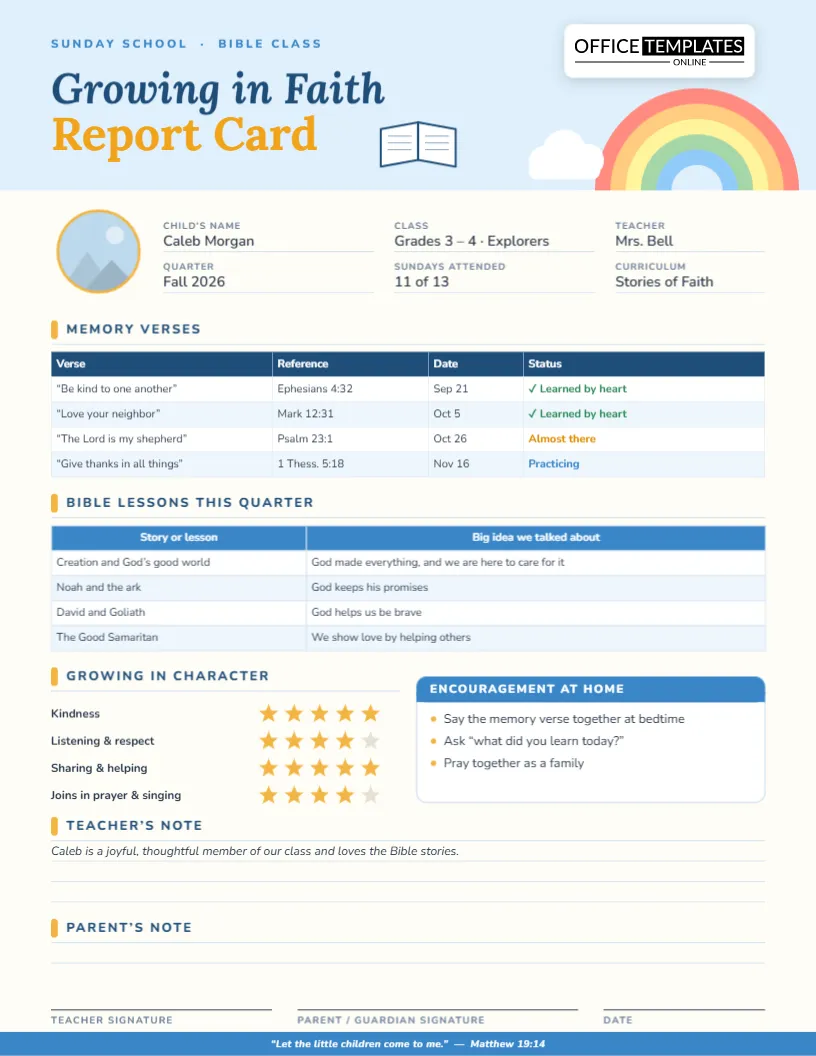
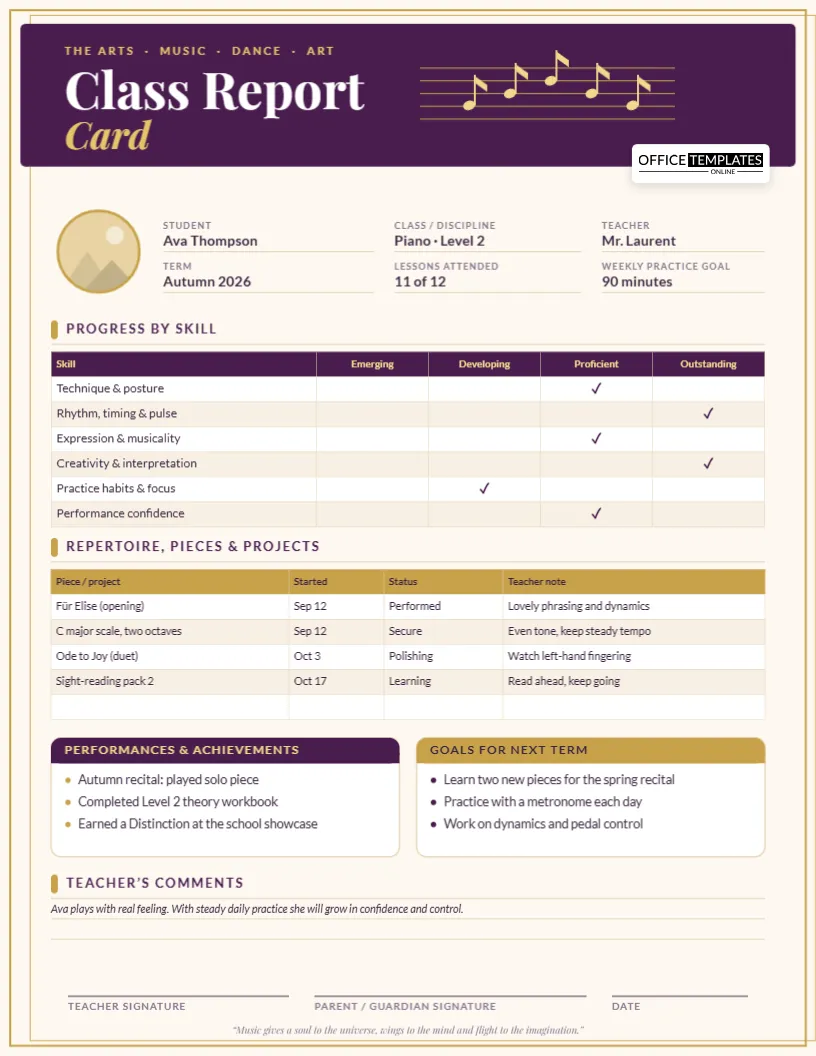
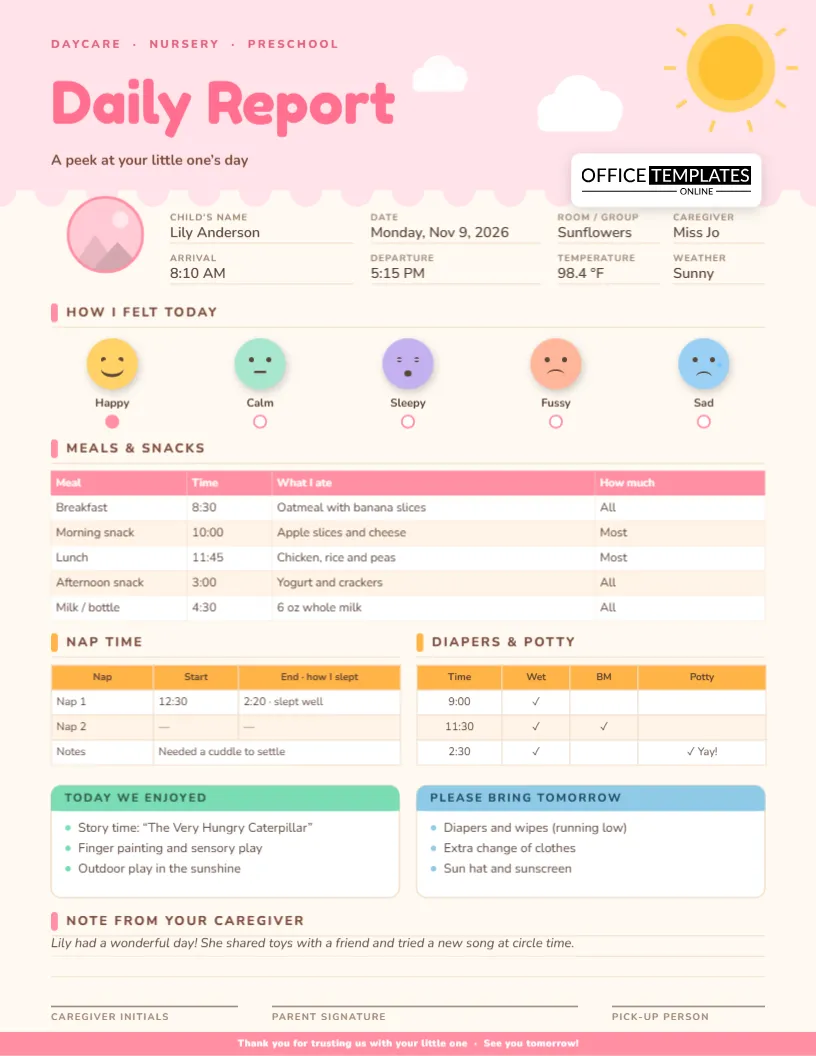
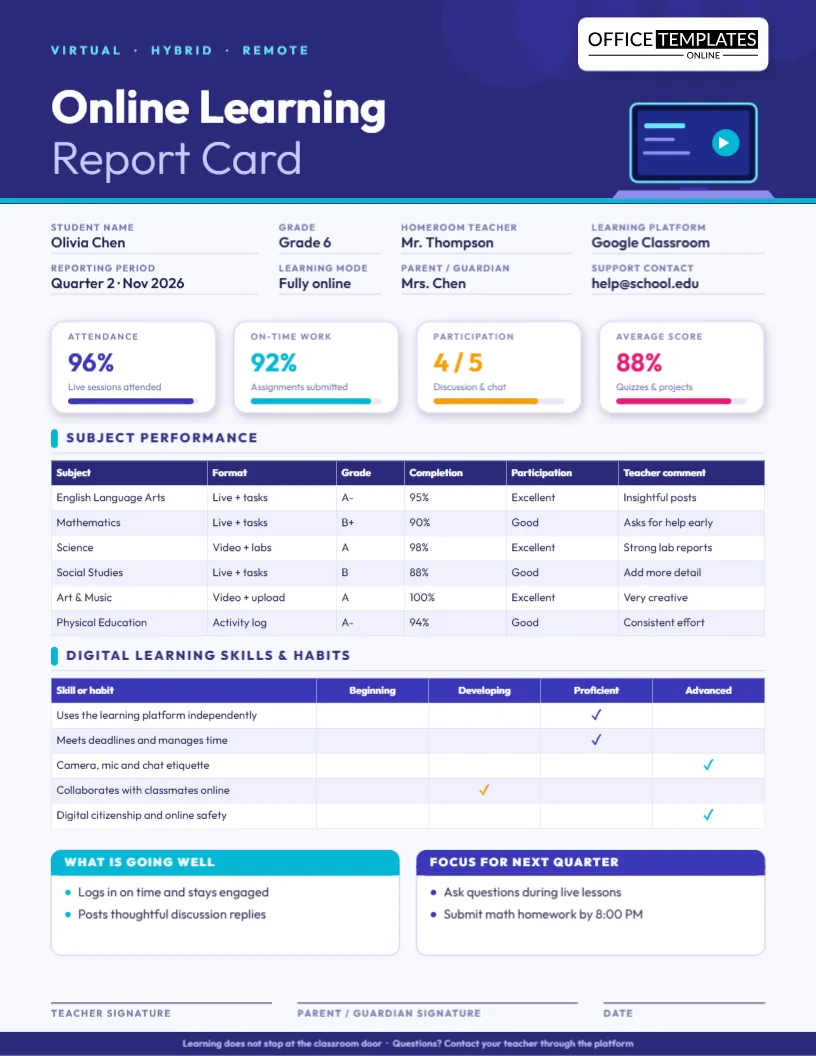
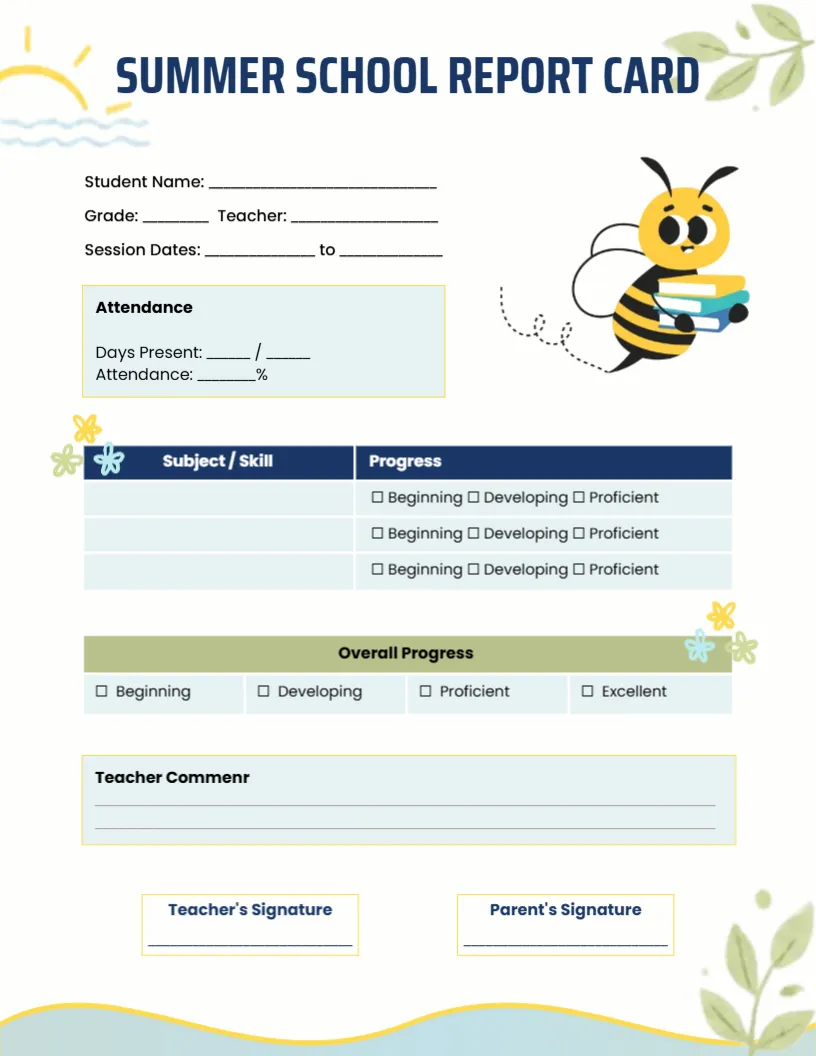
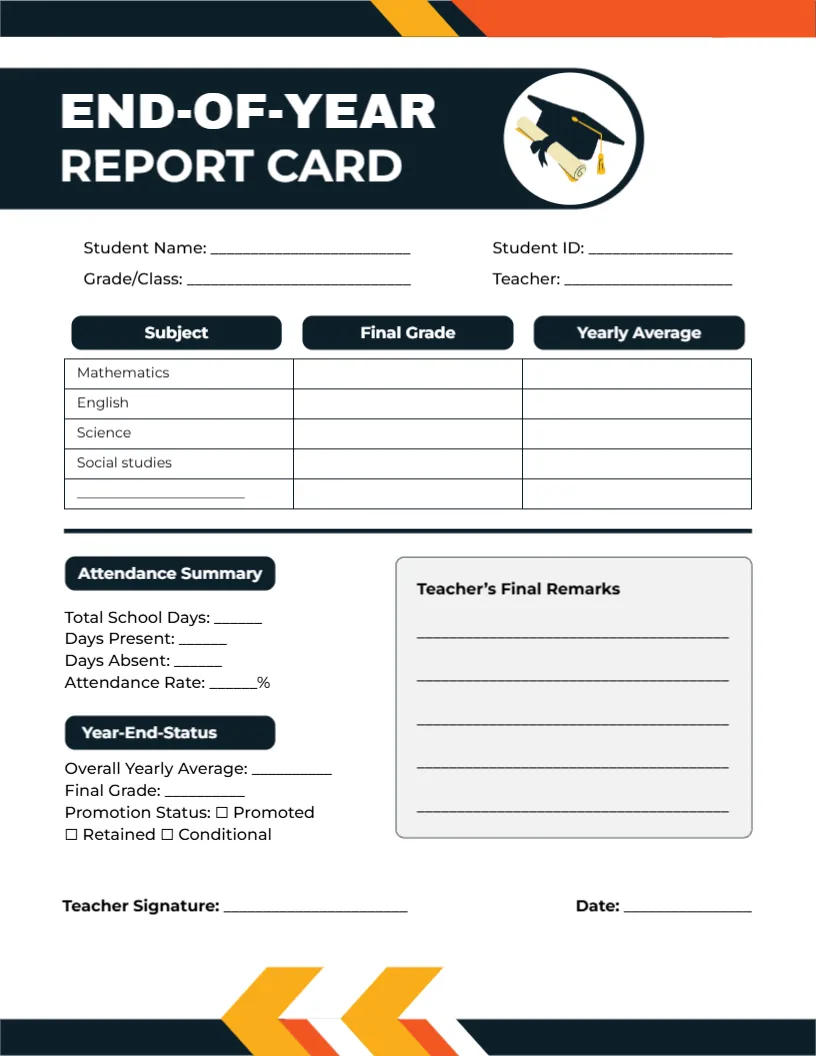
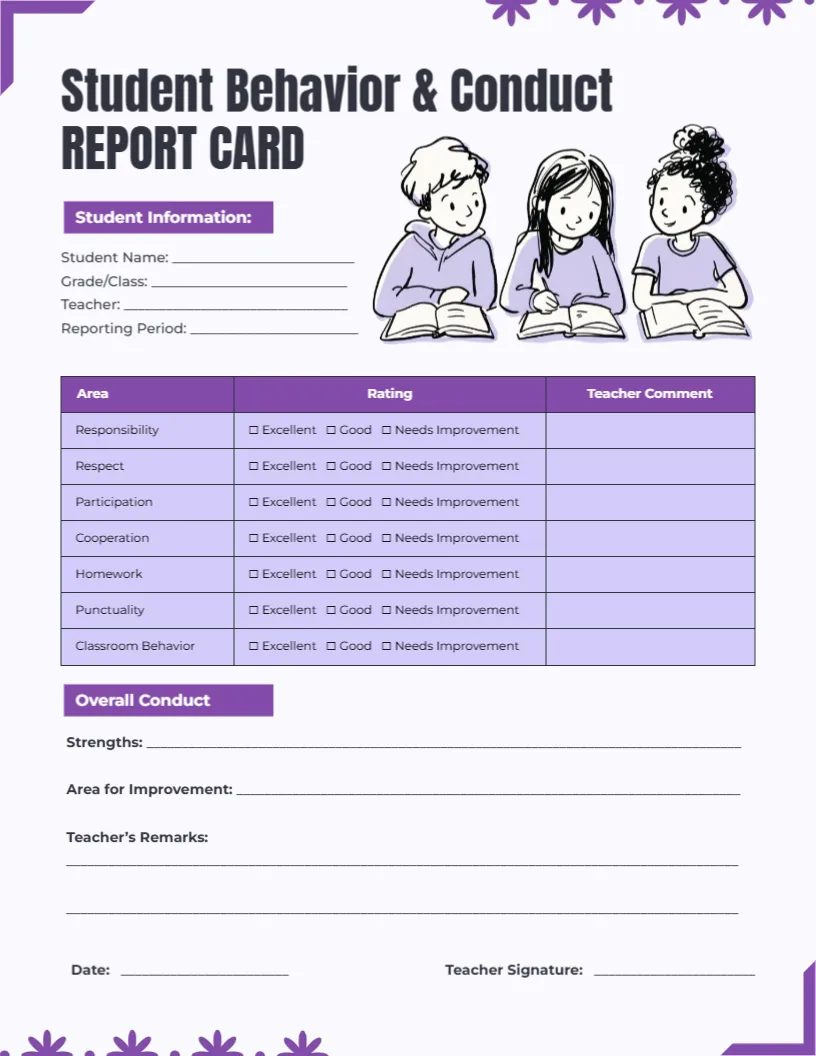
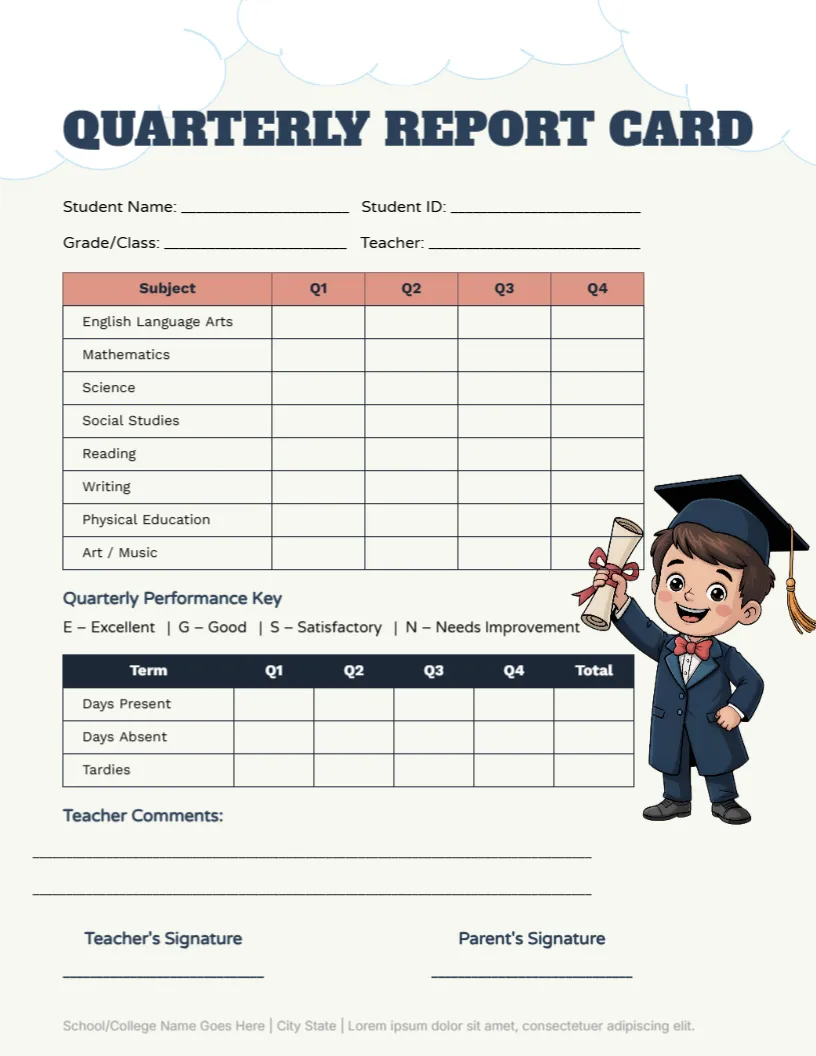
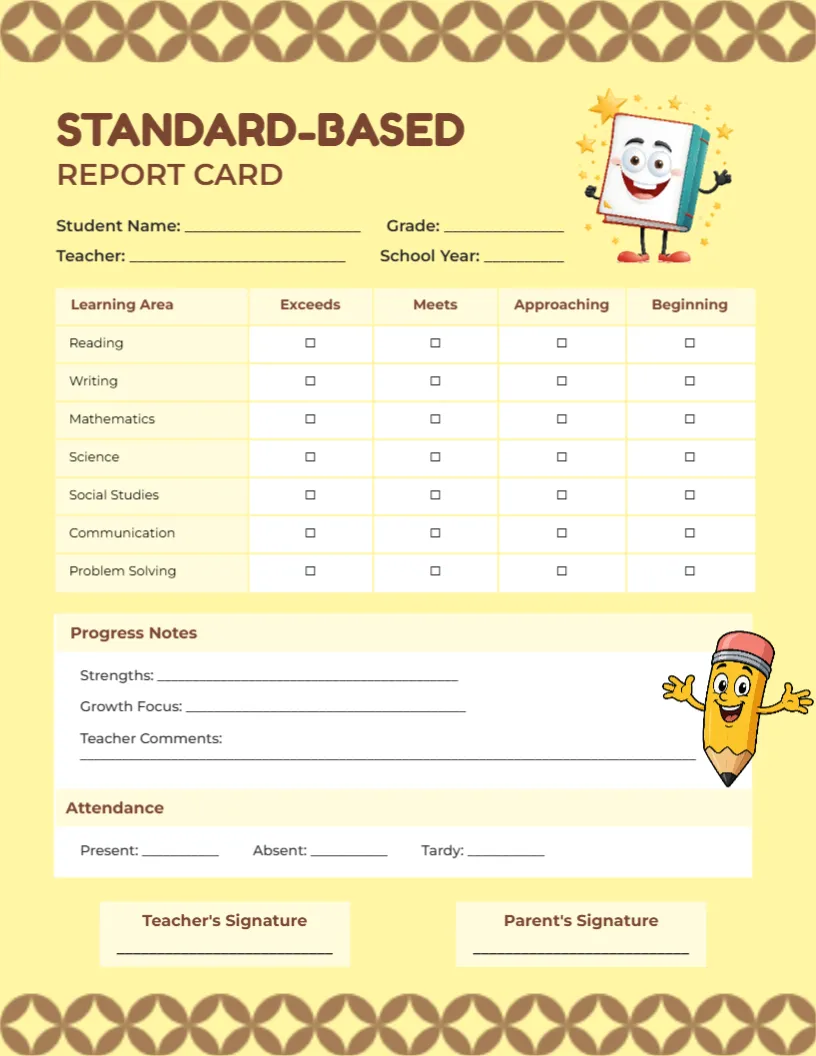
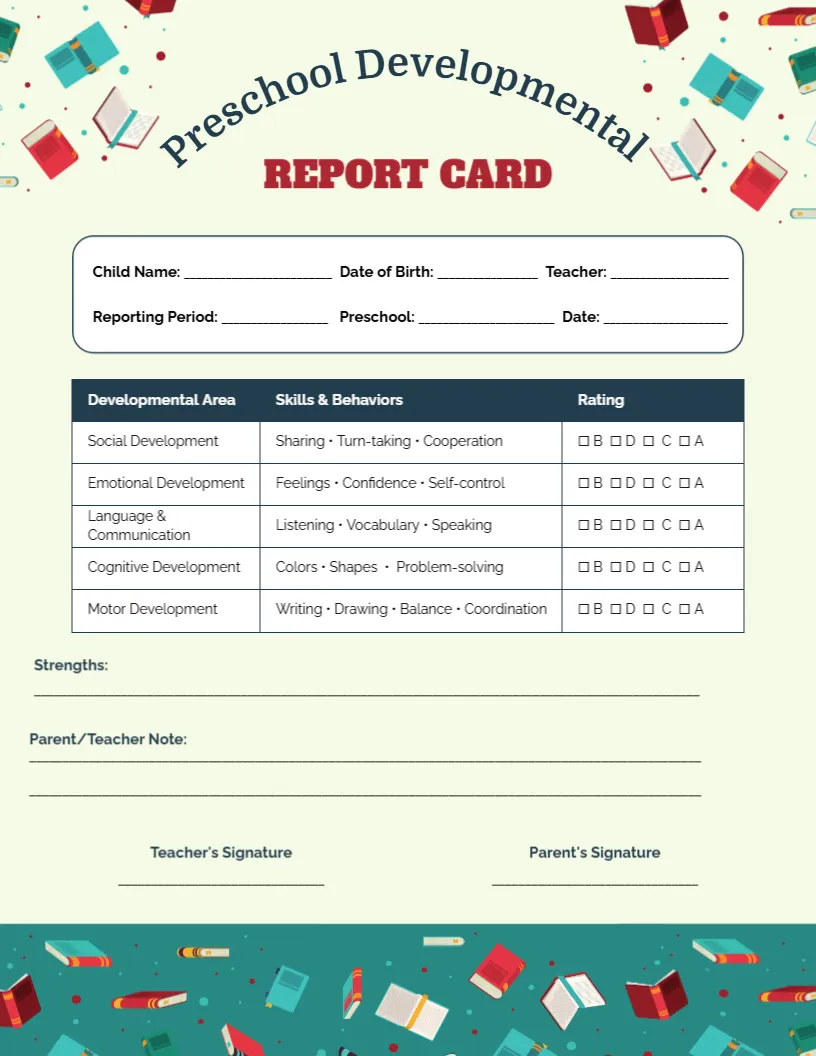
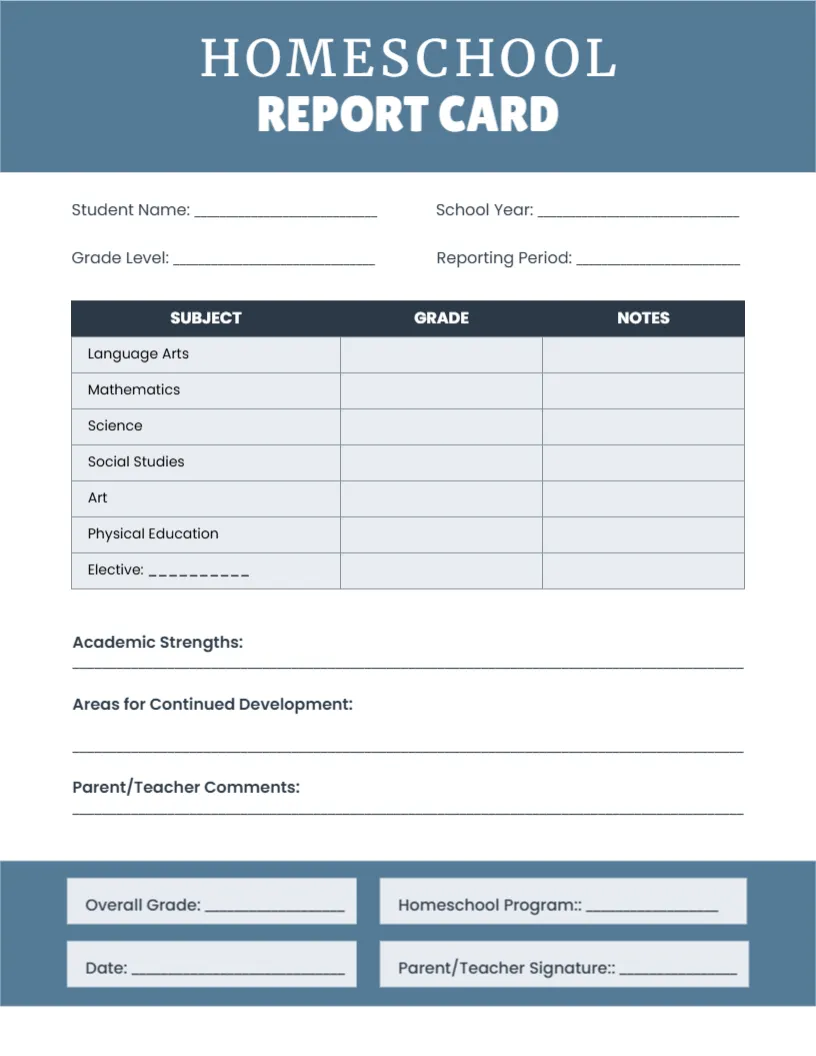
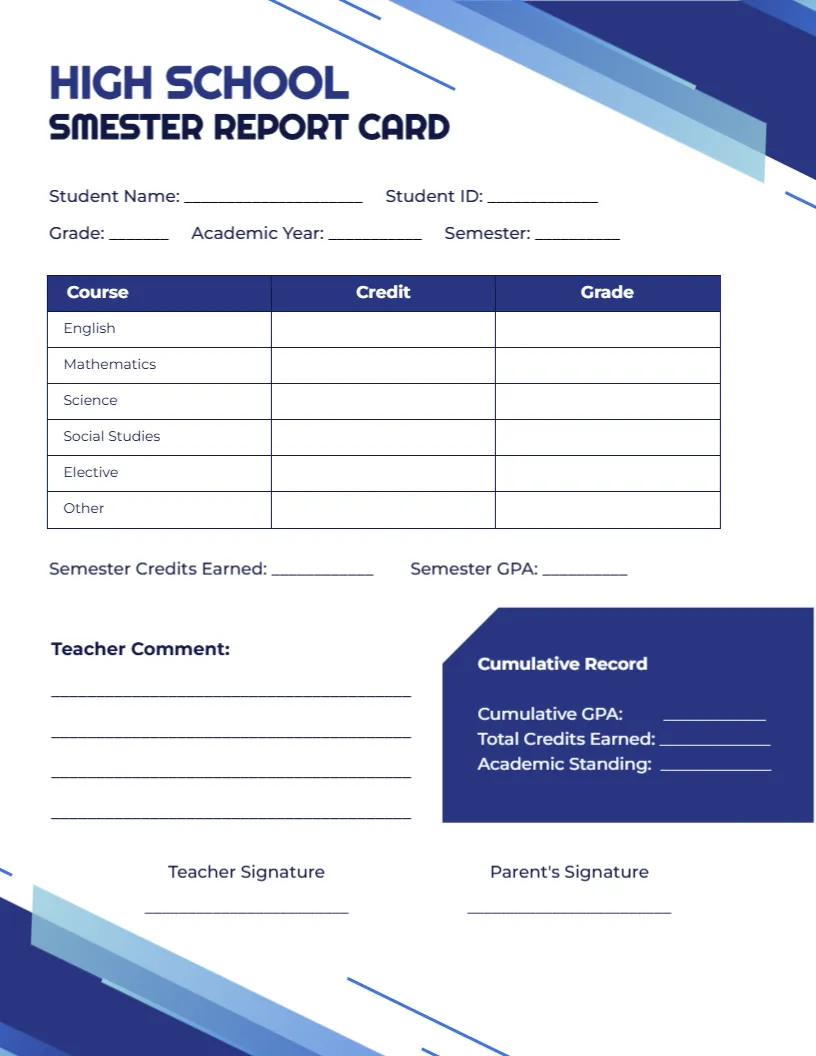
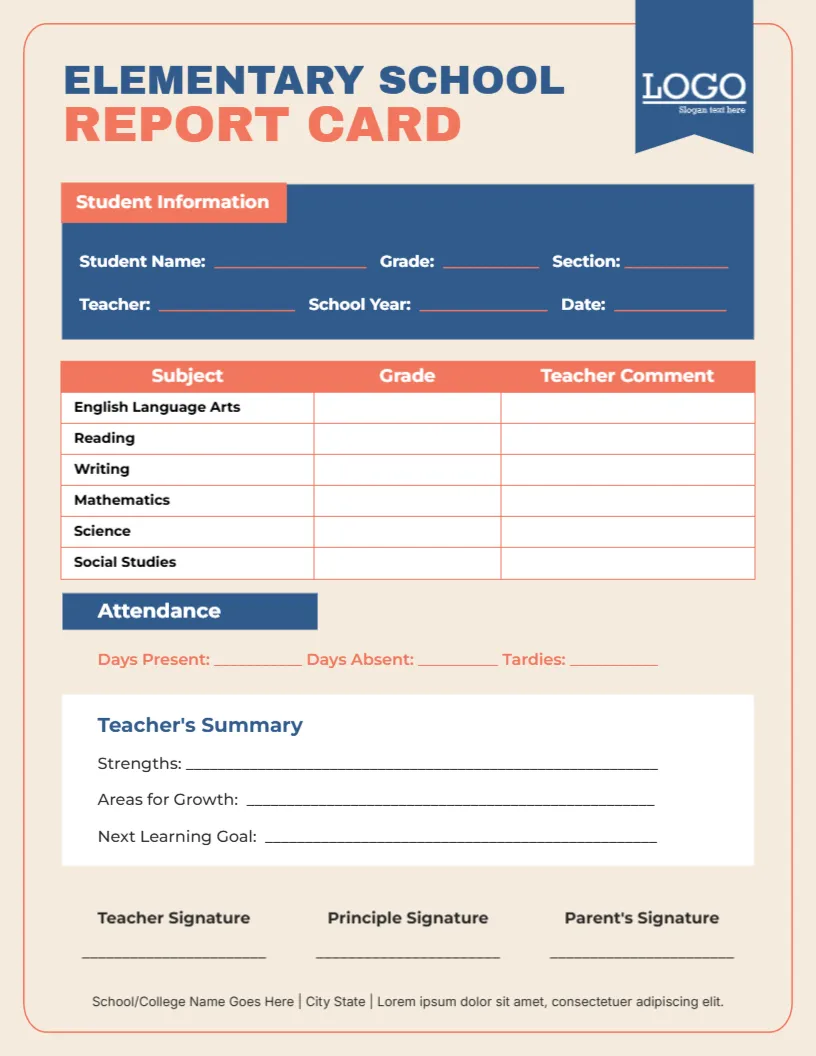
How can teachers communicate a child’s progress clearly and professionally? A well-structured report card brings important academic and classroom information together without overwhelming parents. The Elementary School Report Card Template provides an organized foundation for recording grades, learning skills, attendance, teacher comments, and student goals.
Designed for elementary education, this editable report card helps schools present student performance in a consistent and easy-to-understand format. It can be adapted for different grades, subjects, and reporting periods.
Begin With Essential Student Details
A report card should make it immediately clear whose progress is being reviewed. The opening section provides space for key identification details, including:
- Student name
- Grade or class
- Teacher name
- School name
- Academic year
- Reporting period
- Student ID or roll number
Keeping these details together creates a clear starting point for every student record. It also makes completed reports easier for teachers and administrators to organize.
Give Every Subject a Clear Place
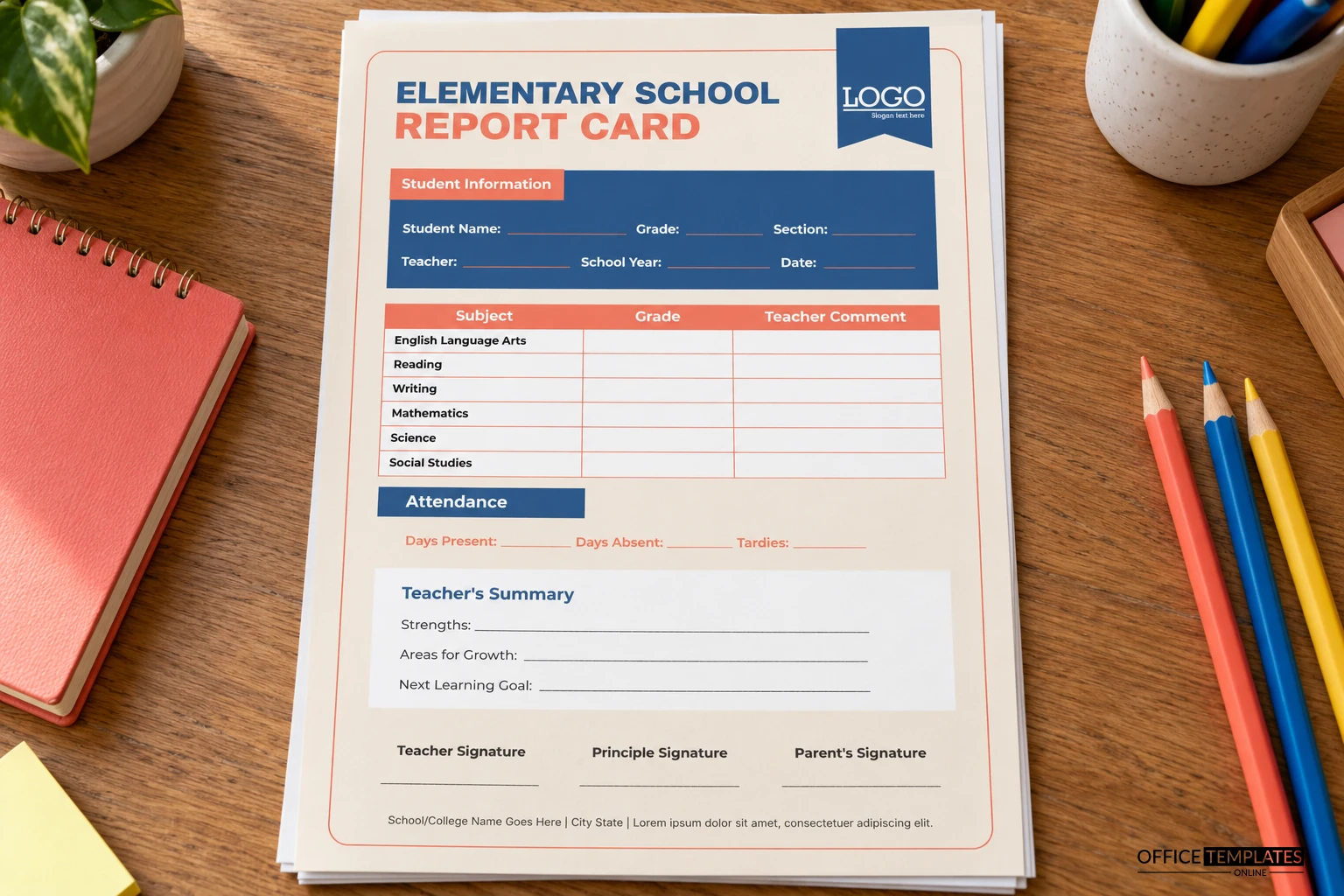
Elementary students often study several subjects during the same reporting period. Therefore, the academic section can be customized to match your school’s curriculum.
Add subjects such as English, Reading, Writing, Mathematics, Science, Social Studies, Art, Music, Physical Education, or Computer Studies. Teachers can then enter grades, marks, ratings, or other assessment results according to the school’s grading system.
If your curriculum changes, you can rename, remove, or add subjects without rebuilding the entire report card.
Show the Skills Behind the Grades
Grades provide measurable results, but they do not always explain how a child approaches learning. For this reason, the template can also include developmental and classroom skill assessments.
Areas Teachers Can Review
Consider evaluating:
- Class participation
- Communication
- Cooperation
- Responsibility
- Organization
- Independent work
- Following instructions
- Assignment completion
- Classroom behavior
- Respect for others
These areas provide additional context around academic performance. Moreover, they help parents recognize positive learning habits and identify skills that may require continued support.
Make Teacher Feedback Meaningful
A dedicated comments area allows teachers to add personal observations. Instead of relying entirely on grades, educators can briefly describe progress, achievements, challenges, or areas for improvement.
For example, comments may highlight stronger reading comprehension, improved mathematical skills, better participation, or the need for additional practice. Short, focused feedback keeps the report useful while giving families a clearer understanding of the student’s development.
Add a Direction for Continued Learning
The report card can also include space for goals or recommendations. Teachers may use this section to suggest specific areas for continued development during the next reporting period.
A recommendation could encourage regular reading, additional mathematics practice, improved organization, or greater participation in classroom activities. As a result, the report can help connect current performance with future learning objectives.
Keep Attendance Easy to Review
Attendance is another important part of a student’s school record. Include straightforward fields for days present, absences, late arrivals, and excused absences.
Placing attendance alongside academic information allows parents to review the student’s overall school record in one document. It also gives teachers a simple way to maintain consistent reporting information.
Adapt It to Your School’s System
Every elementary school may use different grading scales and assessment terminology. An editable Elementary School Report Card Template makes it easier to reflect those requirements.
You can modify subject names, grading categories, evaluation labels, comments, student information, and other fields. You can also remove unnecessary sections and add additional fields as needed.
This flexibility lets the report card support different elementary grade levels while maintaining a professional, consistent appearance.
Suitable for Different Reporting Periods
The template can be used whenever teachers need to document student progress. Adapt it for:
- Quarterly reports
- Midterm assessments
- Semester evaluations
- End-of-year reports
- Progress updates
- Parent-teacher meetings
Because the structure is editable, teachers can update the content for each reporting period without creating a new document from scratch.
Prepare Professional Student Reports
Clear reporting makes communication between schools and families more effective. With the Elementary School Report Card Template, teachers can organize academic results, classroom skills, attendance, feedback, and future goals in one convenient document.
Customize the fields, enter the latest student information, and prepare a polished report with less effort. The editable format gives educators a practical starting point while allowing each school to maintain its own reporting standards.