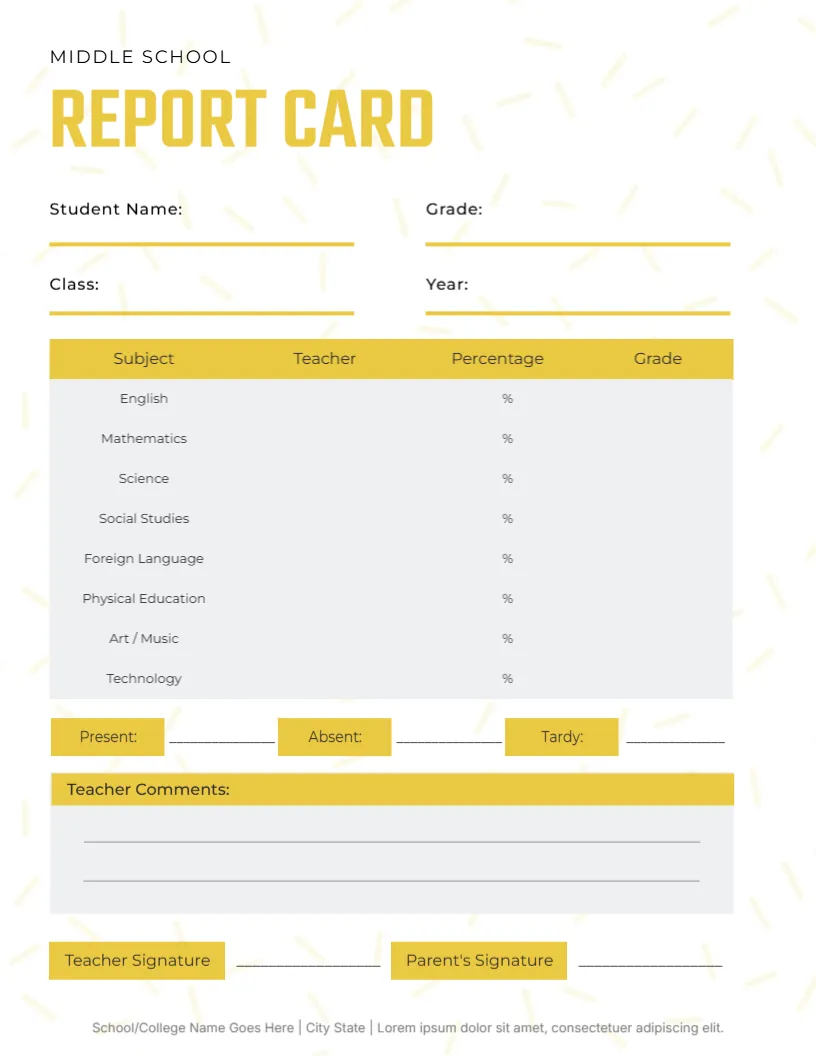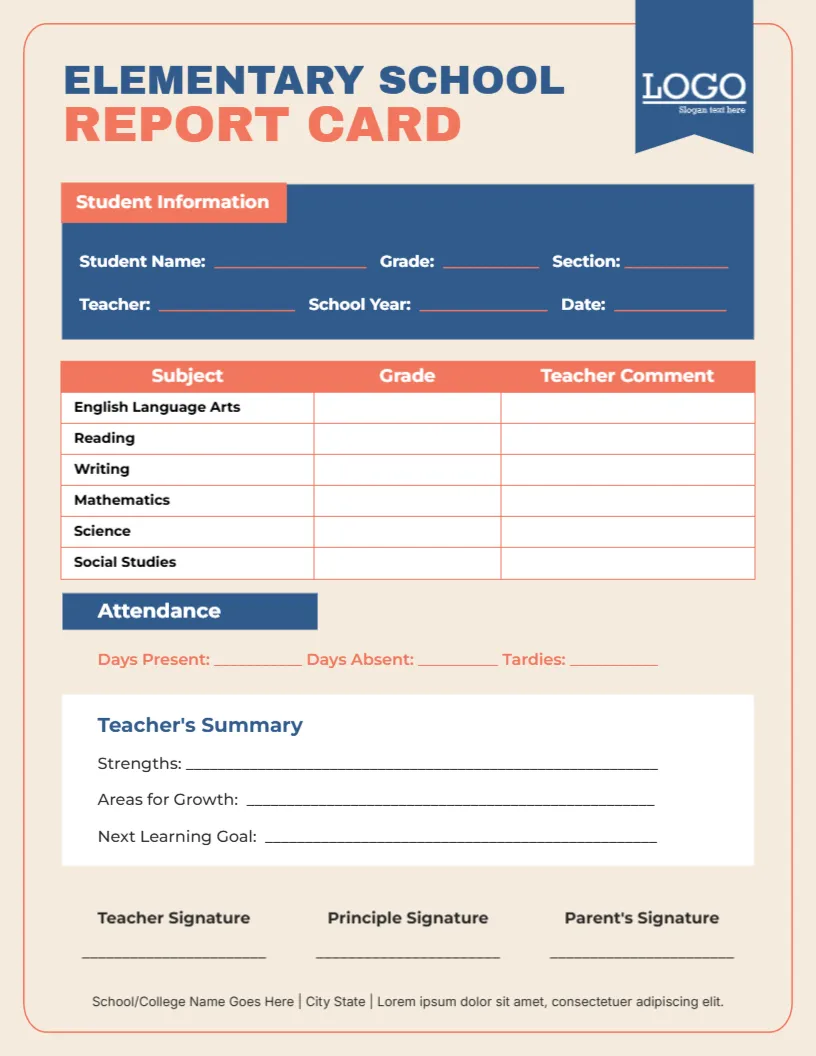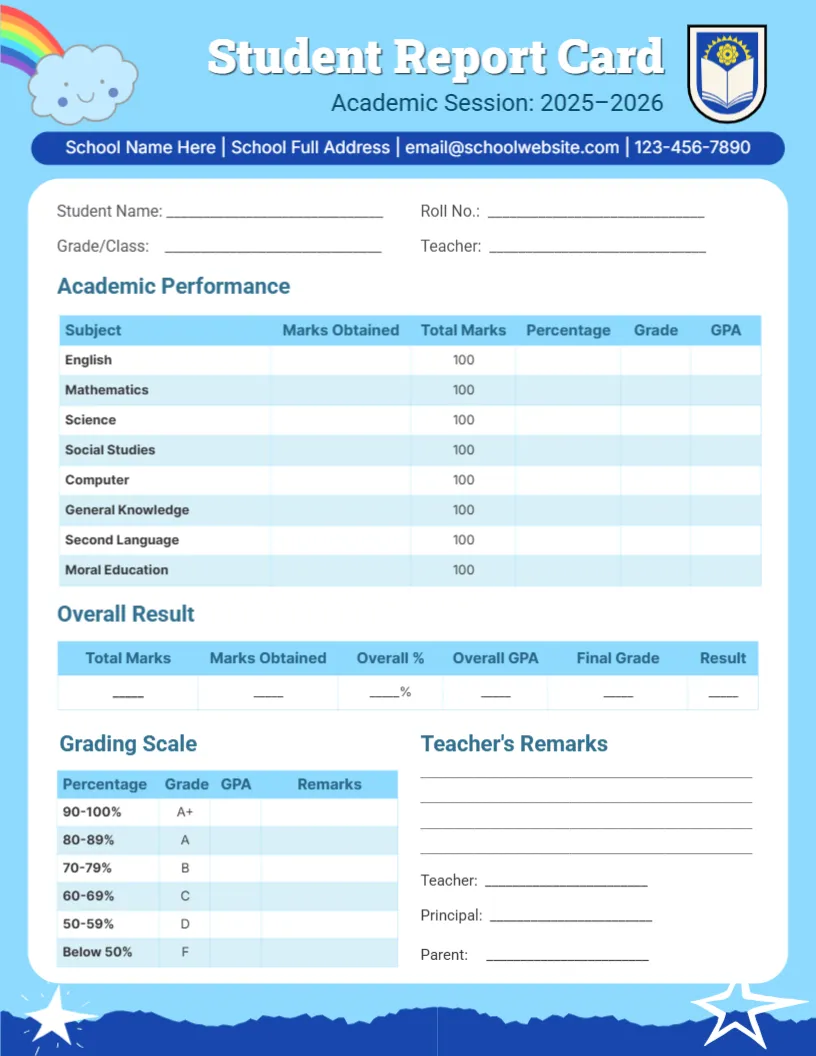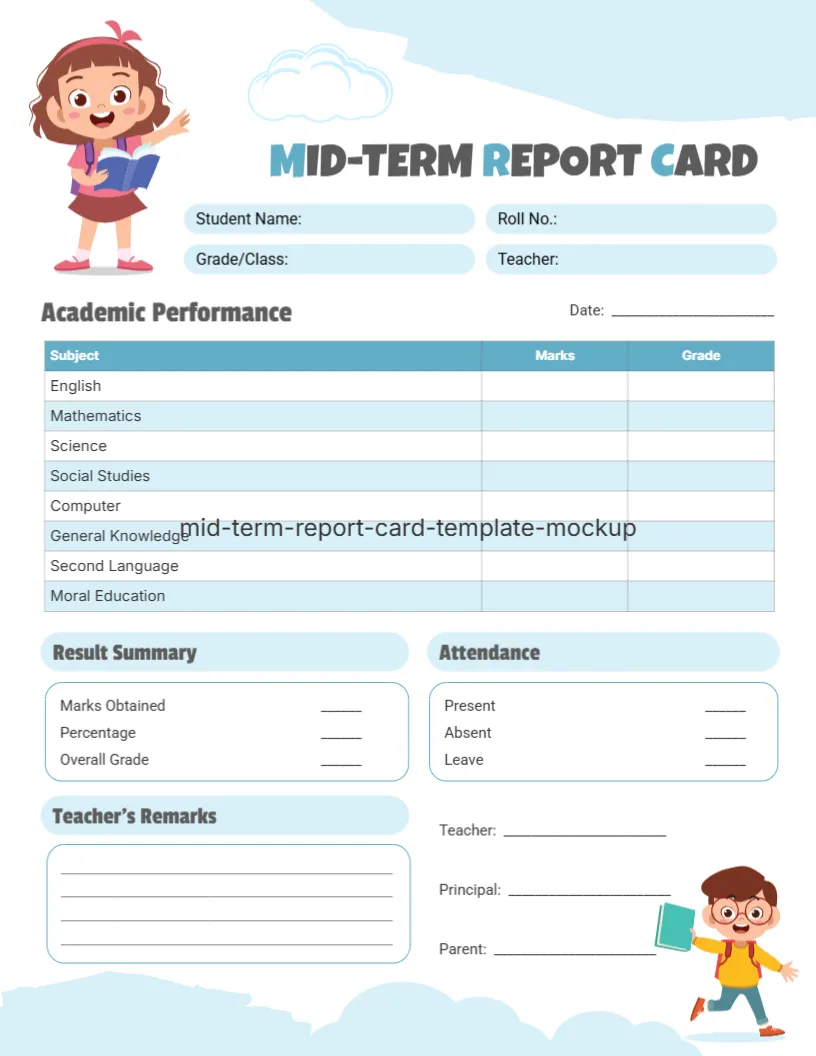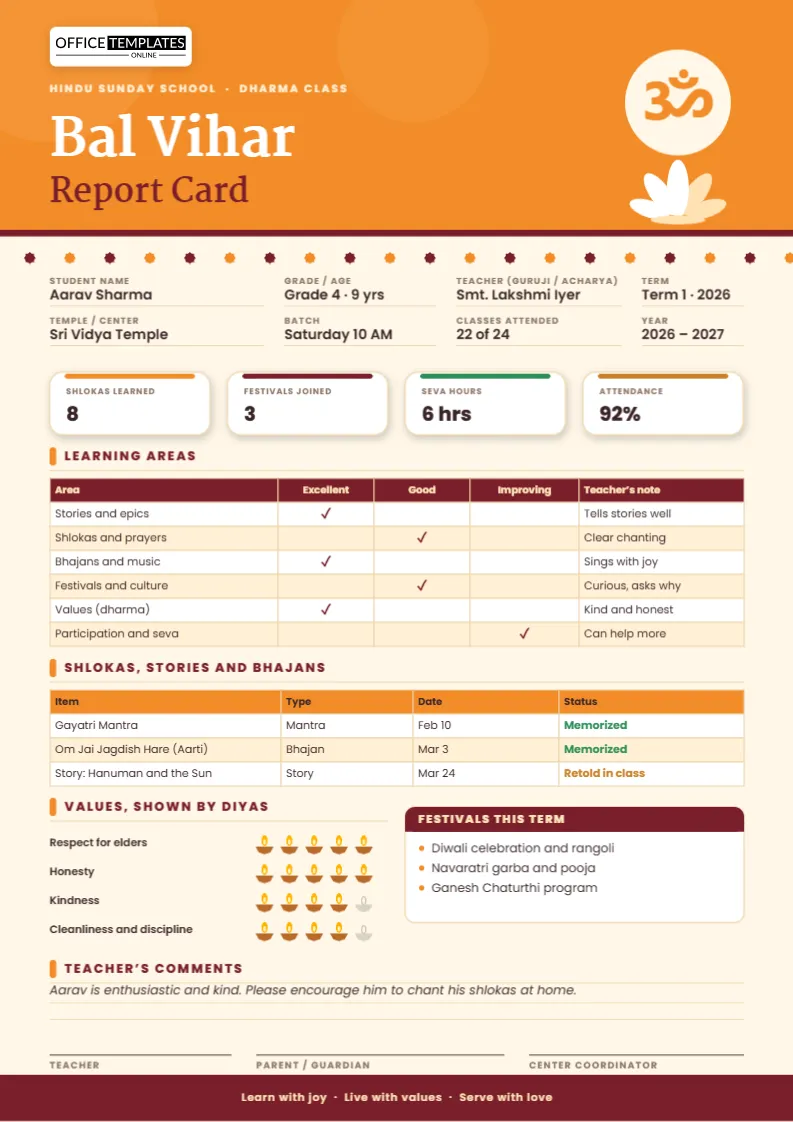
Every weekend, in temples, community halls, and living rooms around the world, volunteers gather children to teach them shlokas, stories, and values. Those classes are precious, but they rarely leave a record that families can hold in their hands. This Bal Vihar report card template gives dharma schools a warm, colorful way to say to each family, Here is what your child learned, and here is how they are growing.
Why weekend dharma schools benefit from a written report
Children in Bal Vihar and Hindu Sunday school classes learn for only a couple of hours each week. A short report at the end of each term shows parents what was covered, gives children a sense of achievement, and helps volunteer teachers keep a steady rhythm. It also helps a center demonstrate its impact to temple committees and donors, who often ask what the class accomplishes.
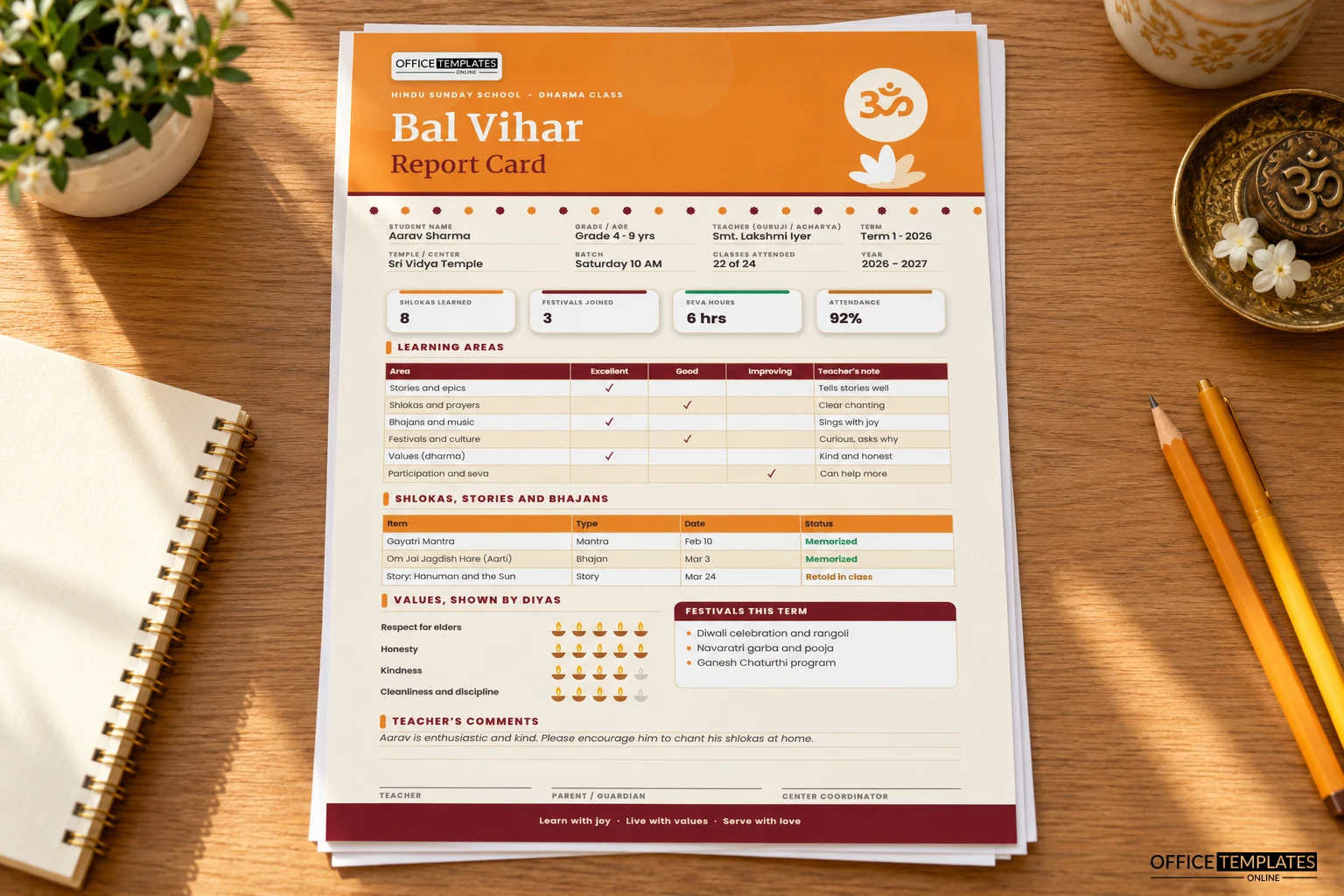
Walking through the card
The saffron header
A saffron header, a lotus, and the Om symbol set a welcoming tone. The title reads Bal Vihar Report Card, with a subtitle naming the Hindu Sunday school and dharma class. A row of small rangoli-style stars runs under the header like a festive border.
Student and center details
Eight fields cover the student’s name, grade or age, teacher (Guruji or Acharya), term, temple or center, batch, classes attended, and year.
Four achievement tiles
Shlokas learned, festivals joined, seva hours, and attendance give an instant snapshot. Rename them to match your program, for example, Bhajans learned, or Stories told.
Learning areas
A table lists six areas: stories and epics, shlokas and prayers, bhajans and music, festivals and culture, values (dharma), and participation and seva. A tick under Excellent, Good, or Improving records progress, with a short note from the teacher. Because it is a real editable table, you can add rows for yoga, art or language, or remove any you do not teach.
Shlokas, stories and bhajans
A second table records what each child has learned, such as the Gayatri Mantra, a familiar aarti, or a story like Hanuman and the Sun, with type, date and status. It is a simple way to keep a running list of repertoire.
Diyas: a gentler way to rate values
Instead of grades, the card shows values through small oil lamps. Five diyas appear for each value, such as respect for elders, honesty, kindness, cleanliness, and discipline, and lit lamps show the level reached. A lit diya feels like encouragement, and an unlit one simply means a light still to be kindled. To change a rating, recolor a lamp’s flame and bowl.
Festivals this term
A maroon box lists the festivals the class took part in, for instance, a Diwali celebration with rangoli, a Navaratri garba and pooja, or a Ganesh Chaturthi program. Parents enjoy seeing which occasions their child was part of, and it reminds children how learning connects to real celebrations.
Notes for volunteer teachers
- Keep comments short, positive, and specific: Sings with joy says more than Good.
- Fill in the card as you go, so end-of-term work takes minutes, not hours.
- Ask a co-teacher to read comments for tone before printing.
- Recognize effort and curiosity as much as memory.
- Invite children to say which festival or story they enjoyed most and add it to the comments.
Working with families in the diaspora
Many families in the diaspora hope that Bal Vihar will help their children stay connected with their heritage, but they may not know how to help at home. Use the teacher’s comments to suggest one simple activity, such as chanting a shloka at dinner, telling a bedtime story from the epics, or lighting a diya together on Fridays. A tiny habit repeated weekly does more than a big plan forgotten.
Filling in the card in five steps
- Open the template in the editor and type the student and center details.
- Update the four tiles and tick the learning areas.
- Fill in the shlokas table and recolor the diyas for each value.
- Edit the festivals box, add a comment, and sign.
- Download the card as a PDF, PNG, or JPG.
Getting it onto paper (A4)
The card is A4, 210 x 297 mm. Print in color on bright paper of 100 to 150 gsm, or on light card stock for a term-end version. Keep page margins at their default so the saffron header and maroon footer print without cropping. For families who prefer a digital copy, download a PNG or JPG and send it by phone, or use the PDF for email.
Before you start: three quick answers
Can I change the Devanagari and the Om symbol?
Yes. They are editable text in a Devanagari-capable Google Font; replace or delete them as you wish.
Can I rename the teacher title?
Yes. Type Guruji, Acharya, Didi, Teacher, or any title used in your center.
Does the card include images of deities?
No. The design uses only a lotus, diyas, rangoli stars, and the Om symbol.
A sample term at a glance
- September to October: Introduce a short prayer, two stories and a bhajan; prepare for Navaratri and Diwali.
- November: Celebrate Diwali with rangoli and lamps; begin a seva project such as a food drive.
- December to January: Learn a longer shloka; review stories from the epics.
- End of term: Complete the report card and hand it out at a short closing gathering.
Welcoming every family
Hindu families come from many regions, languages, and traditions, so each center has its own customs. Keep the language of the card inclusive and let teachers change names, festivals, and prayers to fit their community. A family from Gujarat, Tamil Nadu, Bengal, or Nepal should each feel at home. Invite parents to share a festival tradition from their region, and mention it in the comments to show the class values every voice.
Thanking volunteers
Bal Vihar teachers give their time freely, and a thank-you goes a long way. Print a spare copy of the card layout, replace the child’s details with a teacher’s name, and add a note of appreciation with the diyas all lit. It is a small gesture that shows how much the community values its teachers.
Celebrate what children learn each week. Open the template, add your class details, and download a Bal Vihar report card that families will keep.