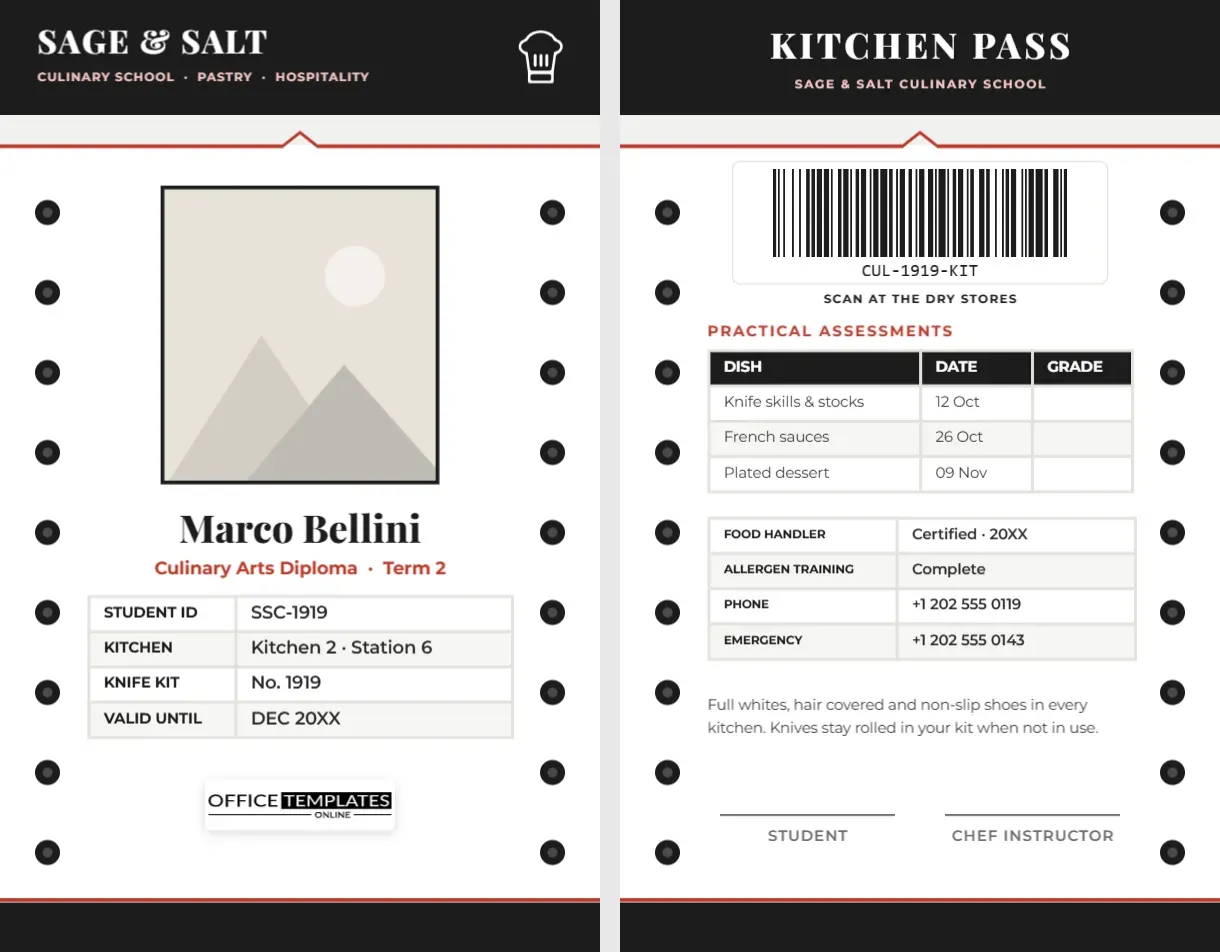
Culinary students spend their days in professional teaching kitchens, working stations, collecting ingredients from stores and carrying a knife kit worth hundreds of dollars. Their student ID has to work in that environment: it identifies them at the kitchen door and the dry stores, records their knife kit number, and shows that they have completed food safety training. This Culinary School Student ID Card is designed as the thing every cook wears with pride, a white double-breasted chef’s jacket.
Whites, Buttons and a Piped Collar
A charcoal band across the top holds SAGE & SALT in bold white Playfair Display, Culinary School · Pastry · Hospitality in soft pink, and a white toque (chef’s hat) icon in the corner. Just below, a light grey mandarin collar with a thin red piping line that dips into a small V at the centre forms the neckline of the jacket. The rest of the card is jacket white, with a column of dark knot buttons running down each side, like the double-breasted front of a classic chef’s coat.
The student’s photo sits between the button rows in a charcoal frame. Beneath it, the name is set in Playfair Display: Marco Bellini on the sample, with Culinary Arts Diploma · Term 2 in red. A table lists the student ID, kitchen and station, knife kit number, and validity date. Our logo sits on a white plate, and a charcoal band with a red line finishes the bottom, like the hem of an apron.
The card is a standard portrait CR80 badge, 2.125 inches wide and 3.375 inches tall.
The Kitchen Pass
The back keeps the collar and buttons, under a charcoal header reading KITCHEN PASS. A barcode labelled Scan at the dry stores suits schools that track ingredient requisitions or locker access. A practical assessment table lists dish, date and grade: knife skills and stocks, French sauces and a plated dessert, ready for instructors to fill in. A table records food handler certification, allergen training, phone and emergency contact. A note reminds students that full whites, covered hair, and non-slip shoes are required in every kitchen and that knives stay in the kit roll when not in use. Signature lines for the student and chef instructor finish the card.
What’s in a Culinary Student’s Knife Kit
| Tool | Main use |
|---|---|
| Chef’s knife (8–10 in) | Chopping, slicing, most everyday cutting |
| Paring knife | Peeling, trimming, small detailed work |
| Boning knife | Butchery of poultry, meat, and fish |
| Serrated bread knife | Bread, cakes, tomatoes |
| Honing steel | Keeping the edge aligned between sharpenings |
| Peeler, zester, piping tips, thermometer | Prep and pastry work, food safety checks |
The KNIFE KIT row on the card records the kit’s number, which helps return lost kits and deters theft in shared locker rooms.
Setting Up the Sage & Salt Card
- Photo: the charcoal-framed portrait between the button rows is the slot; select it and pick Replace Image. A photo in chef’s whites is ideal.
- School name: retype SAGE & SALT and the programmes line (culinary arts, baking and pastry, hospitality management).
- Tables: station, knife kit, and assessment details all update through Edit Data; add further practical exams with + Row.
- Barcode: enter the student’s store or locker number in the Barcodes & QR panel.
- Chef’s hat: the toque is an editable vector that recolours from its swatch.
- Buttons and piping: the button rows are grouped; recolour them black, gold or red to match your school’s jackets.
Kitchen Rules Every Student Learns First
Professional kitchens run on discipline. Arrive in clean, pressed whites with hair tied back and covered. Wash your hands on arrival, between tasks, and after touching raw proteins. Keep your station clean as you go. Call out behind when passing, and hot or sharp when carrying pans or knives. Never leave a knife in a sink of water. Label and date everything that goes into the walk-in. These habits are graded in practical assessments because they keep everyone safe and food wholesome.
Food Safety Certification
Most culinary programmes require students to earn a food handler or food safety manager certification early in their studies, and many employers expect it on the first day of an externship. Allergen awareness training is increasingly required too. The back of this card records both, with space to note the year, so the student can show it to externship chefs without digging through paperwork. Renew certificates before they expire, and update the card when you do.
Culinary Colleges, Pastry Schools and Hospitality Programmes
Culinary colleges, community college culinary programmes, pastry and baking schools, high school career and technical education kitchens, hospitality management programmes and cooking schools for adults can all use the design. Hotel and restaurant apprenticeship programmes can adapt it for apprentices, listing the section they are working in.
Printing Chef Whites
The mostly white design prints cleanly, but white cards show stains quickly in a kitchen, so print on PVC or laminate. Check that the red piping line and the button rows are crisp. Clip the card to your jacket or apron with a short retractable reel, not a dangling lanyard, which can catch on handles or fall into food.
Externships and Stages
Most culinary programmes end with an externship in a working restaurant, hotel or bakery, and many students also do short unpaid trial shifts, known as stages. Carrying a school ID shows the host kitchen that you are a registered student covered by the school’s agreement. Add the externship venue and chef’s name to the back of the card when it begins.
Culinary Student Questions
Can the card be used for a pastry programme?
Yes. Change the diploma line and the assessments to pastry skills such as laminated doughs and chocolate work.
What if my school’s jackets have black buttons?
The buttons are already charcoal; recolour them if your jackets use a different colour.
Should my knife kit number really be on the card?
Many schools recommend it; it links you to your kit if it is lost and helps security if it is stolen.
Open the template, dress your student in whites, record the knife kit and assessments, and send them into the kitchen ready for service.