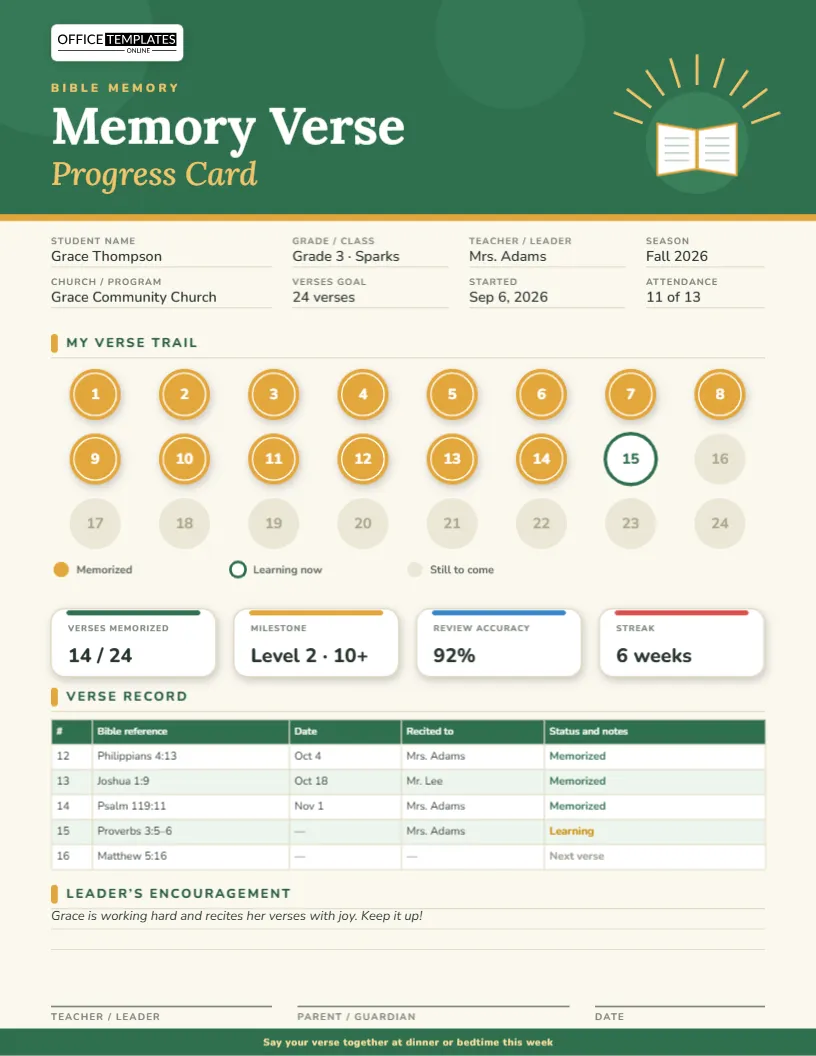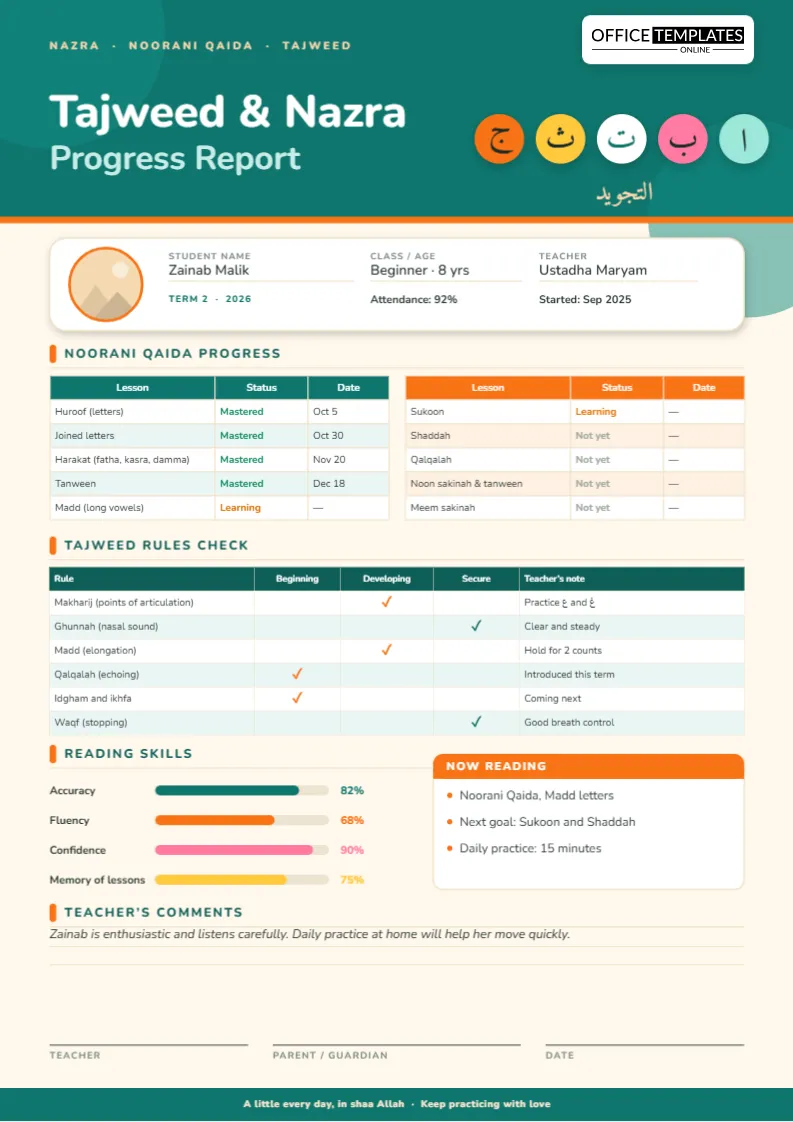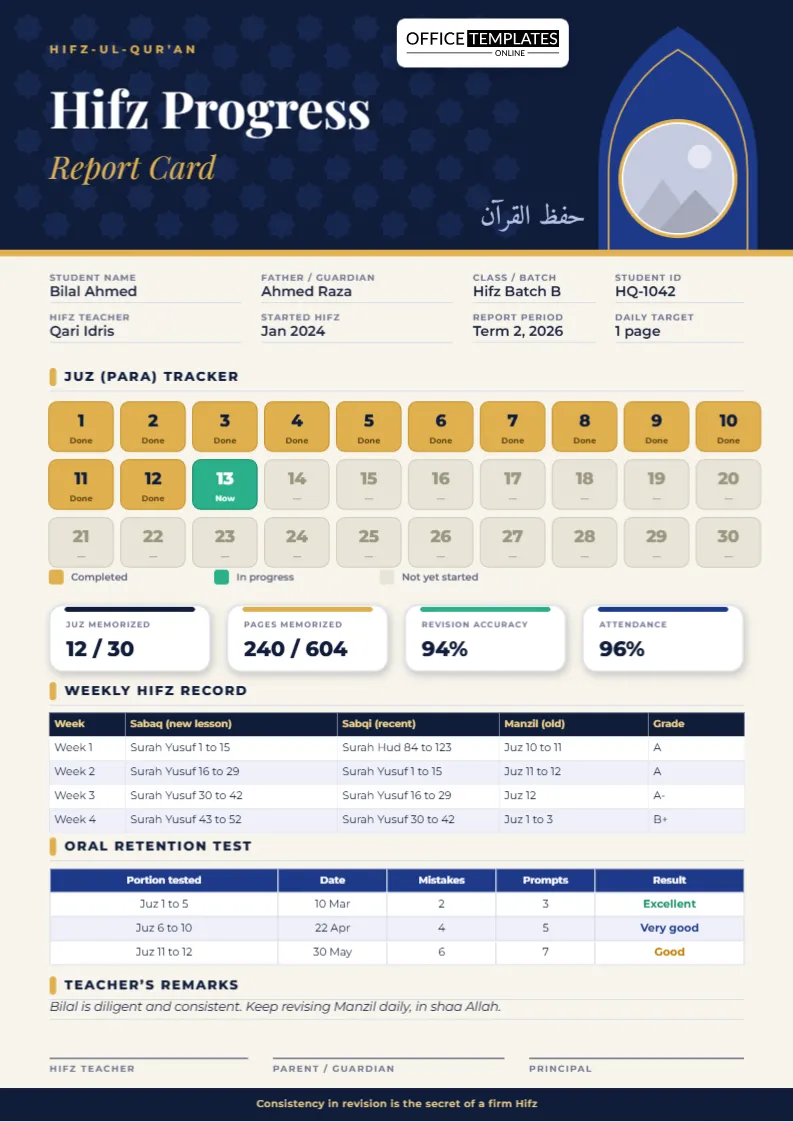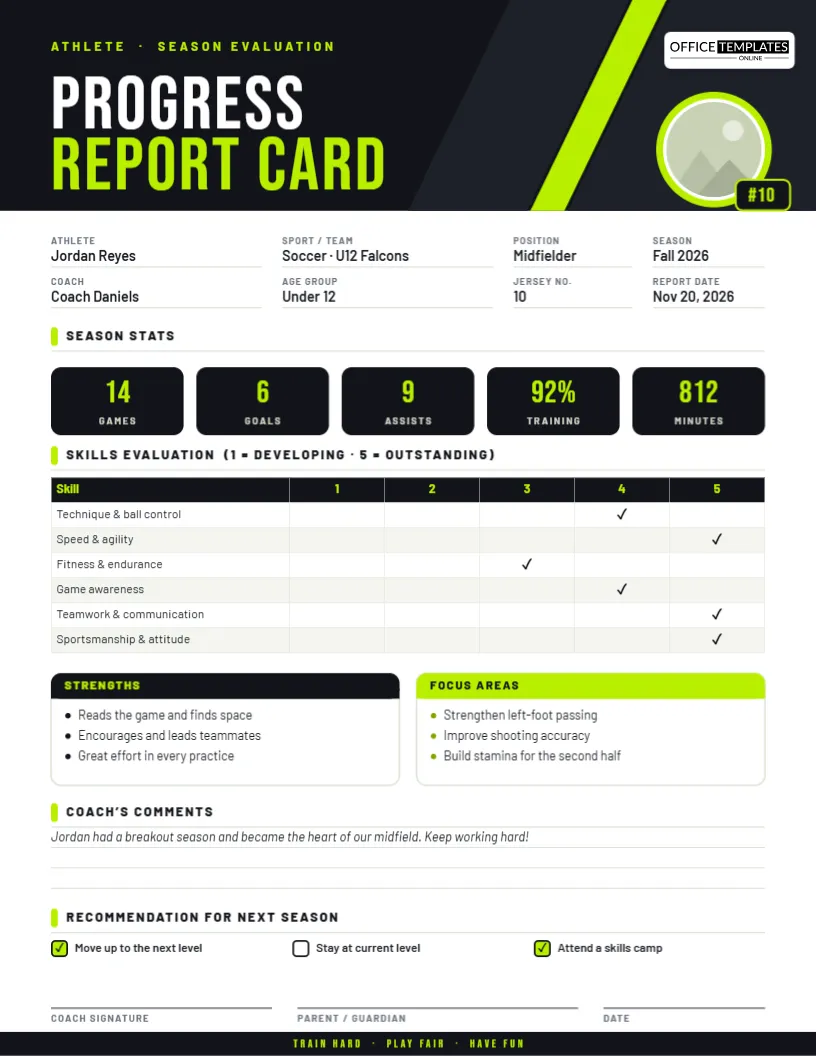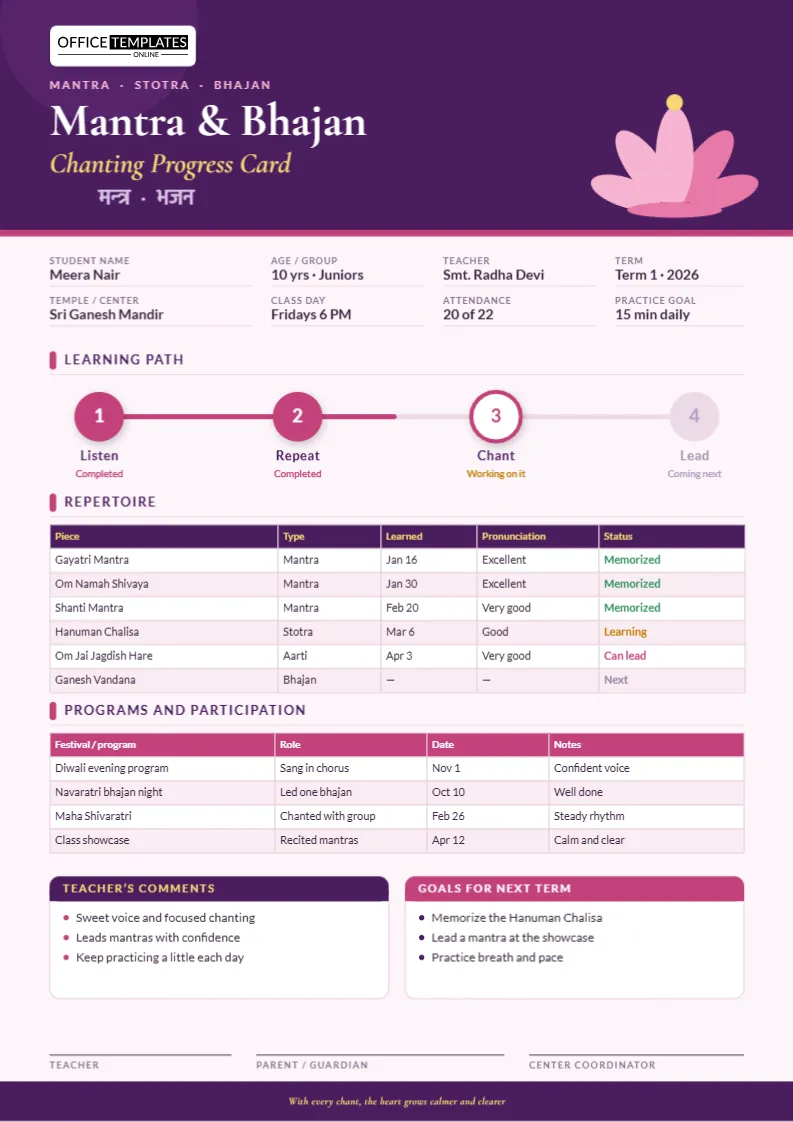
Chanting is a discipline of the ear, the breath and the heart. Children who learn mantras, stotras and bhajans in a temple class or music circle are building focus, memory and a sense of calm that can stay with them for life. Yet progress in chanting is hard to see: it lives in a voice and a moment. This mantra and bhajan chanting progress card template gives teachers a graceful way to capture it.
The four stages of learning to chant
Most teachers guide students through a path that looks something like this, and the card shows it at a glance as four connected circles.
Stage 1: Listen
The student hears the mantra or bhajan sung by the teacher or a recording, absorbing its rhythm and sound without pressure.
Stage 2: Repeat
The student repeats line by line after the teacher, correcting pronunciation and pace.
Stage 3: Chant
The student chants the whole piece from memory with steady rhythm, either alone or with a group.
Stage 4: Lead
The student leads the chant or bhajan for others, showing confidence and understanding.
The path on the card highlights completed stages in pink, shows the current stage with a ring and leaves the next stage in soft gray, with a short label under each: Completed, Working on it, or Coming next.
The repertoire table
Six rows list the pieces a student has learned. The sample includes the Gayatri Mantra, Om Namah Shivaya, a shanti mantra, the Hanuman Chalisa, an aarti and a bhajan to come. Each row has a type, the date learned, a pronunciation rating and a color-coded status, such as Memorized, Learning or Can lead. Replace the sample pieces with those your class actually learns, and add rows as the repertoire grows.
Programs and participation
Chanting comes alive when it is shared. A second table records festival programs and class showcases, with the student’s role, the date and a note. For example, a student might sing in the chorus at a Diwali program, lead one bhajan at a Navaratri night or chant with the group at a Maha Shivaratri gathering. Recording these moments encourages children to see chanting as part of community life.
Breath, posture and calm
Good chanting starts before the first syllable. Teachers often begin with a few slow breaths, an upright and relaxed posture and a moment of silence. Many of the notes on this card, such as “Calm and clear” or “Practice breath and pace”, reflect those foundations. Encourage students to notice how they feel after chanting; children often describe it as feeling quiet and happy.
Tips for temple and music teachers
- Teach short pieces first, so students quickly experience success.
- Record a class recording for home practice, with the family’s permission.
- Praise pronunciation and steadiness, not volume or speed.
- Give each child a chance to lead a line or verse.
- Explain the meaning of each piece in age-appropriate language.
Practice at home
A regular fifteen minutes is far more valuable than a long session once a week. Suggest that families choose a fixed time, such as after evening prayers, and a quiet corner. Parents do not need to know the words; listening with interest and saying “Please sing it for me” is enough to encourage a child. The goals box on the card is the perfect place to write one small practice target for the next term.
Preparing the chanting card
- Open the template in the editor and type the student, teacher, temple and class details.
- Recolor the learning path to show the current stage.
- Update the repertoire and programs tables.
- Write teacher’s comments and goals, sign and date.
- Download the card as a PDF, PNG or JPG.
Colors, fonts and paper
A deep plum header, a soft pink lotus and gold accents give the card a devotional, gentle mood. The Devanagari words for mantra and bhajan are set in a clean Google Font. The card is A4, 210 x 297 mm; print it in color on standard paper, or download a PNG or JPG for messaging.
Quick notes for chant teachers
Can I use it for kirtan, aarti or stotra classes?
Yes. Rename the title and the type column to fit your class.
Can I add a practice log?
Yes. Add rows to either table, or use the goals box to describe a home routine.
Does it include images of deities?
No. The design uses only a lotus, gentle geometric shapes and typography.
A sample class hour
- Five minutes: Quiet sitting and three slow breaths together.
- Ten minutes: Warm-up with a familiar mantra and simple vocal exercises.
- Twenty minutes: Learn a new piece line by line, with repetition and correction.
- Fifteen minutes: Review earlier pieces and let students take turns leading.
- Ten minutes: Close with an aarti or a shanti mantra, and note progress on each card.
Encouraging shy singers
Some children are quiet at first, and that is perfectly fine. Invite them to chant with the whole group, then in a small circle and finally with a friend. Praise their effort privately and record it kindly on the card, for example “Growing in confidence”. A child who feels safe to try will surprise you with how much they have learned.
Privacy and consent
If you record audio or video of children chanting, ask parents for permission and explain how the recordings will be used. Store reports and recordings securely, share the card only with the child’s family and follow your center’s safeguarding guidelines. A respectful approach keeps the class a trusted, joyful space for everyone.
Choosing the right repertoire
Start with pieces that are short, familiar and joyful, then add longer works as the class gains confidence. Balance mantras, which build focus, with bhajans, which build expression and love of music. Listen to what the students enjoy and ask them to suggest a piece for the next term. A repertoire chosen together is remembered longer and sung with more heart, and the card records that shared journey.
Help every young voice grow in confidence and calm. Open the template, add your student’s repertoire and download a chanting card today.