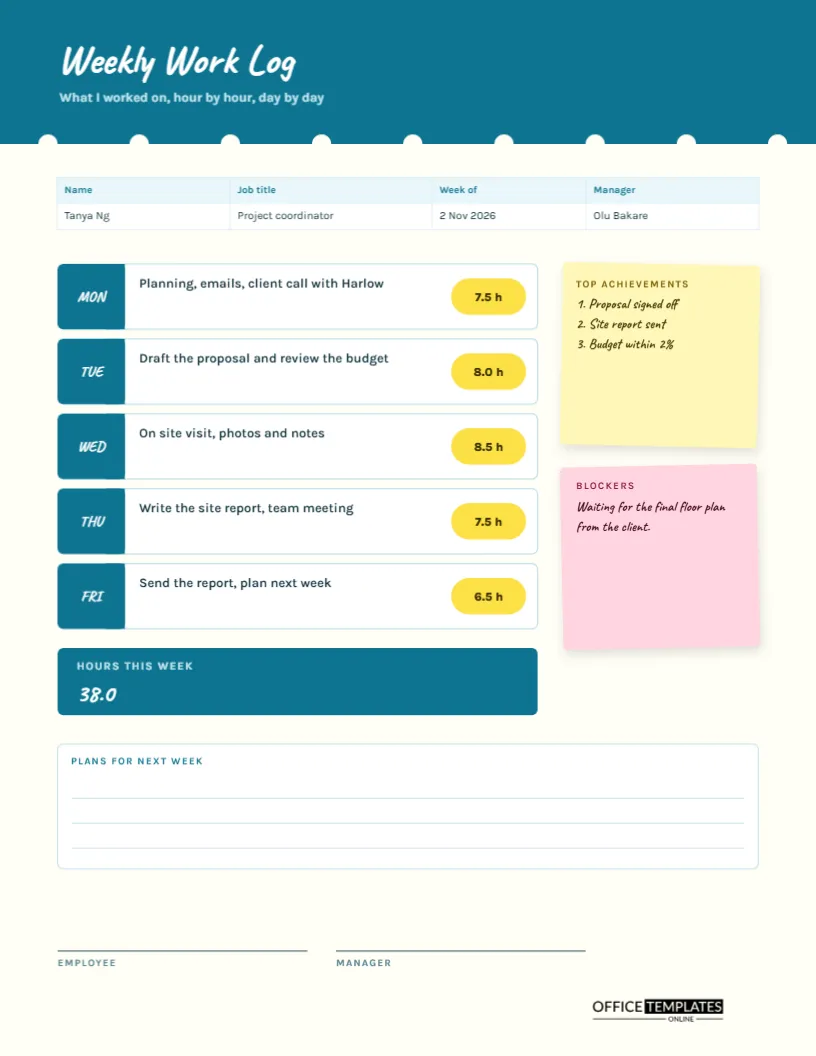
A good weekly report is short, honest, and easy to write. It says what you worked on, how long it took, what went well, and what is in the way. Most people put it off because the formats are dull or complicated. This US Letter page makes it light: a stack of day cards with an hours badge for each, two sticky notes for achievements and blockers, and a lined box for next week. Ten minutes on a Friday is enough.
A Cream Page With a Torn Notebook Edge
The page is a warm cream, like good notepaper. A teal band along the top has a row of small cream circles along its lower edge, like the punched holes of a spiral notebook. The title Weekly Work Log is set in Caveat, a handwriting-style typeface, and Karla sets the body text. The mix feels personal and approachable rather than corporate.
Name, Job Title, Week and Manager
A four-column strip records the name, job title, week, and manager. The sample is Tanya Ng, a project coordinator, for the week of 2 November 2026, reporting to Olu Bakare. Naming the manager tells the writer who the audience is and helps them choose how much detail to include.
Five Day Cards
| Day | What I worked on | Hours |
|---|---|---|
| Monday | Planning, emails, client call with Harlow | 7.5 |
| Tuesday | Draft the proposal and review the budget | 8.0 |
| Wednesday | On-site visit, photos and notes | 8.5 |
| Thursday | Write the site report, team meeting | 7.5 |
| Friday | Send the report, plan next week | 6.5 |
On the page, each row is a white card with a teal day label on the left and a yellow hours badge on the right.
Why Cards Work Better Than Rows
A card gives each day room for a sentence or two. It invites a short description instead of a single word. The yellow badge keeps the hours visible without taking attention from the story. Together they produce a report that reads like a diary of the week and can still be added up in seconds.
Two Sticky Notes
At the right side of the cards, two slightly tilted sticky notes hold top achievements and blockers. The yellow note lists three wins: proposal signed off, site report sent, and budget within 2 percent. The pink note lists one blocker: waiting for the final floor plan from the client. The notes are written in Caveat, which adds to the personal tone.
Why Achievements and Blockers Matter
Hours alone do not tell a manager whether a week went well. Achievements show the output, and blockers show what is slowing it down. A manager who sees a blocker can often remove it in minutes, long before the next meeting. Without the note, the problem sits quietly until it becomes a delay.
The Hours Tile
A teal tile under the cards reports hours this week: 38.0. The number is the sum of the five badges. For people who need to log hours for pay or billing, this tile can feed straight into a timesheet. For others, it is a simple gauge of how busy the week was and whether it matches their contract.
Plans for Next Week
A lined box at the foot is for next week’s plans. Writing the plan on Friday while the week is fresh makes Monday easier, because you start with a list instead of a blank page. It also gives your manager a view of what is coming, and a chance to say if priorities should change.
Writing the Report in Ten Minutes
- Each evening, write one line on the day’s card.
- Note the hours worked beside it.
- On Friday, choose up to three achievements.
- Write any blockers and who could help.
- Add the hours tile and sketch next week’s plan.
- Sign and send to your manager.
What Makes a Good Daily Line
A good line names the task and the outcome: draft the proposal and review the budget. It tells more than worked on proposal. Avoid vague words like various, stuff, and admin unless they truly cover the time. If you meet a client or visit a site, mention who or where. Precise lines are also useful later when you need to remember what happened.
Using the Log for Appraisals and Promotion Cases
A year of weekly logs is a gold mine for an appraisal. You can see the achievements you forgot, count the projects you completed, and show the range of your work. Keep the pages in a folder, or scan them monthly. People who keep logs rarely struggle to answer the question What have you done this year.
Working Remotely or in Hybrid Teams
When colleagues do not share an office, a weekly log replaces the casual conversation by the coffee machine. A manager can see what each person did and where help is needed, without arranging a meeting. Send it on Fridays by email, or print and place it in a shared folder.
Changing Days, Notes and Colours on the Work Log
All text is editable. Change the day labels for a six-day week, retitle the sticky notes to wins and worries, or recolour the cards to match your team. The sticky notes are rectangles with a soft shadow and a slight tilt, so you can change their size or angle.
Employee and Manager Sign-off
The employee and the manager sign at the foot of the US Letter page. In black and white, the teal band prints dark grey and the yellow and pink notes print as light tints, with the writing clear on each.
Sharing Weekly Logs With Your Manager
Send the log on the same day each week, ideally Friday afternoon, so that your manager can plan their reading. Keep your achievements specific and your blockers actionable. Managers value a short, honest page over a long polished one, and a steady habit builds trust more than any single report.
Weekly Work Log Questions
Is the log suitable for billing clients?
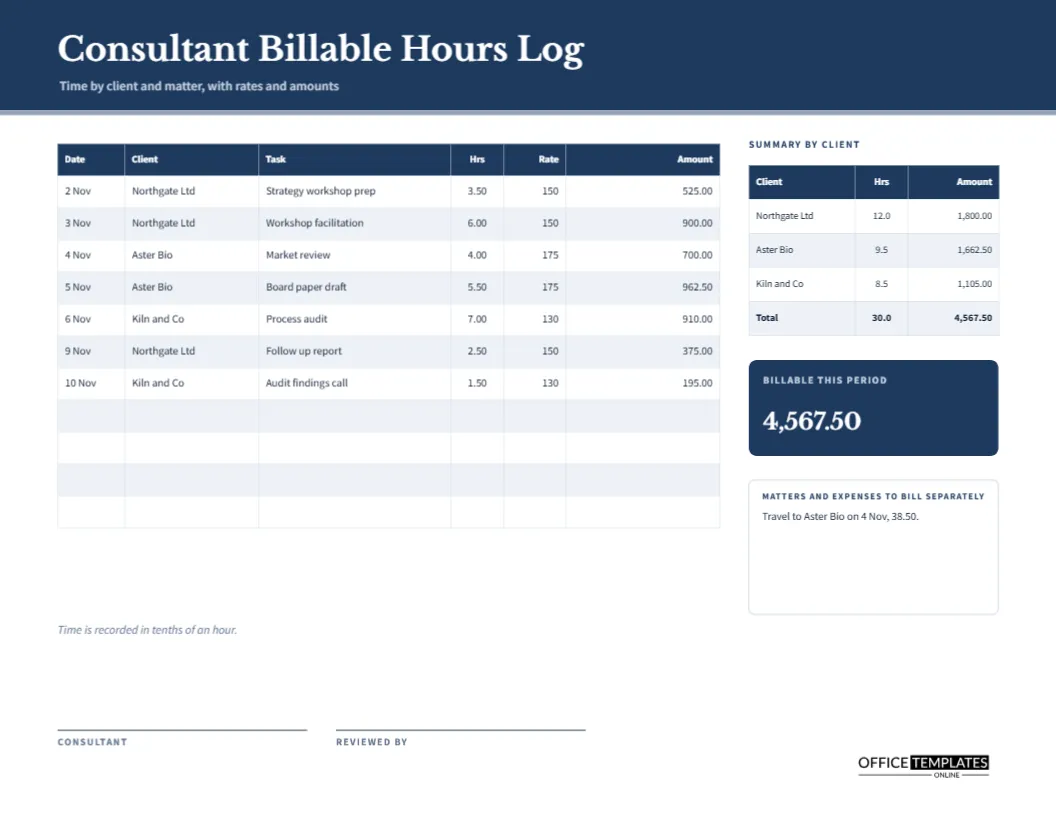
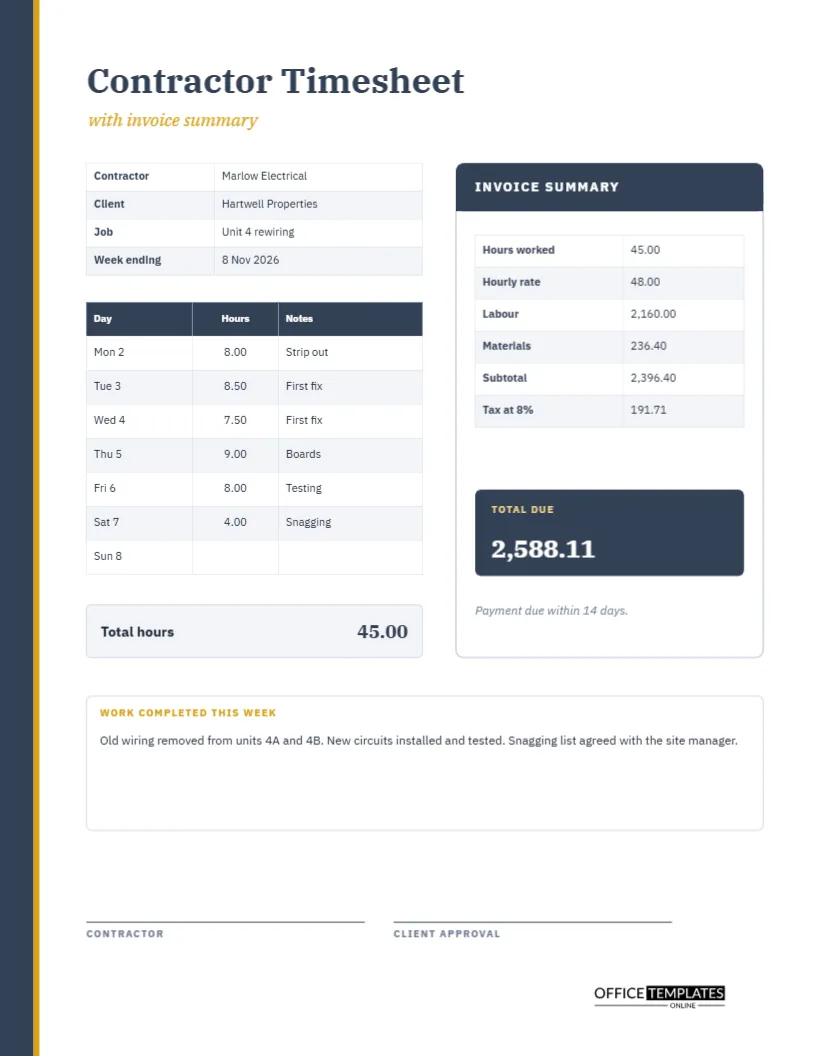
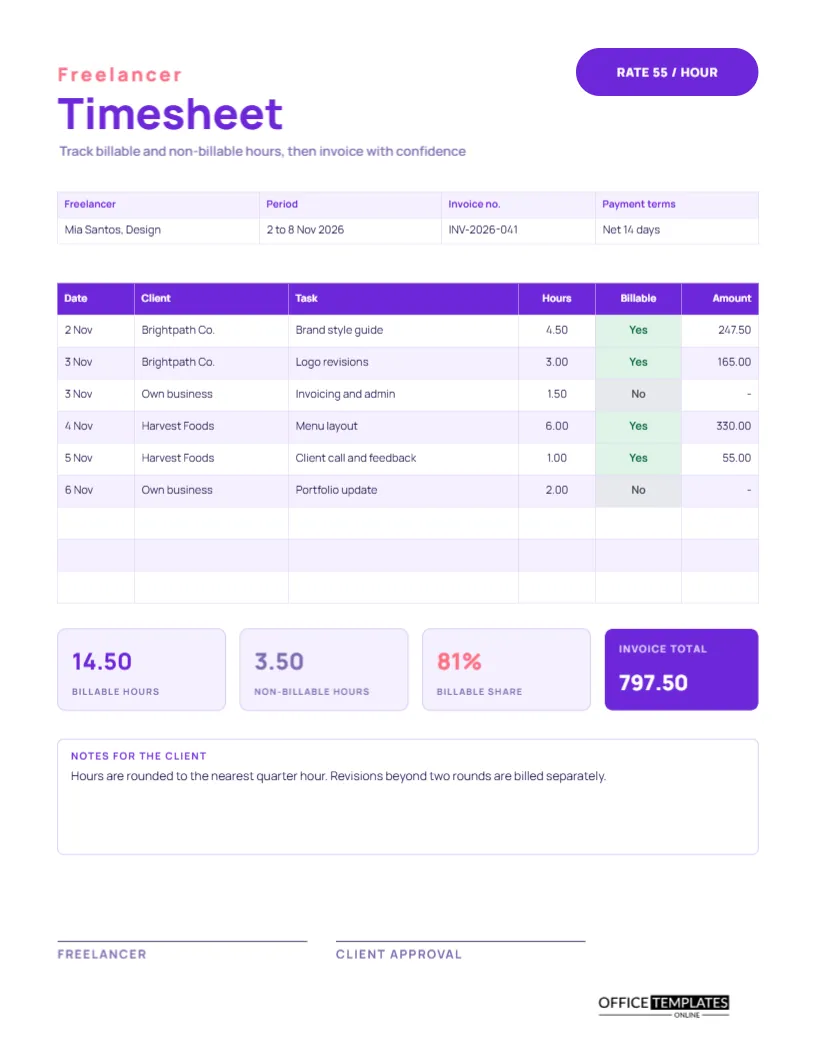
It works as an internal record. For billing, use the freelancer or consultant timesheets in this collection.
Can I use it for a team?
Each person completes their own page. A manager can compile the achievements into a team summary.
Do I have to write every day?
No. A few minutes on Friday works, but daily lines are more accurate.