A no-spend challenge is simple: for one month, you buy only the essentials. No takeaway coffee, no online shopping, no impulse buys. It is one of the fastest ways to save money and to see where your money really goes. This printable calendar is designed to see you through the month, week by week.
The Receipt-Style Challenge Page
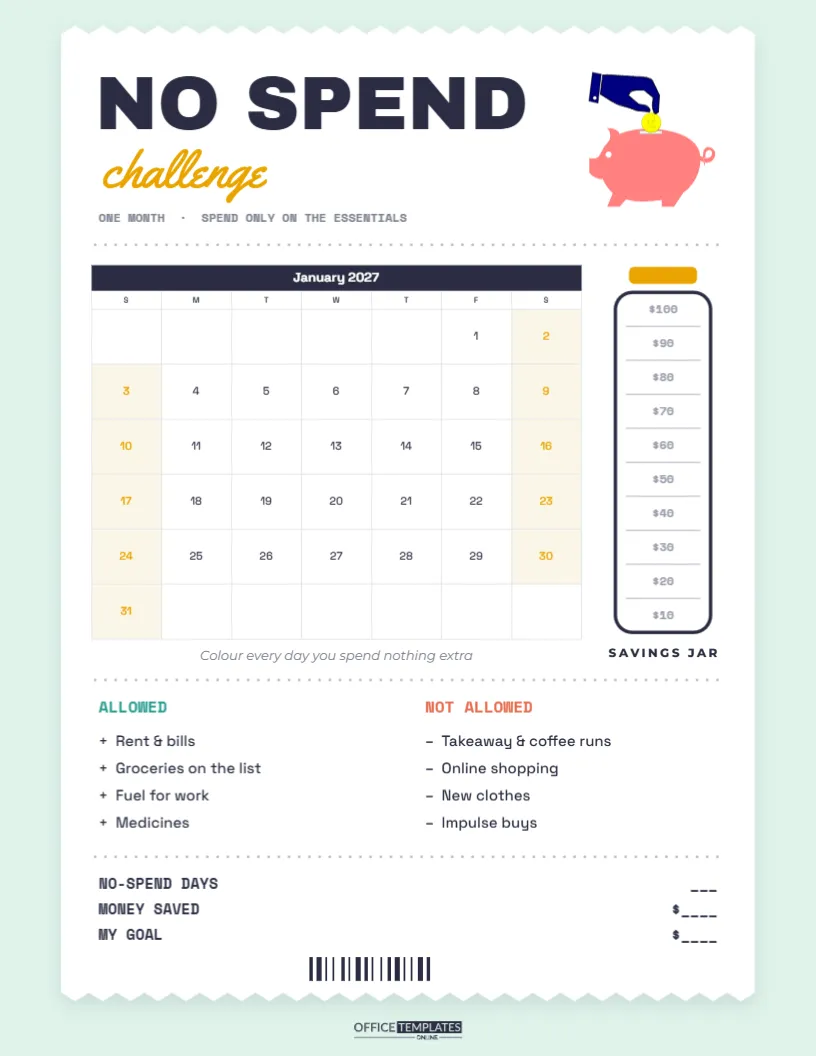
The page is US Letter portrait on a fresh mint background. In the centre, a long white till receipt with zig-zag torn edges at the top and bottom holds everything. NO SPEND is set in heavy Archivo Black, with challenge in mustard Yellowtail script beneath it and ONE MONTH · SPEND ONLY ON THE ESSENTIALS in typewriter-style Space Mono. A pink piggy bank with a coin going in sits on the right. Dotted lines divide the receipt into sections, just like a real one.
Below the title is a month calendar with a charcoal title row and weekend dates in mustard, and beside it a tall savings jar drawn in outline, divided into ten levels from $10 at the bottom to $100 at the top. Further down are two lists, ALLOWED and NOT ALLOWED, then three receipt-style total lines and a barcode at the bottom of the receipt. The OTO logo sits on the mint background below.
Before You Start: Set the Rules
Decide your rules before day one, because grey areas are where challenges fail. The template suggests:
| Allowed | Not allowed |
|---|---|
| Rent and bills | Takeaway and coffee runs |
| Groceries on the list | Online shopping |
| Fuel for work | New clothes |
| Medicines | Impulse buys |
Click either list to edit it. Some people allow one planned treat a week; others ban all eating out. There is no wrong answer, as long as the rules are written down and agreed by everyone in the household.
Week 1: Notice Every Temptation
The first week is about awareness. Each day you spend nothing outside the allowed list, colour that date on the calendar. You will quickly notice the habits that cost money: the coffee on the way to work, the snack at the petrol station, the just browsing scroll before bed. Write the temptations on the back of the page; seeing them listed is often enough to break them. Use up what is already in the cupboards and freezer, and plan meals around it.
Week 2: Replace, Don’t Just Remove
By the second week, the novelty wears off. The trick is to replace spending with free alternatives. Make coffee at home in a travel cup. Swap a restaurant meal for a picnic or a potluck with friends. Borrow books and films from the library. Walk or cycle instead of paying for parking. Each time you skip a planned spend, add the amount you would have spent to the savings jar by colouring in the levels. Watching the jar fill is a powerful motivator.
Week 3: Handle the Hard Days
Birthdays, social events and bad days are the real test. Plan for them: bake a cake instead of buying a gift, suggest a walk instead of drinks, or set a strict budget for an unavoidable event and note it on the calendar. If you slip, do not give up. Leave that date uncoloured, write down what happened, and carry on the next day. A month with 25 no-spend days is still a huge success.
Week 4: Count What You Saved
In the final week, fill in the three total lines at the bottom of the receipt: NO-SPEND DAYS (count the coloured dates), MONEY SAVED (add up the jar) and MY GOAL (what you will do with the money). Move the savings into a separate account straight away, before it disappears into everyday spending. Many people use their first challenge to start an emergency fund or pay down a credit card.
After the Challenge: Keep the Best Habits
Few people keep a full no-spend lifestyle forever, and that is not the point. The goal is to come out with two or three new habits that last, such as making coffee at home or unsubscribing from shop emails. Some people repeat the challenge every January or every quarter. Others run a no-spend weekend once a month. The calendar works for all of these.
Editing the Calendar and Jar
The month calendar is the editor’s Calendar object: open Calendar Options to set the month and year of your challenge, or start the week on Monday. The jar’s level labels are plain text, so change them to suit your goal, for example, $25 steps up to $250 or £ instead of $. Recolour the mint background, the mustard script, and the piggy bank to your taste. Fonts are Archivo Black, Yellowtail, Space Mono, and Space Grotesk, all Google Fonts.
Why the Receipt Design Works
Receipts are the everyday evidence of spending, so turning the whole challenge into one long receipt is a small joke with a serious point. Instead of a list of things bought, this receipt records money not spent. The dotted dividers, typewriter font, and barcode make it feel familiar and playful, which matters when you are trying to stick with something for thirty days. A tracker that makes you smile is a tracker you keep looking at.
Doing the Challenge Together
A no-spend month is easier with company. Print a copy for your partner, housemates or a friend, and check in at the end of each week to compare coloured days and jar levels. Children can join in with their own version, saving pocket money for something they really want.
Printing the Receipt Calendar
Download the PDF and print on letter paper. Stick it on the fridge or inside your wallet folder where you will see it before every purchase. Coloured pencils or highlighters work well for the calendar and jar.
If you want to repeat the challenge, print a fresh receipt each time and keep the finished ones together. Comparing the totals from your first and third challenge shows how much easier saving becomes once the habits stick, and seeing the jars side by side is a real confidence boost.
Thirty days, a few simple rules, and a jar that fills up. Your future self will thank you.