What’s for dinner? It’s asked in millions of kitchens every evening, usually at 5:30 PM, usually to someone who has not decided. A monthly meal planner calendar answers the question weeks in advance. Here are nine ways this one makes everyday cooking easier, cheaper, and calmer.
1. You Decide Dinners Once a Month, Not Every Day
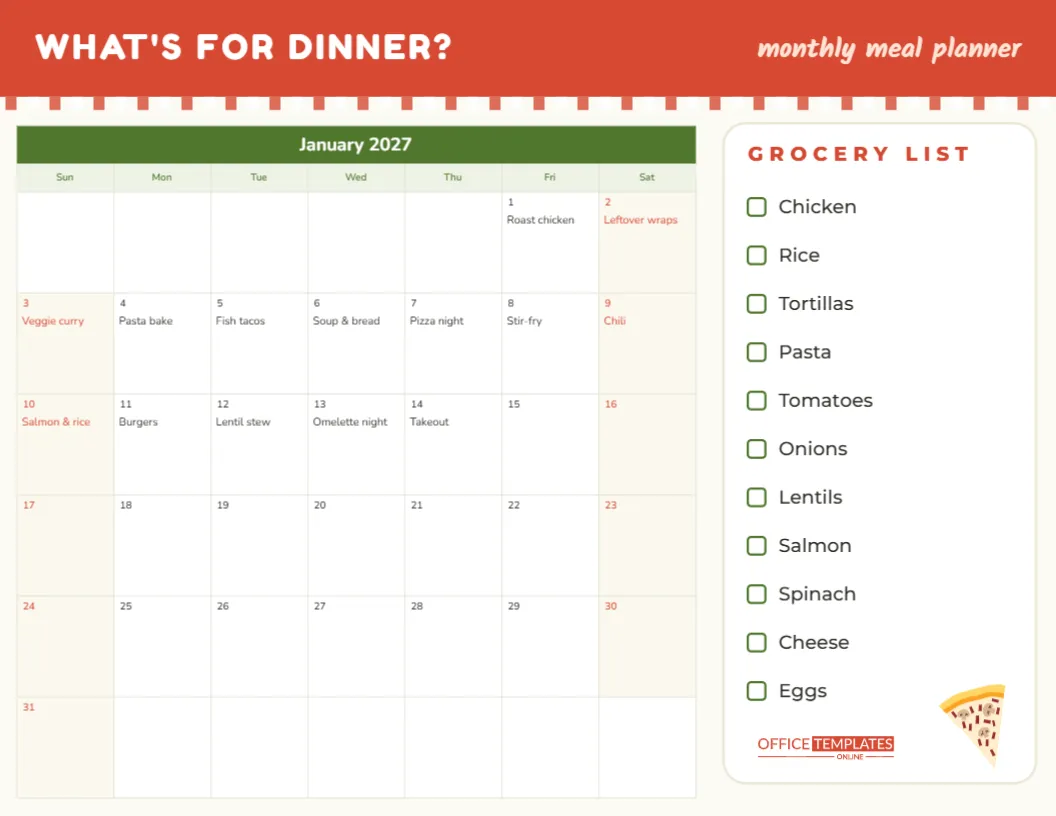
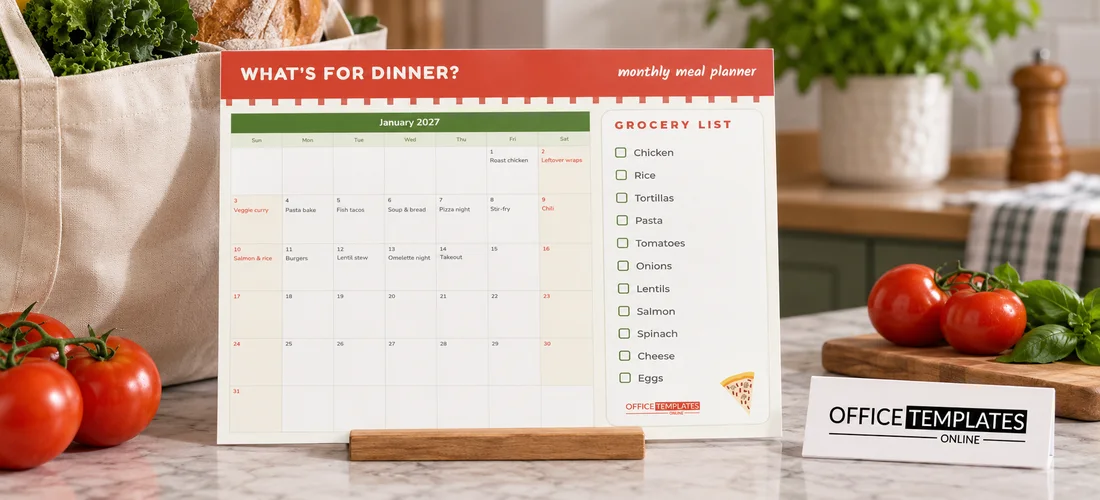
Decision fatigue is real. Planning a month of dinners in one relaxed session means you never have to think on your feet after a long day. The calendar is US Letter landscape, 11 x 8.5 inches, with a tomato-red header that reads WHAT’S FOR DINNER? in white Fredoka One and a monthly meal planner in peach handwriting. A little red-and-white gingham strip runs under the header, like the edge of a kitchen tablecloth.
2. Every Dinner Sits in Its Own Square
The month calendar uses the editor’s Task Calendar style, so each date holds a typed note. The sample fills the first two weeks of January 2027: roast chicken, leftover wraps, veggie curry, pasta bake, fish tacos, soup and bread, pizza night, stir-fry, chili, salmon and rice, burgers, lentil stew, omelette night and takeout. The title row is olive green, the weekday row pale sage, and weekend numbers are picked out in tomato red. Open Calendar Options to type your own meals into each date.
3. Leftovers: Get a Plan
Notice Leftover wraps the day after roast chicken. Planning a leftovers night after a big cook stops food going to waste and gives you an easy evening. Good pairs include roast chicken in wraps or soup, chili in baked potatoes, curry in rice bowls, and pasta bake into lunchboxes.
4. The Grocery List Writes Itself
A white panel on the right holds a GROCERY LIST with eleven checkboxes: chicken, rice, tortillas, pasta, tomatoes, onions, lentils, salmon, spinach, cheese and eggs. Once your meals are planned, read down the month and add every ingredient you need. Tick items off at the shop. A little pizza slice illustration and the OTO logo sit at the bottom of the panel.
5. Themed Nights Make Planning Faster
Many families give each weekday a theme, which narrows the choices without becoming boring.
| Day | Theme | Ideas |
|---|---|---|
| Monday | Meat-free | Veggie curry, lentil stew, bean chili |
| Tuesday | Tacos and wraps | Fish tacos, chicken wraps, burritos |
| Wednesday | Pasta | Pasta bake, carbonara, pesto pasta |
| Thursday | Stir-fry | Chicken stir-fry, fried rice, noodles |
| Friday | Fun food | Pizza night, burgers, takeout |
| Saturday | Try something new | A new recipe or cuisine |
| Sunday | Roast and leftovers plan | Roast chicken, roast vegetables |
6. It Saves Money
Meal planning is one of the simplest ways to cut a food budget. You buy only what you need, use what you already have, and avoid expensive last-minute takeaways. Check the fridge and cupboards before planning, and build the first few meals around what needs using up. Batch-buying staples such as rice, pasta and lentils also brings costs down.
7. Everyone Knows the Plan
When the calendar hangs on the fridge, children stop asking what is for dinner, and anyone who gets home first can start cooking. Teenagers can take a night each, which builds real kitchen skills. If someone has a late activity, put a slow-cooker meal on that date.
8. It Works for Special Diets
Families managing allergies, diabetes, vegetarian eating, or weight goals benefit most from planning. Mark meals that suit everyone, and plan easy swaps for family members with different needs. Add a small V or GF to the note for vegetarian or gluten-free meals.
9. You Can Reuse Good Months
When a month of meals works well, keep it. Save the file, and next time switch the month in Calendar Options; your typed meals stay attached to their dates, so update them as needed. Many families build three or four favourite monthly plans and rotate them through the year, adjusting for seasonal produce.
10. Batch Cooking Becomes Easy
With the month in view, you can spot meals that share ingredients and cook them together. Make a big pot of tomato sauce on Sunday for Wednesday’s pasta bake and Friday’s pizza night. Cook a double batch of chili and freeze half for a busy evening later in the month. Write from freezer in the note on that date so you remember to defrost it the night before. A little planning on the weekend saves hours during the week.
11. Children Learn About Food
Let children choose one dinner each week and write it on the calendar. They learn about balanced meals, budgets, and shopping, and they are far more likely to eat dinners they chose. Older children can help cook their chosen meal, building confidence and skills they will use for life.
12. Busy Evenings Get Easy Meals
Look at the family calendar before you plan dinners. On evenings with late practices, meetings, or appointments, schedule the quickest meals: omelettes, wraps, a slow-cooker dish, or a freezer meal. Save the longer recipes for relaxed weekends. Matching meals to your week’s rhythm is the secret that makes meal plans actually work, rather than looking good on paper and falling apart by Wednesday. Write a small clock symbol on the quick-meal dates so anyone cooking knows it is a fast night.
Making the Planner Yours
The tomato, olive and cream palette feels homely and fresh. Change the header colour, the gingham strip, or the calendar colours in Calendar Options to match your kitchen. Rename the header to Family Dinners or Meal Plan. The grocery list items are editable, and you can add more lines below. Fonts are Fredoka One, Kalam, and Nunito, all from Google Fonts.
A Printed Plan for the Kitchen
Download the PDF and print in landscape on letter paper. If you prefer to handwrite meals, delete the sample notes before printing. For a reusable planner, laminate a blank month and use dry-erase markers. Print a fresh grocery list each week by duplicating the page and deleting the calendar.
Plan once, shop smarter, and enjoy dinner time again. The answer to What’s for dinner? is on the fridge.