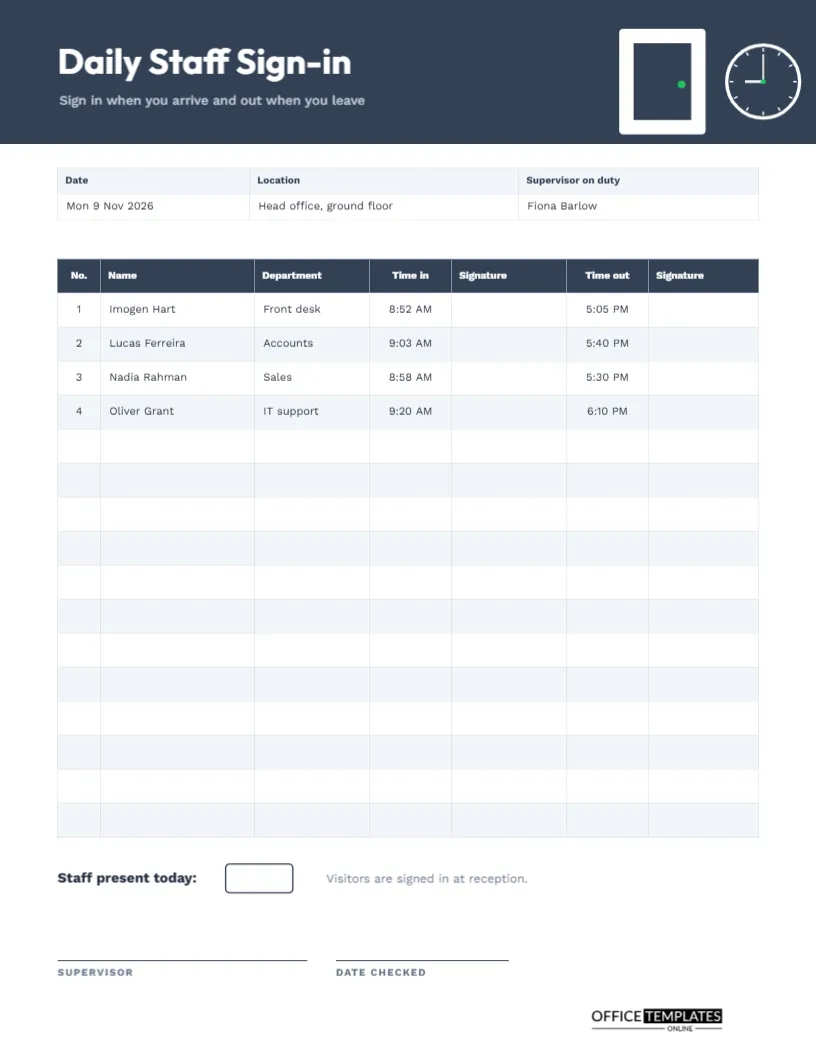
The oldest form of attendance record is still the most useful: a sheet by the door where everyone writes their name when they arrive and again when they leave. It needs no software, no login, and no training. It also answers urgent questions fast. Who is in the building right now? Did the late delivery driver actually sign in? Who was here when the alarm went off? This US Letter sheet gives each person a line with a time and a signature for coming and going.
A Door, a Handle and a Wall Clock
The slate header carries a small white door on the right with a green handle, and beside it a round clock face that reads nine o’clock. The picture explains the purpose in one look: arrival and departure. The title Daily Staff Sign-in is set in Outfit, a clean rounded sans. Work Sans, with its easy-to-read forms, sets everything else.
Date, Location and Supervisor on Duty
A three-column strip at the top records the date, the location, and the supervisor on duty. The sample reads Monday 9 November 2026, Head office, ground floor, with supervisor Fiona Barlow. Writing the location is useful when a company has several sites, and the supervisor’s name tells you who vouched for the sheet if a question arises later.
Sixteen Lines for the Day
| Name | Department | Time in | Time out |
|---|---|---|---|
| Imogen Hart | Front desk | 8:52 AM | 5:05 PM |
| Lucas Ferreira | Accounts | 9:03 AM | 5:40 PM |
| Nadia Rahman | Sales | 8:58 AM | 5:30 PM |
| Oliver Grant | IT support | 9:20 AM | 6:10 PM |
The sample fills four lines and leaves twelve blank, each with a number in the first column.
Why Two Signatures per Person
Each person signs twice: once beside the time in and once beside the time out. Two signatures stop one colleague from signing for another at the end of the day, and they prove that the person was present at both moments. In the sample, the signature cells are left empty on purpose, since they are meant to be signed by hand on the printed page.
Writing the Real Time, Not the Expected Time
The most common weakness in a paper sheet is rounded times. Everyone writes nine and five. The sample shows 8:52, 9:03, and 9:20, which is how real arrivals look. Remind staff to look at the clock and write what it says. If your workplace uses a wall clock by the sheet, mention it in the instructions so nobody relies on a phone that is a few minutes off.
The Staff Present Box
A small box near the foot of the page, labelled Staff present today, holds a number. At the end of the day, the supervisor counts the signed lines and writes the total. It is a small control, but it quickly shows if a line was missed, and it feeds into daily attendance figures without extra work.
Using the Sheet in an Emergency
During a fire drill or a real evacuation, someone has to know who is in the building. A sign-in sheet is the first thing a warden grabs. Keep it in a fixed place near the entrance, make sure the time-out column is filled in as people leave, and carry the sheet to the assembly point. Visitors should be signed in separately at reception, as the footer reminds you.
Steps for a Front Desk or Supervisor
- Write the date, location, and supervisor at the start of the day.
- Place the sheet and a working pen where everyone passes.
- Check at mid-morning that arrivals have signed.
- At the end of the day, collect the sheet and count the signed lines.
- Write the headcount, sign, and file the page.
Sign-in Sheets for Contractors and Temporary Staff
Contractors and temps may not appear on the regular roster, but they still need to be recorded. Add them to the sheet with the company name in the department column. The sheet then doubles as a record of who had access to the premises, which matters for insurance, security, and billing.
Late Arrivals and Early Departures
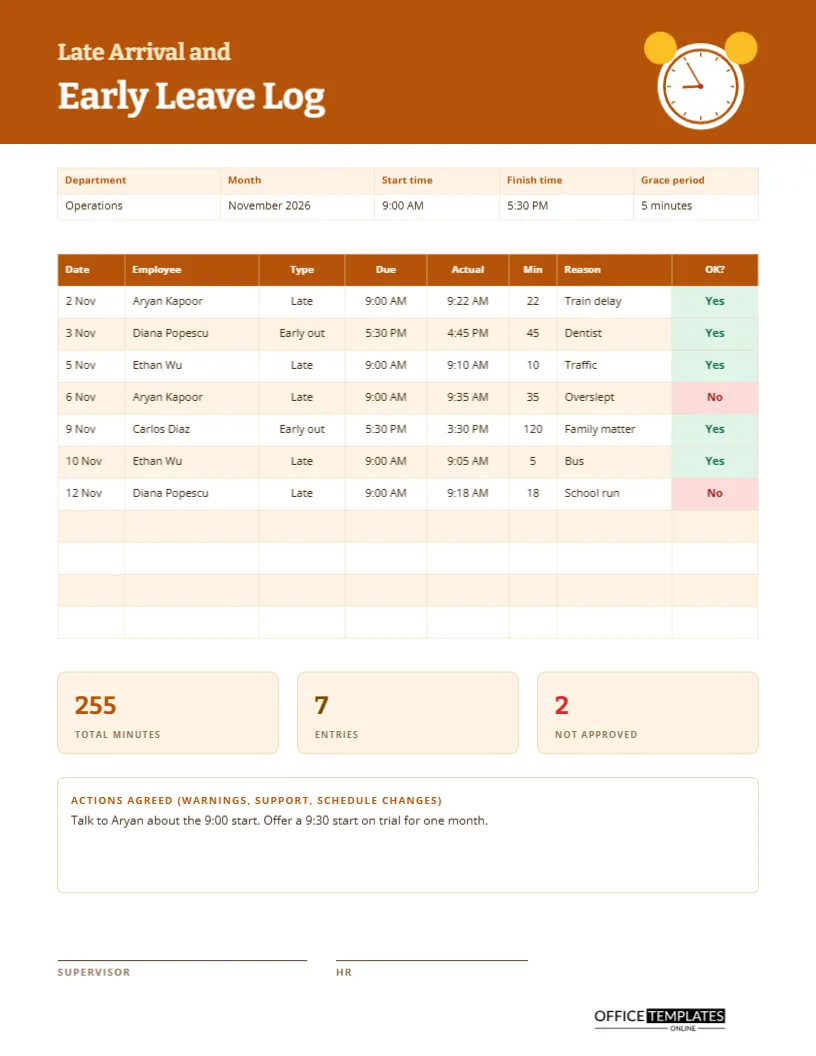
The sheet shows lateness by itself, since the time in is plain to see. If you track lateness, circle or highlight late entries and record them in a separate log. The late arrival and early leave log in this collection is built for that job. For one-off cases, a short note beside the line is enough.
Combining the Sheet With a Weekly Summary
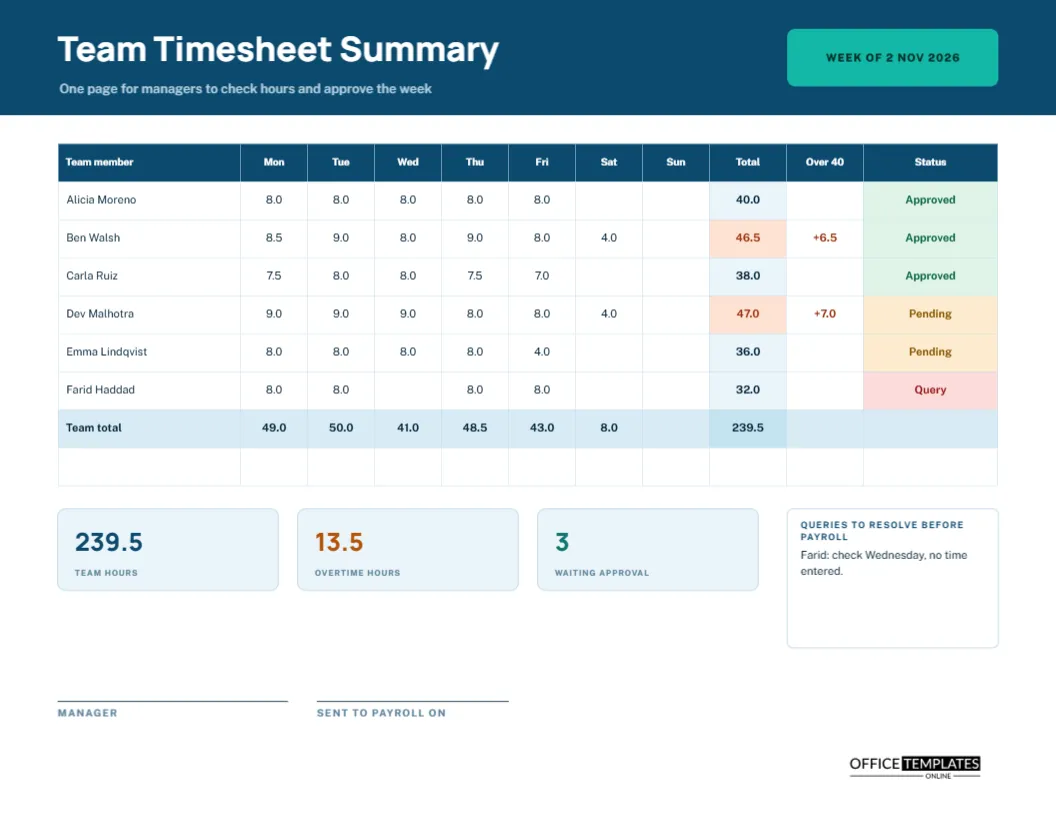
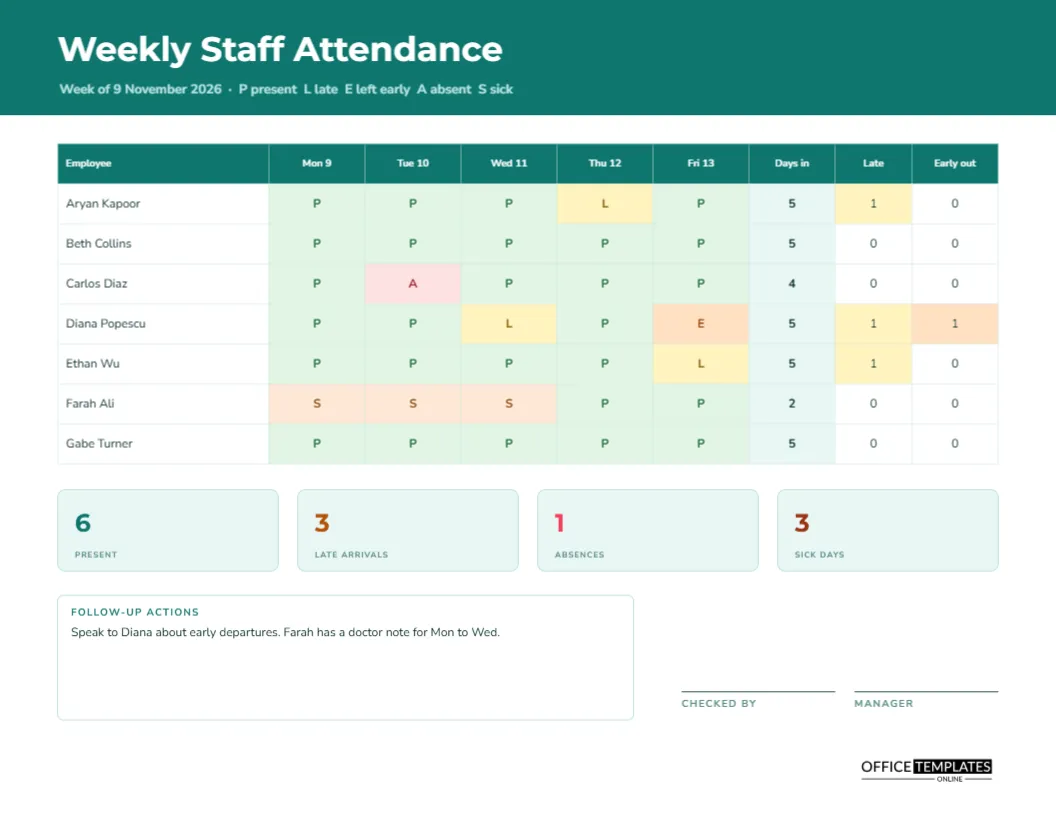
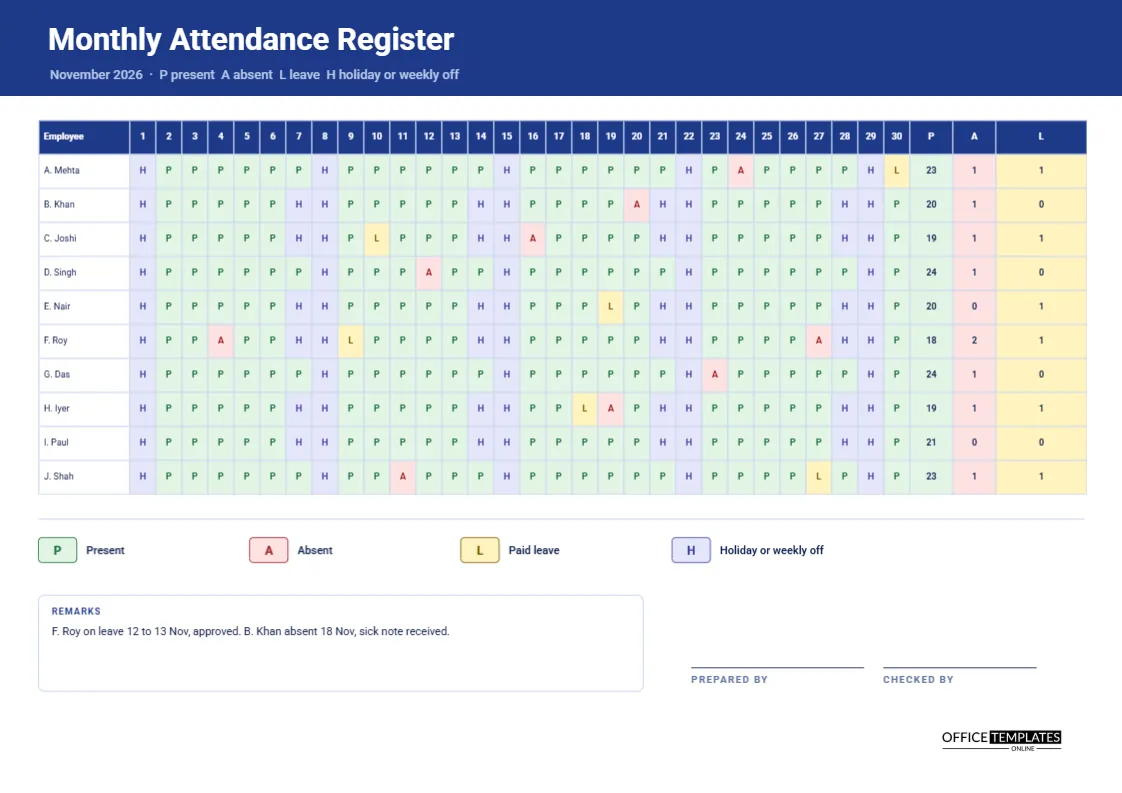
Daily sheets can be summarised in a weekly attendance sheet, which shows each person’s presence in one grid. Collect the daily pages in a folder, copy the codes at the end of the week, and file the originals. If a question about a particular day comes up, you can pull the original and read the signatures.
Privacy and Where to Keep the Page
A sheet on a desk shows every name and time to anyone who looks. That is usually fine for staff, but not for visitors’ personal details. Keep visitors on a separate list, and store used sheets in a closed folder or drawer. Destroy old pages according to your retention rules once they are no longer needed.
Editing the Sheet for Your Site
Every label can be edited. Change the column names, add a column for vehicle registration or temperature checks, or reduce the number of lines and enlarge the rows. The table is a real Table object, so fonts and fills can be changed, and rows added or removed through Edit Table Data.
Printing and Clipboard Use
US Letter portrait. Print one sheet per day, and put it on a clipboard with a pen on a string. The slate header prints as dark grey in black and white, and the green handle becomes a lighter grey. Everything remains readable.
Daily Sign-in Sheet Questions
Can I use it for classes or events?
Yes. Retype the department column as group or class and use the date strip for the event name.
Do I need both signatures?
You can delete one signature column if your workplace only needs the arrival record.
Is it a legal attendance record?
It is a helpful record. Check whether your local rules require a specific format.