Editable Business and Finance Templates: Ledgers, Journals and Vouchers
Part of: Business & Office
Good records save more money than clever accounting tricks. Ledgers, journals and vouchers give every transaction a place to live, so you can answer questions from the bank, the tax office or your own partners without digging through a drawer.
These editable business and finance templates are laid out for practical use. Add your business name, change the headings to suit your accounts and download each form as a PDF, PNG or JPG ready to print and fill in.


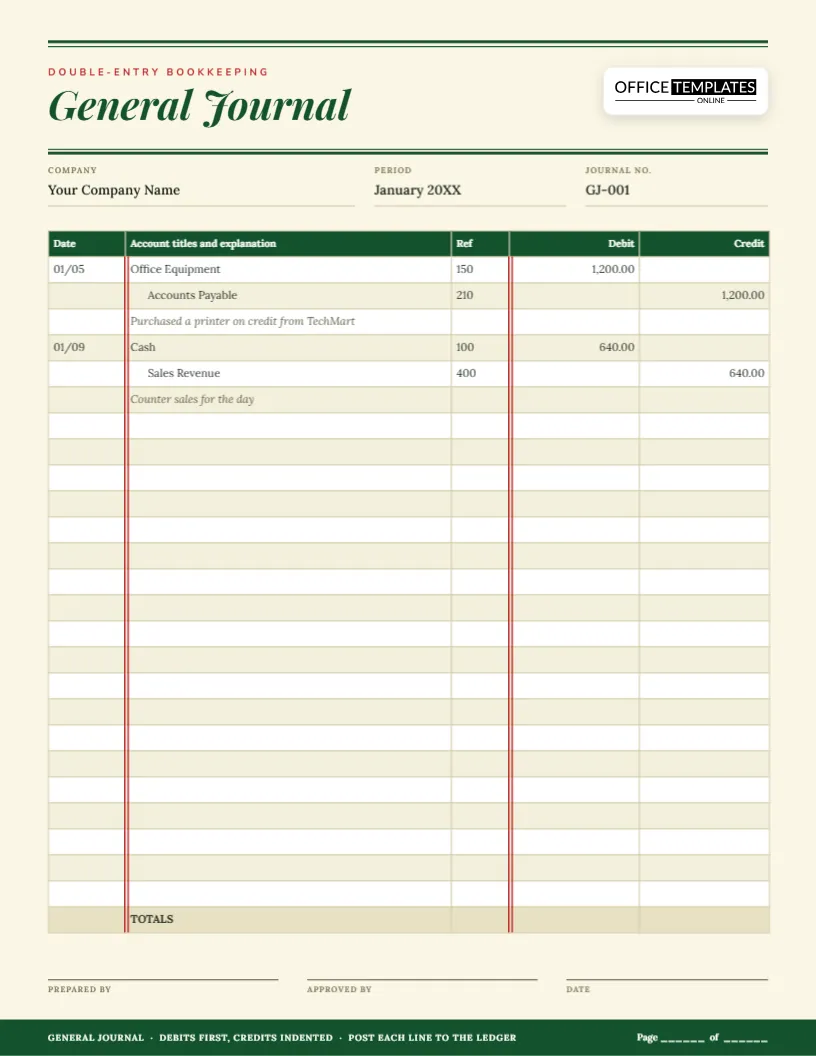
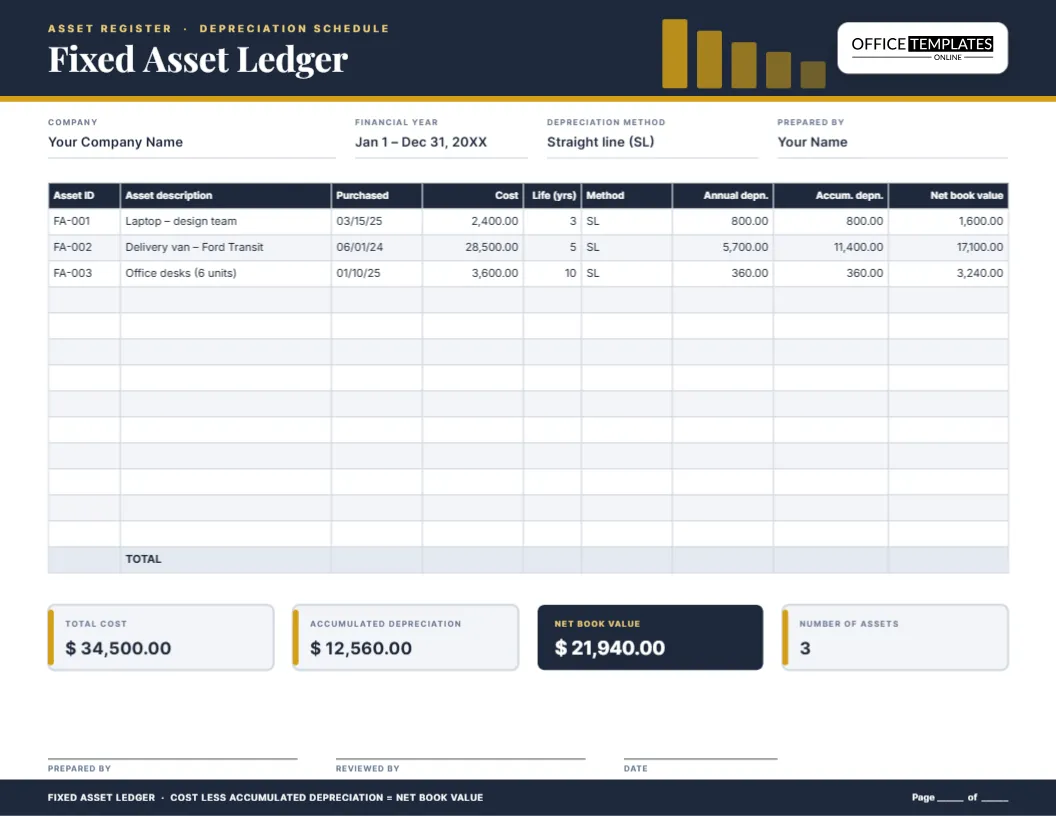
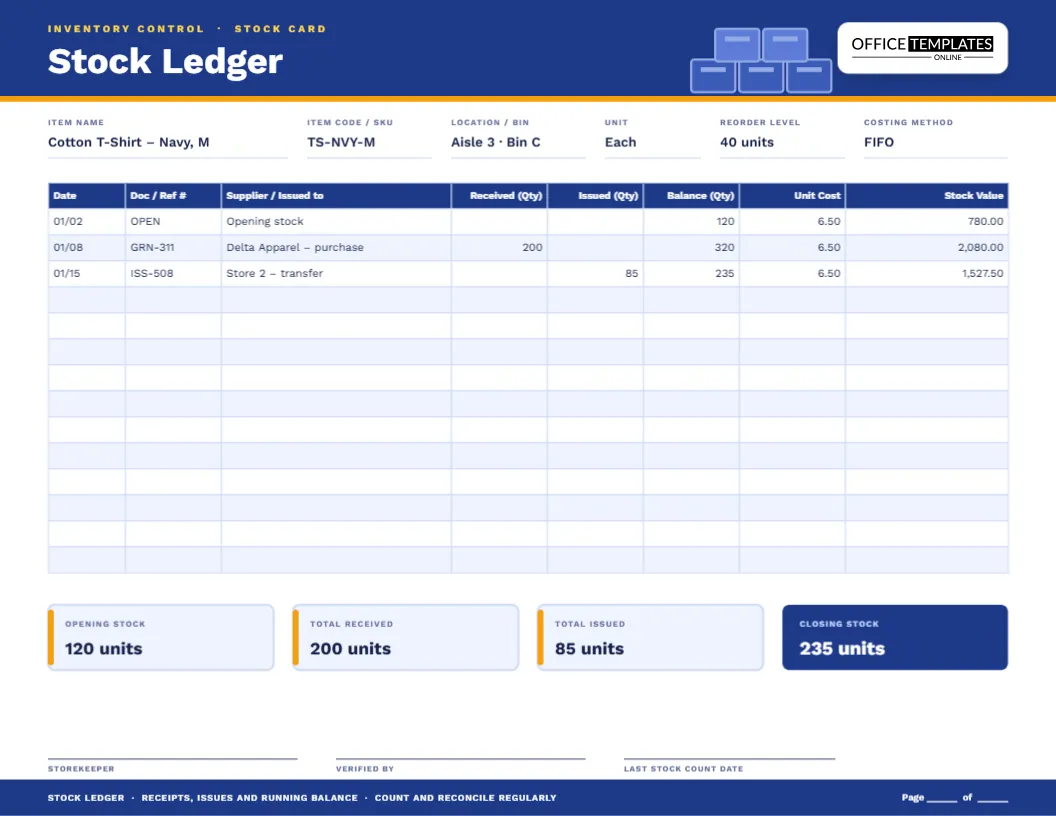
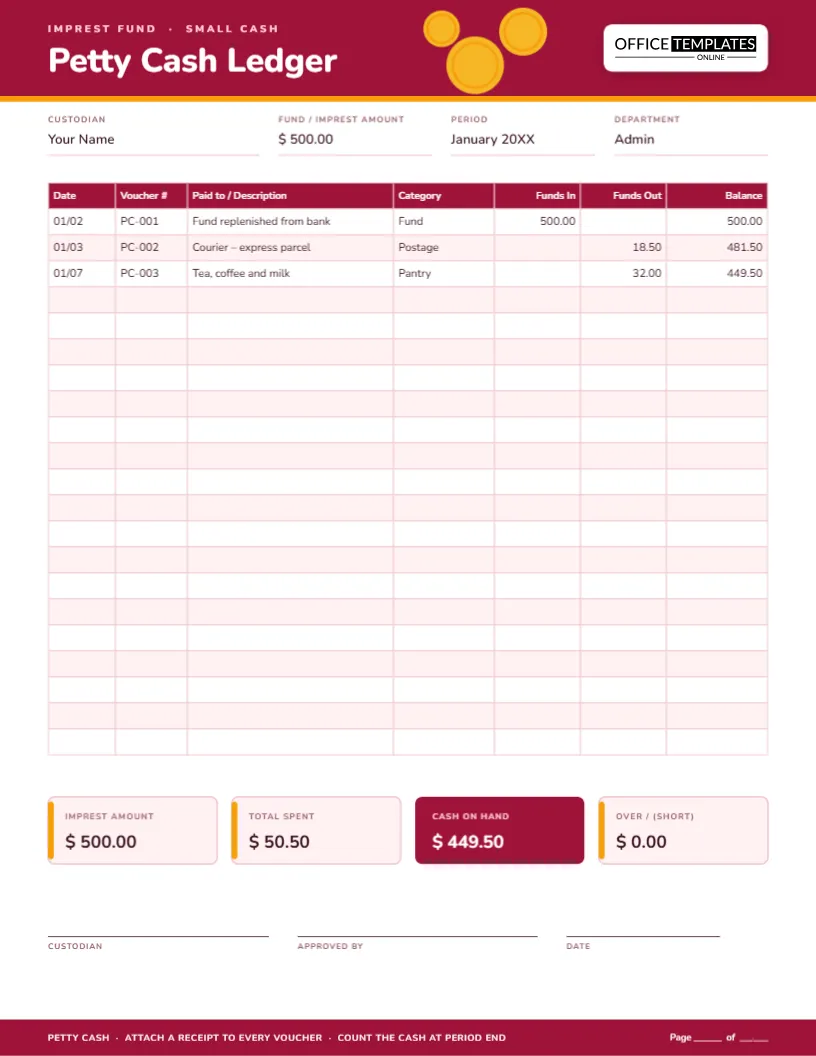
Which Record Do You Need?
| Template | Use it to | Typical user |
|---|---|---|
| General journal | Record double-entry transactions in order | Bookkeepers and accountants |
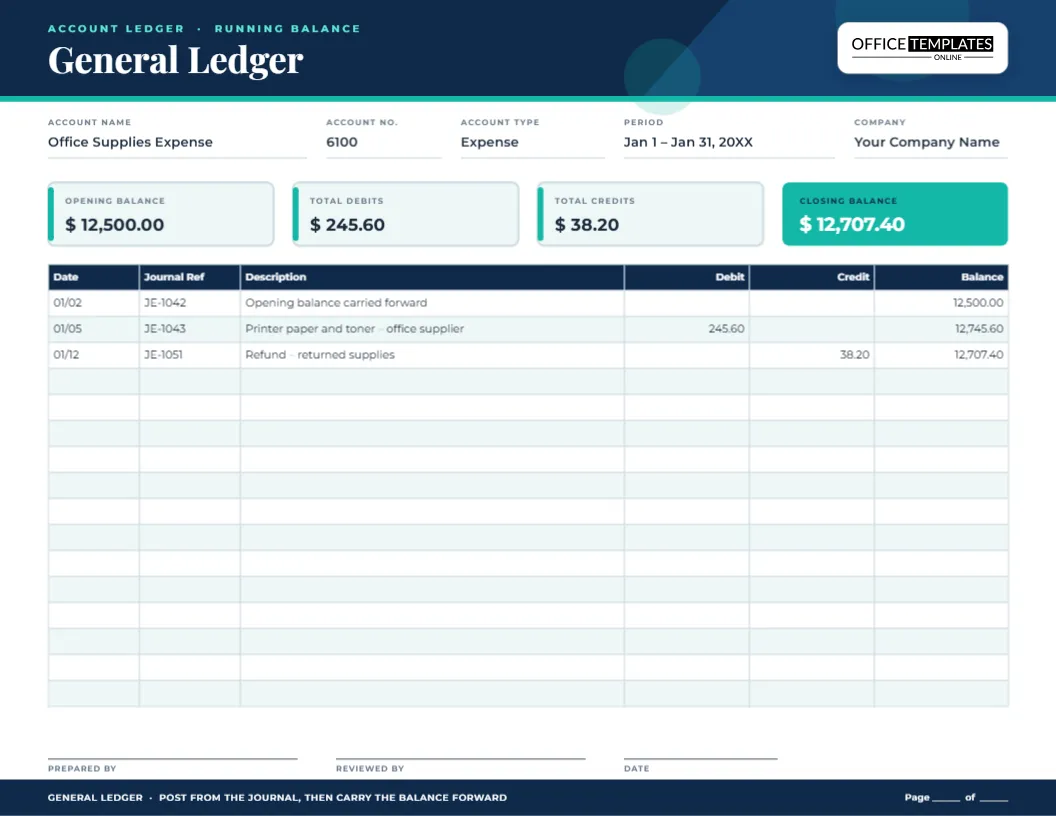
| General ledger | See each account with a running balance | Small business owners |
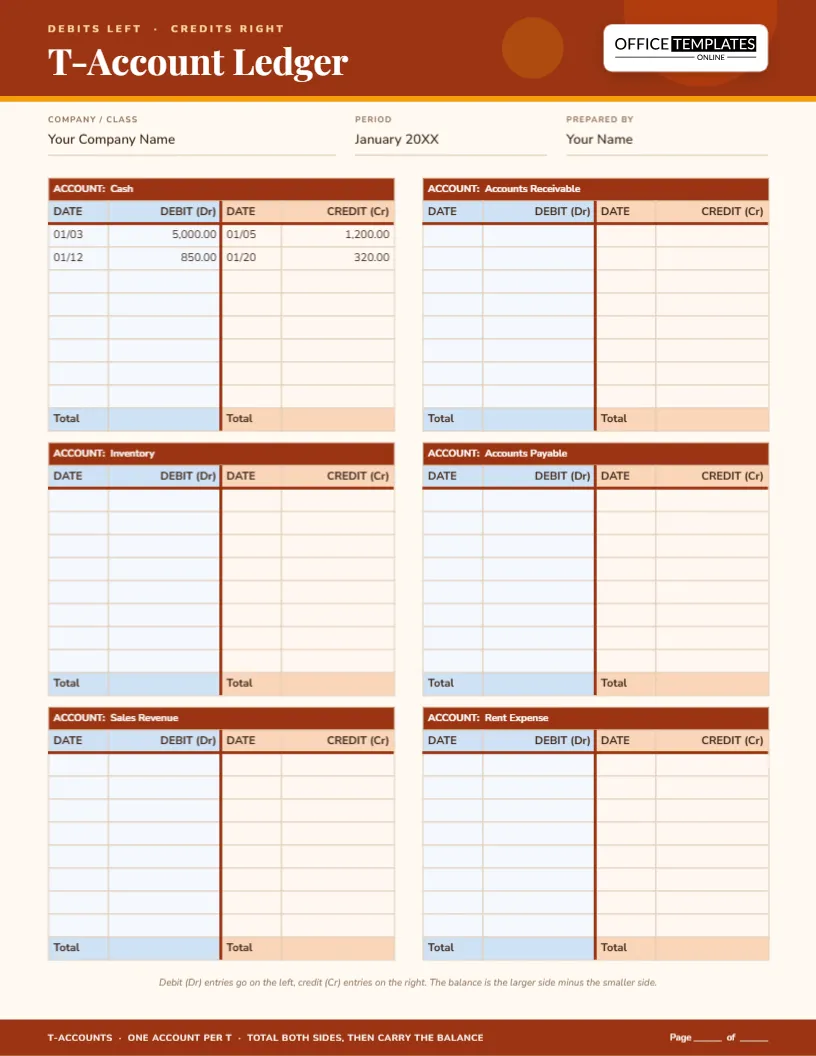
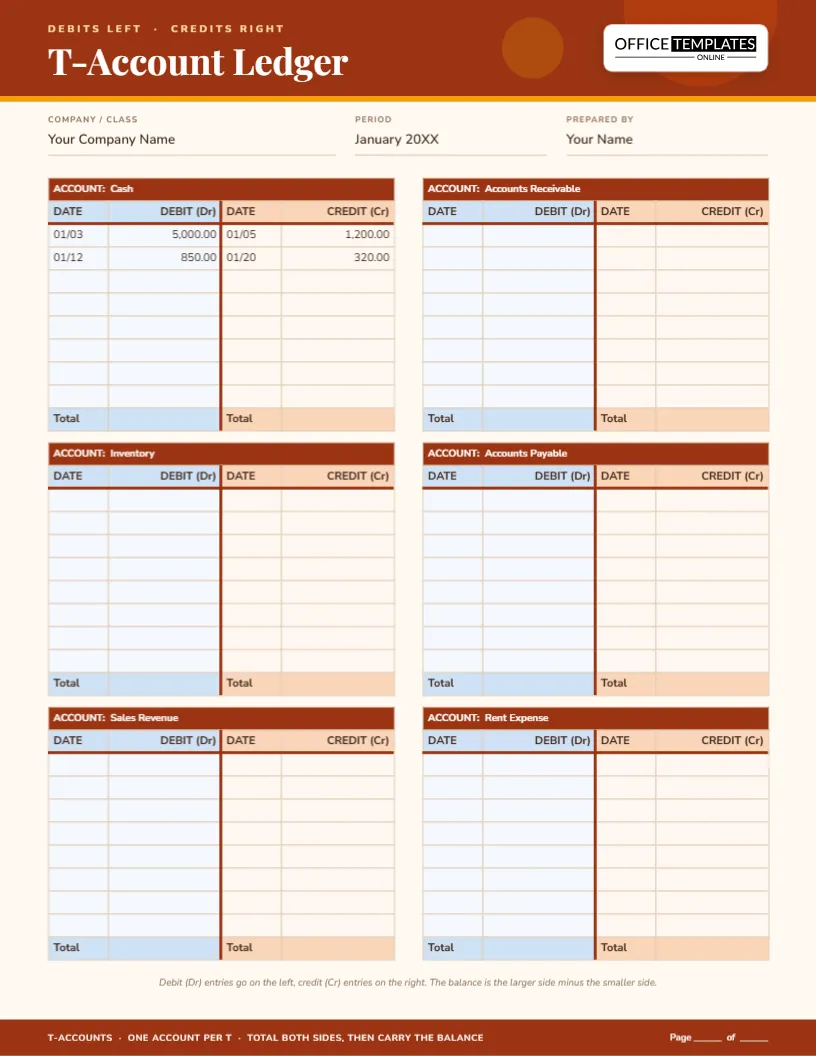
| T-account ledger | Practice or sketch debits and credits | Students and trainers |
| Petty cash ledger | Track small cash payments with voucher numbers | Offices and shops |
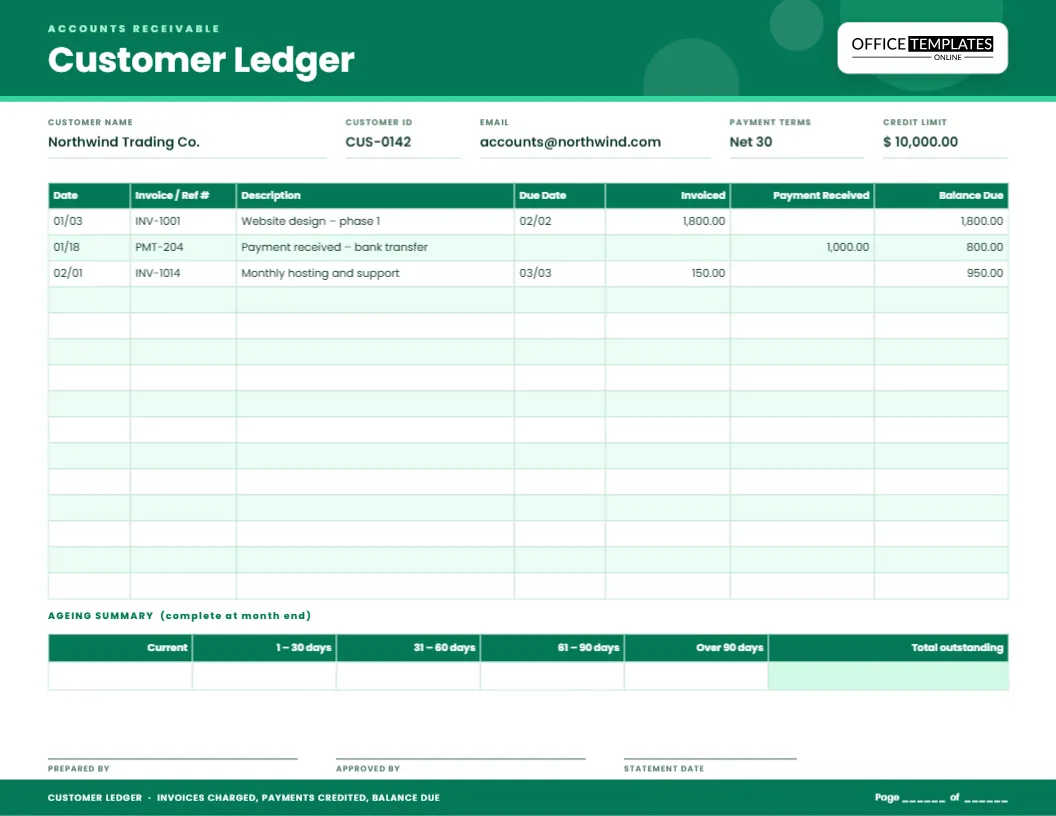
| Customer ledger | Follow unpaid invoices with an ageing summary | Sales and credit teams |
| Inventory stock ledger | Track quantity and value as items move | Stores and warehouses |
| Fixed asset ledger | Record equipment and depreciation | Accountants |
| Expense and settlement vouchers | Document a specific payment | Finance and HR teams |
Keeping Clean Books Without a Lot of Effort
Pick a rhythm and stick to it. Record transactions weekly rather than monthly, because small gaps become big mysteries. Give every voucher a number and keep the numbers in order. Match your ledger to your bank statement at the end of each month and note any difference straight away.
Customizing the Layout
Change the heading to your business name, adjust the labels so they fit your accounts, and choose a font size that stays readable when printed. If a form needs more rows, you can edit the table in the editor and add lines as needed.
Related Templates
For paying suppliers and staff, use payment vouchers. For ordering stock, see purchase orders. For customers, our price lists keep quotes consistent. The rest of the office set is on the business and office templates page.
A Quick Note on Compliance
Record keeping rules differ by country and by type of business. These templates give you a clear layout, but they do not replace advice from a qualified accountant. If you are unsure about retention periods or reporting formats, ask a professional in your area.
Setting Up a Simple Bookkeeping Routine
You do not need complex software to keep honest books. A weekly routine with the right forms goes a long way. On the same day each week, record every sale and expense in the general journal, post each entry to the matching account in the general ledger, then tick off bank transactions against your statement. Once a month, total the ledgers and check that debits equal credits. If they do not, the template layout makes it easier to trace the gap line by line.
How Debits and Credits Fit Together
If you are new to double-entry bookkeeping, the T-account ledger is a friendly place to begin. Draw a T, write the account name on top, put debits on the left and credits on the right. Every transaction touches at least two accounts, and the totals on both sides must match. Paying rent in cash, for example, increases rent expense on the debit side and reduces cash on the credit side.
| Transaction | Debit | Credit |
|---|---|---|
| Pay monthly rent in cash | Rent expense | Cash |
| Sell goods on credit | Accounts receivable | Sales revenue |
| Customer pays an invoice | Cash | Accounts receivable |
| Buy stock from a supplier | Inventory | Accounts payable |
Petty Cash and Expense Vouchers
Small cash payments are the easiest place for records to go missing. A petty cash ledger with voucher numbers fixes that. Start the month with a set float, record every payment with a voucher, and at the end of the month count the cash. The vouchers plus the cash left should equal the original float. Fuel and vehicle expense vouchers, final settlement vouchers and debit vouchers follow the same idea for particular situations.
Tracking Customers and Stock
If you sell on credit, a customer ledger with an ageing summary shows who owes you and for how long. Contact accounts that are past thirty days before they become a problem. If you hold stock, an inventory ledger with a running quantity and value lets you spot shrinkage early and decide when to reorder.
Customizing a Template in the Editor
- Replace the placeholder business name and add your logo.
- Rename column headings to match your chart of accounts.
- Edit the table to add or remove rows.
- Choose a font size that stays readable when printed on A4 or letter paper.
- Download the PDF and print as many copies as you need.
Finance Template FAQs
Can I use these for a small business or a startup?
Yes. They are written to be simple enough for a small team and can be adapted as you grow.
Can I print them and fill them out by hand?
Yes. Download the PDF and print as many copies as you need.
Are these templates enough to run my accounts?
They give you clear forms and layouts. For tax filings and statutory reports, use them alongside advice from a qualified accountant in your country.
Can I change the currency or number format?
Yes. The templates are plain forms, so you can type any currency symbol or number format you use.
How long should I keep the printed records?
Retention periods differ by country and business type, often between five and ten years. Check your local tax authority guidance.
What is the difference between a journal and a ledger?
A journal records transactions in the order they happen. A ledger groups them by account and shows a running balance.
Can I use these ledgers instead of accounting software?
They suit small businesses and learning. As your business grows, accounting software can automate reports and tax filing.
How often should I update my books?
Weekly is a good rhythm. Smaller, regular updates prevent small errors from becoming large ones.
Explore Related Categories
Business and office templates for the documents every team needs, from letterheads, business cards and envelopes to cover pages, price lists, purchase…
Professional letterhead templates help businesses, organizations, consultants, and professionals maintain a consistent brand image across official correspondence. A well-designed letterhead enhances credibility…
Cover page templates for business reports, project proposals, marketing plans, research papers, case studies and portfolios. Add the title, company and date,…
Business card templates help professionals create a strong first impression when networking, meeting clients, and promoting their services. Our editable business card…
Cover page templates help students, professionals, researchers, and businesses create polished front pages for reports, assignments, proposals, presentations, portfolios, and academic projects.…
Fact sheet templates for products, programs, funds, venues, safety information, biographies and school projects. Put the key numbers, dates and details on…
Assignment cover page templates for subjects such as law, psychology, economics, physics, computer science, philosophy and environmental science. Add your course, name,…
Holiday and seasonal templates for every date on the calendar, from Eid and Mother's Day to Halloween, Independence Day, Labor Day and…
Card and invitation templates for the moments people remember, including birthdays, parties, get well wishes, condolences, announcements, gift tags and event tickets.…
Certificate, ID card and voucher templates for schools, businesses, clubs and events. Create award and employment certificates, student and staff ID cards,…
Marketing and promotion templates for small businesses, shops and teams, including flyers, promotion banners, signs, outdoor signs, door hangers, job hiring posters,…
Education templates for teachers, schools, tutors and homeschooling families. Build report cards, progress reports, behavior charts, classroom posters, schedules, homeschool planners and…