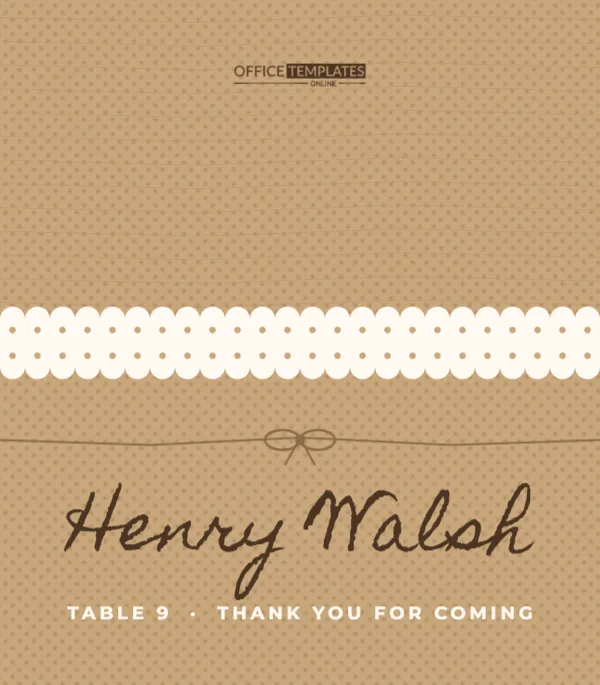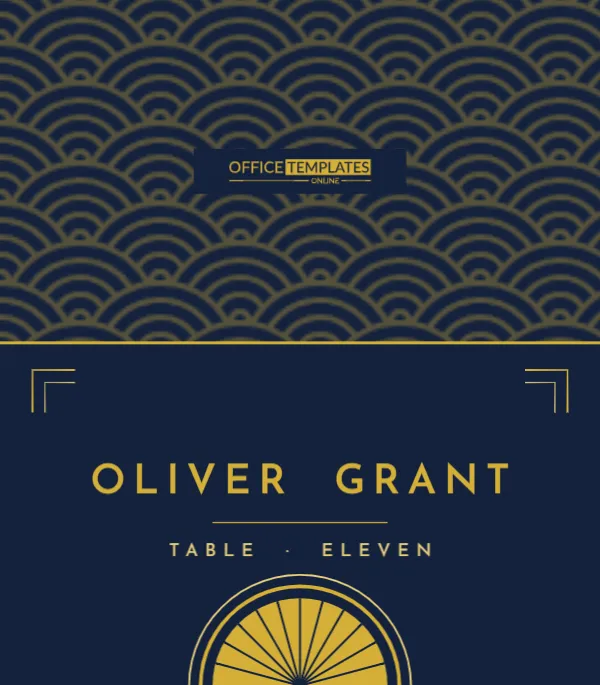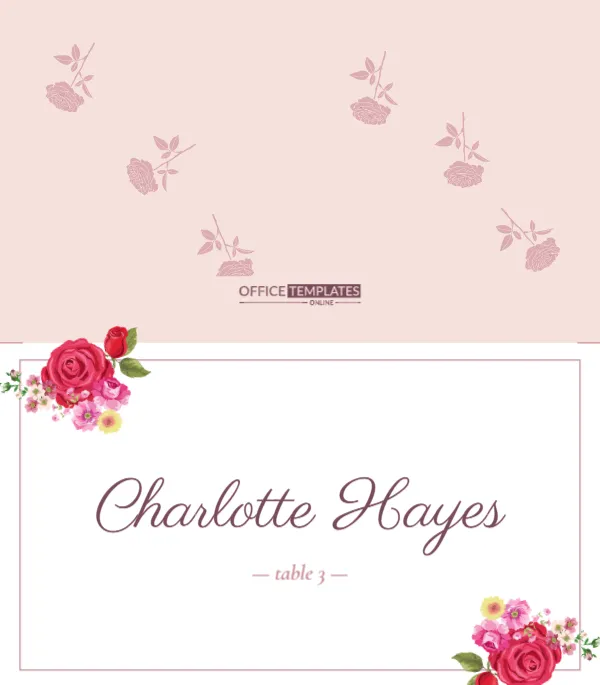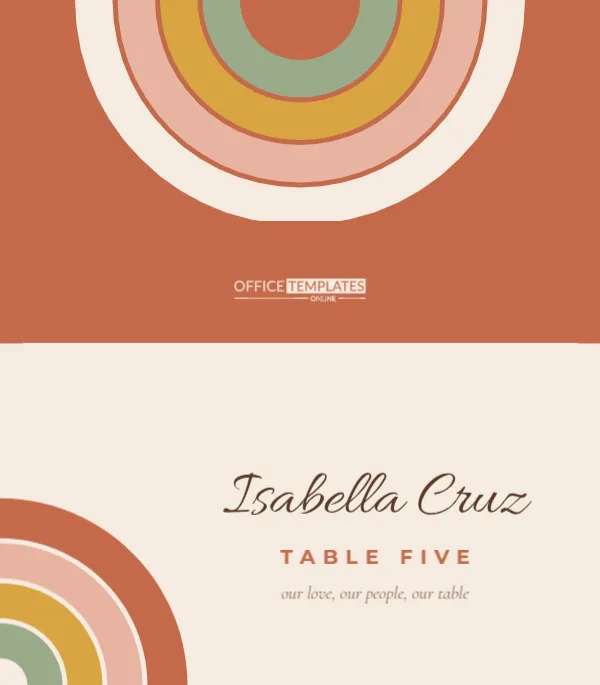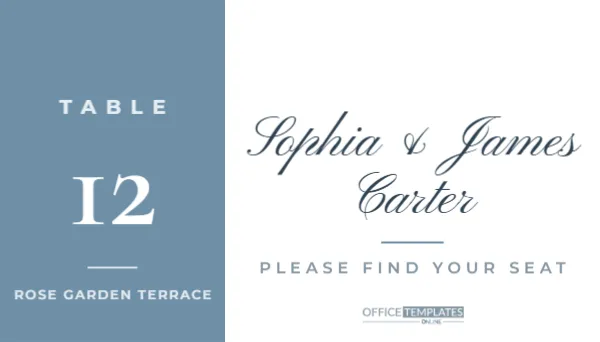
Escort cards and place cards are often confused, but they do different jobs. Escort cards wait at the entrance to the reception, usually arranged alphabetically on a table or a display, and tell each guest which table to go to. Place cards wait at the table itself and mark the exact seat. Many weddings use both; others use only escort cards and let guests choose their seat at the assigned table. This design is a true escort card: a flat, business-card-size card dominated by a large table number, so guests can find their table instantly.
The Layout at a Glance
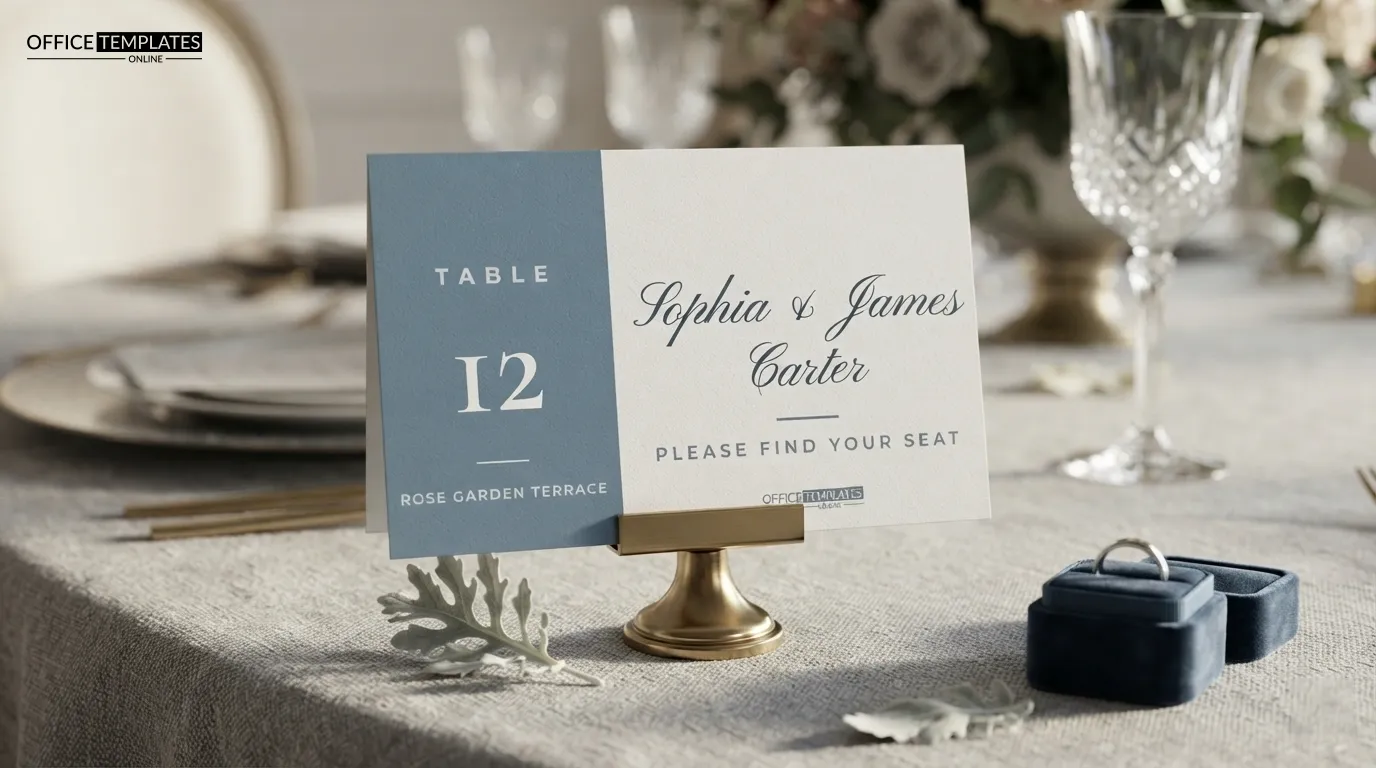
The card is flat, not folded, and measures 3.5 x 2 inches, the size of a business card. The left third is a dusty blue panel with Table in spaced white capitals above a large 12 in Cormorant Garamond, followed by a short white rule and the room or venue area, Rose Garden Terrace. The right two-thirds are white. There, Sophia & James and Carter are set on two lines in Pinyon Script in deep slate blue, with a short blue rule, and Please find your seat in small grey capitals. A small logo sits at the bottom of the white area.
Escort Card or Place Card: Which Do You Need?
| Question | Escort card | Place card |
|---|---|---|
| Where is it displayed? | At the reception entrance | At each seat |
| What does it show? | Guest name and table number | Guest name, sometimes meal |
| How many per couple? | Often one per couple or family | One per guest |
| Does the guest carry it? | Yes, to the table | No, it stays at the seat |
| Typical format | Flat card | Folded tent card |
One Card per Couple, One per Single Guest
Escort cards are usually addressed the way the invitation was: Sophia & James Carter for a couple, Mr. and Mrs. Carter for a formal event, or The Carter Family when children sit with their parents. Single guests receive their own card. This cuts the number of cards almost in half compared with place cards, and the two-line name layout on this design is built for couples.
Writing the Names and Table on Each Escort Card
- Change the table number in the blue panel.
- Update or delete the area line under the rule (Rose Garden Terrace).
- Type the guests’ first names on the first script line and the surname on the second.
- Keep Please find your seat or replace it with a short welcome.
- Download and repeat for the next household.
Displaying Escort Cards
Because escort cards are flat, they need a display. Popular ideas include standing them in rows in a tray of sand or coffee beans, pinning them to a corkboard with small pins, clipping them to twine with mini clothespins, slotting them into grooves cut in a long board, or tucking each into a small envelope with the guest’s name on the front. Arrange them alphabetically by surname so guests find themselves quickly, and place the display where the cocktail hour flows into the reception.
Changing the Blue Panel
Dusty blue is popular with spring and coastal weddings, but the panel is a single rectangle you can recolour in a click: sage for greenery weddings, terracotta for boho, black for modern, blush for romantic. Make the script names the same colour as the panel, or a darker shade of it, so the two halves of the card belong together.
Table Numbers Versus Table Names
Large numerals are fastest for guests to read. If you name your tables, for example, after places you have travelled, replace 12 with the name in a smaller size and keep Table above it. Make sure the table names on your escort cards exactly match the signs on the tables themselves.
Business-Card Stock for Escort Cards
Because the card is the size of a business card, you can print it on business-card stock with pre-cut perforated sheets, or on any cardstock and trim it to 3.5 x 2 inches. A weight of 100 to 120 lb cover keeps the card stiff enough to stand in a tray or hang from a clip. Download the PDF, print at full size, and check that the blue panel reaches the left edge cleanly after trimming.
Keeping Escort Cards Organised
Print escort cards in alphabetical order by surname rather than by table. Then you can lay them out directly, and any missing card is obvious. Keep a printed list and a few blank cards with the venue so late changes can be handled on the day. If a table changes after printing, a small white label over the number is a neat fix.
Using the Same Card as a Place Card
For a small wedding or dinner, this flat card can also mark seats. Lay it flat on top of each napkin, or tuck it into the napkin fold. Change Please find your seat to Welcome and the table number to a seat number if you like.
Wording Alternatives for the Bottom Line
- Your table awaits
- Dinner is served at seven
- Find your seat and say hello
- With love, Emma & Noah
How Many Escort Cards to Print
Count households, not guests. Go through your RSVP list and give one card to each couple or family that will sit together, and one to every single guest. Children seated with their parents share the family card; children at a separate kids’ table get their own. Add five or six spares. A 120-guest wedding with mostly couples typically needs around 70 escort cards, compared with 120 place cards.
Escort Card FAQs
Do I need escort cards and place cards?
Not always. Escort cards alone are enough if guests can choose seats at their table.
What size is this card?
3.5 x 2 inches, flat.
Can I fold it?
No, it is designed as a flat card; use one of the tent designs for folded place cards.
Can I add a meal symbol to the escort card?
Yes. Some caterers ask guests to place their escort card at their seat, so a small meal icon or a coloured dot in the white area works as a serving guide.