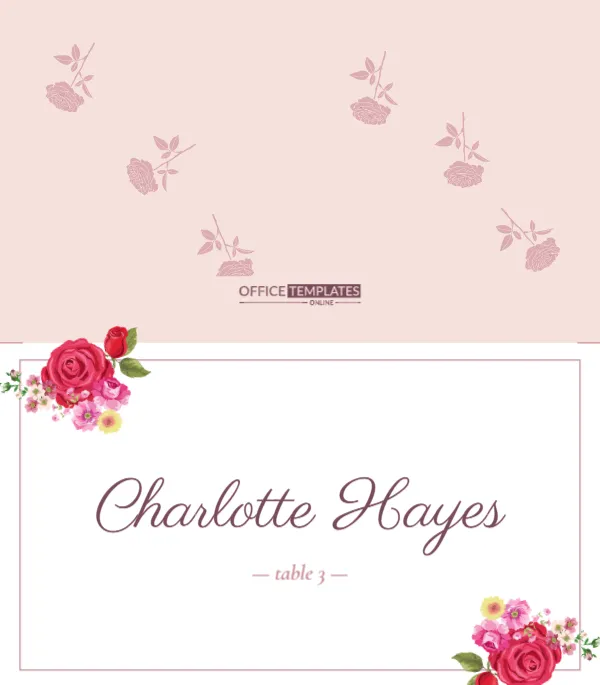
Pink roses are the most romantic flower in the language of weddings, and they rarely go out of style. This place card frames each guest’s name between two clusters of painted pink roses, set on crisp white with a fine rose-coloured frame. The back is a soft blush scattered with small line-drawn roses, so the card looks pretty from every seat at the table. It is a natural choice for spring and summer weddings, bridal luncheons, garden parties and anniversary dinners.
Romance in the Corners
The card measures 3.5 x 4 inches when flat. Folded across the middle, the front stands 3.5 inches wide and 2 inches tall. A thin pink rule frames the white front. In the top left corner, a cluster of bright pink and coral roses with green leaves overlaps the frame; a matching cluster balances it in the bottom right. The name, Charlotte Hayes in the sample, is set in Parisienne, a swirling French-style script, in a soft mauve. Underneath, a small italic line reads — table 3 — in rose pink. The back panel is pale blush with six small single roses drawn in soft rose-pink line art, turned so they appear upright when the card is folded.
Diagonal Balance: Why the Roses Sit Where They Do
Florists and designers often arrange accents on opposite corners because it guides the eye across the centre, exactly where the name sits. One cluster alone can make a card feel lopsided; four would crowd it. Two diagonal clusters frame the name like a pair of hands holding it. If you move the roses, keep them on opposite corners to preserve that balance.
What to Write
Use the guest’s name as you would address them in person. For a bridal luncheon, first names are perfect. For a formal reception, use full names. The table line is small and lowercase, so it reads as a gentle aside rather than an instruction. You can replace it with a seat number, a meal choice, or a short word of thanks, such as with love.
Updating the Card for Your Guests
- Click the mauve name and type the first guest’s name.
- Edit or delete the table line.
- Download the card.
- Change the name for the next guest and download again.
- Keep your seating chart open so the table numbers match.
Changing Rose Colours
The rose clusters are editable vector illustrations, so selecting one reveals its colour swatches. Shift the pink petals to ivory and blush for a softer look, to deep red for a Valentine’s or winter wedding, or to peach and coral for summer. The frame line and the table text can then follow the new flower colour. The back panel’s blush rectangle changes in one click; try ivory or a pale sage to complement the roses.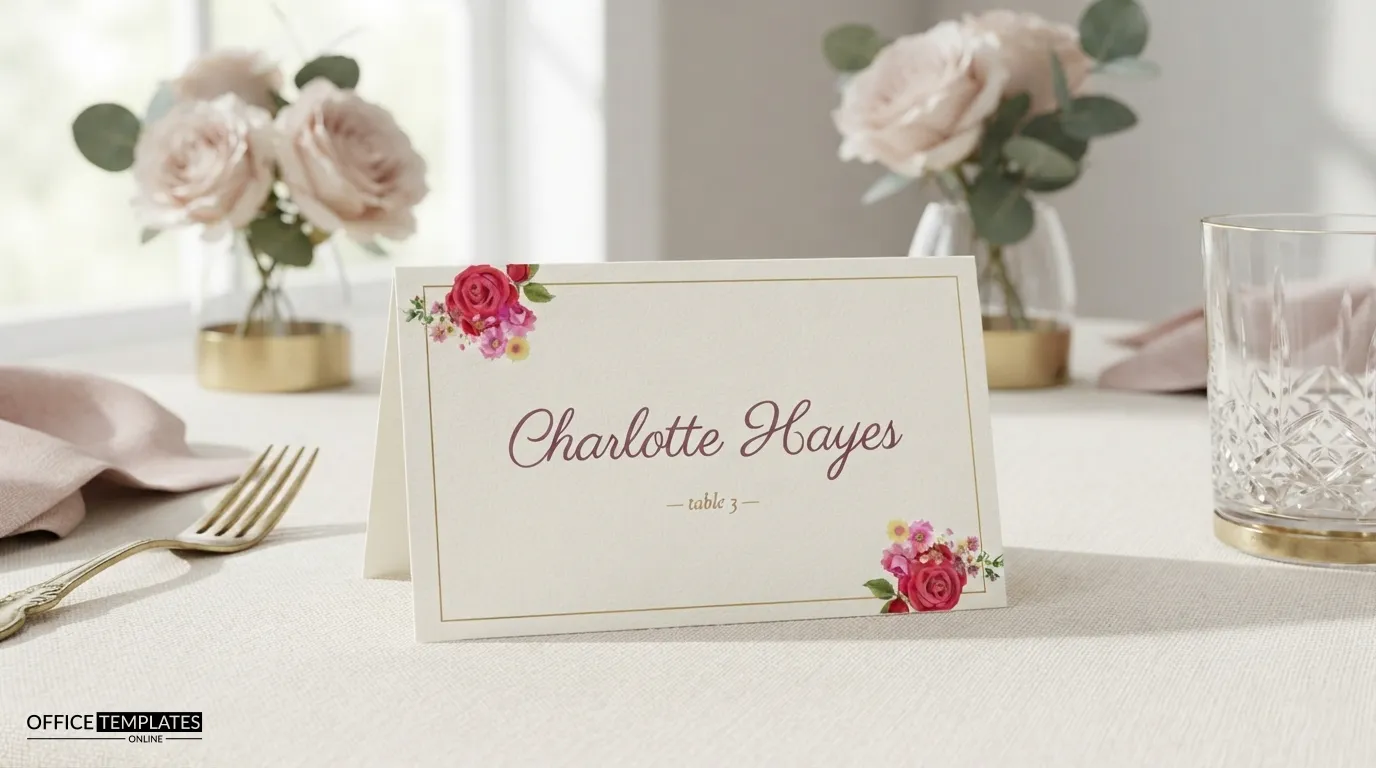
Rose Colours and Their Traditional Meanings
| Rose colour | Traditional meaning | Good for |
|---|---|---|
| Pink | Admiration, gratitude, gentle love | Weddings, bridal showers, Mother’s Day lunches |
| Red | Deep romantic love | Anniversaries, Valentine’s dinners |
| White | New beginnings, purity | Weddings, christenings |
| Peach | Sincerity, appreciation | Thank-you dinners, rehearsal dinners |
| Yellow | Friendship and joy | Birthday brunches, friendship celebrations |
Paper and Colour Accuracy
Pink is one of the colours most affected by paper and printer settings. On cream paper it turns slightly peach; on bright white it stays true. Print a test card first and compare it with your flowers or linens. If the pink comes out too strong, reduce the colour saturation in your printer settings, or select the frame and text and pick a softer shade before printing the whole set.
Folding Without Cracking the Corners
The rose clusters overlap the frame near the edges, so trim the card exactly on its outline rather than inside it. Score the centre line with a bone folder and a ruler before folding. Cardstock of about 100 lb cover holds a crisp fold; very heavy card above 130 lb cover may crack along the crease unless it is scored deeply.
Styling a Rose-Themed Table
Lean each card against a wine glass or place it on a folded blush napkin. Small bud vases with one or two garden roses at every few seats repeat the corner clusters. Rose-gold cutlery and blush glassware complete a soft, romantic table. For an outdoor garden party, scatter a few real rose petals on the tablecloth near each card.
Rose Cards for Teas, Brunches and Anniversaries
The design works beautifully for a Mother’s Day brunch, a sweet sixteen tea party, a garden birthday lunch, or an anniversary dinner. For a tea party, replace the table line with Afternoon Tea and use first names. For an anniversary, put the couple’s names on the back panel in a small script.
Working With a Calligrapher or Doing It Yourself
Some couples love the look of printed florals but want hand-lettered names. You can delete the name text box, print the cards with the roses, frame and table line only, and then have a calligrapher or a friend with neat handwriting add names in mauve ink. Test the pen on a spare card first: some inks bead on coated cardstock. Others go the other way and print everything, which guarantees consistent spelling and saves hours in the final busy week.
Counting, Sorting and Delivering the Cards
Make a list of every guest grouped by table, print the cards in that order, and store each table’s cards in a small envelope marked with the table number. Include a spare blank card in each envelope. Hand the envelopes and the seating chart to your coordinator the day before, and the setting-up crew can place a whole table in under a minute.
Frequently Asked About This Card
Can I remove one rose cluster?
Yes, select it and press Delete; consider moving the other cluster to the centre top for balance.
Will Parisienne be readable from a distance?
Yes, at this size, names are clear from a standing position beside the table.
How big is the folded card?
3.5 inches wide by 2 inches tall.
Could I add a small monogram to the back?
Yes. Add a text box on the blush panel and rotate it 180 degrees so it reads correctly when the card is folded and seen from across the table.