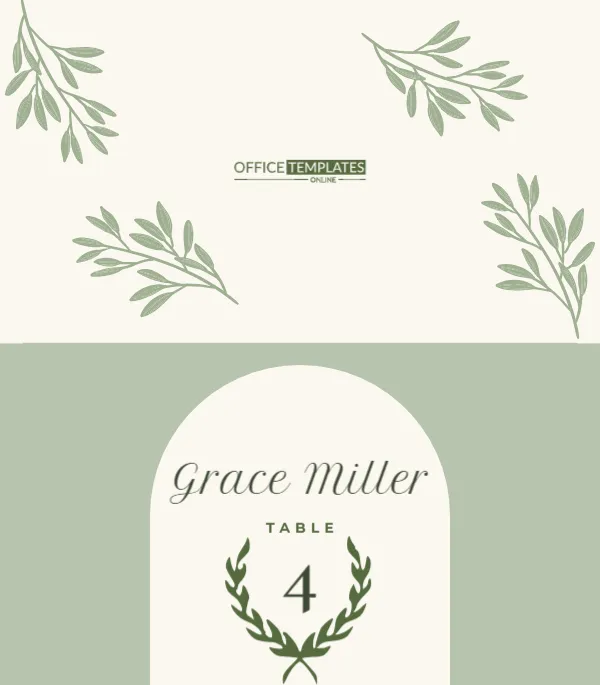
Sage green has become one of the defining wedding colours of recent years: calm, natural, flattering on bridesmaids and easy to pair with white flowers. Olive branches, a symbol of peace since antiquity, are its perfect partner. This place card combines both in a quietly elegant way. A cream arch rises from the bottom edge of a sage front like a doorway in a Mediterranean villa, and inside it the guest’s name sits above a small olive wreath that cradles the table number.
A Window in Sage
Printed flat, the card is 3.5 x 4 inches, folding to a 3.5 x 2 inch tent. The front is a soft sage green. Centred on it, a cream arch with a round top stands on the bottom edge, about two-thirds the width of the card. Within the arch, the name Grace Miller is set in Petit Formal Script, a refined copperplate style, in deep olive. Below it, the word Table sits in small spaced capitals above an olive wreath shaped like an open U, and the table number 4 sits inside the wreath in Cormorant Garamond. The back is cream with four hand-drawn olive sprigs in soft grey-green and the logo in olive at its centre.
The Mediterranean Inspiration
Arched doorways, whitewashed walls and olive groves are the visual shorthand of Tuscany, Provence and the Greek islands. Couples planning destination weddings in those places, or bringing a Mediterranean feel home with long tables, terracotta pots and bowls of lemons, will find this card fits naturally. It also suits vineyard weddings anywhere, from Napa to the Barossa, where olive trees often grow between the vines.
Table Numbers With a Wreath
The small olive wreath turns a plain number into an ornament. It works best with one or two digits. If you use table names instead, such as Santorini or Lavender, reduce the font size so the word fits between the wreath’s branches, or move the name above the wreath and delete the number. The wreath is an editable vector, so you can enlarge it slightly for longer names.
Personalising the Cards
- Click the name and type your guest’s name. Names up to about 16 characters fit at the current size inside the arch.
- Click the number inside the wreath and type the table number.
- Download the finished card.
- Repeat for each guest, working through one table at a time.
For longer names, reduce the name size a few points; the arch is the boundary to respect.
Shades of Green and What They Pair With
| Front colour | Arch colour | Flower pairing |
|---|---|---|
| Sage (as designed) | Cream | White roses, ranunculus, olive branches |
| Eucalyptus blue-green | White | White peonies, silver dollar eucalyptus |
| Deep olive | Ivory | Dried grasses, cream garden roses |
| Dusty blue | Cream | Blue thistle, white lisianthus |
| Terracotta | Sand | Dried palms, rust dahlias |
The sage front is the page background and the arch is a single shape, so both change in a couple of clicks.
The Back Panel
When the card stands, its back faces guests across the table, so it should look intentional too. The cream panel with scattered olive sprigs gives the other side of the table a soft botanical pattern. The sprigs are editable vectors; recolour them to a deeper green if you change the front colour, or delete a few for a sparser look.
Paper Recommendations
A matte, uncoated cardstock in bright white or soft white suits this design. Glossy or pearlescent stock makes sage look synthetic. For a tactile, high-end feel, choose a cotton-content card if your printer can handle it, or ask a print shop to print the PDF on heavy smooth stock of around 110 lb cover. Print a single test card to confirm the sage matches your linens.
Trimming, Scoring and Folding
Trim to the 3.5 x 4 inch outline. The arch touches the bottom edge, so trim exactly on the line to keep the cream doorway meeting the edge cleanly. Score across the middle, where the cream back meets the sage front, and fold with the sage side facing outward.
Table Styling Ideas
Lay a single olive sprig across each plate and stand the card behind it. White crinkle-linen napkins, amber glassware and terracotta bud vases complete a sun-washed Mediterranean table. Bowls of lemons or green olives down the centre of a long table make an inexpensive, striking centrepiece.
Beyond the Wedding Day
The design works for rehearsal dinners in Italian restaurants, engagement lunches, milestone birthday dinners, Mediterranean-themed supper clubs and peace-themed charity events. For a supper club, replace the table number with the date and use first names.
A Note on Olive Symbolism
In ancient Greece, olive wreaths crowned Olympic champions; in many traditions, an olive branch means peace and reconciliation. Some couples mention the meaning on their menu or welcome sign, which gives guests a small story to connect with the cards in front of them.
Planning Seating Around the Arch Cards
Place cards are the last step of a long seating process, and a calm plan makes printing painless. Start with a list of tables and their capacities from your venue. Seat immediate family and the wedding party first, then group friends by how they know you: college, work, neighbours, childhood. Mix couples so nobody sits beside only strangers, and keep children near their parents. Once the plan is final, sort your guest list by table and print the cards in that order, so each table’s set comes off the printer together and goes straight into a labelled envelope. Keep the olive wreath numbers consistent with the numbers on your table signs, and double-check any table where two guests share a first name, since script fonts make similar names easy to confuse.
Arch Card Questions
Can I fit a couple’s names in the arch?
Yes, on two lines at a slightly smaller size; move the Table label down a little.
Is there a version without a table number?
Delete the number and Table label, and the wreath becomes a simple ornament beneath the name.
How big is it folded?
3.5 inches wide and 2 inches tall.