Why the UK Needs Its Own Calendar
The UK tax year does not follow the calendar year. It runs from 6 April to 5 April. A payroll calendar that starts in January is therefore awkward for UK employers, who think in tax months and tax years. This page is built from 6 April 2027 and runs to 5 April 2028, with twelve rows for the twelve tax months and a monthly payday on the 25th.
The UK Tax Year Page at a Glance
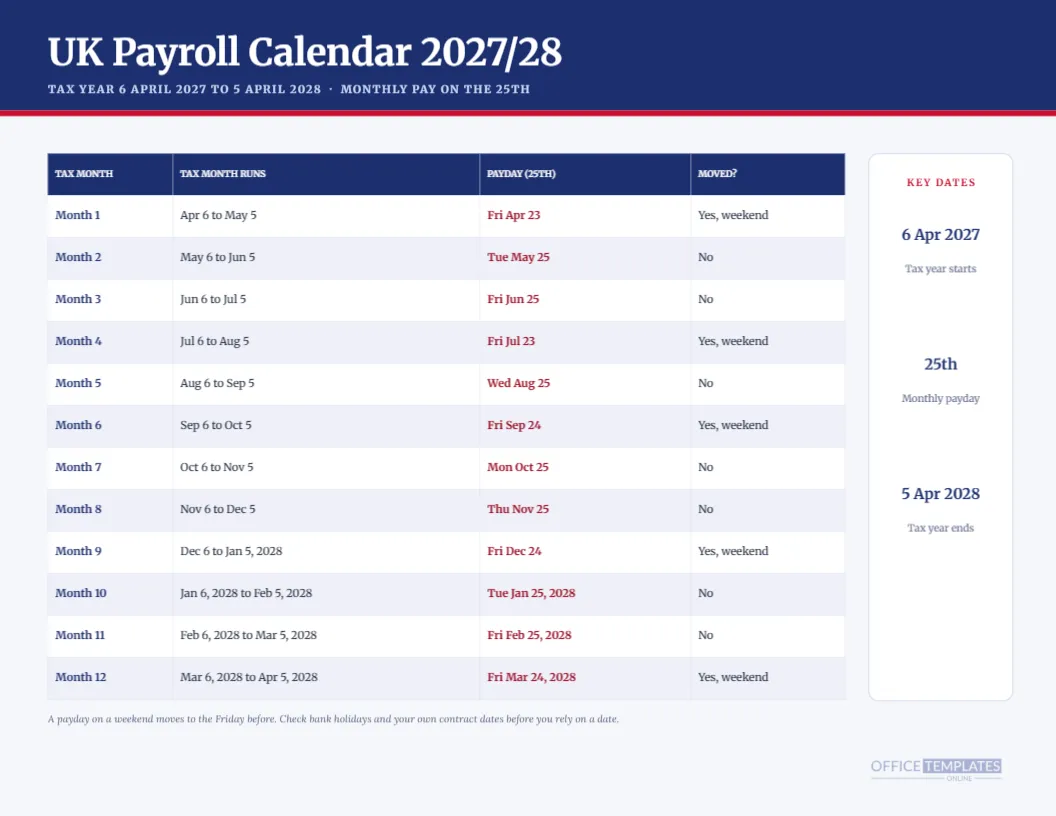
A navy band with a red rule carries the title UK Payroll Calendar 2027/28 in Merriweather Bold, and a subtitle in spaced pale blue capitals reading TAX YEAR 6 APRIL 2027 TO 5 APRIL 2028, MONTHLY PAY ON THE 25TH. A four-column table fills most of the page, and a white card on the right lists three key dates.
The Twelve Tax Months
| Tax month | Runs | Payday (25th) |
|---|---|---|
| Month 1 | 6 Apr to 5 May 2027 | Fri 23 Apr |
| Month 2 | 6 May to 5 Jun 2027 | Tue 25 May |
| Month 3 | 6 Jun to 5 Jul 2027 | Fri 25 Jun |
| Month 4 | 6 Jul to 5 Aug 2027 | Fri 23 Jul |
| Month 5 | 6 Aug to 5 Sep 2027 | Wed 25 Aug |
| Month 6 | 6 Sep to 5 Oct 2027 | Fri 24 Sep |
| Month 7 | 6 Oct to 5 Nov 2027 | Mon 25 Oct |
| Month 8 | 6 Nov to 5 Dec 2027 | Thu 25 Nov |
| Month 9 | 6 Dec 2027 to 5 Jan 2028 | Fri 24 Dec |
| Month 10 | 6 Jan to 5 Feb 2028 | Tue 25 Jan |
| Month 11 | 6 Feb to 5 Mar 2028 | Fri 25 Feb |
| Month 12 | 6 Mar to 5 Apr 2028 | Fri 24 Mar |
How the 25th Is Adjusted
When the 25th falls on a Saturday or Sunday, the page moves the payday to the Friday before. That affects April 2027 (a Sunday), July 2027 (a Sunday), September 2027 (a Saturday), December 2027 (a Saturday) and March 2028 (a Saturday). The page does not adjust for UK bank holidays, so check them before you finalise any date.
The Moved Column
The fourth column of the table reads No or Yes, weekend. Five rows say Yes, weekend: months 1, 4, 6, 9 and 12. Seven say No. It is a small piece of information, but it answers the question employees ask when a payday lands on a weekend, and it shows your team at a glance which months need a reminder.
Key Dates Card
The white card on the right lists 6 Apr 2027, Tax year starts; 25th, Monthly payday; and 5 Apr 2028, Tax year ends. It frames the page for a reader who is not used to the tax year idea. Edit it to add your own key dates, such as a year-end deadline or the date you issue year-end documents.
Using the Page With Your Payroll Software
UK payroll software works in tax months, so the first column matches what you see on screen. Compare each row with your software’s pay schedule, and adjust any date that differs. The page is a planning aid, and your software and HMRC guidance are the sources for anything official.
Tax Dates Are Not Included
Dates for reporting to HMRC and for paying over tax and National Insurance are not on this page. They depend on your arrangements and change over time, so check the current guidance on gov.uk, or ask your accountant, before you add them to the calendar. A mistaken tax date is more costly than a missing one.
Editing the Tax Month Table
It is built as an editable Table object. Change the payday rule to the last working day, the 28th, or whatever you use. Retype the date column, and update the moved column. If you pay weekly or fortnightly, this page is not the right fit, and you can use the weekly or bi-weekly pages in this collection with your own dates.
Navy and Red Styling
Navy and red nod to UK colours without being a flag. The type is Merriweather, a sturdy serif that reads well at small sizes. The table uses a navy header row and pale lavender banding. If your brand is different, change the band, rule and header fill together.
Printing on A4 or Letter in Landscape
Print landscape on Letter paper or scale to A4 if you work in the UK, where A4 is the norm. Choose fit to page, and check the margins. The table text is eight points, which reads well on A4. If you prefer, change the page size in the editor before you edit and print.
Sharing the Tax Year Dates With UK Staff
Many UK employers email payslip dates once a year. Attach the page as a PDF and add a line explaining that weekend paydays move to the Friday before. Staff find it reassuring to see the whole tax year at once, and it saves the payroll team from answering the same question twelve times.
Leap Year Note
February 2028 has 29 days because 2028 is a leap year, and tax month 11 runs from 6 February to 5 March 2028. The page shows the correct end date for it. It does not change the payday rule, but it is a good reminder to check that your software handles the extra day.
Pairing the UK Page With Calendar and Checklist Pages
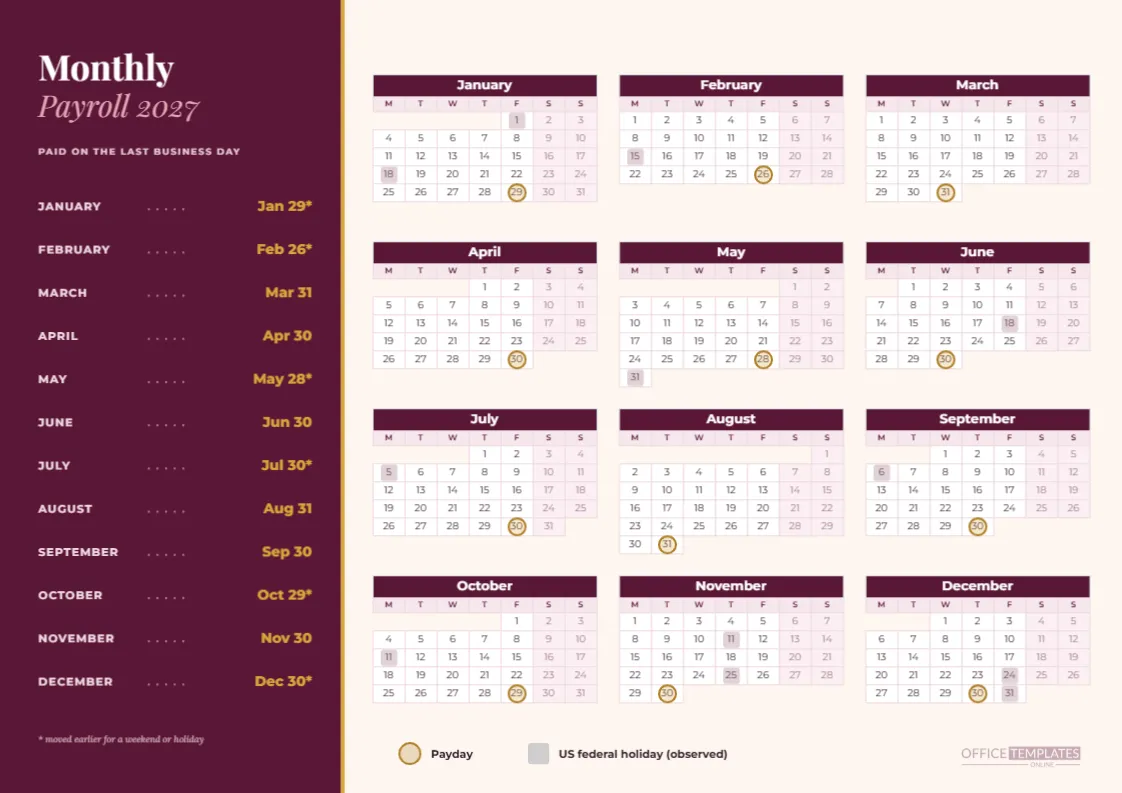
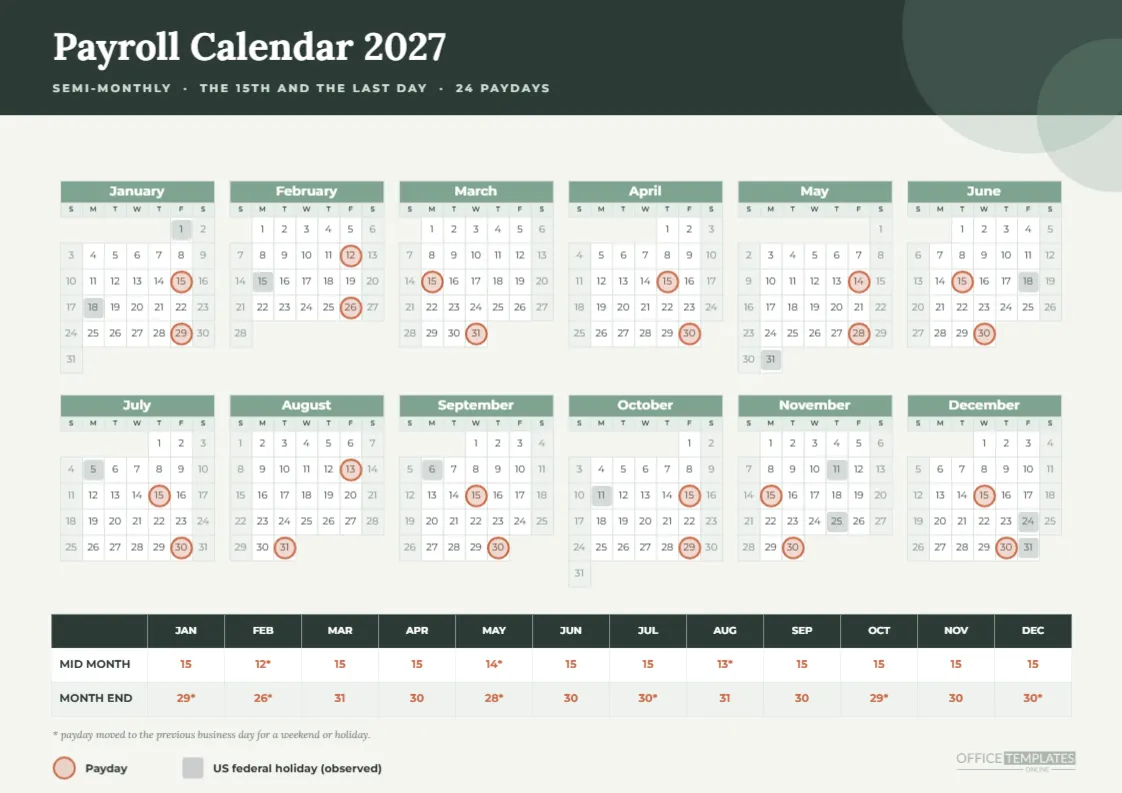
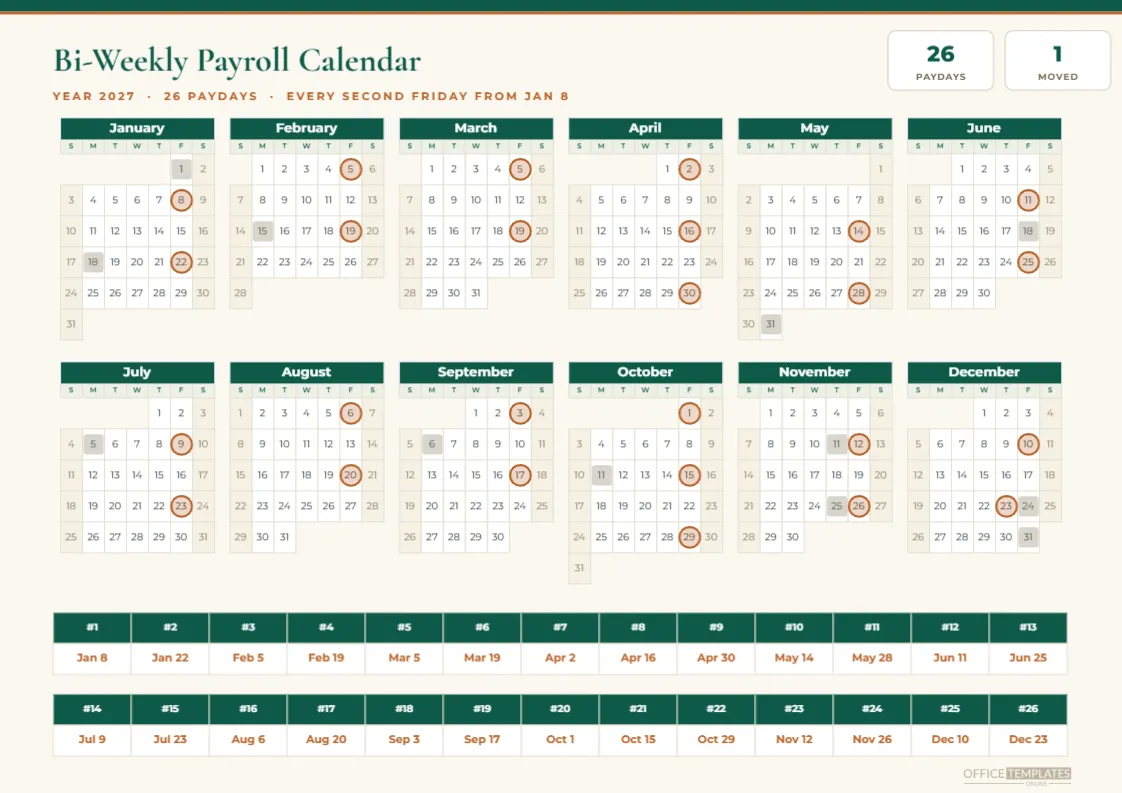
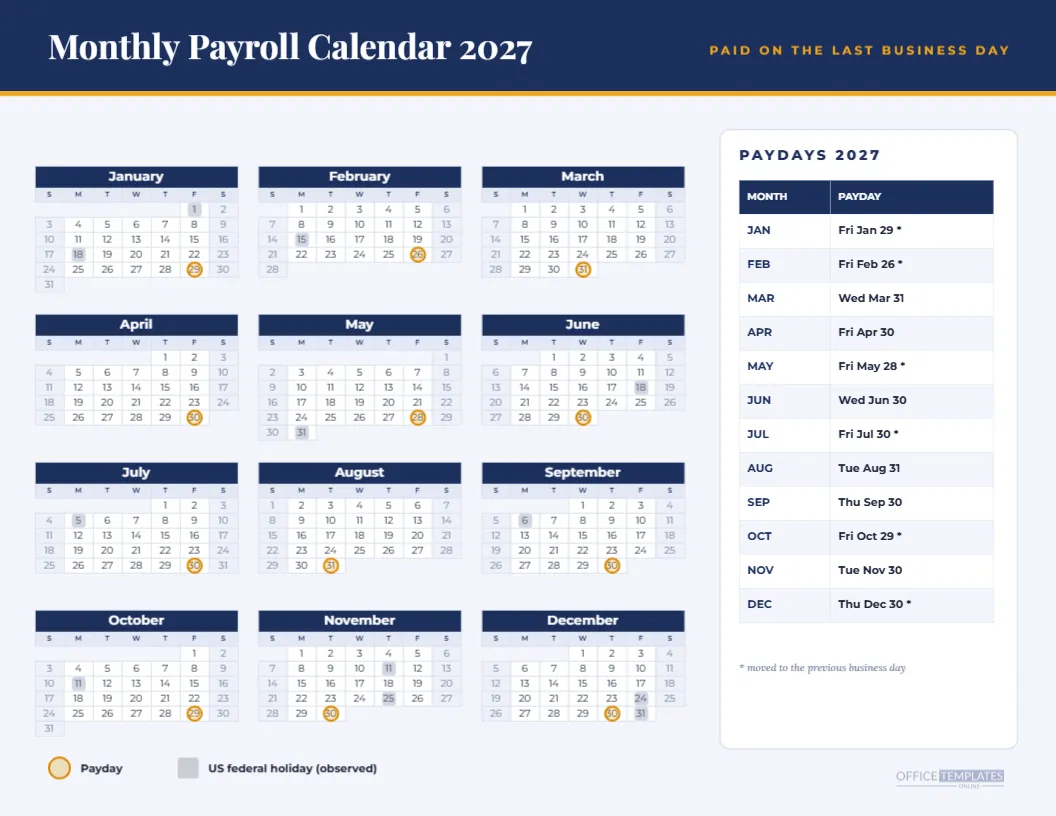
For a year calendar view, use one of the monthly payroll calendars in this collection and adjust the markers to match your 25th paydays. For a checklist per run, the payroll checklist page works unchanged. They share the same visual language, so the pack hangs together.
Honest Limits of the UK Calendar
This page is a planning aid built on a simple weekend rule. It does not account for bank holidays, contract terms or the guidance that applies to your business. Always confirm dates with your payroll provider, and consult official guidance for any legal or tax matter.
The UK Page in Brief
Tax year 6 April 2027 to 5 April 2028. Twelve tax months. Monthly payday on the 25th; five moved to Fridays. Key dates card. Landscape Letter. Editable Table object and text.
A Short Guide to Using the Page in April
April is the start of the tax year, so it is the month when most UK employers review their payroll setup. Print the page, tick each tax month’s payday on your software schedule, and write any differences in the margin. Doing this in the first week of April catches most errors before the first run of the new year.