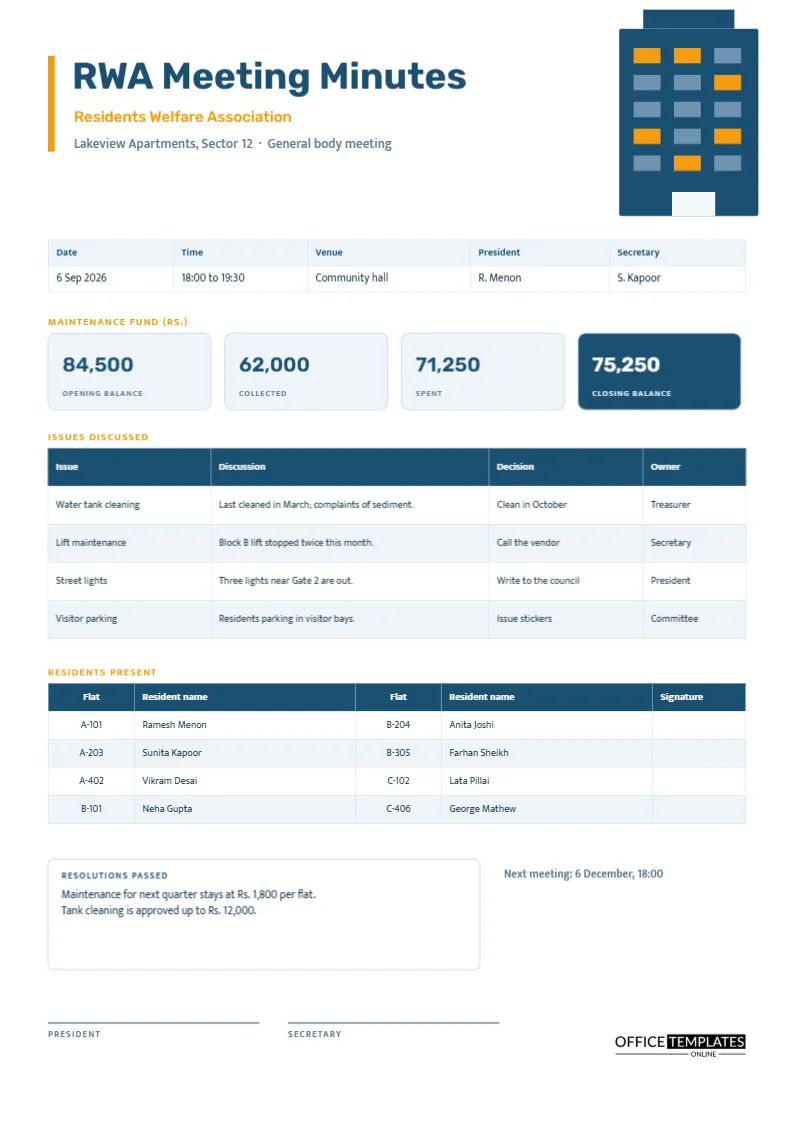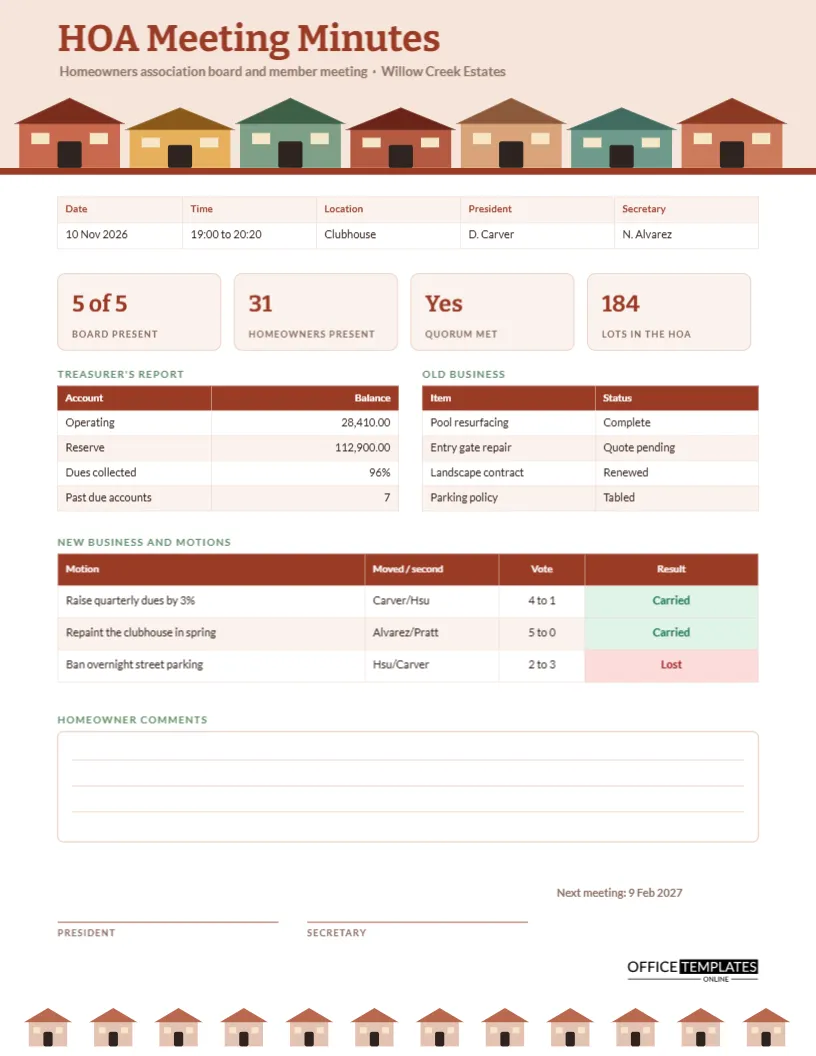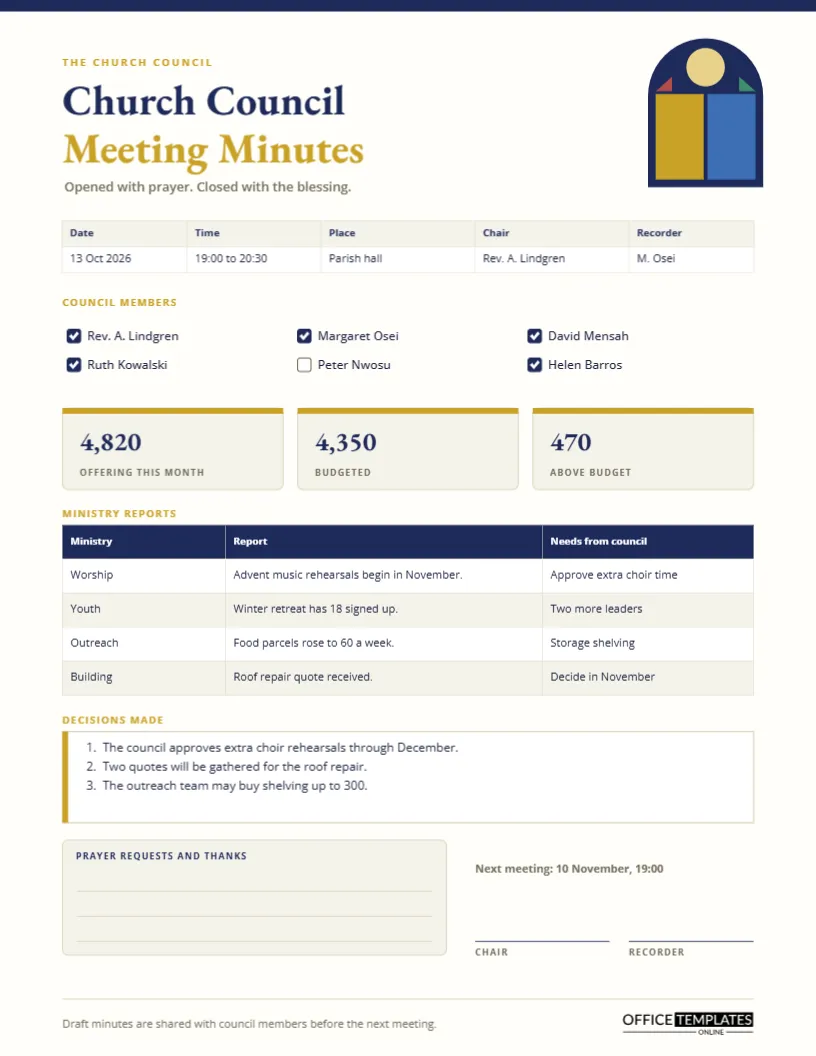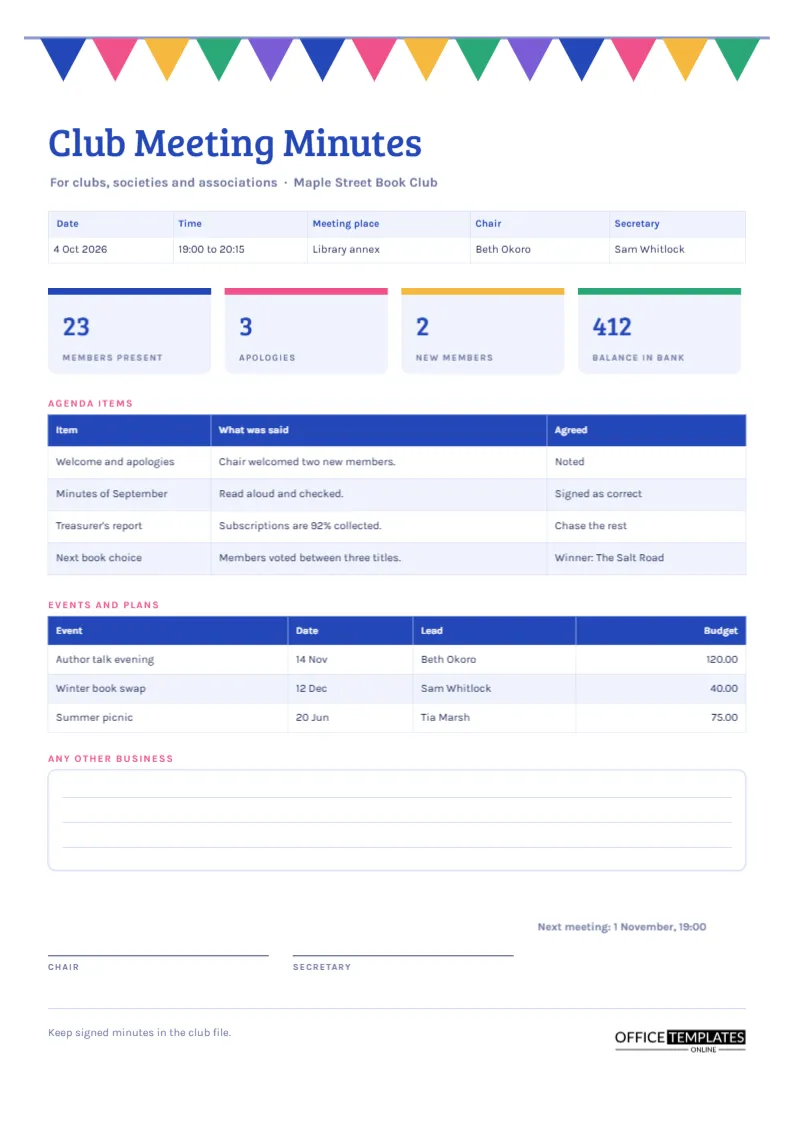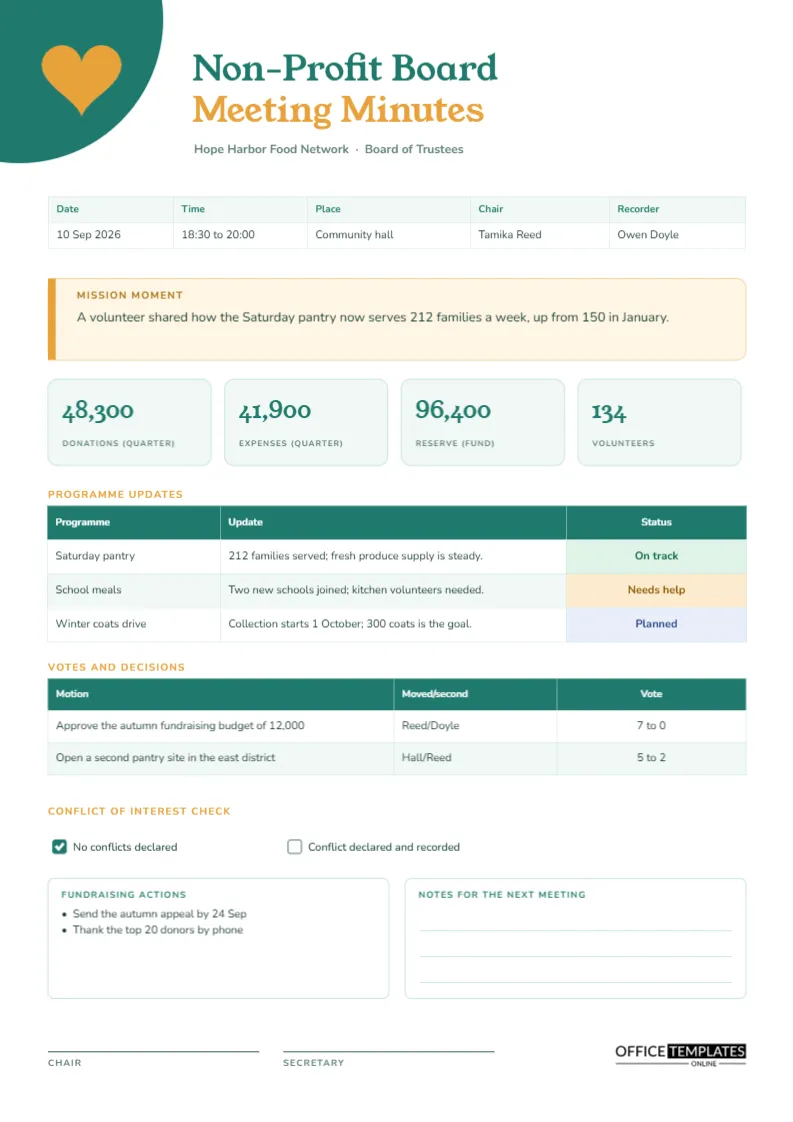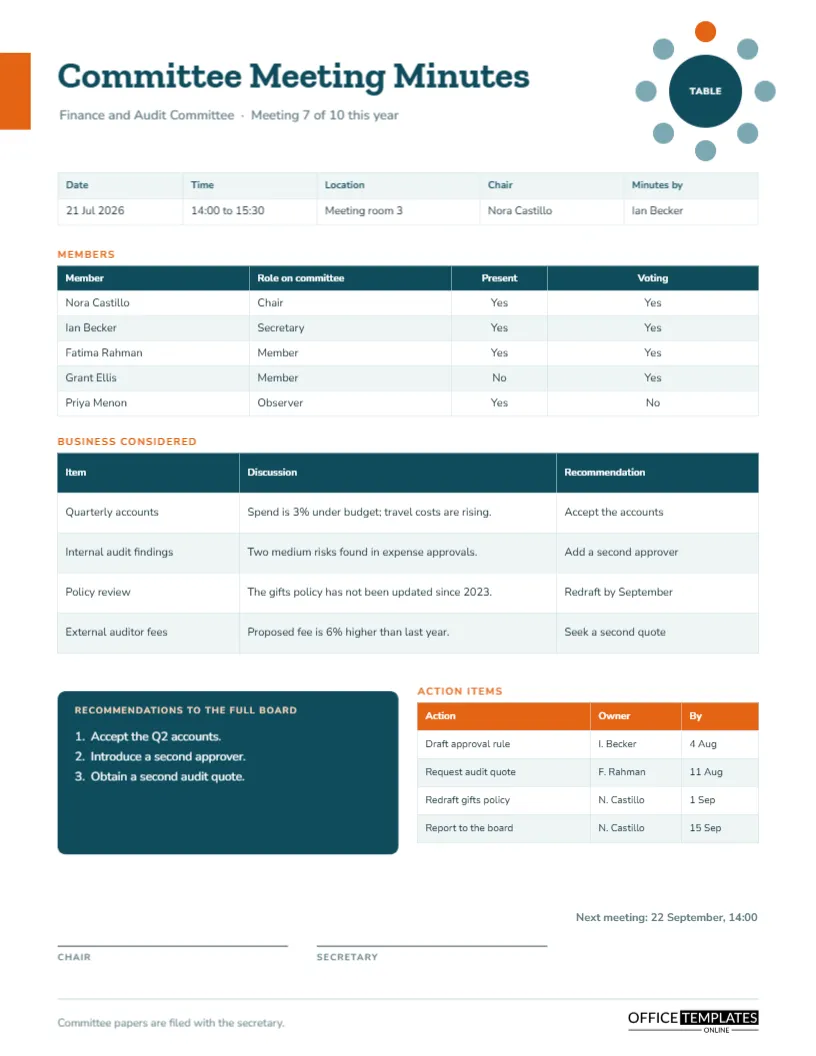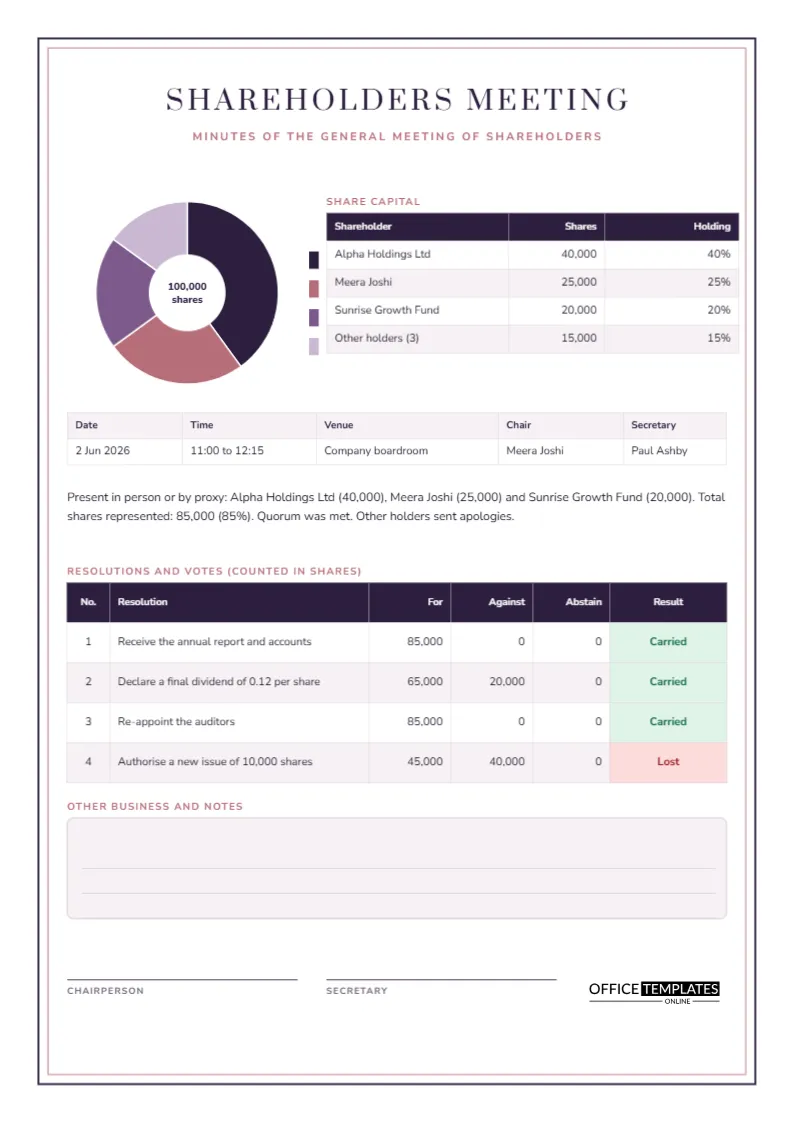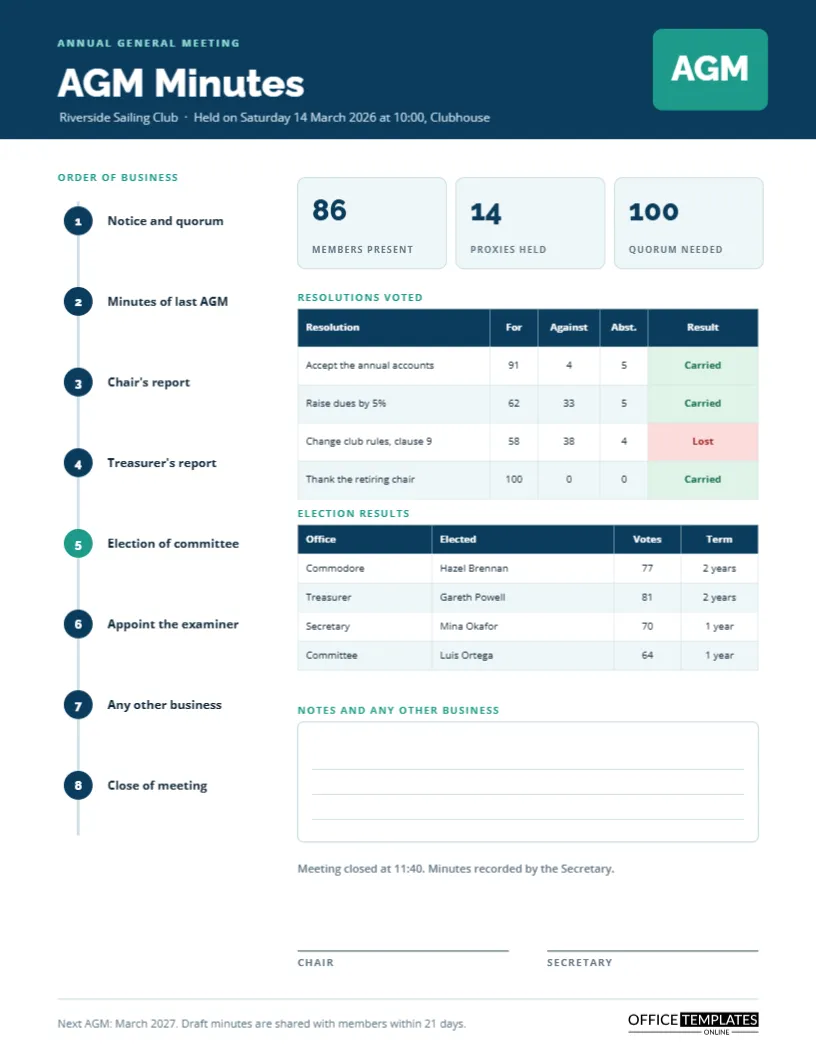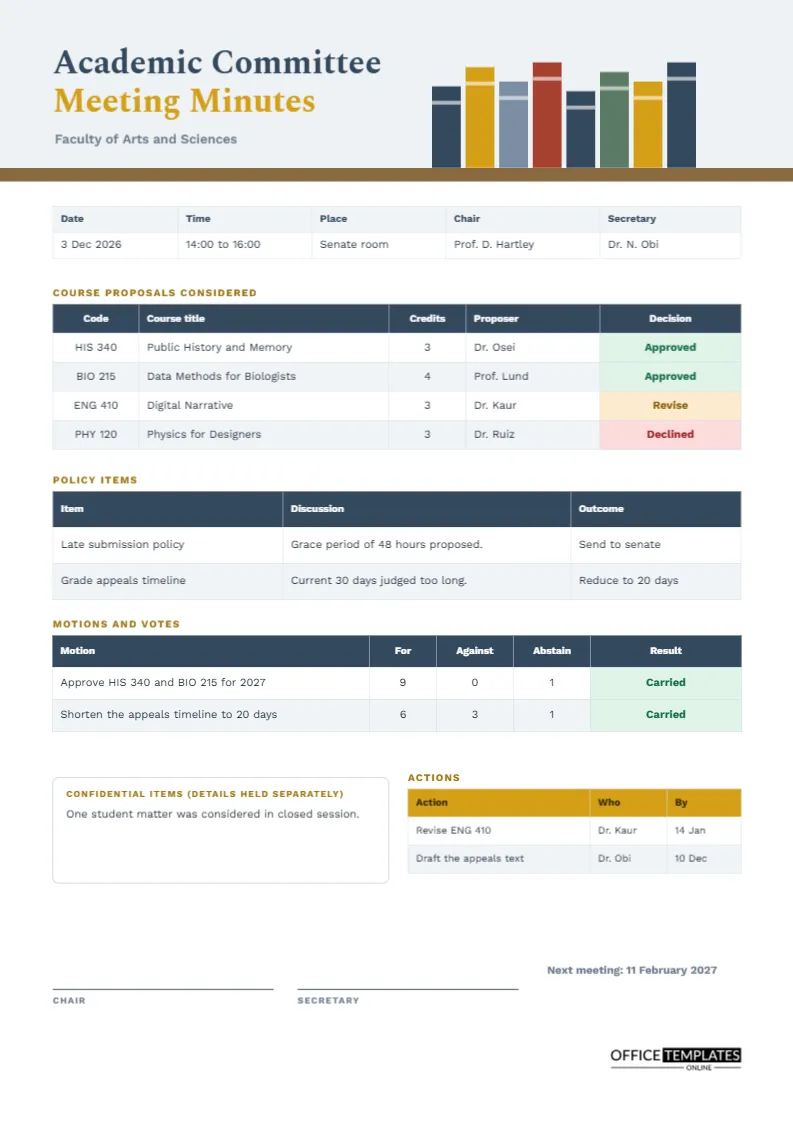
An academic committee decides what a university or college teaches and how it grades. It approves new courses, changes policies on assessment, and handles appeals. Its decisions affect students for years, and they must be traceable. The minutes are therefore read by registrars, departments, and sometimes external reviewers. This template presents those decisions with a scholarly look: a header with a shelf of book spines, a serif title and four tables that track proposals, policy, motions and actions.
A Bookshelf Along the Header
The header band is a pale grey-blue with a row of eight book spines standing on a brown shelf. The spines vary in height and colour, in slate, gold, grey-blue, brick red and green, with a thin light stripe near the top of each, like a label. The title Academic Committee Meeting Minutes is set in Spectral, a serif designed for reading, with the second line in gold. The effect is a library shelf, which suits the subject without a single piece of clip art.
Course Proposals and Their Outcomes
The first main table lists course code, title, credits, proposer, and decision. The decision cells are coloured: Approved in green, Revise in amber, and Declined in red. The sample covers four proposals, including a public history course and a data methods course approved, a digital narrative course sent back for revision, and a physics course declined. A colour-coded column makes it easy for departments to find their own item.
What a Course Approval Entry Needs
| Column | Why it is there | Example |
|---|---|---|
| Code | Links the decision to the catalogue | HIS 340 |
| Title | Identifies the course in plain words | Public History and Memory |
| Credits | Records the workload | 3 |
| Decision | Gives the outcome | Approved |
Revise Is a Decision, Not a Delay
When a committee sends a proposal back, the minutes should say what needs to change. In the sample, a digital narrative course is marked Revise, and an action assigns the proposer to revise it by 14 January. Without that line, the proposer is left guessing, and the proposal may drift for months.
Policy Items and Their Outcomes
The second table covers policy. The sample discusses a 48-hour grace period for late submissions, which is sent to the senate, and a grade appeals timeline judged too long, which is reduced to 20 days. Policy changes often need approval from a higher body, so the outcome column states where the matter goes next.
Recording Votes in Academic Settings
The motions table lists each motion with votes for, against, and abstaining, and a coloured result. The sample passes the approval of two courses nine to nothing with one abstention, and shortens the appeals timeline six to three with one abstention. Many universities require a record of votes, and abstentions show the level of caution on a topic.
Handling Confidential Student Matters
A box at the lower left reads Confidential items, details held separately. The sample says that a student matter was considered in closed session. This is the right level of detail. Write that a matter was considered, in what form and when, and keep names and facts in a secure confidential record. This protects the student and the institution.
Follow-up Tasks for Academic Staff
A gold-headed table lists two actions, one to revise a course and one to draft the appeals text. Because academic committees meet only a few times a year, actions need clear dates, and the secretary should check progress before the next meeting.
Chair and Secretary Signatures
Two lines at the foot for the chair and secretary, with a line giving the next meeting date. Academic bodies often approve minutes at the next meeting, so keep a note of when approval occurs.
Making the Minutes Useful to Departments
After each meeting, departments need only the decisions affecting them. Because the course table is clear and short, a registrar can extract rows quickly and forward them. Consider sending the full page to all members and a short extract to the departments concerned.
Editing the Bookshelf and Tables
The spines are grouped shapes you can recolour to match your institution, or delete if you prefer a plain header. Retype the faculty name under the title. The four tables are real Table objects, with Edit Table Data and Add Row for new entries. Cell fills hold the decision colours.
Printing for the Committee Pack
A4 portrait. Many committees print minutes into a binder for the following meeting. The brown shelf and the book spines print well in colour, and a grayscale copy keeps all the structure.
Linking Course Decisions to the Catalogue and Timetable
An approved course is only useful once it reaches the catalogue and the timetable. Add a line in the notes to say when the registrar will publish each approved course and which year’s catalogue it appears in. This simple link prevents the common situation where a course is approved in December, and no student can enrol in it until a year later because nobody told the registrar.
Recording Reasons for Declined Proposals
When a proposal is declined, the proposer deserves a reason. A short phrase in the policy or outcome cell, such as overlaps with an existing course, helps them to improve and resubmit, and it protects the committee from accusations of arbitrary decisions. Over time, the pattern of reasons also shows the committee’s priorities.
Working With External Reviewers and Quality Bodies
Quality assurance bodies review how academic decisions are made. Well-kept minutes show that proposals were considered against clear criteria, that votes were recorded and that policy changes went through the right levels of approval. Keep the pages in a single series and make sure each carries a date and a signature. A neat record can shorten a review considerably.
Dating Every Decision for the Academic Calendar
Academic decisions often take effect in a particular year or semester. Write the effective date beside each approval, so registrars and departments know exactly when a change begins.
Academic Committee Questions
Can I use it for a school curriculum board?
Yes. Change the code and credit columns to subject and year.
Should minutes name the proposer?
It is customary, because the proposer is accountable for follow-up.