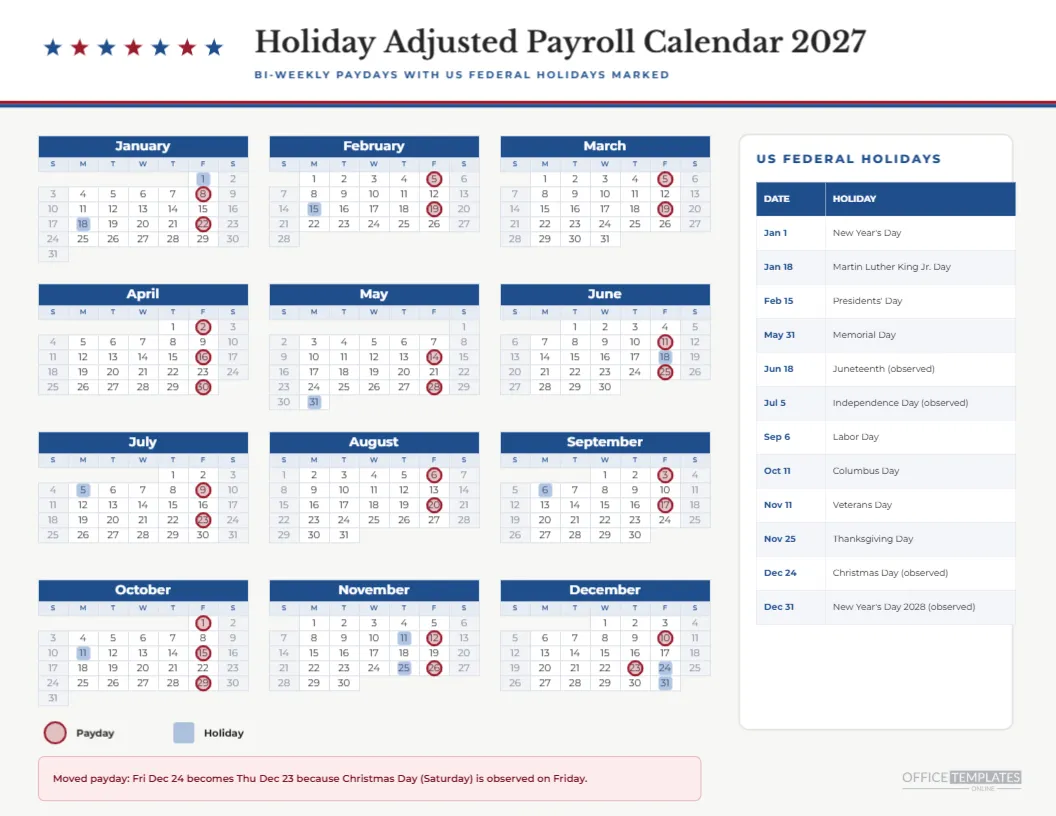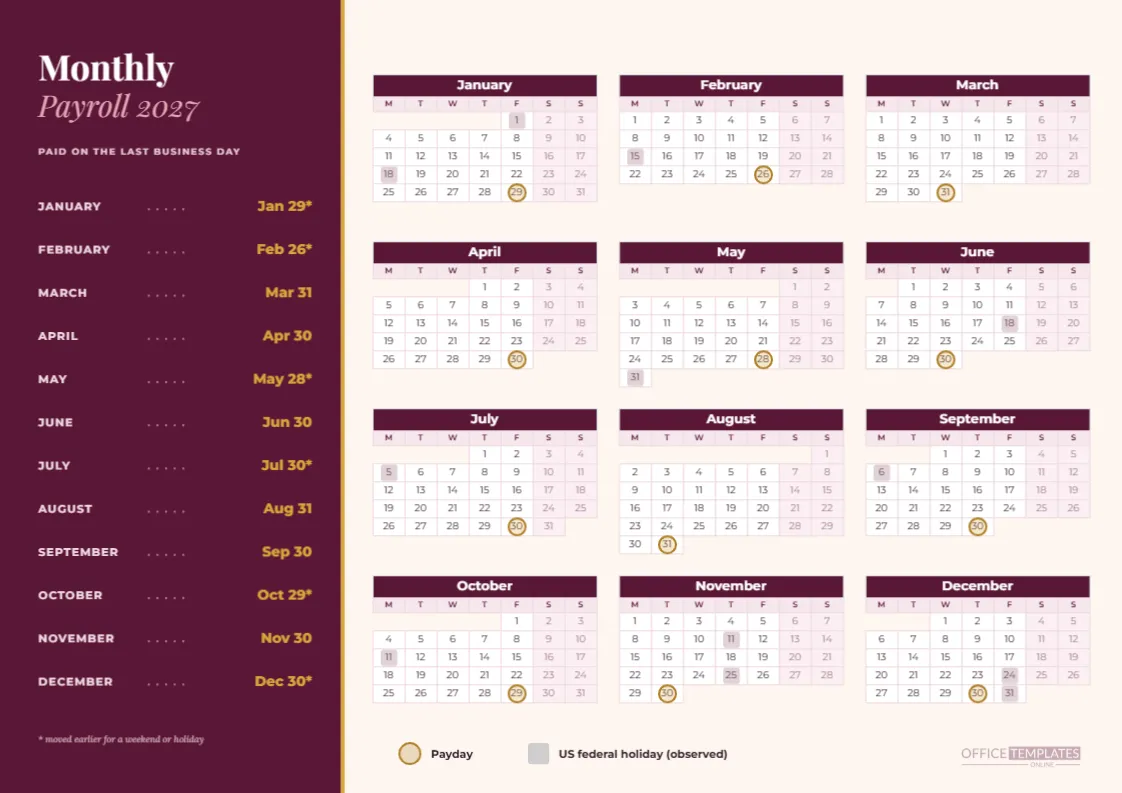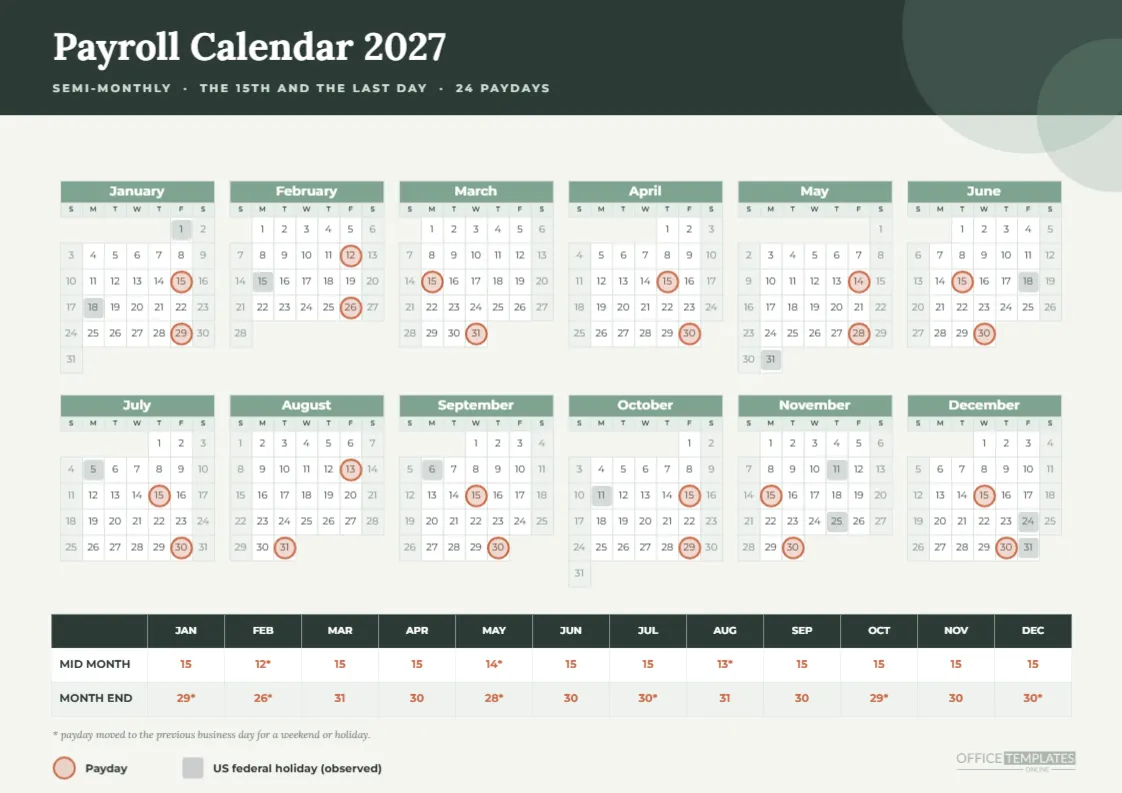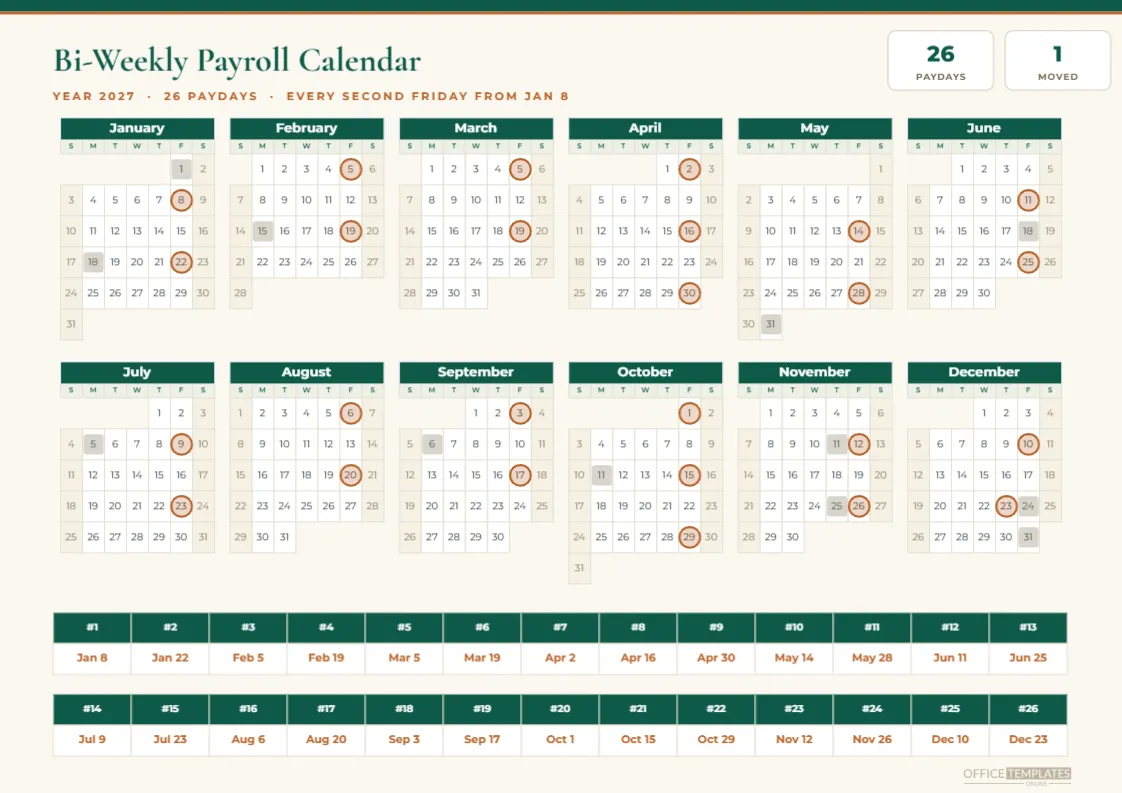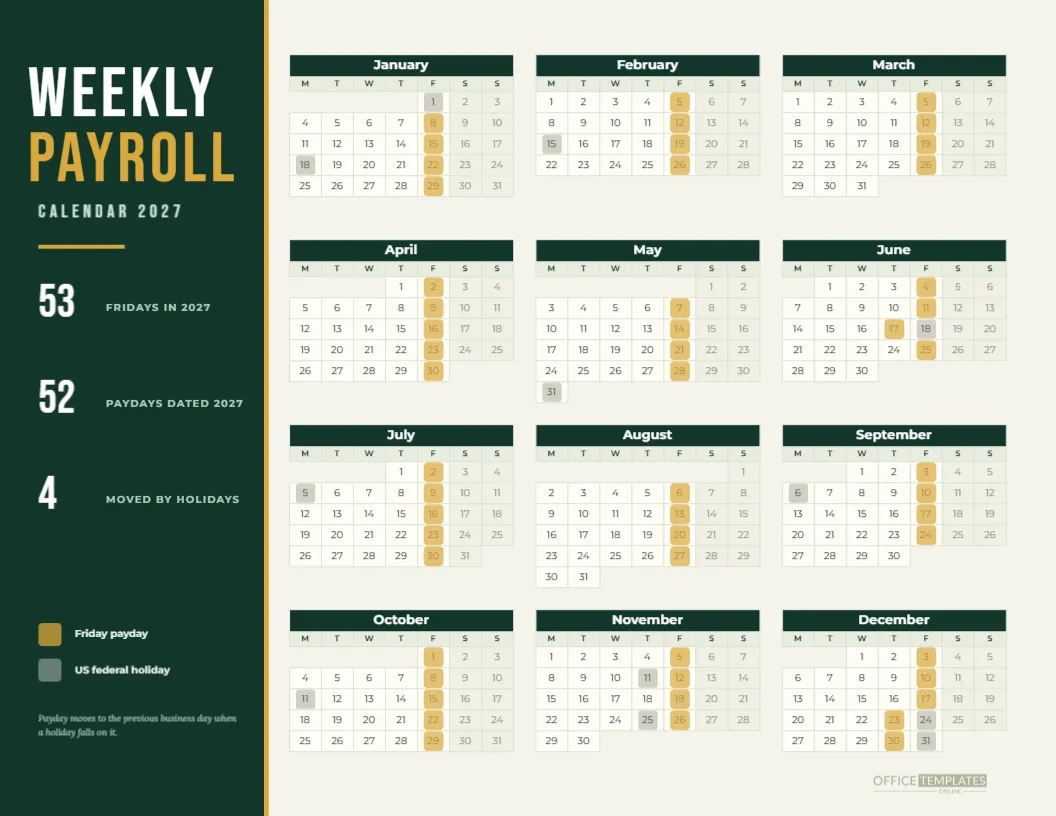
Weekly pay is the simplest schedule to describe and the easiest to get wrong, because there are so many paydays that one missed adjustment hides among the rest. This weekly payroll calendar for 2027 gives the year a dark green sidebar and three columns of mini months, and it tints every Friday payday in gold so the weekly beat reads like a column of lights down each month.
The Look of the Weekly Sheet
The left sidebar is deep green with a gold edge. It carries the words WEEKLY PAYROLL in tall condensed capitals, the line Calendar 2027, and three large figures with small captions. On the right, twelve months sit in three columns with Monday as the first day of the week. Gold squares sit behind the Friday paydays and a quieter grey marks holidays.
Fifty-Three Fridays in One Year
A normal year has 52 weeks plus one extra day. In 2027, that extra day is a Friday, because January 1 and December 31 are both Fridays. So the year holds 53 Fridays, which surprises people who budget with 52 paychecks in mind. The sidebar states the number plainly so nobody has to count the rows on a calendar.
Why the Sidebar Says Fifty-Two Paydays
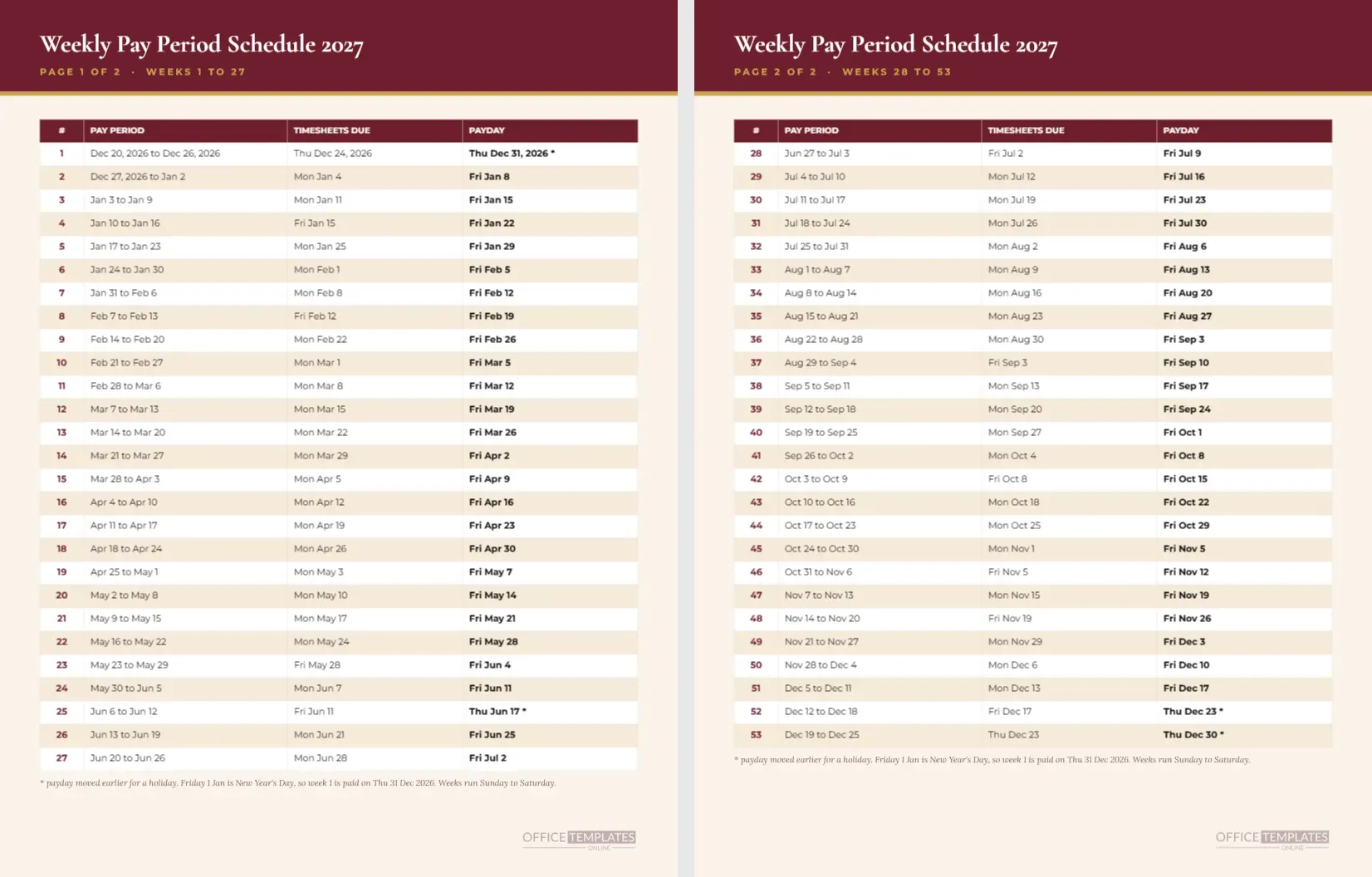
The second figure reads 52 paydays dated 2027. The first Friday, January 1, is New Year’s Day, so that payday moves back to Thursday, December 31, 2026, and never appears in the 2027 grid. The remaining 52 land inside the year. Employers that count by pay date and employers that count by work week can both be right, and the sidebar helps explain the difference.
The Four Fridays That Shift
Four weekly paydays move earlier. January 1 becomes Thursday, December 31, 2026. June 18 becomes Thursday, June 17, because Juneteenth is observed that Friday. December 24 becomes Thursday, December 23, for the observed Christmas holiday. December 31 becomes Thursday, December 30, because New Year’s Day 2028 is observed on that Friday. Each of these shows as a gold square on a Thursday.
Monday Start and Why It Helps
Weekly payroll lives in work weeks, so the calendar starts each week on Monday. That puts Saturday and Sunday together at the right edge and keeps Friday paydays in a tidy column. Any reader who prefers Sunday starts can switch the week start in Calendar Options and then move the gold squares one cell to match.
What Is a Calendar Object Here
The mini months are the editor’s own Calendar object, set to the Full Year style. It is not a picture. You can change the year, rename month labels, and recolour headers from the options panel. The gold squares are separate shapes laid over the calendar and grouped, because the Calendar object cannot highlight a single date on its own.
Spotting Holiday Weeks at a Glance
Grey squares on Mondays mark Martin Luther King Jr. Day, Presidents’ Day, Memorial Day, Labor Day, and Columbus Day. Weeks that contain one of those Mondays often have timesheet or processing deadlines that also shift, so employers who close for them may want an extra reminder. Thursday holidays such as Veterans Day and Thanksgiving fall in the same week as a Friday payday and may need earlier processing.
Cash Flow for Weekly Payers
Weekly employers fund payroll more often but in smaller amounts, which flattens the monthly cash curve compared with bi-weekly pay. The calendar helps a finance lead see which months hold five Fridays: January, April, July, October, and December. In those months, the funding total runs 25 percent higher than in four-Friday months, and the page lets you check that without a formula.
Who Uses Weekly Pay
Construction, hospitality, retail, home care, and many staffing agencies commonly pay weekly, partly because hourly workers value quick access to earnings. If you run one of those operations, the shape of this page, with its heavy column of Fridays, will look familiar. Seasonal businesses can also print it for temporary staff who need to know exactly when they will be paid.
Customising the Sidebar Figures
Click any number in the sidebar to change it. If your company pays on Thursdays, update the labels as well as the markers. The figures are plain text, so a different count such as 52 total paydays can be typed directly. Keep the captions short so they stay on two lines.
Print Settings That Work
Choose landscape, Letter size, and actual size. Turn on background graphics so the green sidebar prints; without it, you will lose the white title text. A colour laser or inkjet handles the gold well. For a black and white copy, the grey holiday squares and gold squares still separate by tone, though a highlighter helps.
Combining It With the Weekly Month Pages
The collection also contains a twelve-page weekly set, one page per month, with the Friday paydays listed beside a large month grid. Use this page as the cover sheet and the month pages for the daily detail. They share the same computed dates.
Checking Your Own Dates
Hold the printout against the schedule from your payroll provider before posting it. Providers differ on holiday handling: some pay the day before, some pay the day after, and some ignore bank holidays entirely. The page follows a single rule, the previous business day, so edit any date that your provider handles differently.
Common Mistakes With Weekly Calendars
People forget that a Friday holiday means a Thursday payday; they count 52 paydays when the year has 53 Fridays, and they print without background graphics. They also forget the markers are shapes and leave them in place after switching to a different year. A two-minute review before printing avoids all four.
Quick Questions About Weekly Payroll in 2027
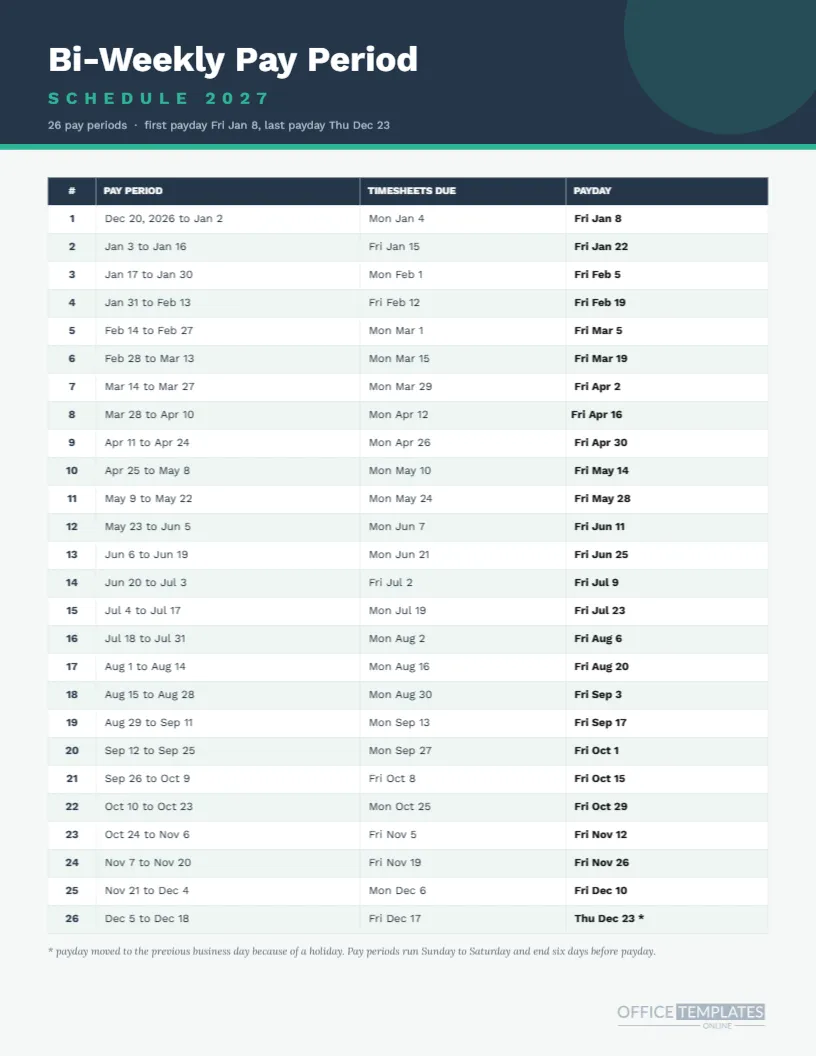
Is January 1 a payday? It is a scheduled Friday but a holiday, so it moves to December 31, 2026. How many Thursdays are paydays? Four in this schedule. Can I use it for biweekly pay? You can, though a dedicated bi-weekly page in this set already does it better. Does it show tax deadlines? No, it focuses on pay dates only.
Training New Payroll Staff With the Weekly Page
A new payroll assistant learns the weekly rhythm faster from a picture than from a policy document. Walk them through January, point at the gold column, and explain that every square is a run to prepare. Then show the Thursday squares and ask them why those weeks are different. Most people remember the lesson after that.