Habits are built in small, boring, repeated moments: reading a chapter before bed, packing the bag the night before, drinking water instead of another fizzy drink. None of them feel important on a single day. Over a month, they change everything. A habit tracker makes those invisible moments visible, one tick at a time.
A Vine That Grows With You
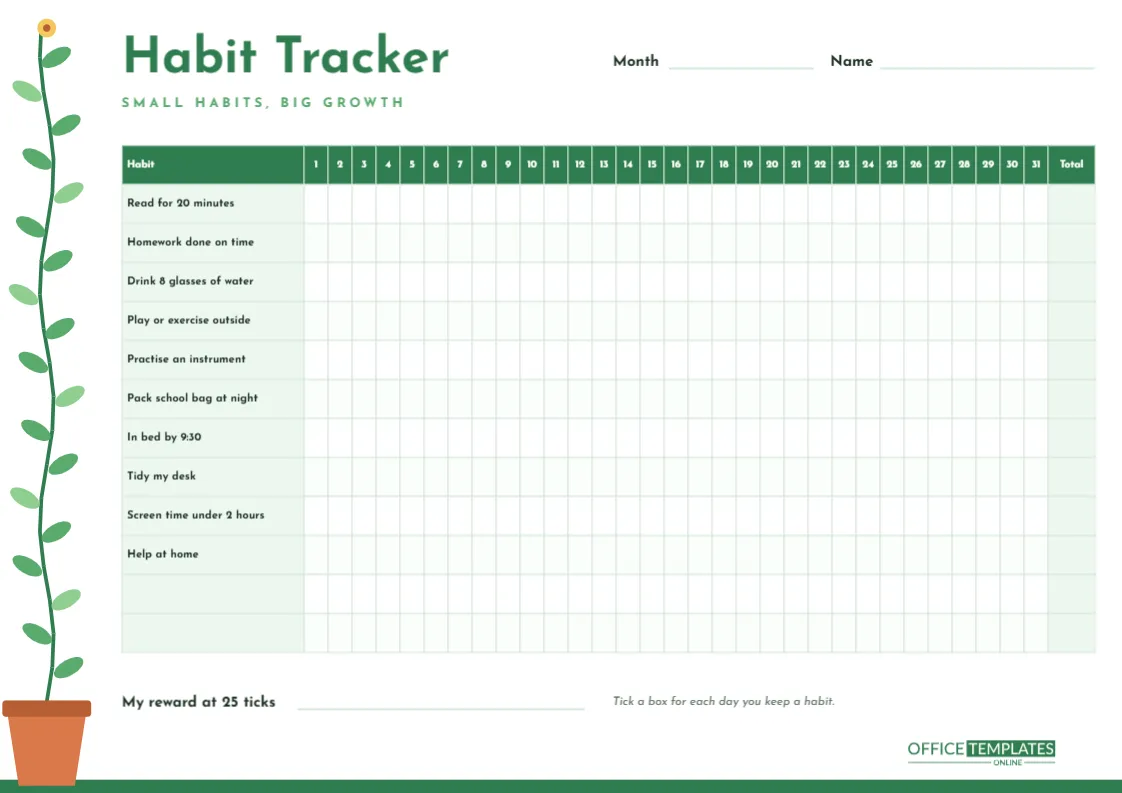
This template is an A4 landscape page (297 x 210 mm). Along the left edge, a terracotta flowerpot sits at the bottom of the page, and a green vine climbs out of it all the way to the top, with leaves in two shades of green alternating left and right and a small yellow flower opening at the tip. A green grass strip runs along the bottom of the page from the pot, grounding the design.
The idea is simple and easy for students to understand: habits are like plants. They start small, need a little attention every day, and grow into something you are proud of.
At the top, the title Habit Tracker is set in clean Josefin Sans green lettering, with the line Small habits, big growth beneath it, and lines for Month and Name on the right.
Inside the 31-Day Grid
The tracker is a wide table with a green header. The first column lists habits; the next thirty-one columns are numbered 1 to 31 for every day of the month; the final column is a shaded Total. Ten habits are already filled in as suggestions:
- Read for 20 minutes
- Homework done on time
- Drink 8 glasses of water
- Play or exercise outside
- Practise an instrument
- Pack school bag at night
- In bed by 9:30
- Tidy my desk
- Screen time under 2 hours
- Help at home
Two blank rows at the bottom leave room for your own. Under the grid, a line reads My reward at 25 ticks, and a short instruction explains the system: tick a box for each day you keep a habit.
Habit Ideas by Age
The pre-filled list suits a wide age range, but the best tracker holds habits that fit the student. Replace any row with ideas from this table.
Age groupHabit ideas5 to 7Brush teeth twice, put toys away, read with a grown-up, say one kind thing8 to 10Practise spelling, lay out clothes for tomorrow, feed the pet, 15 minutes of reading alone11 to 13Check planner every evening, no phone at the dinner table, 30 minutes of outdoor activity, review class notes14 to 18Revise one topic daily, sleep eight hours, journal for five minutes, no screens after 10 PM
| Age group | Habit ideas |
|---|---|
| 5 to 7 | Brush teeth twice, put toys away, read with a grown-up, say one kind thing |
| 8 to 10 | Practise spellings, lay out clothes for tomorrow, feed the pet, 15 minutes of reading alone |
| 11 to 13 | Check planner every evening, no phone at the dinner table, 30 minutes of outdoor activity, review class notes |
| 14 to 18 | Revise one topic daily, sleep eight hours, journal for five minutes, no screens after 10 PM |
How Many Habits Should You Track?
Twelve rows is the maximum, not the target. Beginners do best with three to five habits in the first month. When a habit has been ticked almost every day for a month, it is probably automatic; you can keep it on the list as a confidence boost or replace it with a new challenge. Adding too many at once usually leads to a grid full of gaps and a discouraged student, which defeats the point.
A useful test for any new row: could you do this habit on your busiest day? If the answer is no, shrink it. Read for 20 minutes can start as reading one page, which is still worth a tick and often turns into more.
Setting a Reward That Works
The My reward at 25 ticks line is there to make the finish line concrete. Choose a reward that is small, meaningful, and ideally connected to the habit: a new book after 25 days of reading, a trip to the park after 25 days of outdoor play, or choosing the family film after 25 early nights. Twenty-five out of a possible thirty or thirty-one leaves room for the odd missed day, which keeps the goal achievable.
Editing the Tracker Online
- Double-click the grid to open Edit Table Data, then retype any habit in the first column or clear the suggestions entirely.
- Delete rows for a shorter list, which also makes each remaining row easier to spot.
- Months with 28, 29, or 30 days need no changes; simply shade the unused day cells after printing.
- The vine and pot form one grouped object on the left edge. Click it to move or recolour it as a single piece.
- Change the reward line to a different number if your family prefers 20 ticks or a full month.
Printing a Wide Grid Clearly
Print on A4 landscape at Actual size; scaling down makes the day boxes too small to tick comfortably. The design is mostly white with a narrow green edge, so it prints cheaply in colour. Put the tracker somewhere it is seen daily, such as the bedroom door or next to the toothbrush holder, because a tracker kept in a drawer is quickly forgotten. A clipboard on the wall with a pencil tied to it works very well for younger children.
Making It a Family Project
Habit trackers work even better when someone else is doing one too. Parents can print their own copy and track a habit alongside their child, such as a daily walk or reading before bed. Comparing ticks at the end of each week turns the tracker into a shared conversation rather than a chore chart, and children love catching a parent with an empty box.
Habit Tracker Questions
What if I miss a day?
Leave the box empty and carry on. The rule many people follow is never miss twice: one gap is fine, two in a row is the moment to reset.
Should I tick or colour the boxes?
Either. Colouring a full column when every habit is done for that day creates a satisfying pattern across the month.
Can teachers use it in class?
Yes, for classroom habits such as bringing equipment, reading logs signed, or homework handed in. Rename the habits and print one per pupil.
Plant the First Habit Today
Write the month at the top, choose your habits, and tick today’s boxes before bed. By the end of the month, the grid will show how much you have grown.