A parent-teacher conference lasts ten or fifteen minutes and covers a great deal: how a child is doing, what is hard, what is going well, and what everyone will try next. Parents leave with a feeling, and teachers leave with a pile of other conferences to run. A short written record makes the conversation last. This page captures the three things parents remember best, strengths, needs, and goals, and finishes with a list of agreed actions for the school and for home.
Two Speech Bubbles at the Top
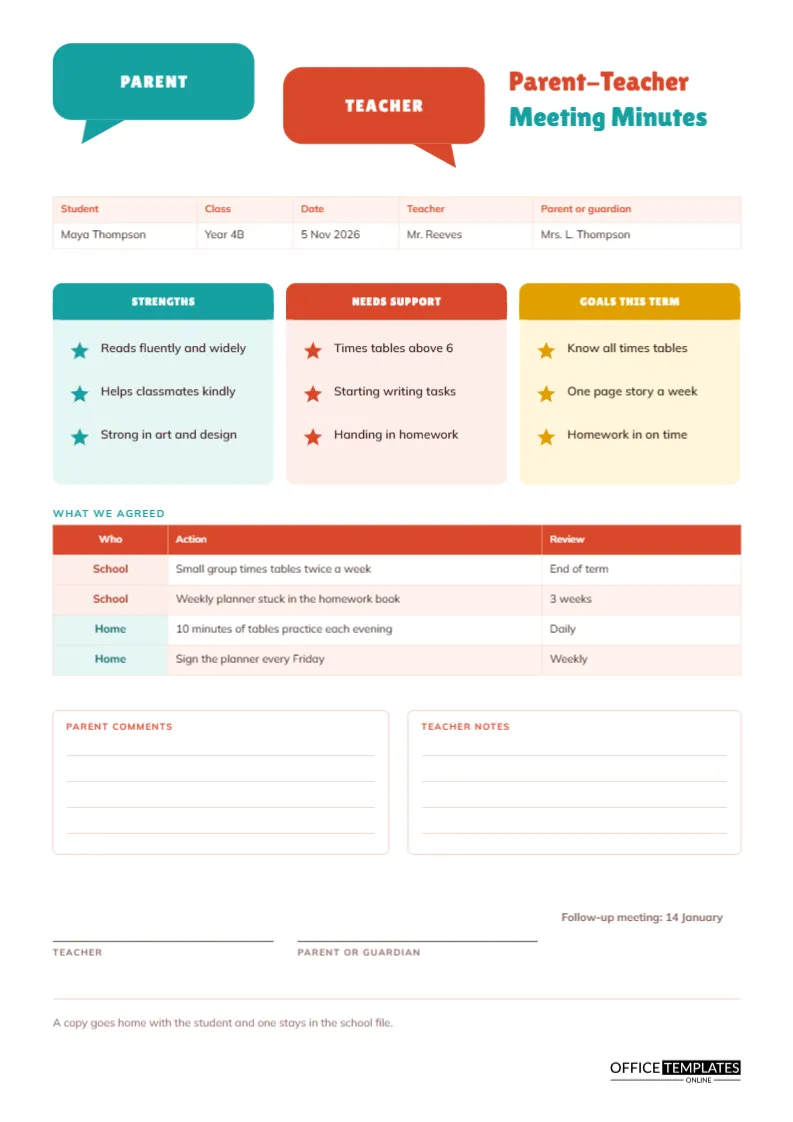
The header shows two overlapping speech bubbles, a teal one labelled PARENT and a red-orange one labelled TEACHER, with the title Parent-Teacher Meeting Minutes set to their right in Lilita One. The picture states the purpose in one glance: this is a conversation between two people who both want the child to do well. The warm, rounded style keeps the page welcoming, which matters because many parents arrive a little anxious.
Student and Meeting Details
A five-column strip records the student, class, date, teacher, and parent or guardian. The sample shows Maya Thompson in Year 4B, with Mr. Reeves and Mrs. Thompson. Recording both adults by name matters when more than one guardian is involved, and it gives the school a clear record of who attended.
Strengths First, Always
The first of three cards is headed Strengths in teal. Each card holds three bullet lines marked with small stars. The sample lists fluent reading, kindness to classmates, and strength in art. Starting with strengths is not merely polite. Research on feedback suggests that parents and children respond better to concerns once they have heard what is going well, and the order of the cards on the page encourages that sequence.
Needs Support, Said Kindly
The second card, in red-orange, is headed Needs Support. The sample says times tables above six, starting writing tasks, and handing in homework. Phrase each as a skill to build, not a failing. Times tables above six is something a child can practise. A label such as careless is not. The page makes this easy because each line is short.
Goals for This Term
The third card, in gold, lists goals: know all times tables, write a one-page story each week, and hand in homework on time. A good goal is specific and measurable, and it connects to a need on the previous card. Three goals are enough. A child who is asked to improve everything at once usually improves nothing.
Turning the Conversation Into Actions
| Who | Example action | How it is checked |
|---|---|---|
| School | Small group practice twice a week | Review at the end of term |
| School | Weekly planner in the homework book | Three-week check |
| Home | Ten minutes of practice each evening | Daily routine |
| Home | Sign the planner every Friday | Weekly signature |
Why School and Home Both Get Actions
An agreement with tasks only for parents feels like a burden, and one with tasks only for the school feels like a promise nobody tests. The table on this page has a coloured label in the first column that reads School or Home, so the split is visible. The review column sets when the plan will be looked at again, which prevents good intentions from fading.
Space for the Parent’s Voice
Two large boxes with ruled lines sit side by side in the lower half, headed Parent comments and Teacher notes. Parents often have information the school does not, such as a change at home or a worry about friendships. Giving them a labelled space shows that their view is part of the record. Teachers can use their own box for observations they did not have time to say aloud.
Signatures and a Follow-up Date
Lines for the teacher and for the parent or guardian sit at the foot, with a follow-up meeting date beside them. Signing is a courtesy, not a contract. It shows that both sides read the page. The footer notes that a copy goes home and one stays in the school file.
Handling Sensitive Subjects
Some conferences raise matters that are too delicate for a general form, such as health, family difficulties, or behaviour that may involve other children. Note only that a confidential matter was discussed and follow your school’s procedure for the details. Never write another child’s name on this page, and keep notes about a pupil’s needs factual.
Running Back-to-Back Conferences
If you have twelve conferences in an evening, fill in the strengths, needs, and goals for each child before the day begins, in pencil or as a draft. During the meeting, you will adjust rather than write from scratch. Print one page per family, and keep them in a folder in schedule order.
Using the Page With Interpreters or Remote Parents
When a parent joins by phone or needs an interpreter, send the filled page afterwards, along with a translation if available. A written record helps a family who followed the conversation in a second language and wants to check the details at home.
Editing the Cards and Bubbles
Every label is editable text, and the speech bubbles are shapes you can recolour. To add a fourth goal, add a line and star to the right card. The actions table is a real Table object, with Edit Table Data and the Add Row button.
Printing the Conference Page
A4 portrait. The coloured headers print well in colour, and the three cards stay distinct in grayscale by their headings and the shapes of the stars.
Following Up After the Conference
The page ends the meeting, but the real work follows. Put the review dates from the actions table in your diary, and send a short note to the parent when each one comes up. A message that says the small group sessions have started and the times table quiz went well builds trust, and it shows that the agreement was taken seriously by both sides.
Questions From Teachers and Parents
Can I use it for a secondary school student?
Yes. Rename the class and adapt the goals, and consider inviting the student to the meeting.
Who keeps the original?
The school keeps one copy in the pupil file, and the family takes the other.