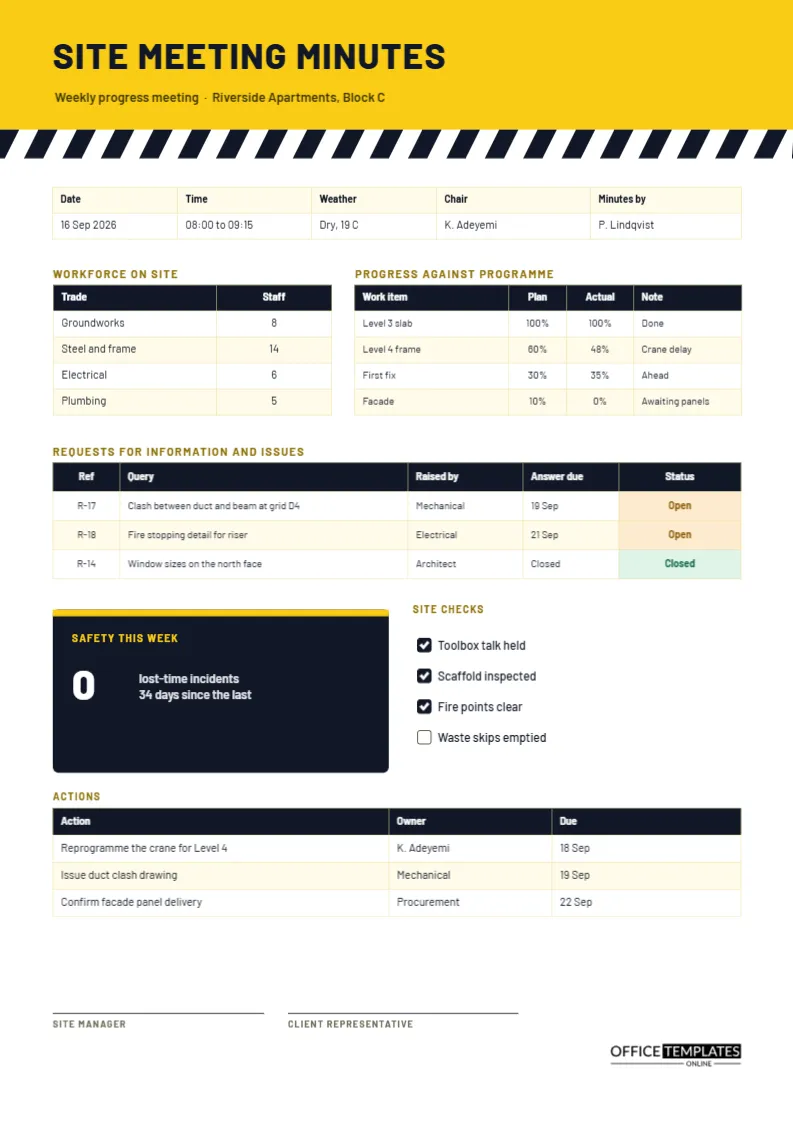
A site meeting is where the paper plan meets the muddy ground. Cranes slip, drawings clash, deliveries arrive late, and somebody must write down who is responsible for each problem, because the contract will later turn on those records. This template is built for the weekly progress meeting on a building site. It borrows the look of hazard tape for its header and keeps the working parts, such as workforce, progress, and requests for information, in plain tables.
Why Site Minutes Get Read in Disputes
Construction disputes seldom hinge on grand events. They hinge on small facts: when a query was raised, who answered it, whether a delay was reported on time. Site minutes record those facts week after week. Because they may be used as evidence, they should be dated, factual, and signed. The layout here keeps statements short and sets queries in a numbered log so that each can be followed to its answer.
A Yellow Band With Black Diagonal Stripes
The header is a solid safety yellow, with SITE MEETING MINUTES in heavy black Barlow capitals and a one-line note naming the sample project, Riverside Apartments, Block C. Along its lower edge runs a strip of black diagonal stripes like barrier tape. Under the header, a five-column strip records date, time, weather, chair and minute-taker, because weather is often cited when explaining lost time.
Workforce on Site, Trade by Trade
A narrow table on the left counts staff for groundworks, steel and frame, electrical and plumbing. The sample shows eight, fourteen, six and five. Recording headcount by trade supports claims about productivity and shows at a glance whether a lagging trade has too few people.
Progress Against the Programme
The table beside it compares planned and actual completion for four items. The level 3 slab is done, the level 4 frame is at 48 percent against a plan of 60 because of a crane delay, first fix is ahead, and the facade has not started. The note column records the cause in a few words. Keep causes factual: write crane delay, not contractor failure.
The RFI and Issues Log
Requests for information, or RFIs, carry reference numbers such as R-17, a short query, who raised it, the date an answer is due, and a status. Open items are tinted amber and closed ones green. The sample includes a clash between a duct and a beam, a fire stopping detail and a closed question about window sizes. An RFI log is the best defence against the charge that a delay was the builder’s fault, because it shows when the design team received the question.
What Counts as a Good RFI Entry
| Element | Example | Why it matters |
|---|---|---|
| Reference | R-17 | Lets everyone cite the same item |
| Query | Clash between duct and beam at grid D4 | Names the location and the conflict |
| Raised by | Mechanical | Shows who needs the answer |
| Answer due | 19 Sep | Sets the clock for the design team |
The Dark Safety Counter
A black panel with a yellow top edge shows the number of lost-time incidents this week, large in white, and the days since the last one. It is a reminder that safety belongs at the heart of the meeting, not at the end. Retype the figures each week.
Site Checks as a Short Tick List
Four check boxes record a toolbox talk, a scaffold inspection, clear fire points, and emptied waste skips. In the sample, three are ticked, and one is open. The list is deliberately short so that it is completed every time. Replace the items with your own recurring checks.
Actions With Owners and Dates
The final table lists actions such as reprogramming the crane for level 4, issuing a clash drawing, and confirming facade panel delivery. Each has an owner and a date. Review it first at the next meeting.
Signatures From Site and Client
Two lines at the foot are for the site manager and the client representative. Signing the minutes does not mean agreeing with every remark, only confirming that they are an accurate record, a point worth saying aloud at the start of the meeting.
Adapting the Page to Your Own Project
Retype the project name, trades and work items. Every table here is a real Table object, which lets you retype cells and add rows from the editor panel. If you need a separate programme chart, attach it and refer to it by title in the progress table.
Recording Delays, Instructions and Variations
Three kinds of events matter most to a contract: delays, instructions and variations. A delay should be recorded with its cause, its date and, where known, its length. An instruction from the client or architect should be recorded with who gave it and when. A variation, a change to the work as originally described, should be noted with the reference to any written confirmation that follows. The notes columns of the progress and RFI tables give you room for these facts without adding pages.
Keeping Subcontractors in the Record
Subcontractors often attend part of the meeting and leave. Record their attendance in the workforce table, and if they raised an issue, list it in the RFI log under their trade name. A subcontractor who can see their own concern written in the minutes is more likely to trust the process, and the main contractor has a clean record of when each trade raised each problem.
Printing for the Site Cabin
The page is A4 portrait. Print it in colour if you can, because the yellow band helps people find the minutes on a cluttered notice board. A black and white copy is still clear, as the stripes turn to grey and every table keeps its borders.
Weather, Access and Ground Conditions
The weather box in the details strip is small but important. Rain, frost and wind each stop certain trades, and a contractor who can show that a week of bad weather fell on a critical task has a stronger case for more time. Record the weather in a few words and the number of lost days where known. Add access problems, such as a blocked road or a late permit, in the progress notes, using the same plain, factual wording.
Site Meeting Questions
How soon should minutes be issued?
Within two working days is common, so that corrections arrive before the next meeting.
Can I add a column for photos?
You can attach photographs as a separate sheet and mention them in the notes of the relevant row.