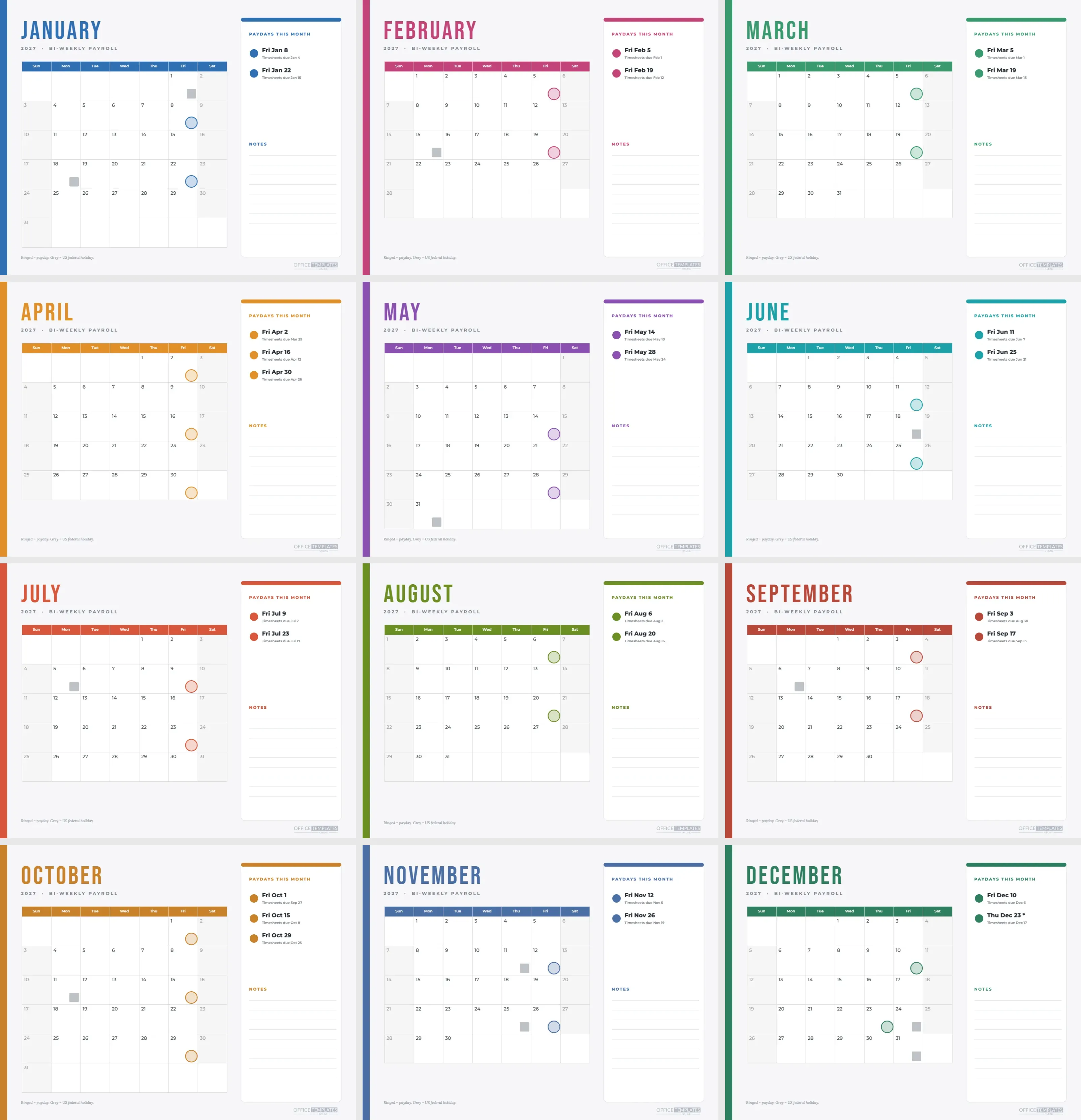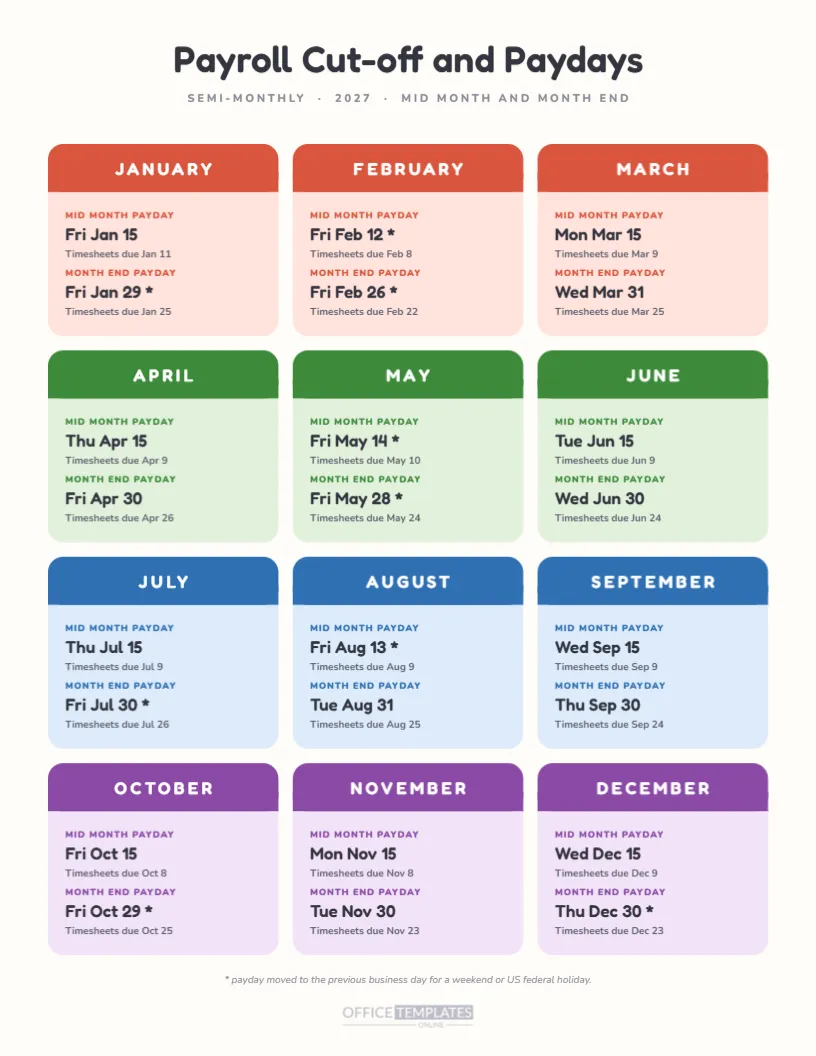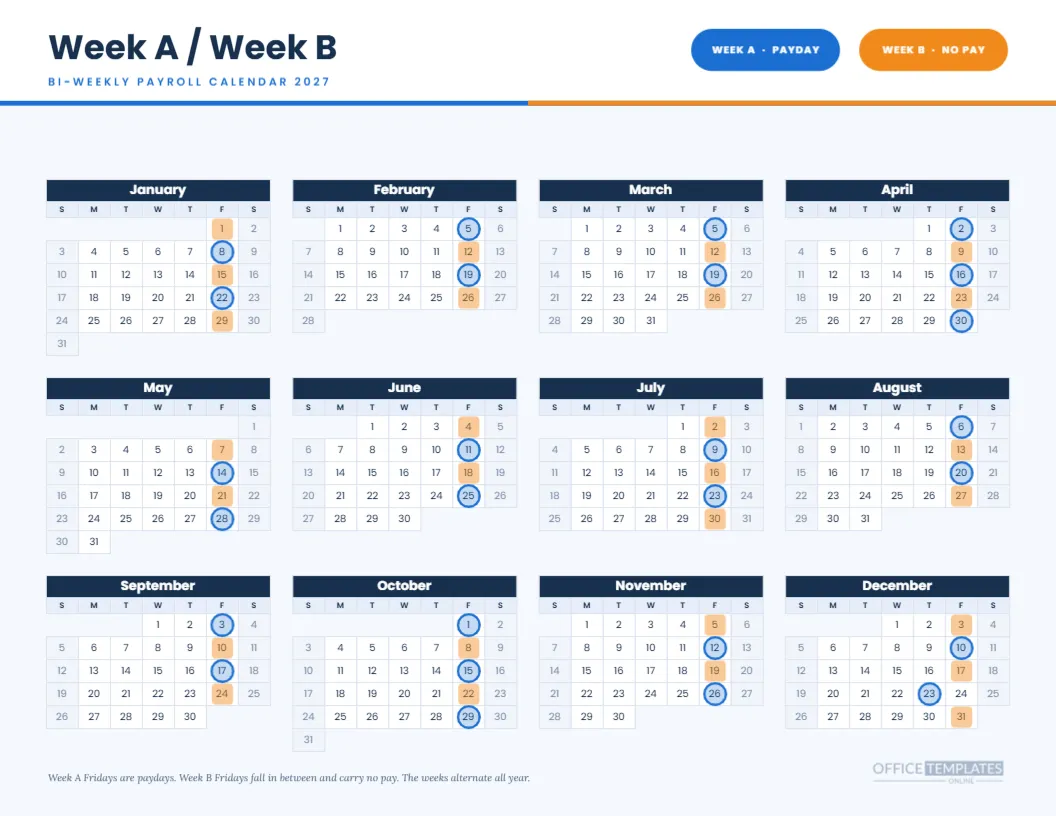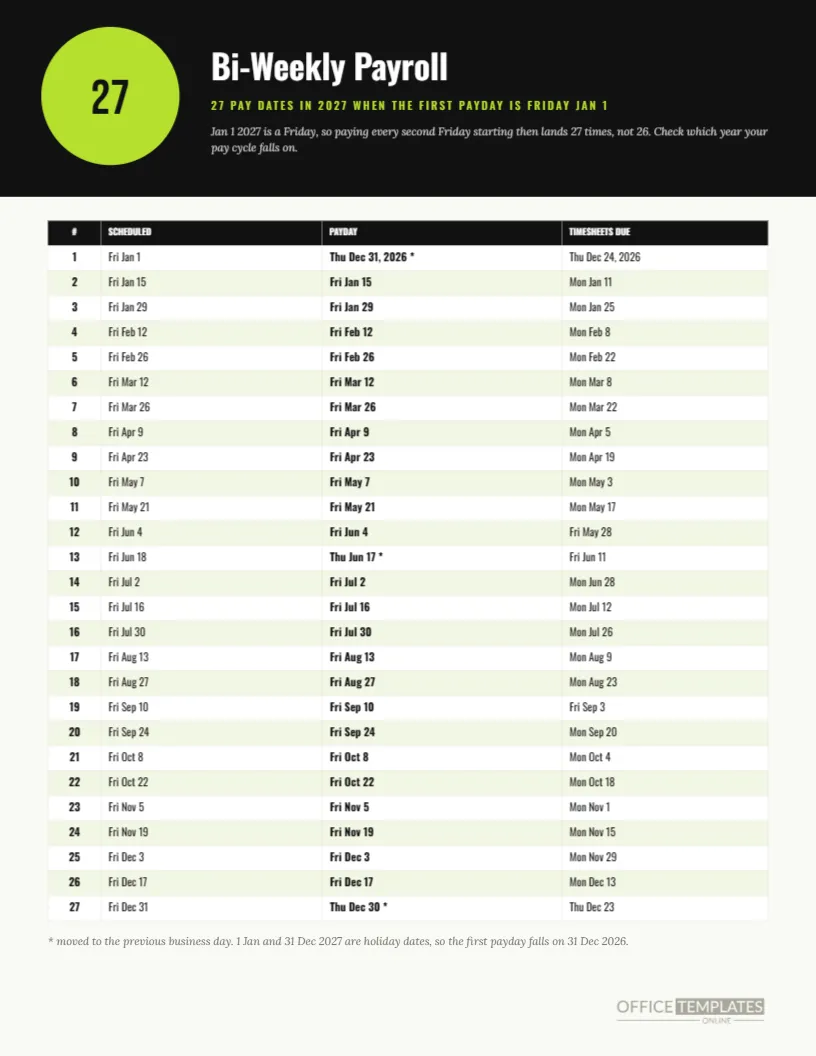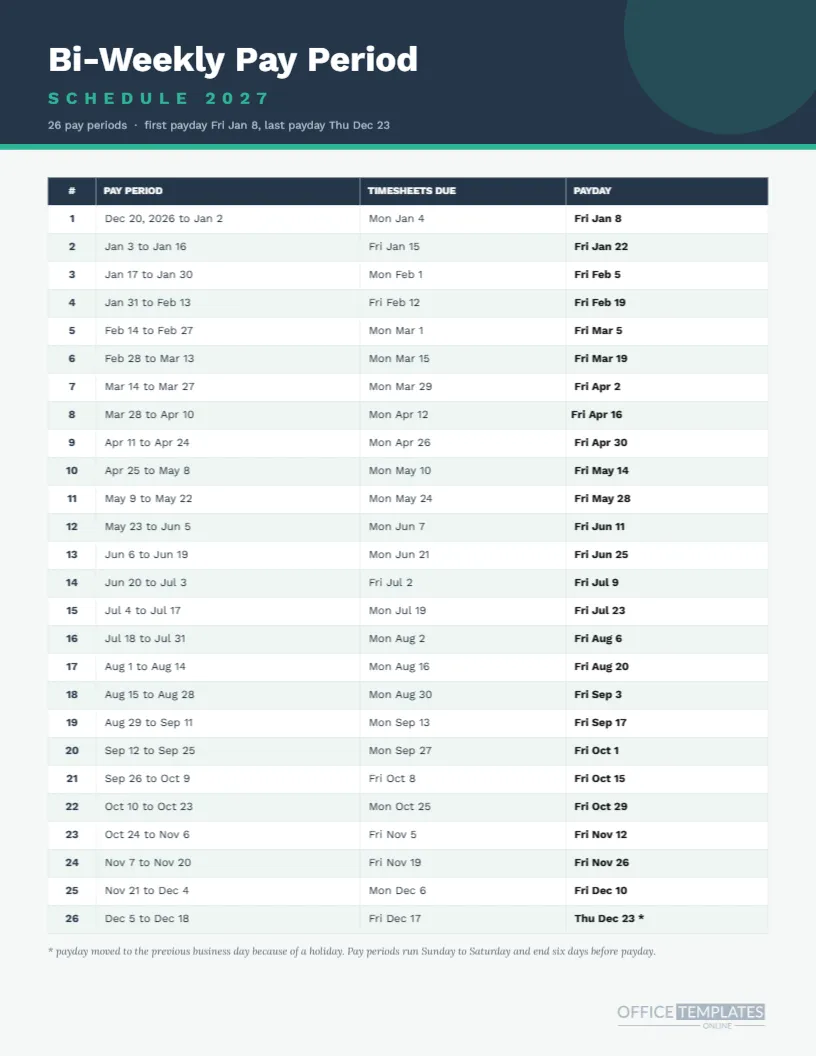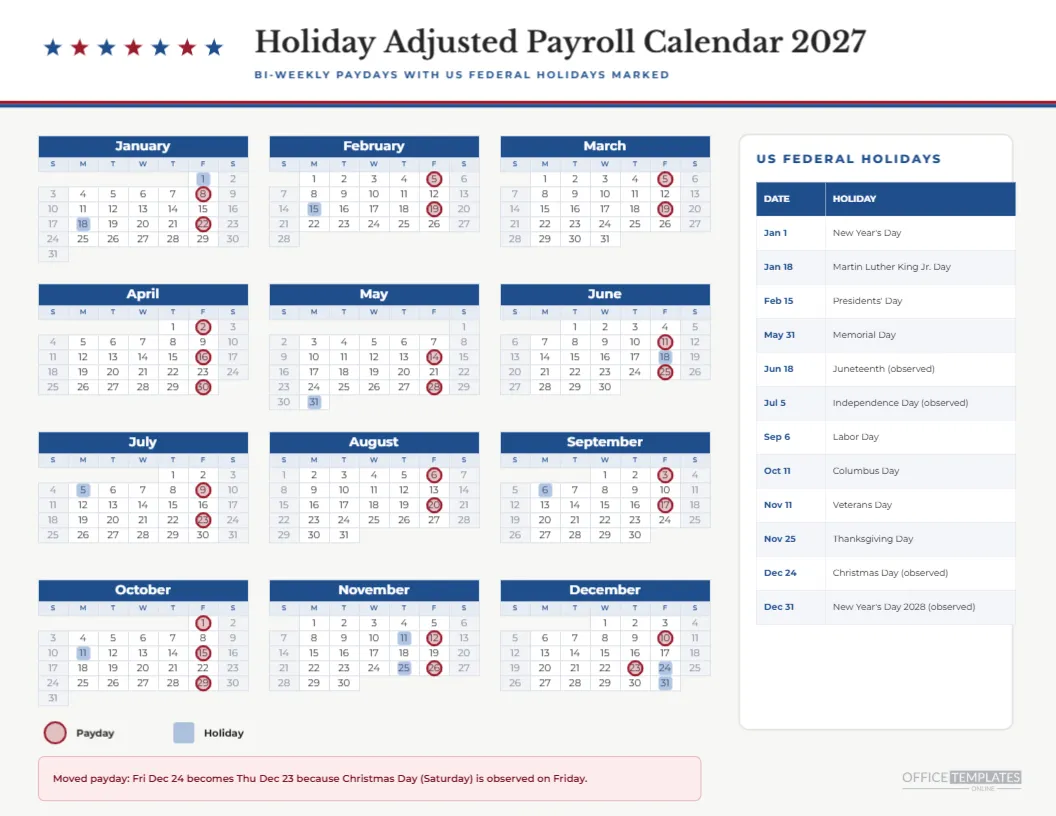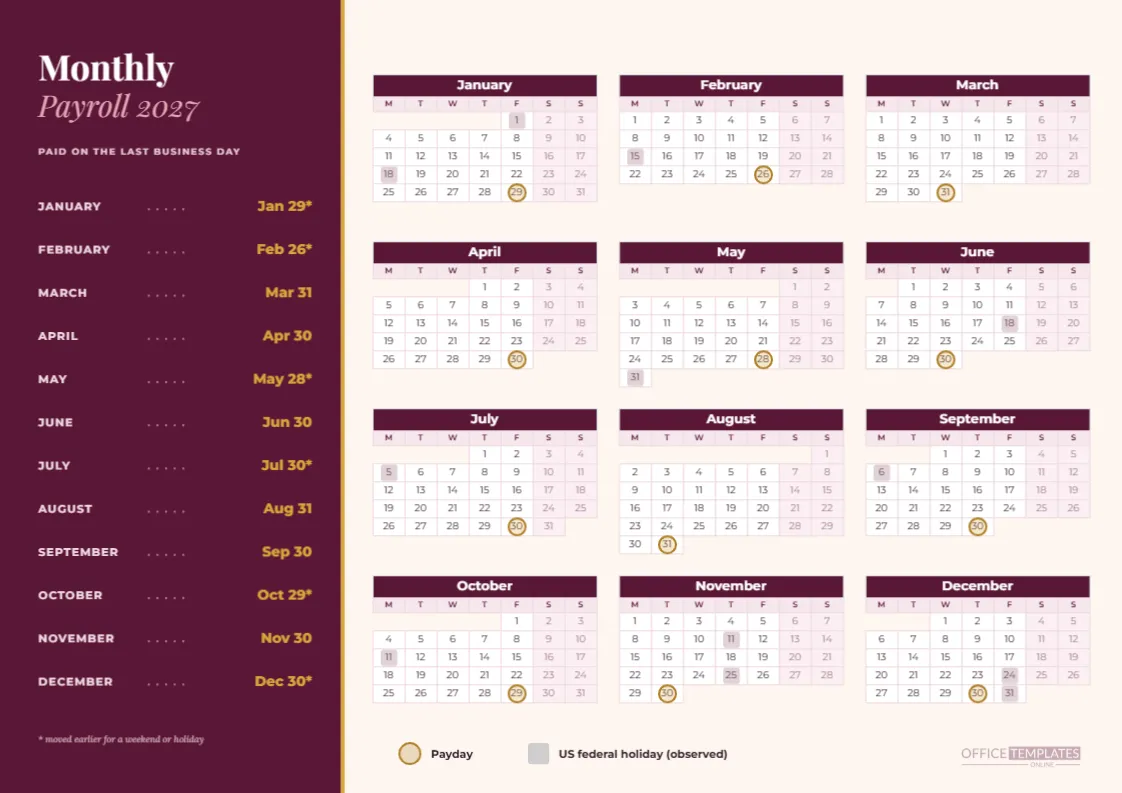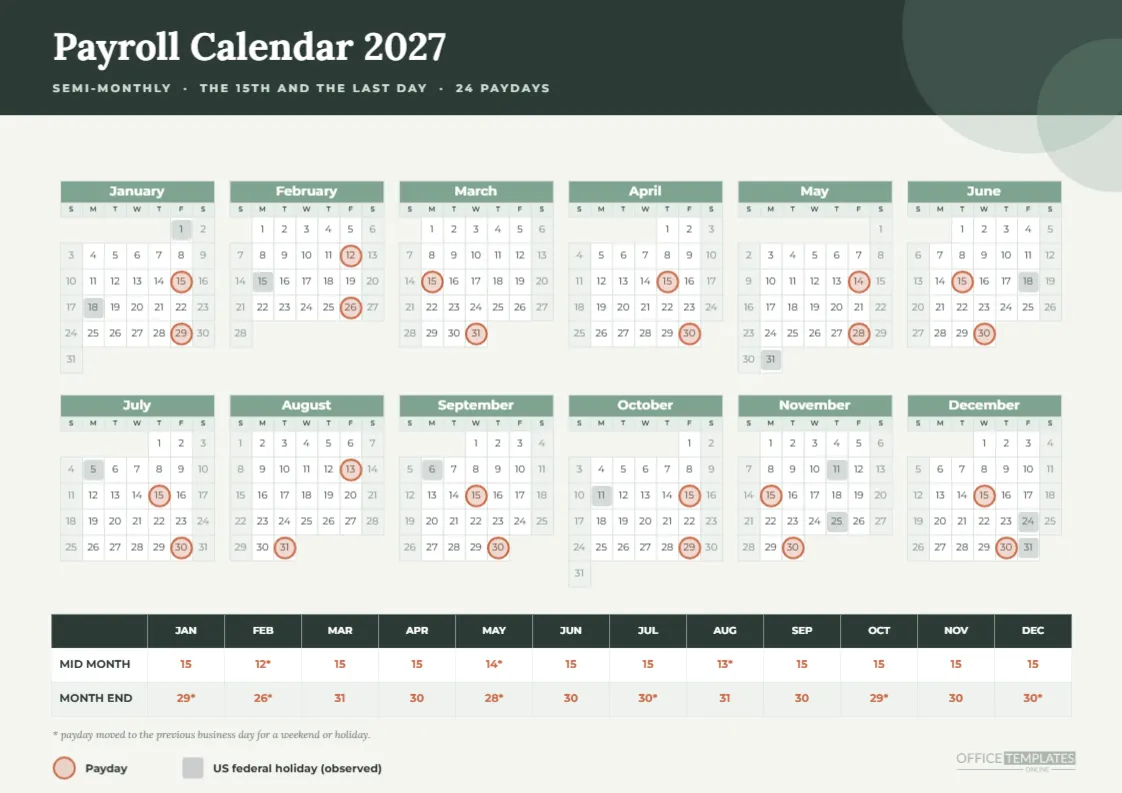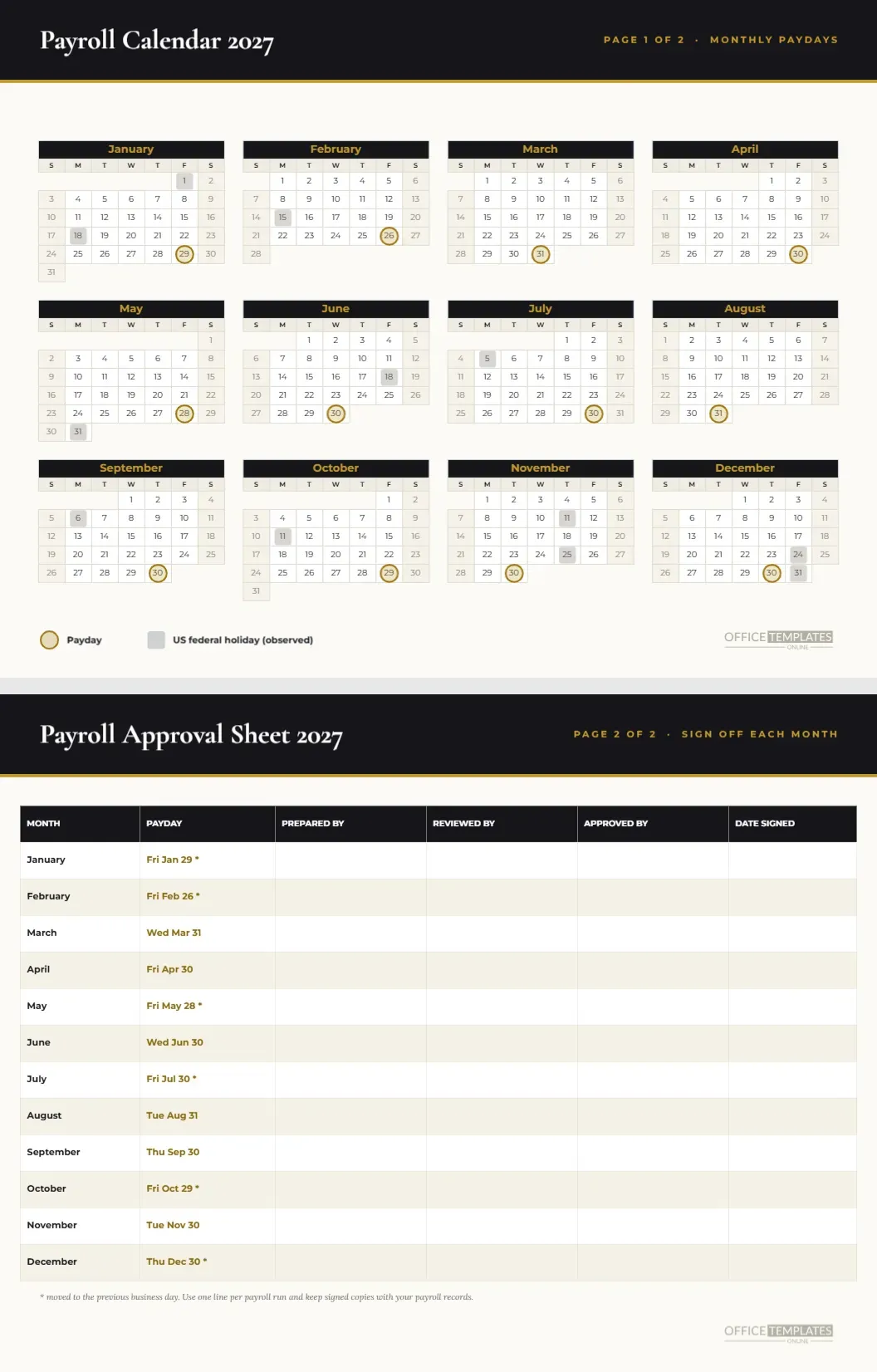
Page One: What It Shows
The first page is a yearly calendar. A black band with a gold rule carries the title Payroll Calendar 2027 in Cormorant Garamond, and PAGE 1 OF 2, MONTHLY PAYDAYS in spaced gold capitals. Twelve mini months sit below in four columns, with black month headers in gold type, pale parchment day names, and gold rings on each of the twelve monthly paydays.
Page Two: What It Shows
The second page keeps the black and gold band, retitled Payroll Approval Sheet 2027 with PAGE 2 OF 2, SIGN OFF EACH MONTH. Below is a six-column table with twelve rows, one per month. The first two columns show the month and payday, and the remaining four are blank for prepared by, reviewed by, approved by, and date signed.
Why Two Pages Belong Together
A calendar shows when payroll happens, and an approval sheet shows that someone checked it. Putting the two in one template means the plan and the control sit in the same file, with the same twelve dates. When an auditor asks for evidence that each month’s payroll was approved, you hand over page two with its signatures.
The Twelve Paydays on the Sheet
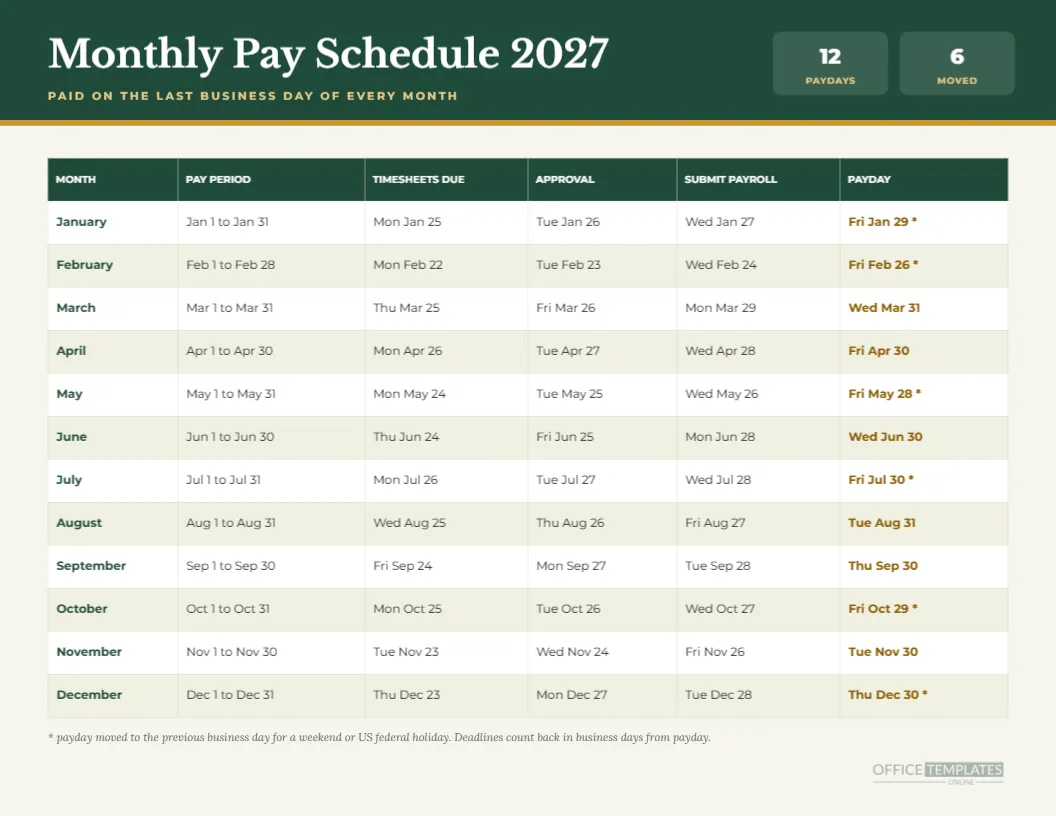
| Month | Payday | Moved? |
|---|---|---|
| January | Fri Jan 29 | Yes, from Sunday the 31st |
| February | Fri Feb 26 | Yes, from Sunday the 28th |
| March | Wed Mar 31 | No |
| April | Fri Apr 30 | No |
| May | Fri May 28 | Yes, from Memorial Day |
| June | Wed Jun 30 | No |
| July | Fri Jul 30 | Yes, from Saturday the 31st |
| August | Tue Aug 31 | No |
| September | Thu Sep 30 | No |
| October | Fri Oct 29 | Yes, from Sunday the 31st |
| November | Tue Nov 30 | No |
| December | Thu Dec 30 | Yes, from the observed New Year holiday |
The Sign-Off Columns
Prepared by is for the person who ran payroll. Reviewed by is for a second person who checked the figures. Approved by is for a manager or owner who authorised payment. Date signed records when. In a very small business, one person may fill several of them, but the structure still asks the question.
Black and Gold Styling
The two pages use a near-black band, a gold rule, and gold lettering for the small captions. The body is warm ivory. Black and gold are formal without being stuffy, and they suit a document that people sign. The same styling on both pages makes them feel like a pair.
Row Height for Signatures
Rows on the sign-off sheet are nearly half an inch high, enough for a signature or initials. The blank columns are about two inches wide. If you sign by hand, use a pen with a fine tip. If your people sign electronically, you can export the sheet as a PDF and use a signing tool.
Using the Sheet Monthly
After each monthly run, the preparer signs, a reviewer checks the register against the approved timesheets and signs, and an approver authorises the payment and signs. Each row takes under five minutes, and the dates give a picture of how long the cycle takes. Late signatures are visible on the sheet.
Editing the Sign-Off Table Columns
The sign-off sheet is a real Table object. Rename the columns to match your process, such as prepared by and checked by, add a column for the bank reference, or remove the reviewed column if you only have two signers. Keep the font size and row height, and your edit will still print cleanly.
Editing the Black and Gold Year Grid
The year grid on page one is a Full Year Calendar object. Calendar Options lets you switch the year or the first day of the week. The gold rings and parchment squares are grouped shapes laid on the grid, so move them after any change. Check that the table on page two matches the rings.
Using the Approval Pack With Other Pay Patterns
If you pay semi-monthly, add a row per payday and adjust the table. If you pay weekly, a monthly sheet is not the right fit, and a tracker with 53 lines is better. The pay pattern determines the layout, so choose the template that matches before you start editing.
Storage and Retention
Keep signed approval sheets with your payroll registers. Retention periods vary by country and record type, so ask your accountant how long to keep them. A consistent folder per year, labelled clearly, is more useful than a perfect system that nobody follows.
A Control, Not a Guarantee
Signatures do not prevent mistakes, but they make them less likely and easier to trace. An approval sheet is one of the cheapest controls available, and many auditors like to see one. Combine it with a checklist for each run and a clear schedule, and you have a sound basic process.
Pairing With the Monthly Pages
The monthly pay schedule in this collection gives timesheet, approval, and submit dates for each month. Use that to plan and this approval sheet to confirm. The two share the same twelve paydays, so a signature here matches a row there.
Honest Limits of an Approval Sheet
The dates follow a last business day rule and a US federal holiday list, and may differ from your provider’s. The sheet does not constitute legal advice or a compliance system. It records that people looked, and the quality of that looking depends on them.
The Pack in Brief
Two pages. Year calendar with twelve rings. Twelve-row sign-off table. Black, gold and ivory. Letter landscape. Editable calendar, table and text.
Who Should Sign What
A sensible split is simple: the person who prepares payroll should not be the only person who approves it. In a business of three people, the bookkeeper prepares, the office manager reviews, and the owner approves. In a one-person business, the owner can prepare, and a trusted adviser can review. Whatever your split, write it at the top of the sheet so everybody knows the rule.
Handling a Month With a Correction
If an error is found after approval, do not overwrite the original signatures. Add a line under the month, write CORRECTION and the date, and have the same three people sign again for the correcting run. A visible trail of mistakes and fixes is a sign of a working process, and an auditor will respect it more than a spotless page.
Presenting the Pack to an Auditor
When an auditor or lender asks about payroll controls, the two pages tell a short story: here is the schedule, and here is the proof each month was approved. Print both on good paper and present them in a plain folder. Hand over the supporting registers separately, since the pack is the index rather than the evidence itself.