Packing a school lunch is easy once. Packing one every weekday, for months, without repeating the same sandwich or running out of bread on Wednesday, is a genuine planning job. A weekly lunchbox planner turns five rushed mornings into one relaxed ten-minute session: decide the week’s lunches, write the shopping list, and the mornings take care of themselves.
The Menu Lives in the Lunchbox
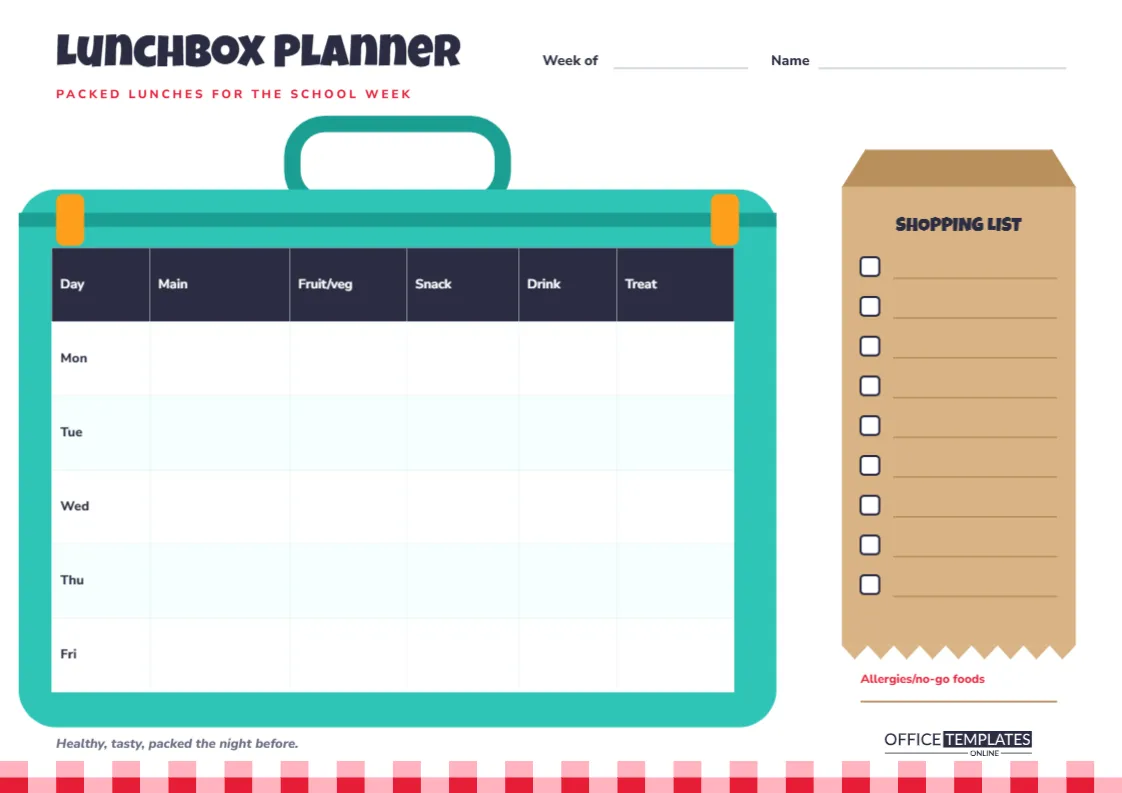
This template is an A4 landscape page (297 x 210 mm). Most of it is taken up by a big teal lunchbox with rounded corners, a sturdy carry handle on top, a darker lid line, and two orange latches. The week’s menu is a table set right inside the box, where the food would be.
On the right, a brown paper grocery bag, with a folded top and a zigzag bottom edge, holds a Shopping List with nine tick-box lines and a red Allergies/no-go foods line underneath. The title Lunchbox Planner is set in the playful Luckiest Guy font at the top left, with Packed lunches for the school week in red, and lines for Week of and Name on the right. A red and pink gingham strip, like a picnic cloth, runs along the bottom edge.
Five Days, Five Food Groups
The lunchbox table has a dark header row and one tall row for each day, Mon to Fri. Its five food columns follow the shape of a balanced packed lunch:
- Main: sandwich, wrap, pasta, rice, leftovers or a thermos of soup.
- Fruit/veg: at least one portion, ideally something crunchy and something sweet.
- Snack: yoghurt, cheese, crackers, popcorn or a homemade muffin.
- Drink: water most days, milk or juice as a change.
- Treat: a small something to look forward to, which can be a food or even a note.
Mix-and-Match Ideas
Stuck for inspiration by Wednesday? Pick one item from each column, and the lunch is done.
| Main | Fruit/veg | Snack | Drink | Treat |
|---|---|---|---|---|
| Cheese and cucumber wrap | Apple slices | Plain yoghurt | Water | Two squares of chocolate |
| Pasta salad with sweetcorn | Cherry tomatoes | Crackers | Milk | A handwritten joke |
| Chicken or bean rice bowl | Carrot sticks and hummus | Popcorn | Water | Mini flapjack |
| Egg or chickpea sandwich | Grapes (halved for little ones) | Cheese cubes | Diluted juice | Raisins |
| Thermos of vegetable soup | Orange segments | Oat bar | Water | Homemade cookie |
Always check your school’s food policy: many schools are nut-free, and some ask families to avoid certain snacks. Leftovers are a lunchbox secret weapon too: cook a little extra pasta, rice or curry at dinner and Tuesday’s Main column is already filled in.
The Shopping List on the Paper Bag
Once the table is filled in, read across each day and write anything you need to buy on the paper bag. Grouping items by shop section, such as fruit and veg first, then bread, then fridge items, makes the shopping trip quicker. The Allergies/no-go foods line is a permanent reminder for whoever is packing, whether that is a parent, a grandparent or an older sibling, and it is especially helpful when different people pack lunches on different days.
Packing Tips That Keep Lunches Fresh
A good plan deserves a lunch that is still appealing at midday. Chill the lunchbox overnight or add a small ice pack for anything with dairy, meat, or eggs. Keep wet and dry foods apart, for instance, dressing in a tiny pot rather than on the salad, and crackers in a separate compartment from fruit. Sliced apples stay fresher with a squeeze of lemon juice. Thermos food should go in piping hot after the flask has been warmed with boiling water. And make the night-before routine simple: pack everything that can be packed in the evening, leaving only the drink and anything from the freezer for the morning. The planner makes that possible because the decisions have already been made.
Getting Children Involved
Children eat more of the lunch they helped to plan. On the weekend, let them choose one item per column for two or three of the days, within the options you are happy with. Older children can fill in the whole planner and make their own lunch from it the night before. The tagline under the lunchbox, Healthy, tasty, packed the night before, is a gentle nudge towards the evening prep that makes mornings calmer.
Changing the Planner for Your Family
- Double-click the lunchbox table to open Edit Table Data. Rename columns, for example Protein, Grain, Fruit, Veg, and Drink, if you prefer a nutrition-based layout.
- Add a Saturday row for weekend clubs or sports days.
- Click the lunchbox and choose another colour, or make one planner per child in their favourite colour; the lunchbox shape, handle and latches are grouped behind the table.
- Edit the shopping list lines or type regular items in advance, such as bread, milk and fruit.
Printing and Keeping It Handy
Print on A4 landscape at Actual size. The teal lunchbox is the largest area of colour; if you print one every week, consider changing it to a lighter teal first. Stick the planner on the fridge or inside a kitchen cupboard door, where the person packing lunches will see it every morning. Laminating one copy and using a dry-wipe marker saves paper if your family repeats a similar menu each week.
Lunchbox Planner FAQs
How do I plan lunches for more than one child?
Print one planner per child, or add a small initial in each cell when siblings have different lunches on the same day.
Can I use it for school dinners too?
Yes. Write School lunch in the Main column on those days and plan only the snack and drink.
Does it work for teens and college students?
It does. Many older students use it for meal prep, filling in their own lunches on Sunday.
Five Lunches, One Plan
Spend ten minutes on the weekend filling in the lunchbox and the shopping bag. Your weekday mornings will thank you, and so will the empty lunchboxes that come home.