Ramadan is a month of fasting, prayer, reflection, and community. Many families like to keep a simple daily record: did we fast, did we pray taraweeh, how much Quran did we read? This printable Ramadan calendar for 2027 brings all of that onto one beautiful A4 page, with lanterns, a crescent moon, and the two months of the year in which Ramadan 1448 falls.
A Night-Sky Header with Lanterns
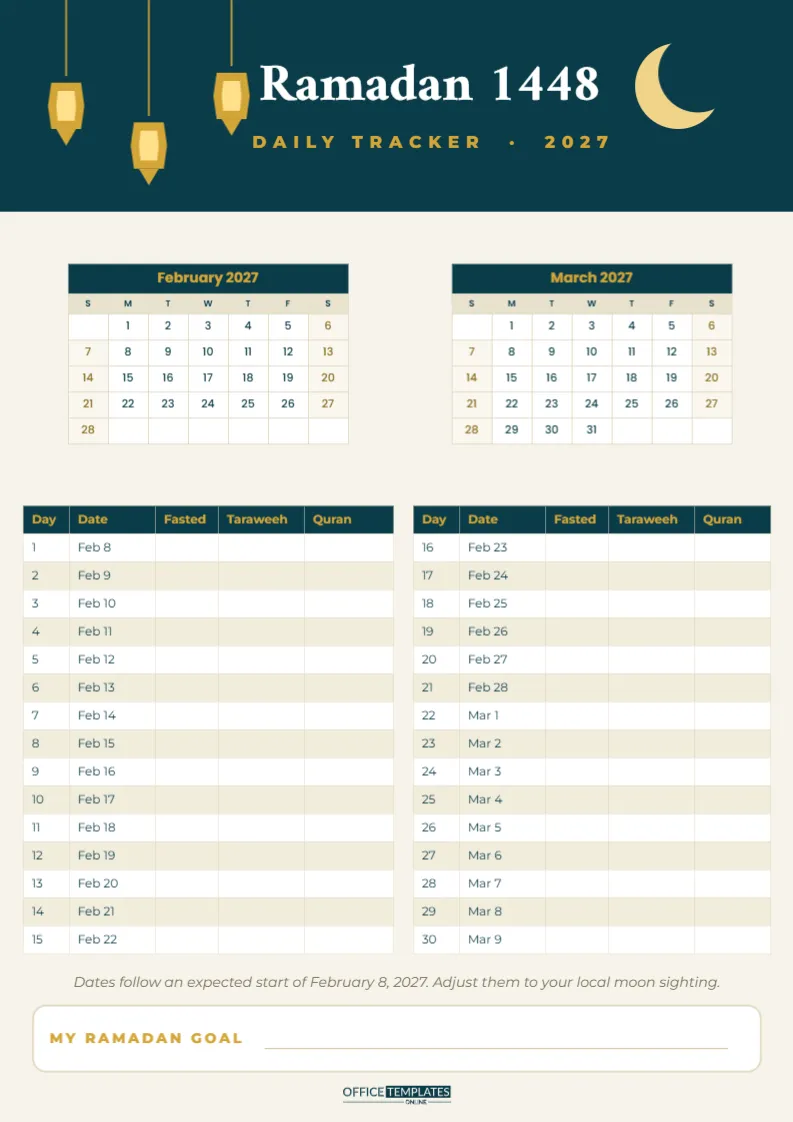
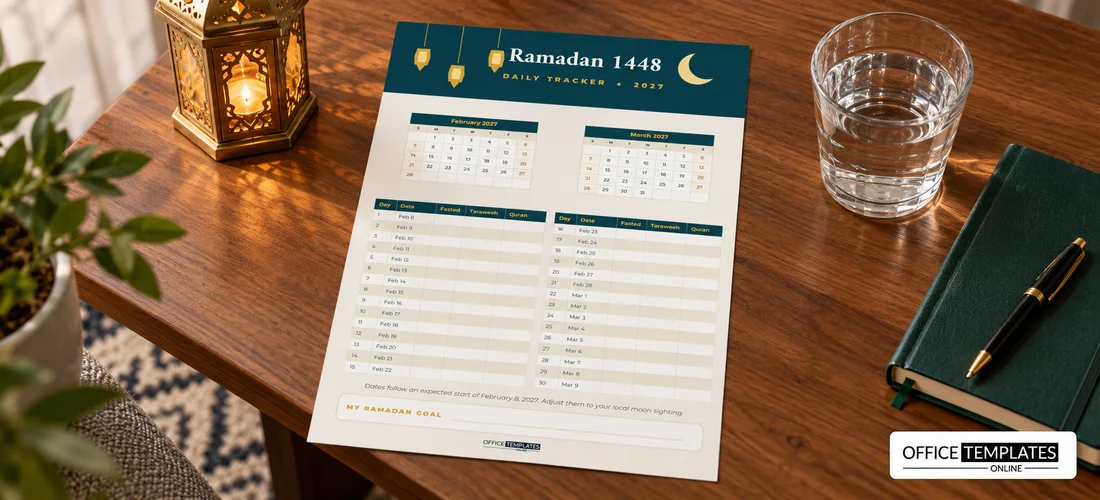
The calendar is A4 portrait (210 x 297 mm), on a warm cream background. The top of the page is a deep night-teal header. Three golden lanterns hang from the top edge on fine cords of different lengths, each with a glowing yellow panel. A pale gold crescent moon sits on the right. In the centre, Ramadan 1448 is written in white Amiri, an elegant Arabic-inspired serif, with DAILY TRACKER · 2027 in gold spaced capitals underneath.
February and March 2027 Side by Side
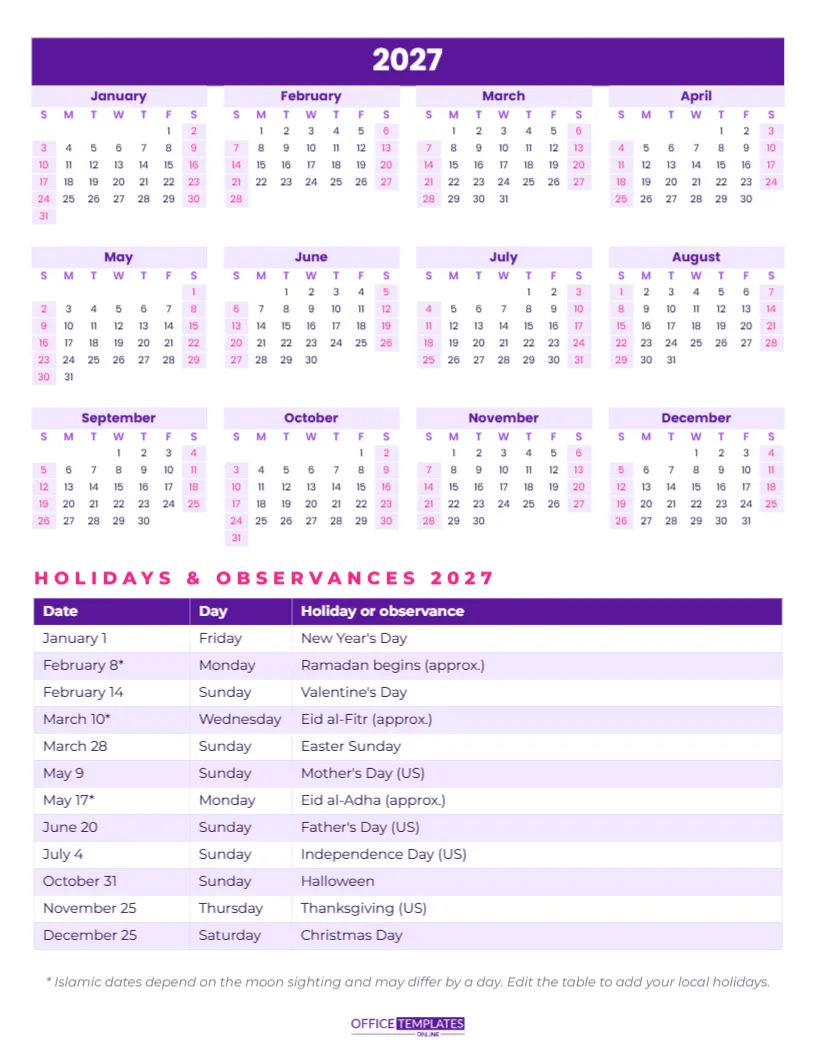
Ramadan 1448 is expected to begin around February 8, 2027, and end around March 9, so it spans two calendar months. Below the header, two small month calendars sit side by side: February 2027 on the left and March 2027 on the right. Each has a teal title row in gold lettering, a sand-coloured weekday row and centred dates, with weekends in a warm golden tone. Circle the first and last days of Ramadan and Eid al-Fitr once your local dates are confirmed.
Both month calendars are the editor’s Calendar objects. Open Calendar Options on either one to change the month or year, which is useful in future years when Ramadan moves about eleven days earlier each year.
The 30-Day Tracker Tables
The heart of the page is two tracker tables side by side, covering days 1 to 15 and days 16 to 30. Each has columns for Day, Date, Fasted, Taraweeh, and Quran. The Date column is filled with expected dates from Feb 8 to Mar 9; the other columns are left empty for ticks and page counts.
| Column | What to record |
|---|---|
| Day | Day of Ramadan, 1 to 30 |
| Date | Gregorian date (adjust to your moon sighting) |
| Fasted | A tick for a completed fast |
| Taraweeh | A tick, or the number of rakaats prayed |
| Quran | Pages or juz read |
The tables are the editor’s Table objects, so you can rename columns (for example, Charity, or Dua) or add a column for suhoor and iftar times.
Adjusting for Your Moon Sighting
A small italic note under the tables explains that the dates follow an expected start of February 8, 2027, and should be adjusted to the local moon sighting. If Ramadan begins on February 9 where you live, edit the Date column by one day. Many families wait for the announcement from their local mosque before printing, then update the dates and print the final version.
My Ramadan Goal
At the bottom of the page, a white box titled MY RAMADAN GOAL gives space for a personal intention for the month. Common goals include completing the whole Quran, praying every taraweeh, giving charity every day, memorising a short surah, or reducing screen time. Writing the goal down and seeing it every day keeps it in focus through the long, busy month.
Ramadan Activities for Children
Children who are too young to fast every day still love being part of Ramadan. Print a copy for each child and let them track their own version: half-day fasts, helping with iftar, reading a story about the Prophets, or giving a small coin to charity. Coloured stickers in the tracker make it exciting. Many families celebrate a child’s first full fast, and the tracker becomes a lovely keepsake of that milestone.
Recolouring the Lanterns and Header
The teal and gold palette is calm and festive. To change the mood, recolour the header to deep purple, navy, or emerald, and change the calendar and table colours in their options panels. The lanterns are a single grouped object; recolour or resize them as you like. You can add your family name under the title (The Rahman Family), or add a verse or dua in the goal box. Fonts are Amiri for the title and Poppins for the calendars and tables, both Google Fonts.
Hanging the Tracker at Home
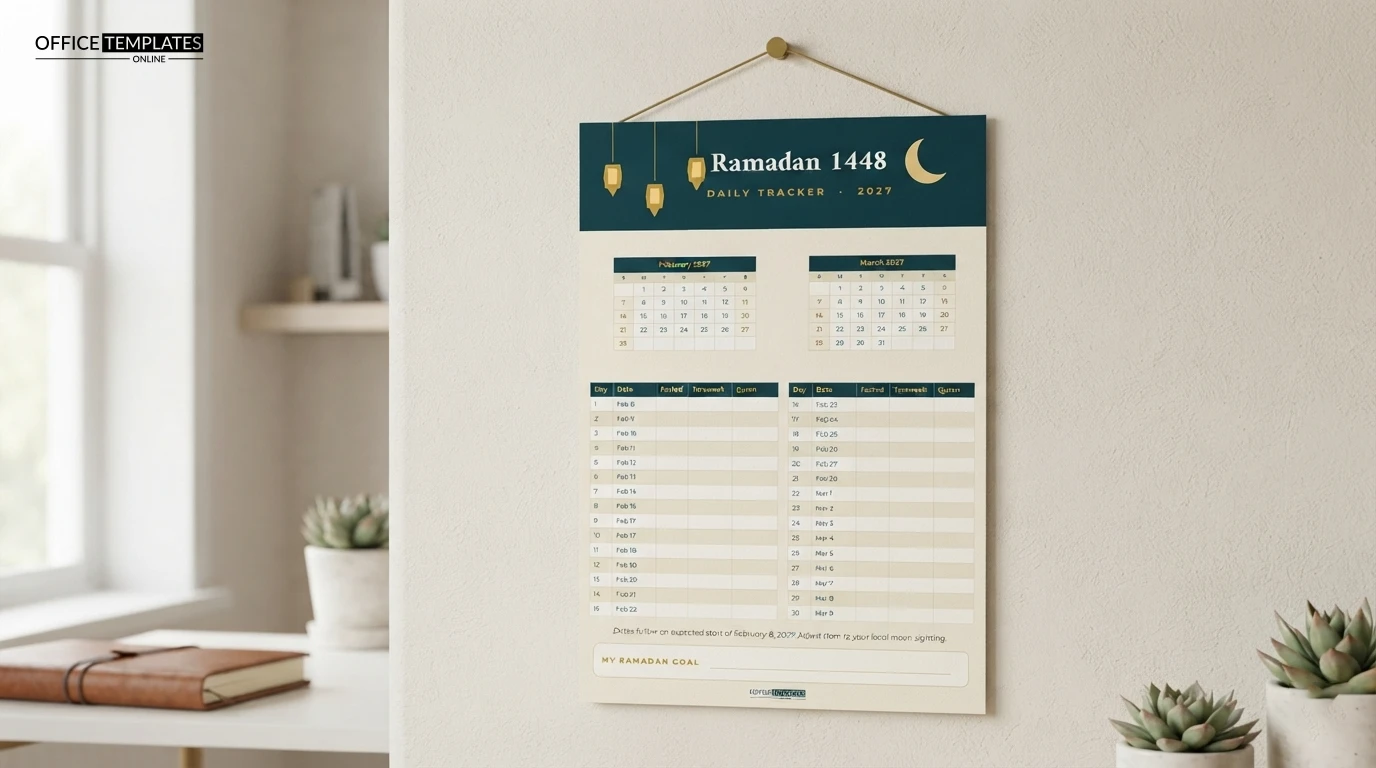
Download the PDF and print on A4 paper; it also scales to US Letter. Hang the tracker on the fridge or next to the prayer area, with a pen tied beside it. Print a copy for every member of the family so each person can follow their own progress. On the last day, take a photo of everyone’s completed tracker before Eid.
For Mosques, Schools and Communities
Mosques and Islamic schools can share this tracker with families at the start of Ramadan. Add the mosque name and local prayer timetable website in the header area, update the dates to the community’s announced start, and print in bulk or share as a PDF. Teachers can use it for a class Quran-reading challenge, adding up pages read across the whole class.
Planning the Last Ten Nights
The final ten nights of Ramadan are the most special for many Muslims, as they include Laylat al-Qadr. On the tracker, these are days 21 to 30, in the right-hand table. Many families mark the odd nights (21, 23, 25, 27 and 29) with a small star in the Day column and plan extra worship, charity or Quran reading for those evenings. If you are planning to give your zakat or a larger donation, writing the date in the goal box helps make sure it happens before Eid.
It also helps to plan practical things for the final week: Eid clothes, gifts for children, food for the Eid morning breakfast, and zakat al-fitr, which should be paid before the Eid prayer. A short list in the margin, or on the back of the printed page, stops these jobs from piling up in the last two days.
Suhoor and Iftar Routines
The tracker works best when it becomes part of the daily routine. Tick the Fasted column right after iftar, and fill the Quran column before bed. Families with older children can give each child the job of updating their own row, which builds responsibility and a sense of achievement as the ticks add up.
Ramadan Kareem. May the month be full of blessings, and may every tick on your tracker bring you closer to your goal.