Teal and Yellow Squiggles Around a Social Skills Chart
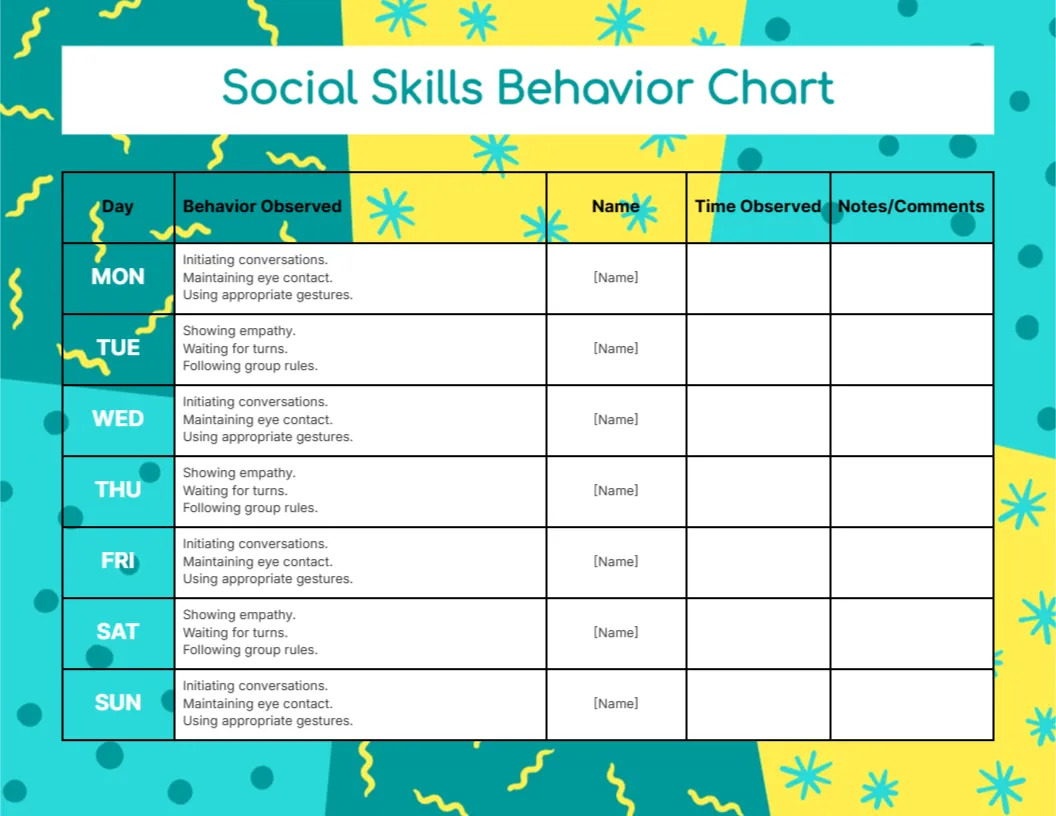
Bold teal and yellow blocks with wiggly yellow lines, teal dots and star shapes fill the background of this landscape chart, giving it a cheerful, playful energy. A white bar across the top carries Social Skills Behavior Chart in teal. Below, a table lists the days from Monday to Sunday down the left, each with a short set of skills to watch for, then columns for the child’s name, the time observed and notes. Unlike most behaviour charts, the days run down the page rather than across it, which leaves plenty of room for written comments.
Days Down the Side, Notes Across
The chart is 11 x 8.5 inches, landscape. Each day has one wide row with three short skills in the Behavior Observed column, a [Name] cell, an empty Time Observed cell and a wide Notes cell. That makes it more of a short observation log than a tick chart, which suits teachers, therapists and parents who like to write what they saw.
Two Sets of Skills That Alternate
The skills alternate between two sets. Monday, Wednesday, Friday and Sunday list Initiating conversations, Maintaining eye contact and Using appropriate gestures. Tuesday, Thursday and Saturday list Showing empathy, Waiting for turns and Following group rules. You can keep this pattern, or give each day its own focus by typing new skills into each row. Replace [Name] with the child’s name.
Setting Up the Social Skills Chart
- Type the child’s name in each row.
- Keep or change the skills per day.
- Note the time when you see a skill.
- Write a short comment.
- Review the week together.
Writing Useful Observation Notes
Short, specific notes are the most helpful. Write what happened, such as Asked a classmate to join the game at lunch, rather than a general word like Good. Over a few weeks, these notes show real progress and help when talking to teachers or specialists.
Practising Skills Before Social Situations
Children often find social skills easier when they rehearse them. Before a playdate or a family visit, practise saying hello and asking a question. Then note in the chart how it went, which turns the chart into a simple plan, practise and review cycle.
Using the Chart in Small Groups
Teachers and support staff can use one sheet per child in a social skills group. The alternating skill sets give a natural rhythm across the week. Keep completed sheets in a folder so you can compare months and share progress at review meetings.
Printing the Bright Background
The teal and yellow background is busy, so the white table matters. Print in colour for display, or in black and white for daily note taking, since the table stays clear either way. A clipboard makes it easy to write notes during play.
Supporting, Not Diagnosing
This chart is a simple record for parents and educators. It is not an assessment tool. If you have concerns about a child’s social development, speak to a teacher, doctor or qualified specialist, who can suggest goals to add to the chart.
Using the Social Skills Chart
Start a fresh sheet each week and keep the old ones for comparison.
Step by Step Editing of the Social Skills Teal Yellow Design
- On the social skills teal yellow design, click the main headline and type your own words, keeping a similar length.
- Retype every name, date and contact line on the social skills teal yellow design, checking each against a trusted source.
- Search the social skills teal yellow design for the words Lorem and Company so that no placeholder remains.
- Click any logo or photo on the social skills teal yellow design, choose Replace Image and resize the new picture to fit.
- Zoom the social skills teal yellow design to full size and read each line aloud before you save it.
- Keep a clean master of the social skills teal yellow design without private details, so later versions start tidy.
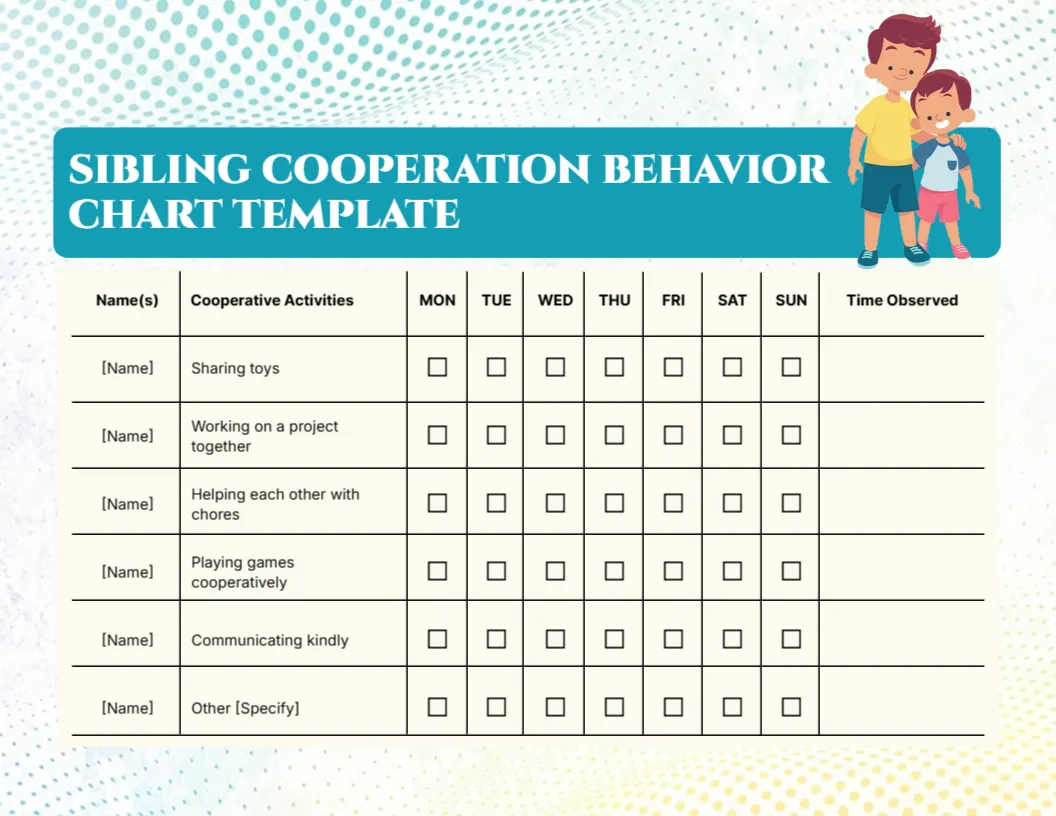
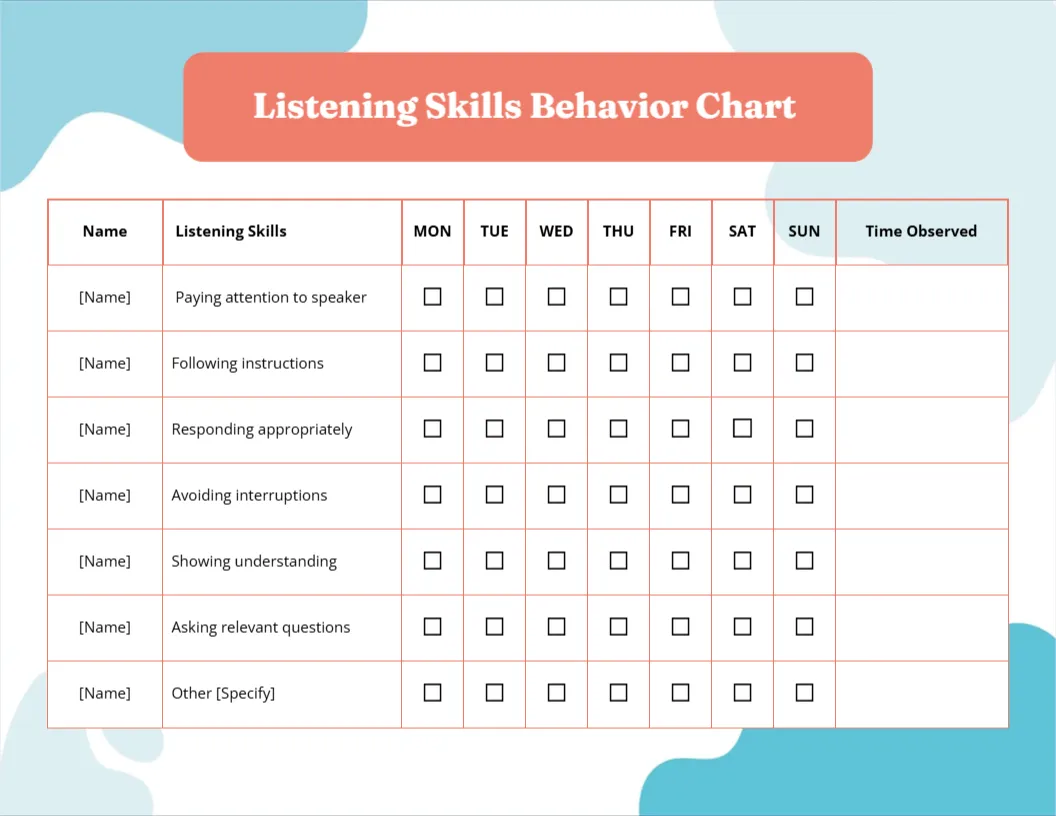
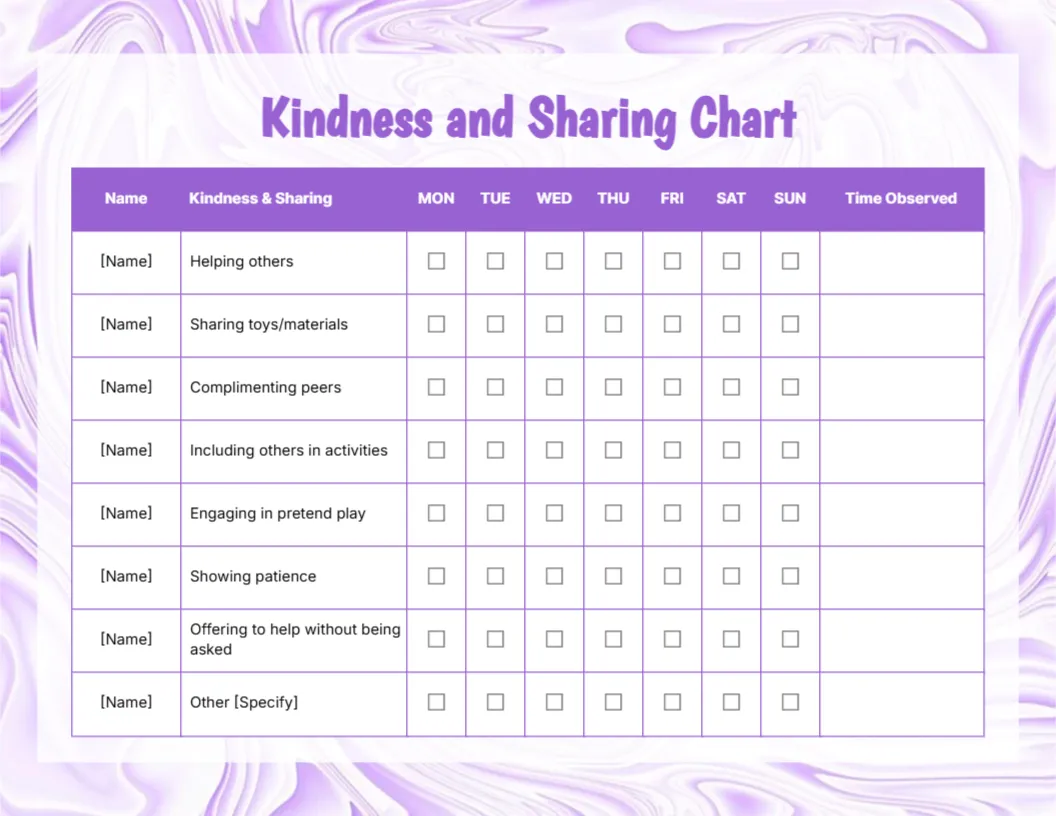
For comparison, open the listening skills behavior chart. Consider the sibling cooperation chart. Similar designs include the lilac marble kindness chart. Every social skills teal yellow style alternative sits in behavior chart templates.