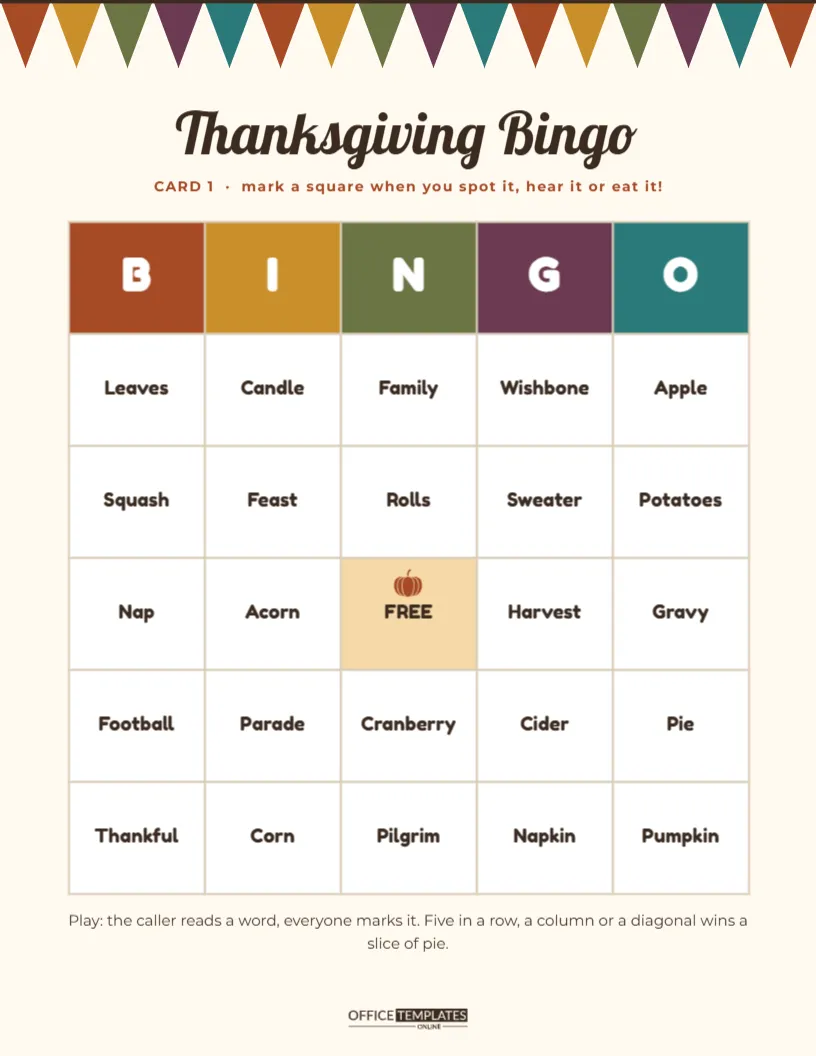
Bingo is the easiest game to play with a crowd: everyone gets a card, someone calls words, and whoever fills a line first shouts. A Thanksgiving version swaps numbers for holiday words, which makes it fun for every age at the same table. This template gives you two different bingo cards, with a festive bunting header and a FREE pumpkin square in the middle of each.
Rules of Thanksgiving Bingo
The printed card has the basic rule in one line, but here is the full game for anyone who has not played:
- Each player gets a bingo card and a handful of markers (dried beans, candy corn, buttons or a pencil).
- Everyone marks the FREE square in the centre.
- The caller reads a word from the list. Players who have that word on their card cover it.
- The first player to complete a line of five, across, down or diagonally, shouts Bingo!
- The caller checks the line against the words already called.
- The winner gets a prize, such as first pick of the pie, and a new round begins.
The Calling List
The cards are drawn from this list of 28 Thanksgiving words. Write each one on a slip of paper, fold the slips, and put them in a bowl or a hat for the caller:
Turkey, Pie, Gravy, Football, Parade, Cranberry, Stuffing, Leaves, Pumpkin, Family, Corn, Rolls, Thankful, Apple, Acorn, Harvest, Feast, Napkin, Candle, Pilgrim, Sweater, Nap, Leftovers, Grandma, Wishbone, Potatoes, Squash and Cider.
Some of these words are funny on purpose. Nap and Leftovers get a laugh every time, and Grandma means everyone looks at Grandma.
The Bingo Card Design
Each card is a full US Letter page, 8.5 x 11 inches, portrait, on a warm off-white background. A row of triangular bunting flags in rust, mustard, olive, plum, and teal hangs across the top edge. Thanksgiving Bingo is written in Lobster, a confident retro script, in dark brown, with the card number and a short instruction underneath in rust capitals.
The game grid is a real table with five columns and six rows. The top row spells B I N G O in big white Fredoka One letters, each in its own colour: rust, mustard, olive, plum and teal. Below are 25 squares with large, clear words in the same rounded font, separated by warm beige borders. The centre square is FREE, shaded in pale gold, with a small pumpkin icon above the word. Under the grid, a line explains how to win, and the brand mark sits at the bottom.
The template has two pages, Card 1 and Card 2, with the words in different positions, so two players never have the same card.
Making More Than Two Cards
For a bigger group, you will want more unique cards. It only takes a minute per card:
- Open the template and double-click the grid, or choose Edit Table Data.
- Swap the words around in the 24 non-free squares, using the calling list.
- Change the card number in the line under the title.
- Download and repeat.
Because there are 28 words for 24 squares, every card can also leave out a different four words, which makes each one feel distinct. Ten cards are plenty for most family gatherings.
Variations to Keep the Game Fresh
- Four corners: the first player to mark all four corners wins.
- Blackout: the first to fill the whole card wins; perfect for a long afternoon.
- Spot it bingo: no caller. Players mark words when they happen in real life during the day, such as someone saying pass the gravy or a football game on TV.
- Kids versus grown-ups: teams share cards and race.
- Picture bingo: for pre-readers, draw a small picture next to each word in the editor.
Prizes That Fit the Holiday
Small prizes keep the energy up: first pick of the pie table, getting out of washing up, choosing the next game, a mini pumpkin, a chocolate turkey or the honour of breaking the wishbone. For a classroom, stickers and pencils work well.
Printing and Laminating the Bingo Cards
Download the PDF with both cards. Print on card stock if you want to reuse the cards with markers, or on regular paper if players will mark squares with a pen. Laminating the cards and using dry-erase markers makes a set you can bring out every year. The colourful header row also prints clearly in greyscale, because the letters are white on dark tones.
Tips for the Bingo Caller
A good caller makes the game. Read each word slowly and clearly, then repeat it once. Put called slips in a separate bowl so you can check a winning line quickly. Add a little drama for children: a drum roll on the table, a funny voice for Leftovers, a dramatic pause before Pie. If several people shout Bingo! at once, check each card, and if they are all right, share the prize or play a quick tiebreak round of four corners.
Bingo for Large Gatherings and Classrooms
For a classroom of thirty or a community dinner, make ten or twelve different cards and print three copies of each. With that many players, several people may win at once, so switch to blackout or four-corners rounds after the first game. Project the called words on a screen or write them on a board so everyone can keep track, and appoint a helper to check winning cards.
Bingo Card Questions
Can I change the words to Friendsgiving or fall themes?
Yes. Replace the words in the table with your own list, such as inside jokes for a Friendsgiving or autumn words for a classroom.
How many people can play?
As many as you have cards for. Two cards come ready; make more by rearranging the words.
Can children who are still learning to read play?
Yes. Pair them with an older player, or add small icons next to the words so they can match pictures.
Bingo turns a crowded living room into a game in seconds. Print your cards, fill a bowl with word slips, and let the shouting begin.