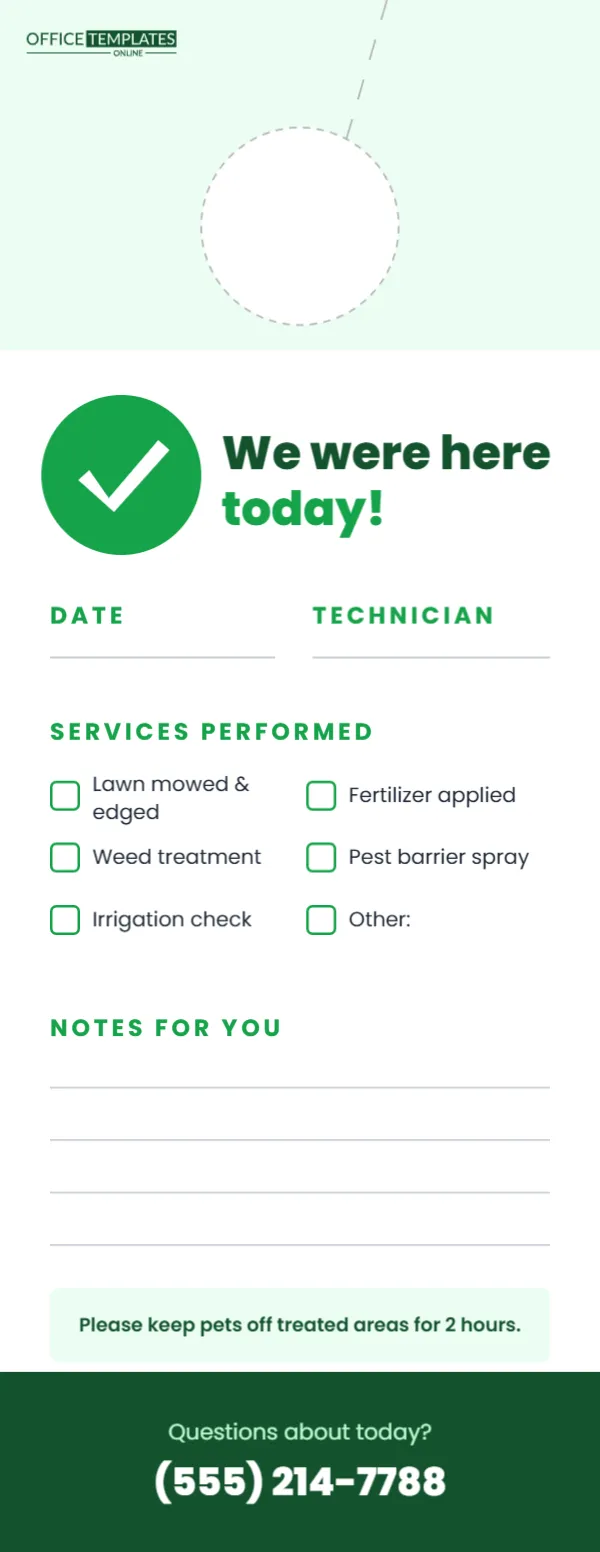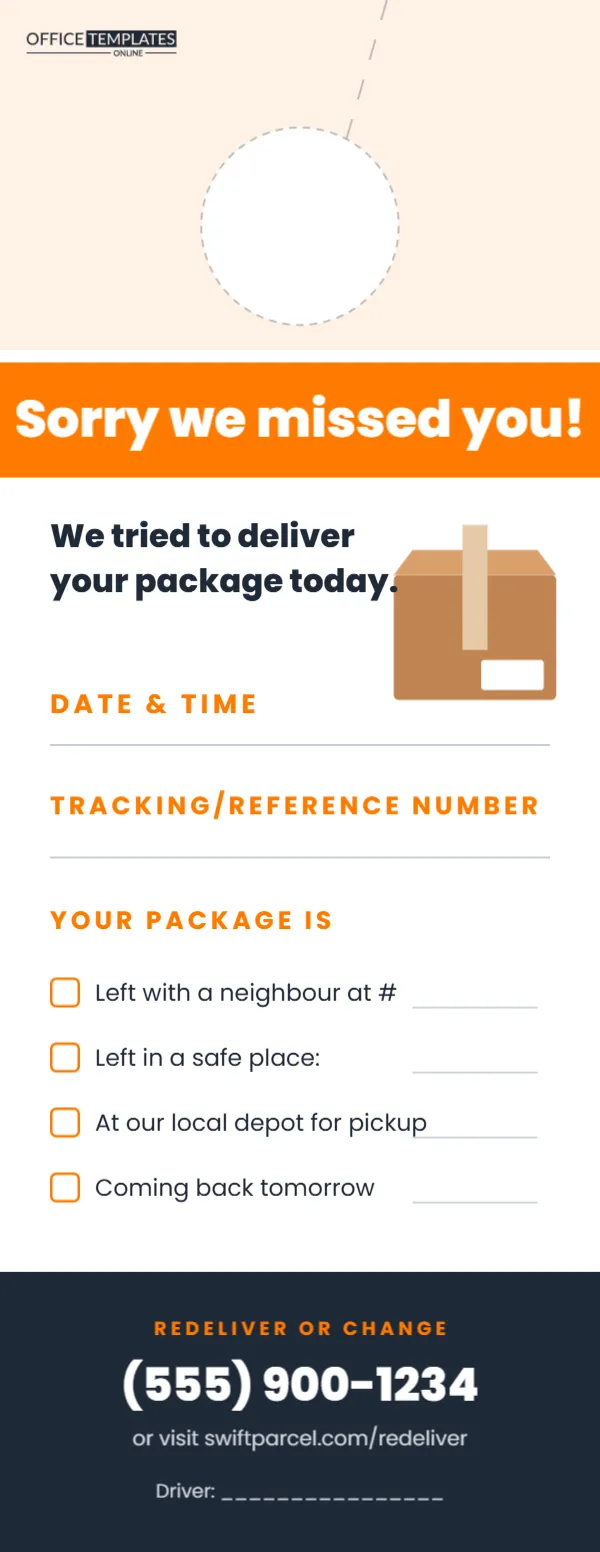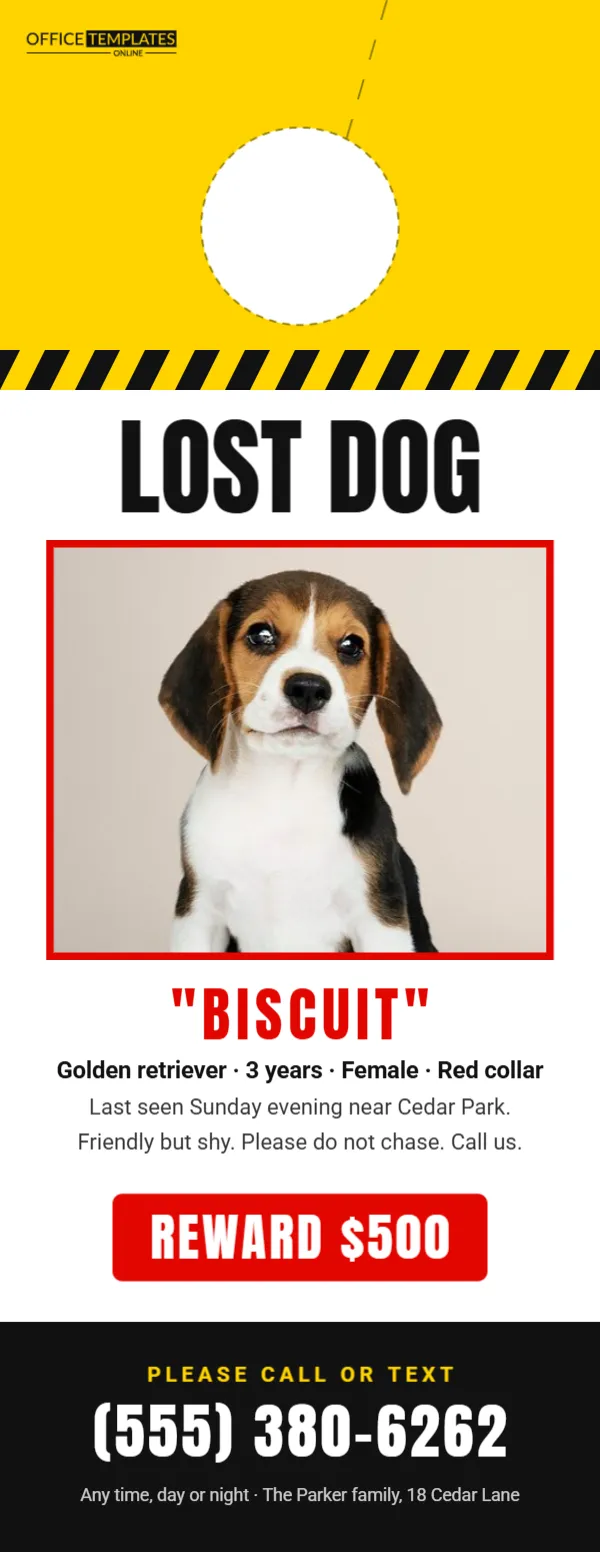
When a pet goes missing, every minute counts, and the most effective search tool is still people: neighbours who check their garages, look under porches, and keep an eye out on their morning walks. Door hangers reach every home in the area quickly and stay visible on doorknobs, unlike flyers on poles that blow away. This design is built for urgency and recognition: a hazard-yellow header, a huge LOST DOG, a big photo of your pet, the name, a clear description, a reward, and a phone number large enough to read from the sidewalk.
High-Visibility Yellow and Black
This single-sided hanger measures 4.25 x 11 inches. The top around the door hole is bright yellow, separated from the white body by a band of yellow and black diagonal hazard stripes. LOST DOG sits across the top of the white section in huge black Anton. Below it, a large photo slot with a thick black frame holds the pet’s photo. The name, BISCUIT, is set in quotes in red Anton, followed by the breed, age, sex and collar colour, where the dog was last seen, and a request not to chase. A red rounded box offers Reward $500. A black footer says Please call or text, shows the phone number in big white text, and adds any time, day or night with the family name and street.
Choosing the Best Photo
Click the photo frame and choose Replace Image to upload your pet’s photo. Choose a clear, recent, well-lit photo that shows the whole animal and its markings, ideally from the side or slightly in front. Avoid photos with other pets or busy backgrounds. If your pet has distinctive markings, such as a white chest patch or a notched ear, make sure they are visible. A good photo is the single most important part of a lost pet notice.
Writing the Description
Keep the description short and factual: breed or type, colour, size, age, sex, collar and tags, microchip status, and any medical needs. Add where and when your pet was last seen. Include behavioural advice: many frightened pets run from people, so please do not chase; calling us helps prevent them bolting further away.
What to Include on a Lost Pet Notice
| Detail | Example | Why it helps |
|---|---|---|
| Name | Biscuit | Pets may respond to their name |
| Breed and colour | Golden retriever, light gold | Helps people recognise the animal |
| Size and age | Large, 3 years | Rules out similar-looking pets |
| Collar and tags | Red collar, no tag | Quick visual identifier |
| Last seen | Cedar Park, Sunday evening | Focuses the search area |
| Behaviour | Shy, do not chase | Prevents the pet from running further |
About Offering a Reward
A reward motivates people to look harder and to call if they see your pet. You do not have to state an amount; Reward offered works too. Be cautious of scams: anyone who claims to have your pet should be able to describe it accurately or send a photo. Never send money before you have your pet back, and meet in a public place.
Changing It for a Cat or Other Pet
LOST DOG is a text box; change it to LOST CAT, MISSING PARROT, or LOST TORTOISE. Cats often hide close to home, so for a lost cat, ask neighbours to check garages, sheds and under decks, and mention that the cat may be scared and silent. Update the description accordingly.
Found Pet Version
If you have found a pet, duplicate the design and change the headline to FOUND DOG. Leave out some identifying details, such as collar colour, so you can verify the real owner by asking them to describe it. Keep the photo and phone number prominent.
Door Hole and Fast Cutting
A dashed circle at the top marks the doorknob hole, and a dashed slit shows the cut to the edge. In an emergency, print and cut by hand with scissors; perfection does not matter, speed does.
Printing Quickly at Home
Download as a PDF or PNG and print immediately on any printer. Cardstock is best for hanging, but plain paper folded over a doorknob or taped to a door works in a hurry. Print in colour if possible so the photo shows true colours. Make dozens; you will need more than you expect.
Search Radius for Lost Dogs and Cats
Start at your street and spiral outwards, covering every home within at least half a mile for dogs and a few hundred yards for indoor cats. Leave hangers at vets, pet shops, groomers, and shelters too. Post the same image on neighbourhood social media groups and lost pet websites, and contact local shelters and animal control daily.
Microchips and Shelters
If your pet is microchipped, call the chip registry to report it missing and check that your contact details are current. Visit local shelters in person, as descriptions on the phone can be misleading. Many lost pets are found within a mile of home, so keep searching nearby at quiet times like dawn and dusk.
When Your Pet Comes Home
Once your pet is safe, go back and remove the hangers or replace them with a FOUND, thank you! note. Neighbours who helped will be glad to know, and it keeps your street tidy.
Staying Calm and Organised
Searching for a lost pet is stressful. Ask friends to help in shifts, keep a map of where you have hung notices and searched, and log every sighting with time and place. Patterns in sightings often show where a frightened pet is hiding. Leave an item with your scent, such as a worn T-shirt, and fresh water outside your door; many pets find their way home.
Lost Pet Hanger FAQ
Can I print it without a reward?
Yes. Delete the red reward box or change it to Please help us bring Biscuit home.
Can I add a second photo?
Yes. Add another image beside the main photo, for example, a close-up of markings.
What size is it?
4.25 x 11 inches, single-sided.
Should I include my address?
A street name is enough; share your full address only with people who have genuinely found your pet.