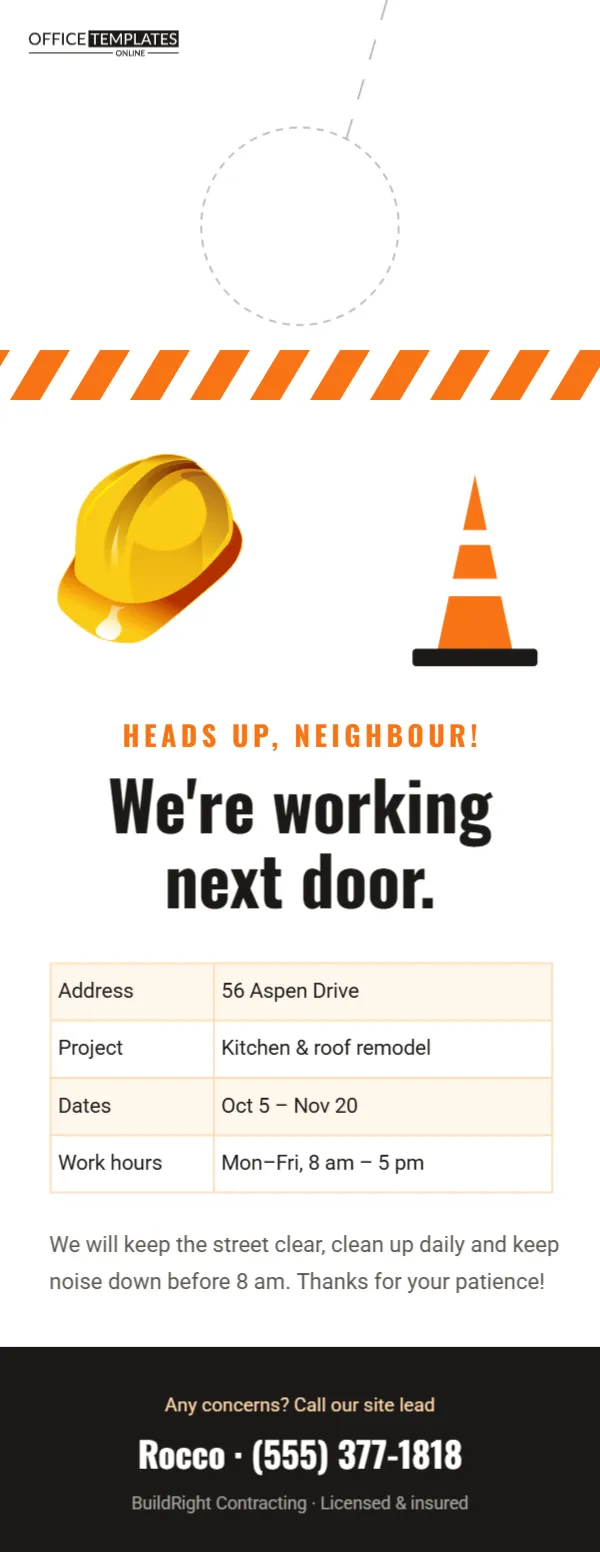
Construction and renovation work affects the whole street: noise, trucks, dust, dumpsters, and workers parking where neighbours usually park. Good contractors know that a little communication prevents complaints, keeps projects running smoothly, and even wins future work. A courtesy notice on the neighbours’ doors before work starts is one of the simplest professional habits. This template is friendly and clear: orange and white construction stripes, a yellow hard hat and an orange cone, Heads up, neighbour!We’re working next door, and a table with the project details and work hours.
Construction Stripes and Friendly Words
This single-sided hanger measures 4.25 x 11 inches on a white background. Just below the door hole, a band of orange and white diagonal construction stripes crosses the card. A yellow hard hat sits on the left and an orange traffic cone with white reflective bands on the right. Heads up, neighbour! is set in orange Oswald capitals, followed by We’re working next door. in large dark type. A table lists the address, the project (kitchen and roof remodel), the dates, and the work hours. A paragraph promises to keep the street clear, clean up daily, and keep noise down before 8 am, with thanks for neighbours’ patience. A dark footer gives the site lead’s name and phone, the company name, and Licensed & insured.
Why Courtesy Notices Matter
Neighbours who know what is happening are far more tolerant of disruption than those who are surprised by a 7 am concrete truck. A courtesy notice shows respect, gives a contact to call instead of the city, and sets expectations about hours and duration. It also markets your company to every household on the street, many of whom have their own renovation plans.
Filling In the Project Table
The project details are in a real table. Select it and choose Edit Table Data to change the address, project type, dates and hours. Add rows with Add Row for Dumpster on street, Road closure, or Crane delivery if those apply. Be accurate with dates; if the schedule changes, send an update.
What Neighbours Want to Know
| Concern | How to address it |
|---|---|
| Noise | State work hours and quiet times |
| Parking | Say where crews will park |
| Dust and debris | Promise daily clean-up |
| Duration | Give start and end dates |
| Safety | Mention fencing and signage |
| Who to call | Name and phone of the site lead |
Respecting Local Noise Rules
Many cities restrict construction noise to certain hours, often 7 or 8 am to 6 or 7 pm on weekdays, with tighter limits at weekends. State your hours on the notice and keep to them. If a noisy task such as concrete pouring must start early, warn neighbours with a second notice.
A Named Site Lead
A real name and phone number, Rocco · (555) 377-1818 in the sample, turns your company into a person neighbours can talk to. Make sure the site lead answers calls politely and acts on reasonable requests. One quick response to a parking complaint can prevent a formal complaint to the city.
Turning Neighbours Into Customers
Renovation is contagious: when one house on a street gets a new kitchen or roof, neighbours start thinking about theirs. A tidy site, polite crew and a professional courtesy notice make a strong impression. Some contractors add a small line such as: Thinking about a project? Ask us for a free estimate. Keep it subtle; the notice’s main job is courtesy.
Recolouring the Hanger
Orange is the colour of construction worldwide, which is why it works here. If your company has strong brand colours, change the footer and headline accents but keep the stripes orange for instant recognition. The hard hat and cone are editable illustrations you can recolour.
Hanging the Courtesy Notice
A dashed circle at the top shows where the doorknob hole goes, and a dashed slit shows where to cut. Hang notices on homes on both sides of the project, across the street and behind it, usually 10 to 20 houses.
Printing for Each Project
Because each project has different details, this single-sided design is easy to print in small batches on an office printer. Download as a PDF and print on cardstock. Keep a template with your company name, logo, and footer ready, so only the table changes for each job.
Timing the Notice
Deliver notices about a week before work starts, and again before particularly disruptive phases like demolition, concrete pours, or roof tear-offs. For long projects, a mid-project update thanking neighbours and confirming the end date maintains goodwill.
Finishing Well
When the project ends, clean the street thoroughly, remove signs and thank neighbours with a short note. A simple Thanks for your patience, the work at number 56 is complete leaves a lasting positive impression and often leads to referrals.
Dumpsters, Deliveries and Shared Driveways
Large projects often bring dumpsters, delivery trucks and portable toilets. Tell neighbours where these will be placed and for how long, and ask before using shared driveways or blocking access even briefly. If a crane or road closure is planned, deliver a separate notice with the exact date. Small courtesies like these are remembered long after the noise has stopped.
Handling Complaints Gracefully
Even with good notice, someone may complain. Listen, apologise for the inconvenience, explain what you can change, and follow up. Many disputes come from small issues like a worker’s radio or a blocked mailbox that are easy to fix once you know about them.
Contractor Notice FAQ
Can homeowners use this for their own renovation?
Yes. Change the headline and footer to your own names; a personal note from the homeowner is even friendlier.
Can I add my licence number?
Yes. Add it in the footer next to Licensed & insured.
What size is it?
4.25 x 11 inches, single-sided.
How many neighbours should get a notice?
Usually every home that can see or hear the work, often 10 to 20 houses.
Can I add a photo of the finished design?
Yes. A small rendering of the finished project can make neighbours excited rather than annoyed.