A GP Letterhead That Puts Qualifications Up Front
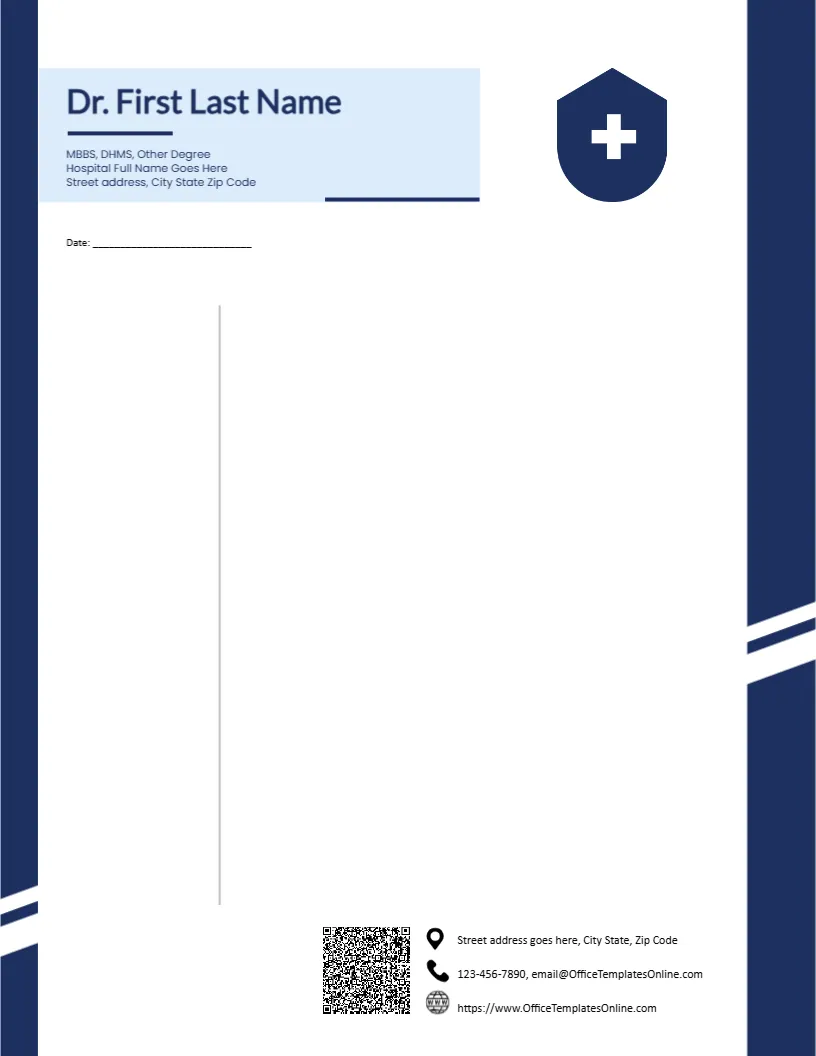
General practitioners are the first doctor many patients meet, and a letter from them often goes to a specialist, an employer or a school. This design emphasises credentials: a name, a line for degrees, the name of the hospital or clinic and the address. Navy side bars and a shield logo give it a steady, trustworthy feel.
Navy Side Bars and the Shield
The page is 8.5 x 11 inches, portrait, one page. Navy bars run down the sides, framing the writing area like pillars. A shield logo sits in the header. It is a picture, so choose Replace Image if you want your clinic mark. The shield suggests protection and care, and it is a common symbol in health branding.
The Name and Degrees Lines
The header reads Dr. First Last Name, followed by a smaller line: MBBS, DHMS, Other Degree, and then Hospital Full Name Goes Here with a street address. Replace all of it. List only degrees that you hold, in the order that your local custom prefers. If you work at several places, use the main one here and mention the others in the letter body.
Address, Phone, Email and Web
At the foot, another block gives a street address, a phone number, an email and a web address. This repeats the clinic address from the header, so check that both match. If you keep only one, delete the other to avoid contradiction.
Date Line and Patient Letters
A Date line is at the top right. Many GPs begin with a line that names the patient and their date of birth, then a short paragraph. For a referral, state the reason, the findings and the request in that order. Keep patient details limited to what the recipient needs.
Common Letters for a GP Practice
- Referrals to specialists, therapists and imaging services.
- Medical certificates and fitness letters.
- Letters to schools and employers with consent.
- Follow up letters after tests.
- Notices to patients about clinic hours and holidays.
The page is a layout. The content of a certificate or a referral must follow your local professional rules.
Choosing This Page Over a Specialist Design
If you are a general practitioner or family doctor, a plain page with strong credentials is usually better than a symbol of a specific organ. Specialist pages, with a heart or a tooth, are better for cardiologists and dentists.
Editing and Layout Tips
Everything in the header is editable text apart from the shield. Keep the name in large capitals and the degrees in a lighter weight. Leave at least one inch of space between the header and the first line of the letter.
Printing and Signing
Print on white 100 gsm paper, and sign above the typed name. For digital letters, export a PDF and check that the side bars align. Keep a plain master copy without patient information.
For a named GP page in blue, see the general practitioner letterhead. For a family doctor design, try the family medicine letterhead. For a clinic page, see the medical practice letterhead. More are in letterheads.