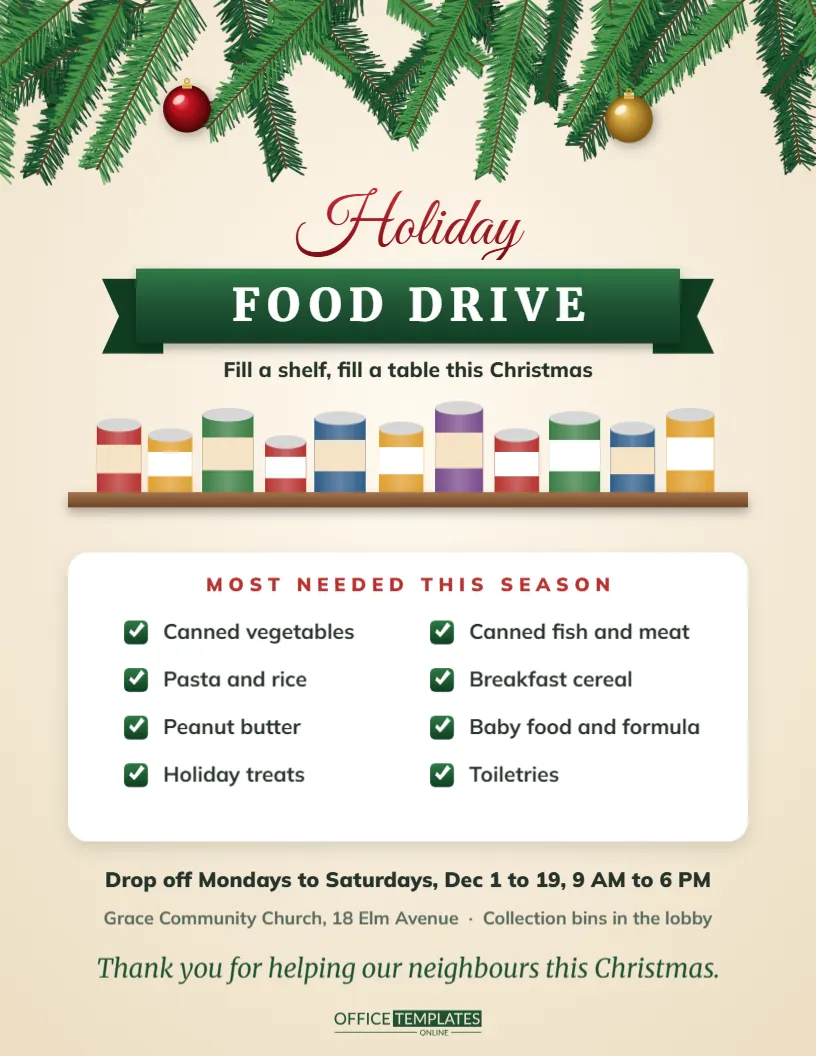
A food drive works when donors know exactly what to bring and where to take it. This flyer answers both questions at a glance. A warm cream glow carries a pine swag with baubles, a green ribbon title banner, a wooden shelf lined with glossy jars and cans, and a checklist card of the most needed items. Drop-off details sit at the bottom. It is designed for food banks, schools, churches, workplaces, scout groups, and neighbourhood associations that collect non-perishable food before Christmas.
A Clear and Friendly Call to Donate
Charity posters can overwhelm people with problems. This one invites them to help by showing a full shelf, a picture of abundance. The soft palette keeps the message positive, which is more likely to inspire action than a sombre tone.
Editing the Green Ribbon Title
The ribbon holds the title in white capitals. Change it to Holiday Food Drive, Fill the Pantry, or Neighbours Feeding Neighbours. Short titles fit best on the ribbon and help the poster read at a distance.
Customising the Wooden Shelf of Jars and Cans
The shelf shows canned vegetables, soup, pasta sauce, jam, and cereal drawn as glossy objects with labels. They act as a visual cue for the kind of items you want. Recolour the labels or reorder the jars to match your own most requested products.
Writing the Most Needed Items Checklist
| Category | Example items | Why they help |
|---|---|---|
| Proteins | Canned tuna, beans, peanut butter | Filling and long-lasting |
| Grains | Pasta, rice, oats | Base of many meals |
| Meals | Soup, stew, pasta sauce | Quick to prepare |
| Holiday extras | Stuffing, gravy, cranberry sauce | Brings a festive meal to the table |
What Not to Donate to a Food Bank
Food banks cannot accept opened packages, homemade items, or products past their date. Add a short line saying so, along with a note about glass jars if your volunteers prefer cans. Clear guidance avoids waste and keeps donations safe for families.
Listing Drop-Off Dates, Times, and Places
Give the dates of the drive, the hours each site is open, and the address of every drop-off point. If collections happen at a school or workplace, mention which door to use. A map or landmark helps first-time donors find the box without calling.
Monetary Donations and Online Giving
Some people prefer to give money, which food banks can use to buy fresh produce at wholesale prices. Add a short line with a web address or QR code for donations. State what a typical amount can buy, such as $ 10 feeding a family for a day.
Volunteering for Sorting and Delivery
Add a line inviting volunteers to help with sorting, packing, and delivery. Include a contact for sign-ups. Many people who cannot spare cash are happy to give two hours, and the extra hands make the drive run smoothly.
Competitions That Boost Donations
Schools and workplaces can run a friendly contest, with classes or departments competing to fill the biggest box. Announce the weekly totals on the flyer or at assemblies. A fun contest adds energy and produces larger collections than quiet requests.
Partnering With Supermarkets and Local Businesses
Local shops can host collection bins near the exit. Ask them to display the flyer and to promote a pre-packed donation bag customers can buy at the till. Mention partners on the poster, because recognition encourages continued support.
Where the Food Goes and Who It Helps
Donors appreciate knowing where their gifts end up. Add a line such as: All food stays in our county and is distributed by the Community Pantry. Transparency builds trust and makes appeals feel personal.
Printing and Posting the Food Drive Poster
The light background uses little ink, so it suits office printers. Post copies in schools, places of worship, libraries, and supermarkets, with permission. Replace old posters after the drive ends so people are not confused about collection dates.
Reporting Results and Thanking Donors
When the drive ends, share how many pounds or items were collected and how many families will benefit. A short thank-you post with a photo of the full shelves reinforces the sense of success and encourages donors to return next year.
Final Review Before the Drive Starts
Verify the dates, addresses, and contact information. Check that drop-off hosts have agreed. Print a test copy and see whether the checklist can be read at a glance, because many donors will decide what to bring in a few seconds.
Organising Collection Bins and Volunteers on the Day
Place sturdy boxes at each site, label them clearly and ask volunteers to empty them daily. Record the weight or number of items so that you can report totals. A short briefing for volunteers on safety and manual handling keeps everyone comfortable as the boxes fill.
Food Safety, Dates and Storage Basics
Volunteers should check use-by dates, reject damaged cans, and store items in a dry, cool place. Tell donors on the flyer to bring unopened, in-date goods. Good handling protects recipients and protects the reputation of the food bank that will distribute the food.
Reaching Younger Donors Through Schools and Clubs
Children often drive the best food drives. A class challenge, a scout badge, or a youth group project gets whole families involved. Send the flyer home in book bags and thank participating classes by name in your results post.
Extending the Drive Beyond December
Hunger does not end on December 26. Add a line inviting donors to give again in January, when pantry shelves are often empty. Providing a year-round donation link encourages ongoing support and turns a seasonal drive into a lasting relationship.
Cultural and Dietary Needs in Your Collection
Families have different diets and traditions. Ask for halal, kosher, vegetarian, and gluten-free items alongside the usual cans. Mentioning variety on the flyer helps donors think beyond the standard shopping list and ensures that every household receives food they can eat.
Counting Donations and Sharing Weekly Totals
Keep a simple tally on a clipboard and post the number each Friday. A running total on social media shows momentum, and people love to see a thermometer fill. Share a photo of the full shelves, with permission, so supporters can see their contribution at work.
Keeping Volunteers Safe and Motivated
Volunteers lift heavy boxes and spend hours in cold rooms. Provide gloves, water, and short breaks, and thank them often. Mention volunteer roles on the flyer so that newcomers know the work is manageable and valued.