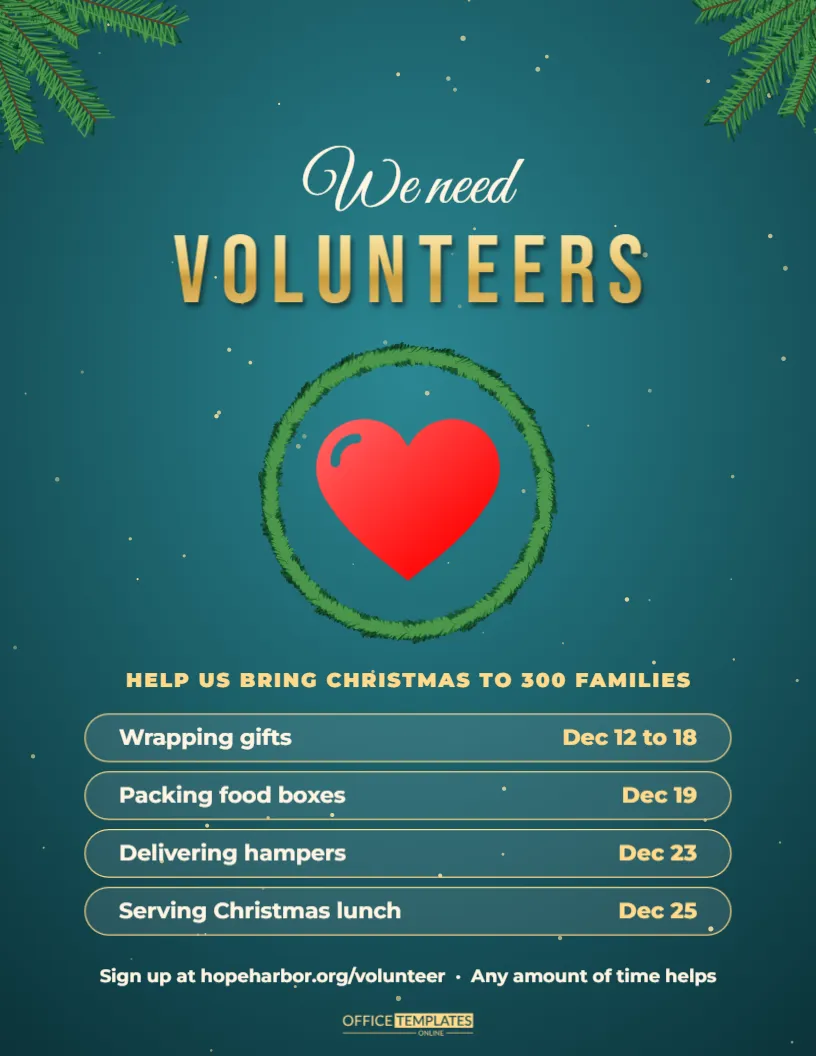
Charities and community groups depend on volunteers at Christmas, when demand for help rises and many regular helpers are away. This flyer asks for help warmly and directly. A deep teal glow carries pine corners, a script We need above a large gold VOLUNTEERS, a wreath around a red heart, a line about how many families will be helped, and a list of tasks with dates. A sign-up line closes the page. Food banks, churches, shelters, schools and neighbourhood groups can use it to recruit helpers quickly.
A Warm Message That Feels Personal
The heart inside the wreath tells readers that the work is about care, not paperwork. Teal and gold are calm and trustworthy colours. The result is a poster that asks for help without guilt or pressure, which is more likely to inspire people to sign up.
Editing the We Need Volunteers Heading
The script We Need sits above VOLUNTEERS in tall gold capitals. Change them to Join Our Team, Elves Wanted, or Helping Hands. Keep it short and active so that people understand the request at once.
Explaining the Impact in One Line
The spaced line under the heart states how many families will be helped, such as 300 families. A specific number makes the need concrete. Replace it with your own figure, and keep the sentence short so it fits across the page.
Listing Tasks, Dates and Time Commitments
| Task | Example date | Time needed |
|---|---|---|
| Wrapping gifts | Dec 12 to 18 | 2 hours |
| Packing food boxes | Dec 19 | 3 hours |
| Delivering hampers | Dec 23 | 4 hours |
| Serving Christmas lunch | Dec 25 | 3 hours |
The four pills on the page match the table. State how long each task takes, so that people can fit it into their week.
Making Sign-Up Easy
Add a short link, a QR code, and a phone number. Simple sign-up forms ask only for name, phone, email, and availability. The easier it is to join, the more people complete the form, so keep the process quick.
Roles for Different Ages and Abilities
Mention that families, teenagers, and seniors are welcome, and that no experience is needed. Provide seated tasks for those who cannot stand for long. A broad invitation increases the number of volunteers.
Training, Safety and Background Checks
If volunteers work with vulnerable people or children, state that a background check is required and how long it takes. Offer a short orientation on the first shift. Clear expectations protect volunteers and the people they serve.
Corporate and School Volunteer Groups
Companies and schools often provide groups of helpers. Offer a group sign-up and a contact. Provide a simple timetable that allows a team to work together, and send a thank-you letter afterwards.
Recognising and Thanking Volunteers
Thank volunteers in person, on social media, and with a small gift or a certificate. Offer a drink and a snack at each shift. People return when they feel valued, and positive word of mouth recruits others.
Remote and Flexible Volunteering Options
Not everyone can attend in person. Offer tasks such as making calls, writing cards, or sorting donations at home. Mention these options in a line on the poster to attract busy people who still want to help.
Tracking Hours and Impact
Record each volunteer’s time and the tasks completed. Share totals in your thank-you message. Many students and employees need volunteer hours for programmes, and a clear record helps them.
Posting the Call in the Community
Place the poster in shops, libraries, faith centres and online groups. Ask local media to share the call. A personal ask from a friend is the strongest form of recruitment, so encourage supporters to forward the flyer.
Printing the Teal Poster
Dark teal backgrounds look rich on satin paper. Print enough copies for community boards and mailing lists. A digital version suits social media and email, and the heart image attracts attention in a crowded feed.
Retaining Volunteers After Christmas
Send a message in January thanking helpers and listing future events. Offer them a role for the year ahead. Christmas volunteers often become long-term supporters if you stay in touch.
Final Review of Tasks and Contacts
Check dates, times, and contact details. Confirm that every task has a leader. Ask a friend to read the poster and tell you how they would sign up.
Matching Volunteers to the Right Tasks
Ask volunteers about skills, mobility, and time. Place driving tasks with people who have cars and seated tasks with those who prefer to sit. A good match increases satisfaction and ensures that each shift runs smoothly.
Keeping Volunteers Safe and Comfortable
Provide clear instructions, safe lifting advice, and hydration. Make sure there are rest areas and basic first aid. Safe volunteers are happy volunteers, and they will return to help again next season.
Using Social Proof From Past Volunteers
A short quote from someone who helped last year adds credibility. Ask for permission and print a line such as Best afternoon of my December. Real voices convince hesitant readers more than slogans can.
Writing Short Role Descriptions
Give each task a title, a time, a place, and a one-line description. Clear descriptions reduce anxiety for first-time volunteers. Provide a contact name so that people know whom to ask, and share parking and clothing advice in the confirmation message.
Scheduling Shifts Around School and Work Hours
Offer morning, afternoon, and evening slots so that people with different routines can help. Keep shifts to three hours or less, and allow short breaks. Flexible scheduling is one of the best ways to widen your volunteer pool.
Explaining Why Volunteers Matter Most at Christmas
December brings more families who need help and fewer people who can give time. Explain that every hour spent wrapping, packing, or delivering turns directly into a meal, a gift, or a visit. People volunteer when they can see where their effort goes, so tell the story in a line or two on the page or in your follow-up message. Add the number of volunteers needed for each task, and update it as sign-ups arrive, so that people feel the urgency and know that their name will make a difference.