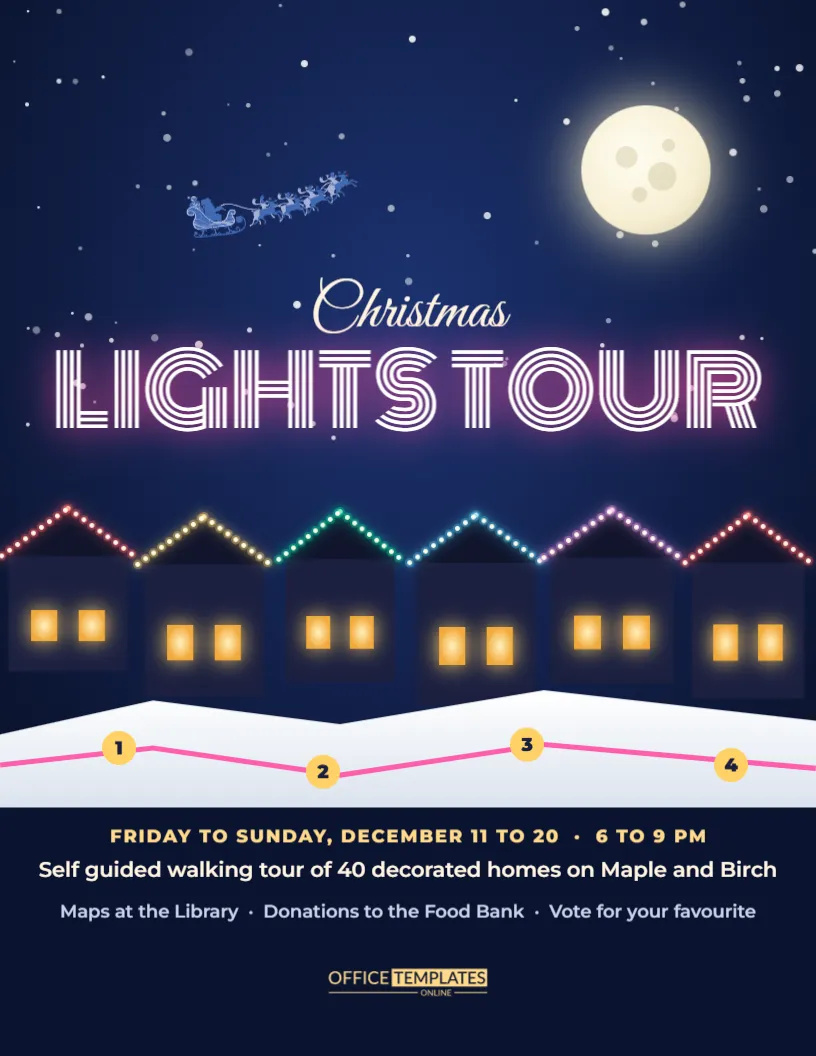
Driving or walking through streets of decorated houses is a favourite family tradition, and a good flyer tells people where and when to go. This design shows a dark suburban street with houses outlined in coloured lights, a sleigh crossing the moon, a neon-style title in pink and white, and a route marked with numbered stops. A panel at the bottom holds dates, hours, and tips. Neighbourhood associations, councils, charities and tourism groups can use it to promote a self-guided tour.
A Neon Night Look for a Lights Event
The page uses a deep blue night and a vivid neon title because the event itself happens after dark. The glow around the lettering echoes the lights people will see on the tour, and the bold style stands out on crowded boards.
Editing the Neon Title
The word Christmas appears in script above LIGHTS TOUR in a multi-line neon face. You can change it to Holiday Lights Trail, Twinkle Tour, or Winter Wonderland Drive. Keep it short, since the lettering has fine outlines that need space.
The Street of Glowing Houses
Six houses stand in a row, each with a different colour of roofline lights and two lit windows. Recolour the lights or change the number of houses. The row creates a sense of rhythm and invites the eye to travel along the street.
Numbered Route Stops and the Pink Path
A pink line winds across the lower part of the page with four numbered stops. Replace the numbers with the number of highlights on your own map, and add a short key beneath. A visual route helps visitors plan a walking or driving loop.
Dates, Hours and Tour Rules
| Detail | Example | Reason |
|---|---|---|
| Dates | December 11 to 20 | When lights are on |
| Hours | 6 to 9 PM | Evening viewing window |
| Route | Maple and Birch streets | Where to go |
| Cost | Free, donations welcome | Removes a barrier |
Maps and Where to Collect Them
Print a simple map with house numbers and distribute it at the library, a cafe, or online. Add a QR code to the flyer that opens a digital map. A clear map makes the tour feel organised and encourages people to visit every stop.
Walking or Driving Instructions
Tell visitors whether to walk or drive, and where to park. Ask drivers to go slowly and keep headlights low. Suggest a one-way direction to avoid congestion. These notes keep residents happy and children safe.
Respecting Residents and Private Property
Remind visitors to stay on the pavement, avoid noise, and keep dogs on leads. A friendly line such as Please be kind to our neighbours reduces complaints. Residents who feel respected will keep taking part in the tour year after year.
Collecting Donations for a Good Cause
Many tours collect for the local food bank or children’s charity. Place donation boxes at the start and mention the cause on the flyer. People enjoy the lights more when they know their kindness helps someone.
Competitions and Voting for Favourite Displays
Invite visitors to vote for the best house with a paper form or online. Announce the winner at the end of the tour. A prize such as a trophy, a gift card, or a mention in the newsletter encourages participation.
Recruiting Houses to Join the Tour
Use the same flyer to invite neighbours to register their display. Add a deadline and an email address. A bigger tour attracts more visitors, and early registration allows you to print accurate maps.
Accessibility and Warm Spots Along the Route
Mention any places where visitors can get warm drinks, use restrooms, or rest. Parents with prams and older visitors appreciate knowing the route is manageable. A short line about step-free paths can be a big help.
Printing and Sharing the Tour Flyer
Dark flyers use more ink, so use a print shop for larger quantities. Post in the library, cafes, and online groups. The neon title looks excellent on screens, so a social post will attract attention.
Final Review of Tour Dates and Safety
Confirm every house is on the list and that dates match. Review the route for hazards. Print a test sheet and walk the first few stops to ensure that the numbers and directions are accurate.
Choosing the Best Time and Day for Viewing
Evenings after dark are best, with weekends attracting the largest crowds. Mention quieter nights for visitors who prefer less traffic. A note about when lights switch off lets people plan, and it prevents disappointment for late arrivals.
Offering Audio Guides or Digital Maps
A short audio guide or interactive map can add stories about each house and its decoration. Share a link or QR code on the flyer. Visitors enjoy hearing about the effort behind each display, and it builds a stronger bond with the community.
Thanking Residents and Recognising Creative Displays
Give each participating house a certificate or a sign for the lawn. Mention standout displays in the newsletter. A little recognition encourages residents to return next year and raises the quality of the displays you promote.
Safety on Dark Streets and Crossing Roads
Ask visitors to wear bright clothing, carry torches, and use crossings. Mention safe parking areas and request that drivers stay alert for walkers. A short line on the poster protects families and demonstrates responsible planning.
Working With Local Radio and Newspapers
Send the flyer, a short description, and a few photographs to local media in November. Many outlets publish lists of festive events. A mention reaches visitors from neighbouring towns and gives your tour a stronger audience than posters alone.
Parking Plans for Narrow Streets
Residential streets can fill quickly. Suggest park-and-walk points at a school or hall, and mark them on the map. A short notice to residents about expected traffic keeps goodwill high, and a few volunteers in bright jackets can guide visitors.
Photography Etiquette for Visitors
Visitors love to take pictures, but flashes and tripods can disturb residents. Ask people to respect privacy and avoid shining lights into windows. A friendly line on the flyer keeps the tour pleasant for everyone and encourages homeowners to join again.