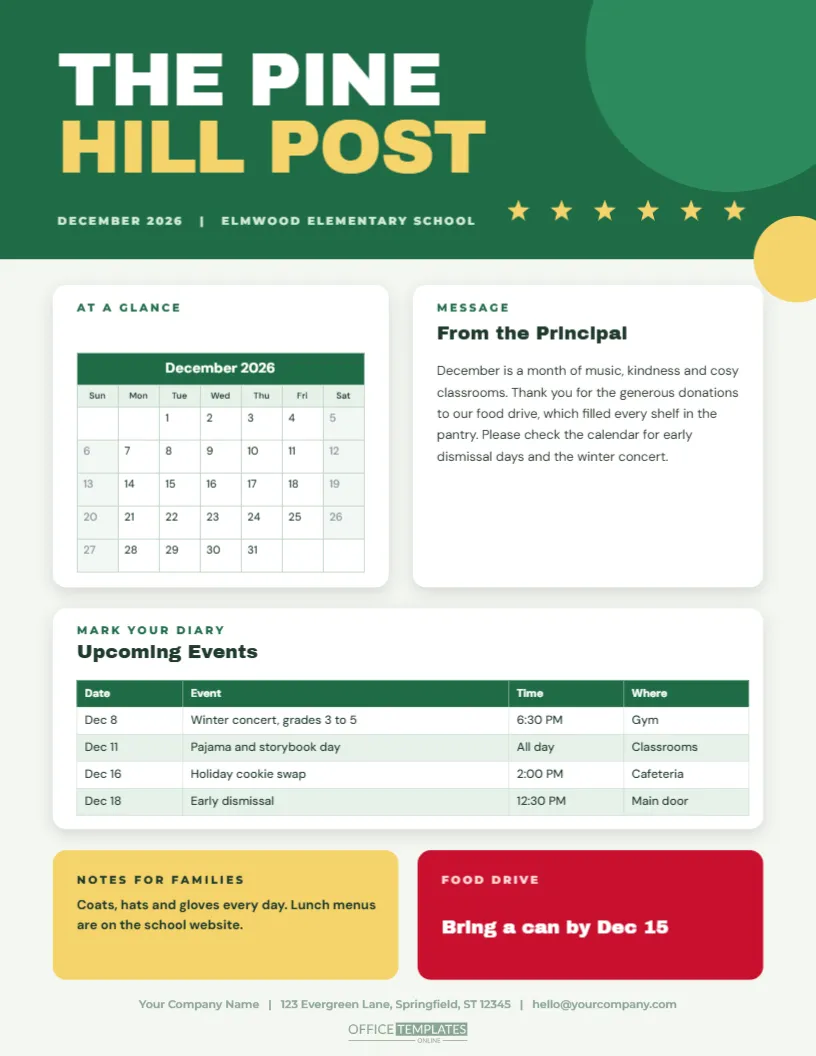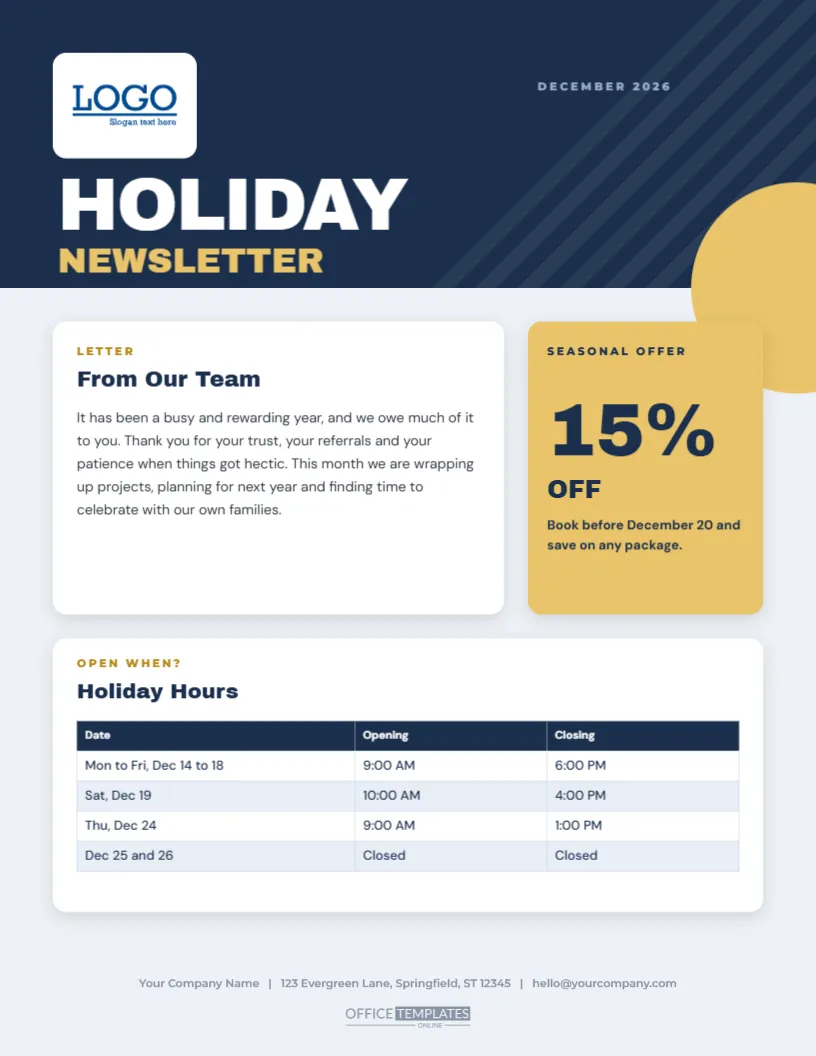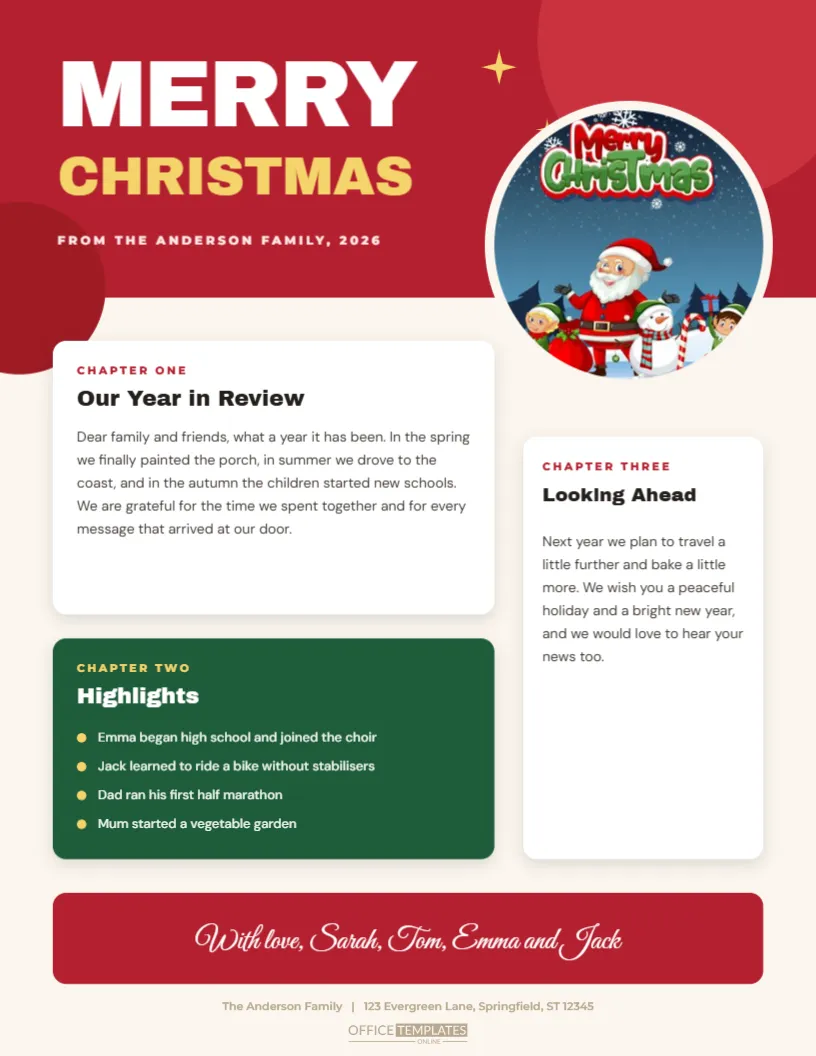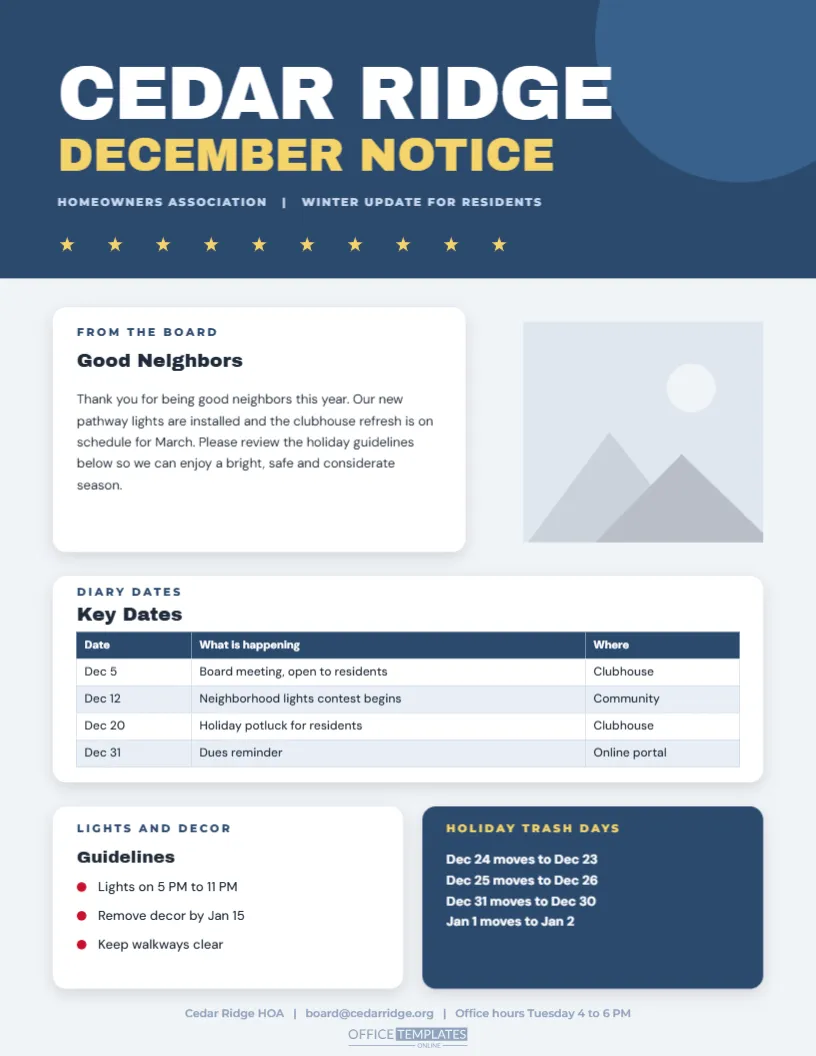
A homeowners association has to communicate rules, dates, and practical details without sounding like a lecture. This December notice manages both. A slate blue block with a row of tiny gold stars carries CEDAR RIDGE in huge white capitals and DECEMBER NOTICE in gold. A board message sits beside a photo slot, a real key dates table follows, a guidelines card lists decoration rules, and a navy panel gives the holiday trash schedule, with the normal day and the new day side by side.
Why a Notice Helps
Disputes in shared communities often begin with misunderstanding. A clear, polite notice at the start of the holiday season reduces them. It reminds residents of the rules on lights and noise, announces social events and shares practical changes, such as collection days. Because the notice is printed and also emailed, it reaches residents who do not follow online groups.
The Board Message
The message at the top left is where the board sets the tone. Thank residents for being good neighbours, report on a project or two, and invite everyone to the holiday events. Keep it short and friendly. Avoid a list of complaints. A positive message makes residents more willing to follow the guidelines, and it shows that the board is approachable.
| Part | Where | Editing tip |
|---|---|---|
| Header with stars | Top | Retype the community name |
| Key dates table | Middle | Table options |
| Decoration guidelines | Lower left | Adjust to your rules |
| Trash schedule table | Lower right | Update to your collection days |
The Key Dates Table
The key dates table has three columns: date, what is happening, and where. Use it for board meetings, social events, and deadlines, such as the next dues payment. It is a real table, so you can add rows, change the header colour, and edit the text. List dates in order, and keep the descriptions short. Residents will use it to plan, so avoid ambiguity.
Decoration Guidelines
- State the hours when lights may be on.
- Explain where decorations may and may not be placed.
- Give a date by which decorations must be removed.
- Remind residents to keep walkways and driveways clear.
- Name a contact for questions about the rules.
The Holiday Trash Schedule
Trash collection often moves around holidays, and missing a collection is a common complaint. The second table shows the normal day beside the new day. Check the dates with the collection company before printing, and update the table if they change. Put the schedule on the fridge or the noticeboard, and send a reminder email the week before.
Choosing a Calm Tone for Notices
A community notice reads better when it uses plain language and a polite voice. Say please, explain the reason for a rule, and thank residents for their cooperation. Avoid threats and legal language unless required. If a rule is mandatory, say so clearly and cite the section of the governing documents. Respectful wording prevents arguments before they begin.
Questions About the HOA Notice
Can I add the dues amount?
Yes. Add a row to the key dates table or a line in the contact box.
Which fonts are used?
On the homeowners association December notice newsletter page, Archivo Black sets the titles and card headings, DM Sans sets the body text and tables, and Montserrat sets the small labels.
Can I add a map of the community?
Yes. Replace the photo slot with a map image.
Can I use it for an apartment complex?
Yes. Edit the wording and the dates.
Delivering the Notice
Deliver printed copies to every unit, post one in the clubhouse, and email a PDF through the community portal. Keep a log of delivery, so that you can show that the notice was sent. Place a copy in the welcome pack for new residents. Reuse the template each month, changing only the content.
Building Community Spirit
Use the notice to promote volunteer opportunities, such as a decoration committee or a welcome team. Mention residents who have helped, and invite others to join. A community that feels appreciated is more likely to cooperate, and a friendly notice is one of the simplest ways to encourage that feeling.
Explaining Rules With Reasons
People follow a rule more willingly when they understand why it exists. Beside each decoration guideline, add a few words of explanation: lights stay off after eleven to respect sleep, and decorations come down by mid-January to keep common areas safe. A short reason turns a restriction into a shared agreement and reduces complaints to the board.
Handling Questions and Complaints Politely
Include a clear contact in the box at the foot, and say when the board will reply. A promise to respond within three working days sets a reasonable expectation. Keep a simple log of questions, and share answers in the next issue. A community that feels heard is easier to manage, and the newsletter is a good place to show that.
Printing and Filing the Notices
Keep a copy of every notice in the association’s records, with the date and the delivery method. This can matter if a dispute arises later. Print on white paper for clarity, and use a coloured sheet for urgent changes. Number the issues, so residents can refer to them in correspondence.
Planning the Year of Notices
A community that gets one clear notice a month rarely needs ten urgent ones. Keep a simple calendar of the year, with the board meeting dates, the dues deadline, the landscaping schedule, the pool opening and the holiday events, and build each monthly issue from it. Reuse the same layout so residents learn where to look for the dates. The key dates table and the trash panel are the two blocks people read most, so keep them up to date.
Writing for Residents Who Skim
Most residents read a notice in under a minute. Put the date and the action in the first words of each row, and keep every sentence short. Use the guidelines card for rules that stay the same, and the board message for news. If a rule is new, say so in a single clear line. A notice that respects the reader’s time is more likely to be followed, and it lowers the number of questions sent to the board.
Reaching Residents Who Do Not Use Email
Not every household reads the community portal. Deliver a printed copy to each door, leave a stack at the clubhouse, and give a copy to the property manager. A friendly phone call to older neighbours before a major change is worth more than a second email. Note in the file who received a paper copy, so the board can show that the notice reached everyone.
Adding a Seasonal Thank You
December is a good month to thank the volunteers who sweep paths, water planters and organise events. Add a line under the board message with their names, or print a small card to slip into the notice. A named thank you costs nothing and makes it easier to find helpers next year. Keep the tone warm, and let the photo slot show a happy moment from the year.