On Diwali morning, a quick look through WhatsApp statuses shows how many ways there are to say the same thing: rangoli photos, sweets on a plate, a family in new clothes, a forwarded image with a cartoon lamp. A status you made yourself, with your family’s name on it, stands out among the forwards. This template gives you a polished, full-screen greeting that takes two minutes to personalise.
What the Status Looks Like
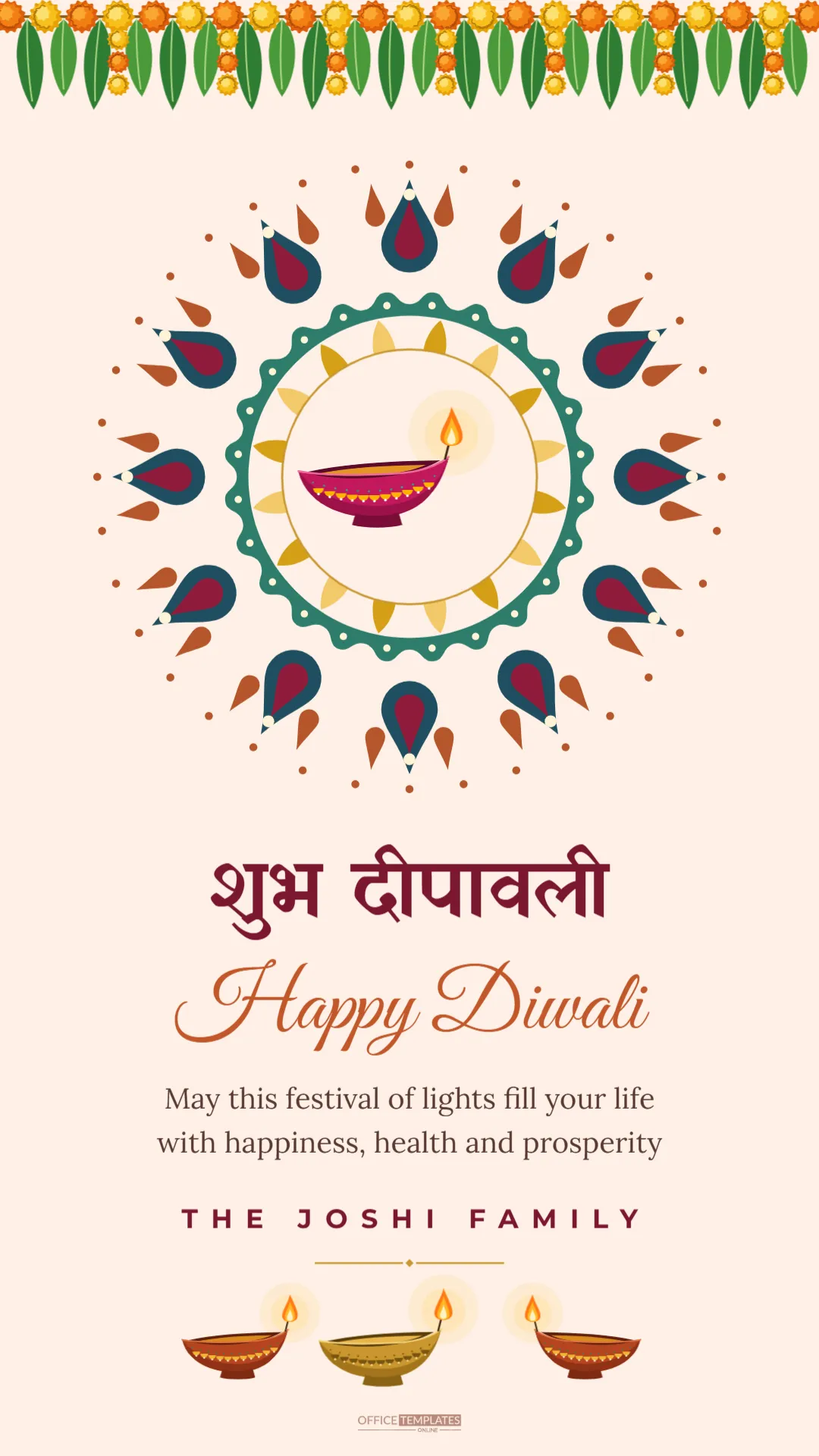
The design fills a phone screen at 1080 x 1920 pixels on a warm blush background. A toran of mango leaves and marigolds hangs across the very top. Below it, a large jewel-toned rangoli in teal, deep red, and burnt orange surrounds a clean cream circle edged in gold, and in that circle sits a painted magenta diya with a lit flame. Under the rangoli, ??? ??????? (Shubh Deepavali) is written in maroon Yatra One, followed by Happy Diwali in copper Great Vibes script and a two-line wish in Lora. THE JOSHI FAMILY appears in spaced capitals, then a gold divider, a row of three diyas, and the Office Templates Online mark.
Personalising It in Two Minutes
- Click THE JOSHI FAMILY and type your own family name, or your names, for example ANJALI AND VIKRAM.
- Change the wish if you like. Keep it to two lines.
- Download a PNG.
- Send the image to your phone, open WhatsApp, go to Updates, and add it as your status.
Statuses disappear after 24 hours, so post it on the morning of Diwali, which falls on Sunday, November 8, 2026. Many people post a second status on the evening of the festival with a photo of their own lamps.
Greetings in Other Indian Languages
The Devanagari line works for Hindi and Marathi speakers. If your family speaks another language, replace it with a greeting in that language, using a Google font that supports the script. Here are common Diwali wishes, written in English letters so you can check the meaning before typing them in the right script.
| Language | Common Diwali greeting | Meaning |
|---|---|---|
| Hindi | Deepavali ki hardik shubhkamnayein | Heartfelt wishes for Deepavali |
| Marathi | Diwalichya hardik shubhechha | Heartfelt Diwali wishes |
| Gujarati | Diwali ni shubhechha, Saal Mubarak | Diwali wishes, happy new year |
| Punjabi | Diwali diyan lakh lakh vadhaiyan | A hundred thousand Diwali congratulations |
| Bengali | Shubho Dipaboli | Happy Diwali |
| Tamil | Deepavali nalvazhthukkal | Deepavali greetings |
| Telugu | Deepavali subhakankshalu | Deepavali wishes |
| Kannada | Deepavali habbada shubhashayagalu | Wishes for the Deepavali festival |
Ask an elder in the family to check the spelling in the native script before posting; small errors are easy to make and easy to notice.
Why the Rangoli Surrounds the Diya
On Diwali night, many families place lamps on and around the rangoli at the door. The design captures that moment from above: the diya rests in the clear centre, so its flame stays the focus, and the colourful pattern radiates out around it. The plain cream circle also gives the eye a resting place in the middle of a busy pattern, which keeps the status calm rather than cluttered.
Changing the Rangoli and Background Colours
The rangoli, the toran and the diyas are editable vector art. Select the rangoli to see its colour swatches: the teal, deep red, orange and cream can each be changed, and every part in that colour updates together. A pink and gold rangoli feels softer; a saffron and green one feels traditional. You can also change the blush background to ivory, pale gold, or mint by clicking an empty area.
Sending It as a Greeting, Not Only a Status
The same image works as a message. Send it directly to relatives and friends who might not check statuses, especially older family members. Add a personal line in the chat, such as: Wishing you and the whole family a bright and happy Diwali; it would not feel complete without you.
Making a Set for the Festival Week
Diwali is a five-day festival, and some families post a status each day. Keep the same design and change the main line:
- Dhanteras (Friday, November 6): Happy Dhanteras.
- Choti Diwali (Saturday, November 7): Happy Choti Diwali.
- Diwali (Sunday, November 8): Happy Diwali, as designed.
- Govardhan Puja and the Gujarati New Year (Monday, November 9): Saal Mubarak or Happy New Year.
- Bhai Dooj (around November 10 or 11, depending on your calendar): Happy Bhai Dooj.
Using It on Instagram and Facebook Stories
The 1080 x 1920 size is also the size of Instagram and Facebook stories, so you can post the same file there. The important text sits in the middle of the screen, away from the profile name at the top and the reply bar at the bottom.
Status Greeting Questions
Will WhatsApp blur the image?
WhatsApp compresses images a little. The large lettering stays sharp, and PNG files hold up best.
Can I add a family photo?
Replace the diya with a circle from the Elements panel inside the cream centre and use Replace Image to place your photo in it.
Can I remove the Hindi line?
Yes. Delete it and move the English greeting up, or replace it with a greeting in another language.
A Note on Forwarded Greetings
Many families receive dozens of identical forwarded images on Diwali morning, and most are glanced at and scrolled past. A greeting carrying your own family name feels different because it could only have come from you. If you share the template with relatives so they can make their own, encourage each household to change the name line and perhaps the rangoli colours, so every status in the family group looks personal rather than copied.
Adding the Year for a Keepsake Status
Many people save their festive statuses and look back at them years later. Adding a small line such as DIWALI 2026 under the family name turns the image into a dated keepsake. Use the same spaced capitals and a soft colour so it does not compete with the greeting, and keep a copy of the downloaded file in a folder with the year’s family photos.
Wish Everyone at Once
Add your family name, download, and post. Your status will be the one people actually stop at on this Diwali morning.