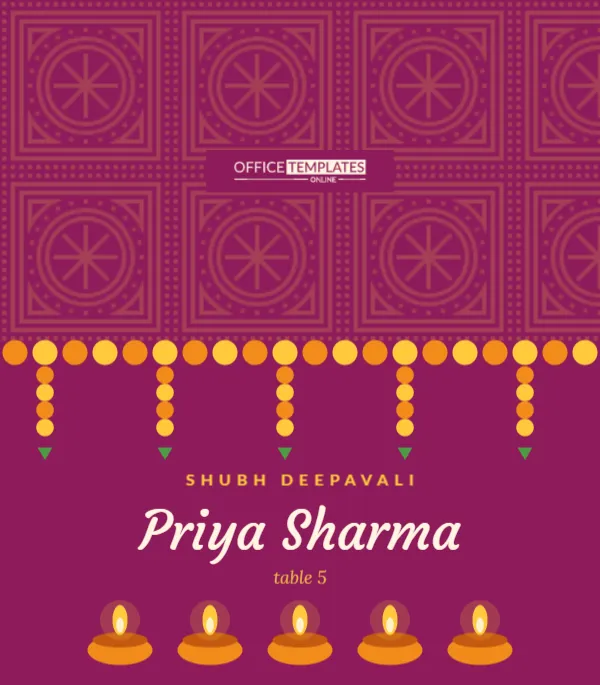
Diwali, the festival of lights, fills homes with oil lamps, marigold garlands, rangoli, sweets, and the gathering of family and friends. A Diwali dinner is one of the happiest meals of the year, and the table deserves the same colour and glow as the rest of the house. This place card is made for it. A marigold toran, the traditional door garland of orange and yellow flowers, hangs along the top of a rich magenta front, a row of five diyas glows along the bottom, and each guest’s name is written in warm cream script.
Marigolds Above, Diyas Below
The card is 3.5 x 4 inches flat and folds to 3.5 x 2 inches. The front is a deep magenta. Right along the fold, a string of alternating orange and yellow marigold blossoms runs across the card, and from it, five short strands of marigolds hang down, each finished with a green mango-leaf tip, just like a toran over a doorway. Along the bottom, five clay diyas glow in orange and amber, each with a bright yellow flame and a soft halo. Between them, Shubh Deepavali is spaced in yellow capitals, the name Priya Sharma is set in Courgette in cream, and table 5 sits underneath in gold italic. The back is magenta with a gold pattern of interlocking tiles and the logo in cream.
The Gold Tile Pattern Is a Background Texture
The back’s ornate gold pattern is the editor’s built-in Lisbon background texture. Open Backgrounds and choose Pattern to adjust it: change the gold to orange or white, make the tiles larger or smaller, fade them, or replace the pattern with another, such as Moroccan or Overlapping Circles. The magenta front panel covers the pattern, so it shows only on the back.
Diwali Greetings for the Card
| Greeting | Language | Meaning |
|---|---|---|
| Shubh Deepavali | Hindi | Auspicious Diwali |
| Happy Diwali | English | Happy Diwali |
| Deepavali Nalvazhthukal | Tamil | Diwali greetings |
| Shubh Deepawali | Marathi | Auspicious Diwali |
| Saal Mubarak | Gujarati | Happy New Year, used the day after Diwali |
Replace the yellow headline with the greeting your family uses.
Writing Guest Names Under the Toran
Click the cream name and type the guest’s name; Courgette is friendly and readable, and most names fit easily. Change the table line, or replace it with a blessing such as May your life be full of light. Download each card and continue with the next guest. The garland and diyas are grouped, so they stay aligned while you work.
The Toran and Its Meaning
A toran is a decorative garland hung over doorways during festivals and weddings to welcome guests and bring good fortune. Marigolds are used because their bright colour is associated with the sun, auspiciousness, and celebration, and mango leaves symbolise prosperity. Placing the toran along the fold means it sits at the top edge of the standing card, like a garland over the entrance to each guest’s seat.
Diyas: The Lamps of Diwali
Diyas are small clay oil lamps lit to celebrate the victory of light over darkness. Families place them on windowsills, doorsteps and around rangoli designs. The five diyas on the card stand for that tradition. They are simple shapes in a group: ungroup them to change their colour, for example to gold or to painted clay colours, or to add more lamps.
Recolouring for Your Celebration
Magenta, orange and gold are classic festival colours, but you can adapt them to your décor. Deep purple with gold, royal blue with orange marigolds, or emerald with gold all look beautiful. Change the canvas background and front panel to the new base colour, then update the texture colour in the Pattern drawer to match.
Printing Rich Festival Colours
Magenta and orange are vivid colours that home printers handle well, but large magenta areas use lots of ink. Choose a matte cardstock setting at high quality and print a test first. For a luxurious finish, ask a print shop to add gold foil to the diyas or the toran.
Folding Along the Garland
Trim to 3.5 x 4 inches, score along the line of marigolds and fold with the front facing out. The garland then sits just under the top edge of the standing card.
Setting a Diwali Table
Brass thalis, colourful napkins, rose petals, small diyas or tealights at each place, and a centrepiece of marigolds and candles create a glowing table. Place a small box of mithai, such as ladoos, barfi or kaju katli, beside each card as a favour. A rangoli near the entrance welcomes guests before they find their seats.
Other Festive Occasions
The design suits Navratri dinners, Indian wedding sangeet and mehndi events, housewarmings, Karva Chauth dinners and Holi parties with a colour change. Update the headline to the occasion.
Hosting a Diwali Dinner Party
Diwali dinners often follow the Lakshmi puja, when families pray for prosperity in the evening. Plan the meal after the puja, light diyas around the room, and switch off bright overhead lights so the candles glow. Seat elders at the head of the table, mix families so friends from different circles meet, and give children a place near the door for when the fireworks or sparklers begin. Vegetarian dishes are common on Diwali; if you have guests with different diets, a small note on their card helps servers or helpers.
Diwali Card Questions
Can I change the diyas to tealights?
Ungroup them and replace the clay bases with small white circles.
Why can’t I select the gold pattern?
It is a page background texture; change it in Backgrounds, Pattern.
What size is the folded card?
3.5 inches wide and 2 inches tall.
Can the marigolds be pink?
Yes. Ungroup the toran and recolour some blossoms pink for a rose-and-marigold garland.
Is the toran an image?
No. It is made of simple editable circles and leaf shapes grouped.
Can I add rangoli?
Yes. Build a simple rangoli on the back panel from coloured circles arranged in rings, like flower petals, and keep it centred so it looks right from either side of the table.