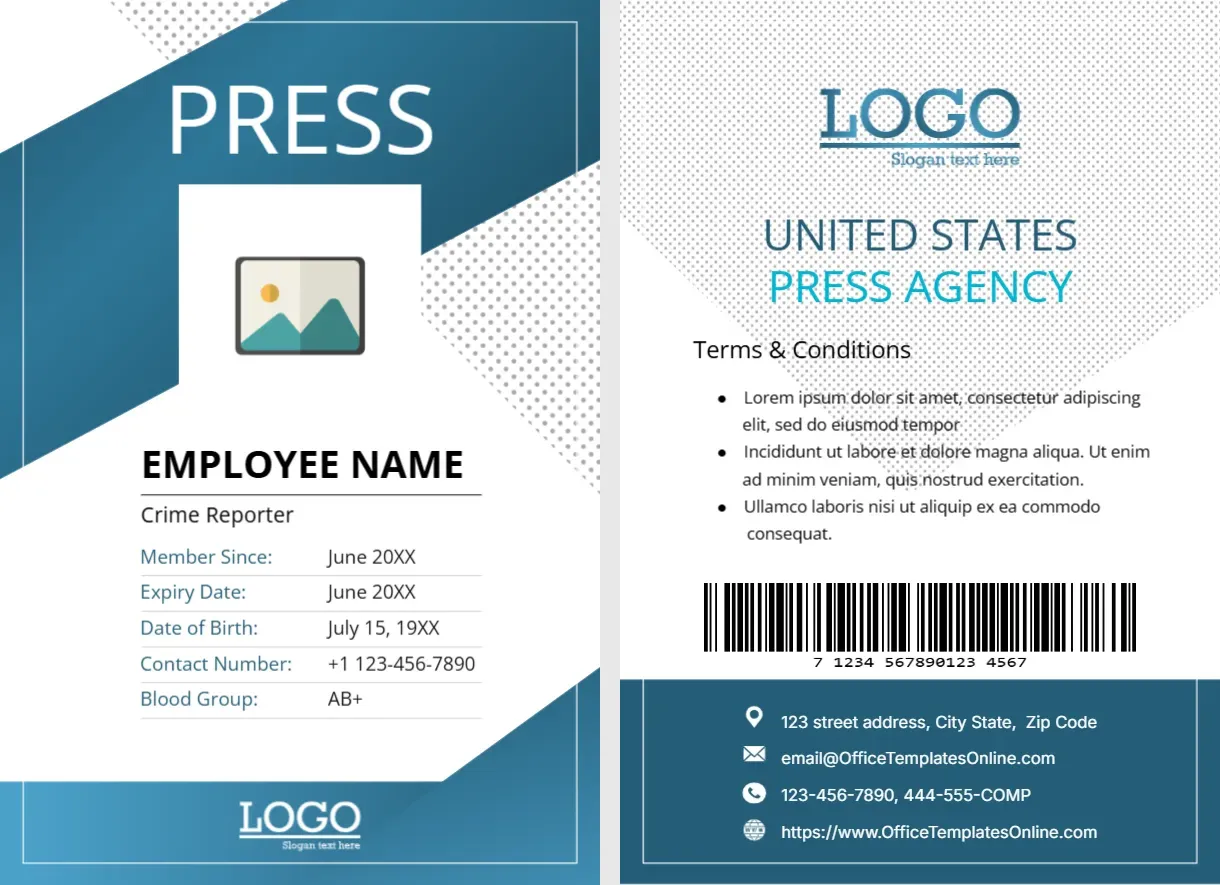
A Press Card Is Read in Two Seconds
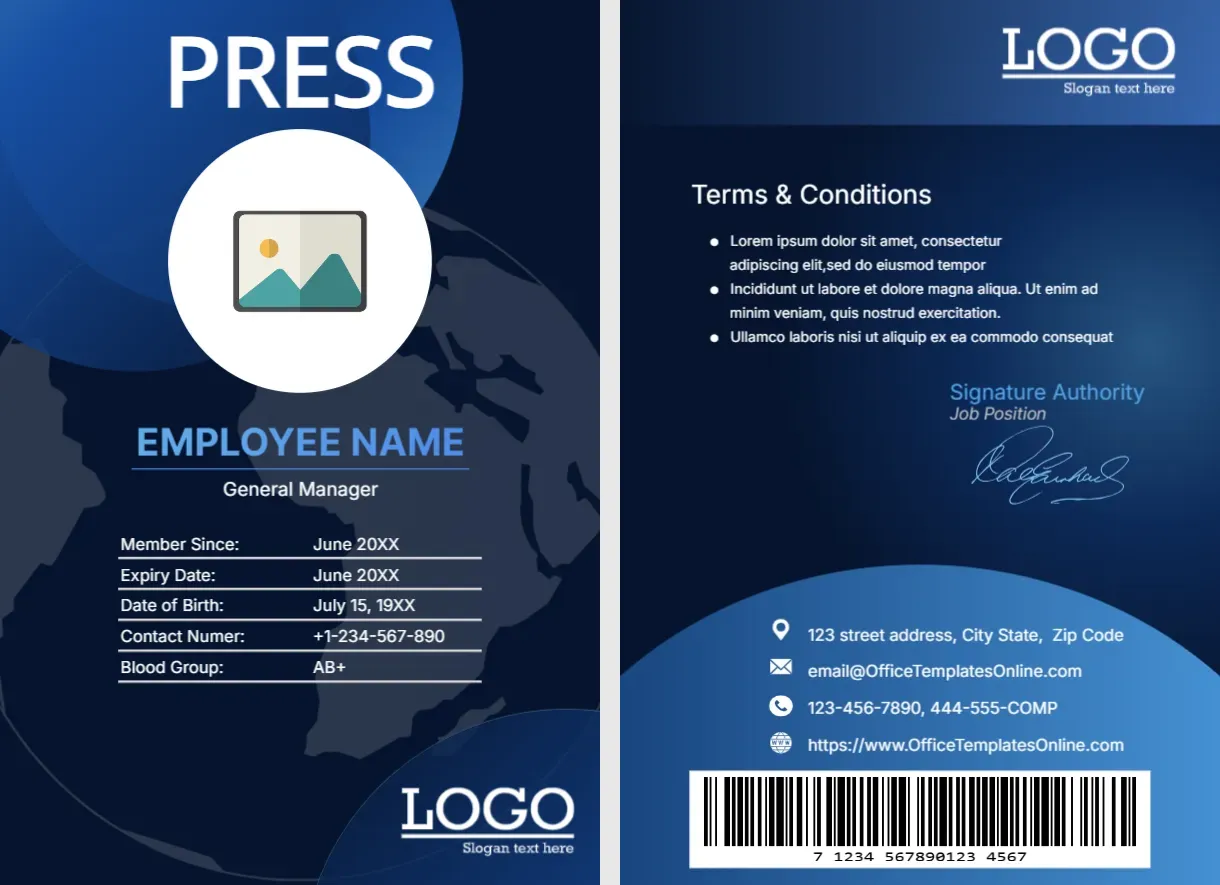
A reporter flashes a card at a police line, a press gate or a council office, and the person checking glances at it for a moment. In that moment, three things must be clear: this is a press card, here is the photo and name, and it has not expired. This reporter ID is designed around those priorities. PRESS is the largest word on the front, the photograph and name are in the middle, and the expiry date is one of the first lines under them.
Front: Blue Panel and Large PRESS Header
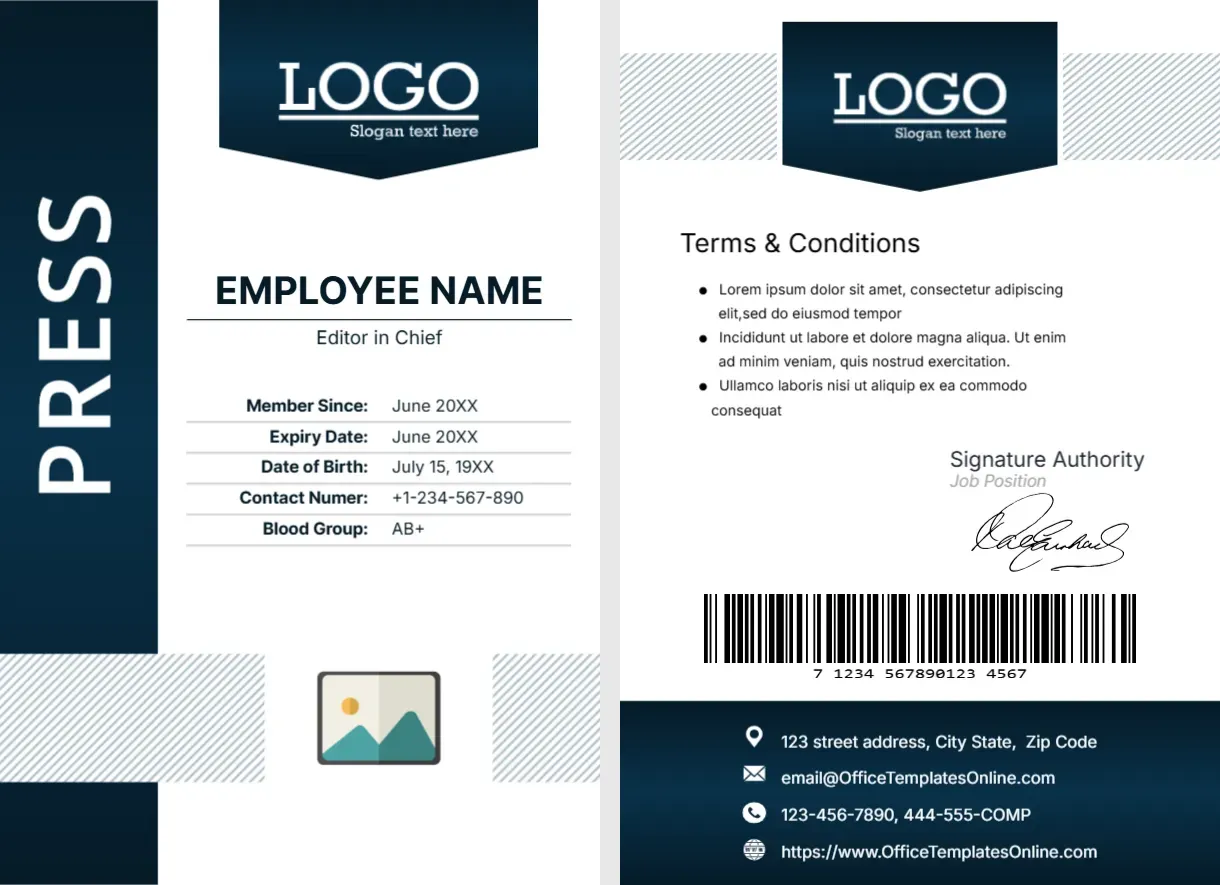
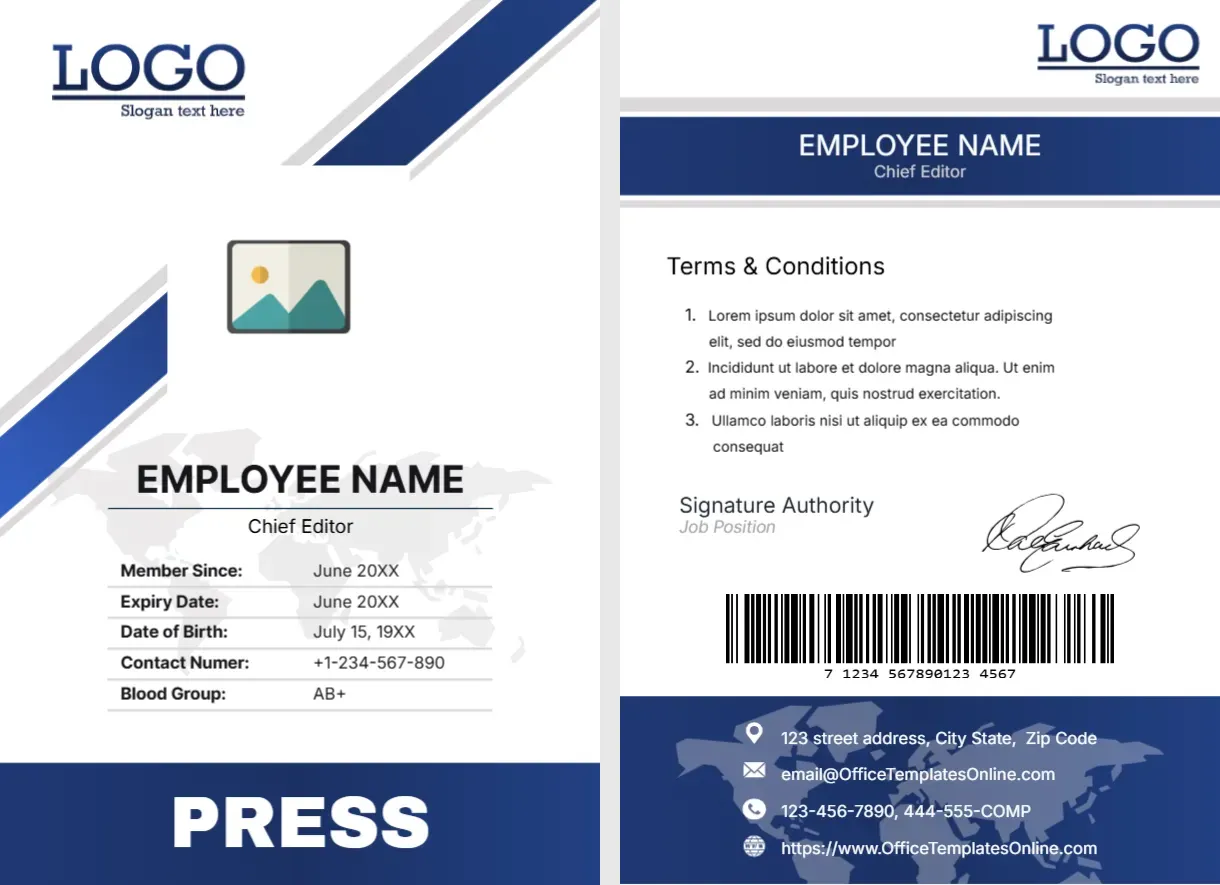
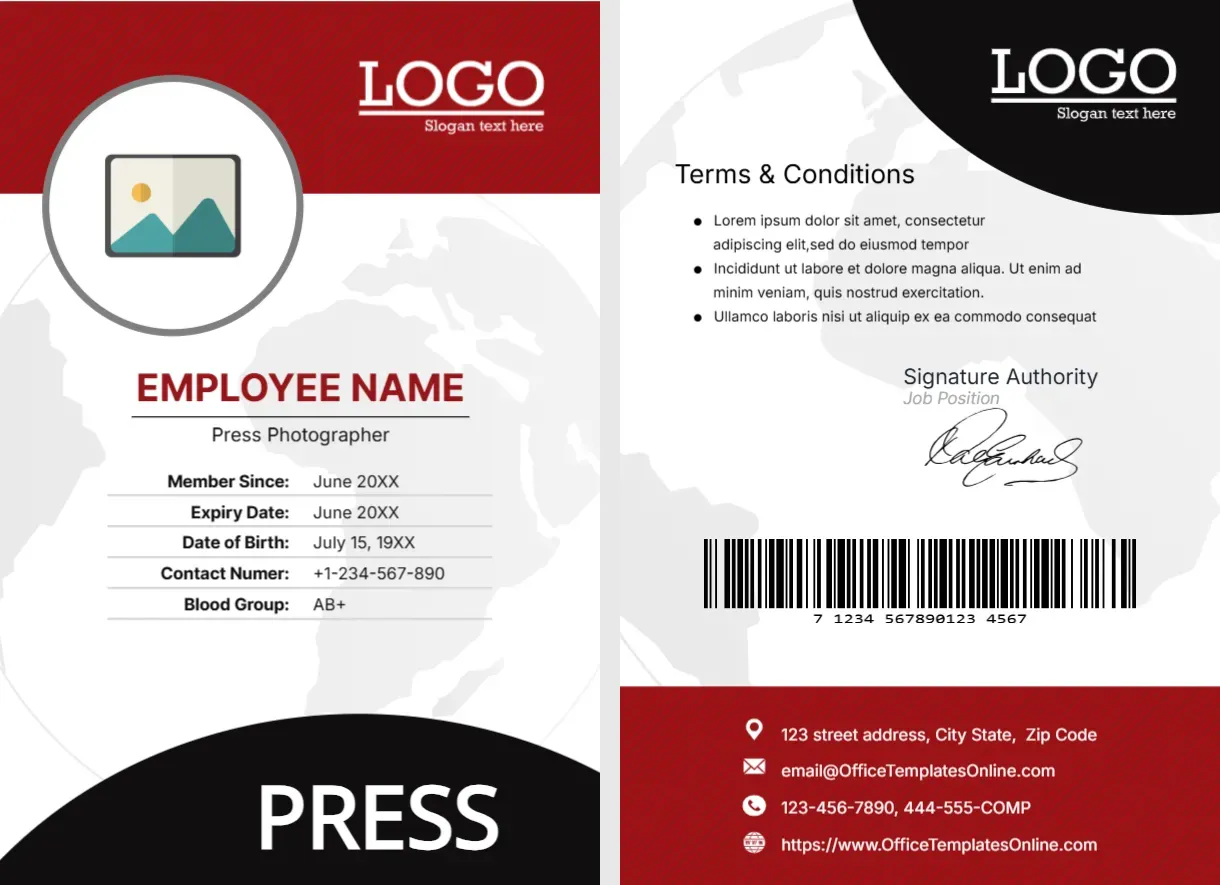
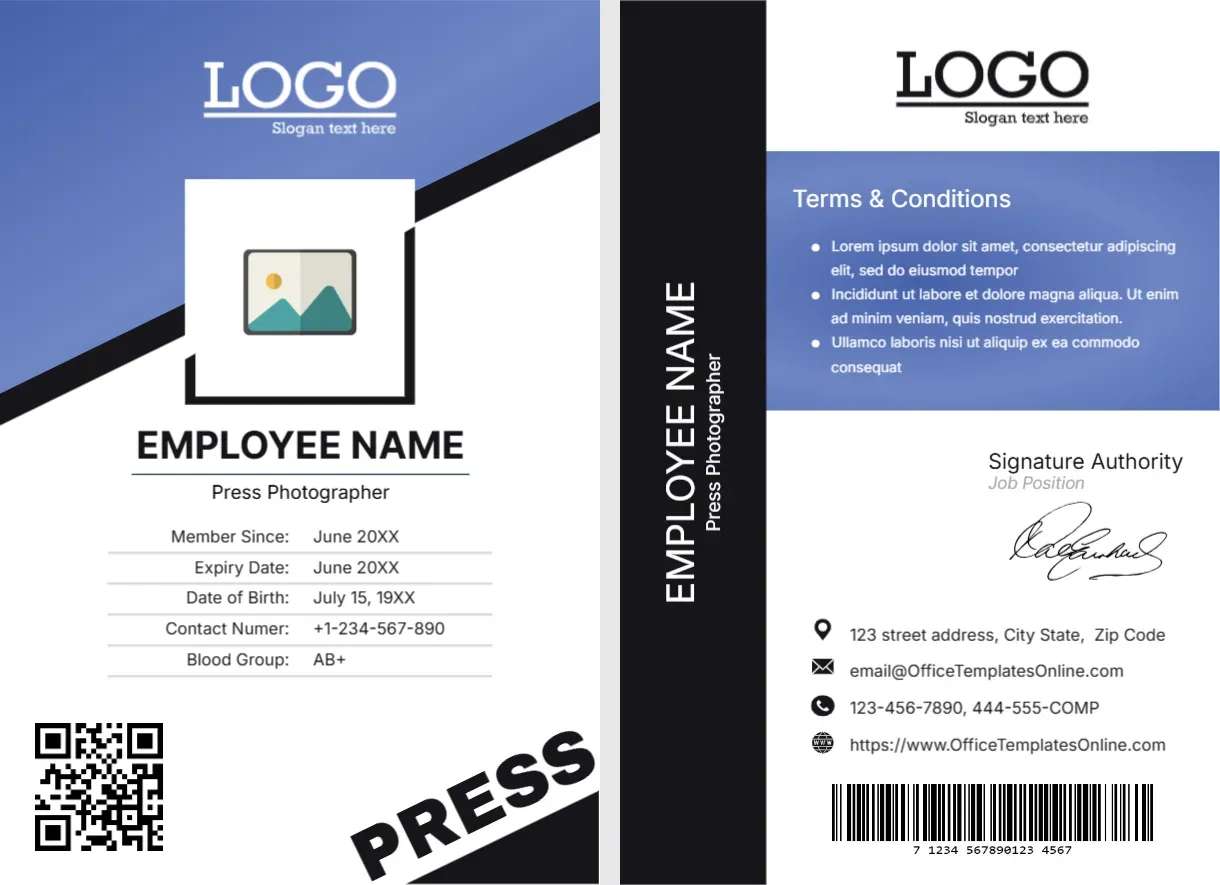
The card is portrait, 2.63 x 3.88 inches, a little larger than a credit card. The top is a rich blue panel cut diagonally, with a dotted pattern fading in on the right. PRESS is written in huge white capitals across the top. A white square holds the photo placeholder. Below, EMPLOYEE NAME is in bold dark capitals with a thin rule, and the role, Crime Reporter, is a small line under it. A table lists Member Since: June 20XX, Expiry Date: June 20XX, Date of Birth: July 15, 19XX, Contact Number: +1 1234567890 and Blood Group: AB+. A LOGO sits on a blue footer at the bottom. The type is Open Sans.
Back: Agency Name, Terms and Barcode
The back has a pale dotted header with a LOGO and the words UNITED STATES PRESS AGENCY in blue. Below is a Terms and Conditions heading with three bullets of placeholder text, then a long barcode picture, and a blue footer with a street address, email, two phone numbers and a website, each with a small white icon.
Change the Beat, Not Just the Name
The role line reads Crime Reporter. Replace it with the real beat: Political Reporter, Sports Reporter, Court Reporter, Business Reporter, Local News Reporter. A specific role helps organisers decide which press area to send you to. If you are a general assignment reporter, say so.
Fields You Can Safely Leave Out
The template includes Date of Birth and Blood Group. These are common on press cards in some countries, and are useful in an emergency, but they are personal data. If your organisation does not need them, delete those rows, or replace them with fields such as Press Card Number or Publication. Always follow your local privacy rules.
Replace the Agency Name
The back reads UNITED STATES PRESS AGENCY. Replace it with your newsroom’s name. Do not use the name of a real agency or publication unless you work for it. A card that claims affiliation with an organisation you do not belong to may be misleading and, in many places, illegal.
Photo Tips for Press IDs
Use a clear, front facing portrait on a plain background, with no sunglasses or hats. The photograph must look like you, because guards compare it with your face. Click the placeholder and choose Replace Image. Replace it every few years or after a major change in appearance.
Printing a Larger Press Card
At 2.63 x 3.88 inches the card is bigger than a credit card, so it fits a vertical 3 x 4 inch badge holder rather than a standard card sleeve. Print both sides on 250 to 300 gsm stock or have a print shop produce a laminated version. Add a slot for a lanyard with a slot punch.
For other press cards, see the press journalist ID card and the news editor ID card. More are in ID cards.