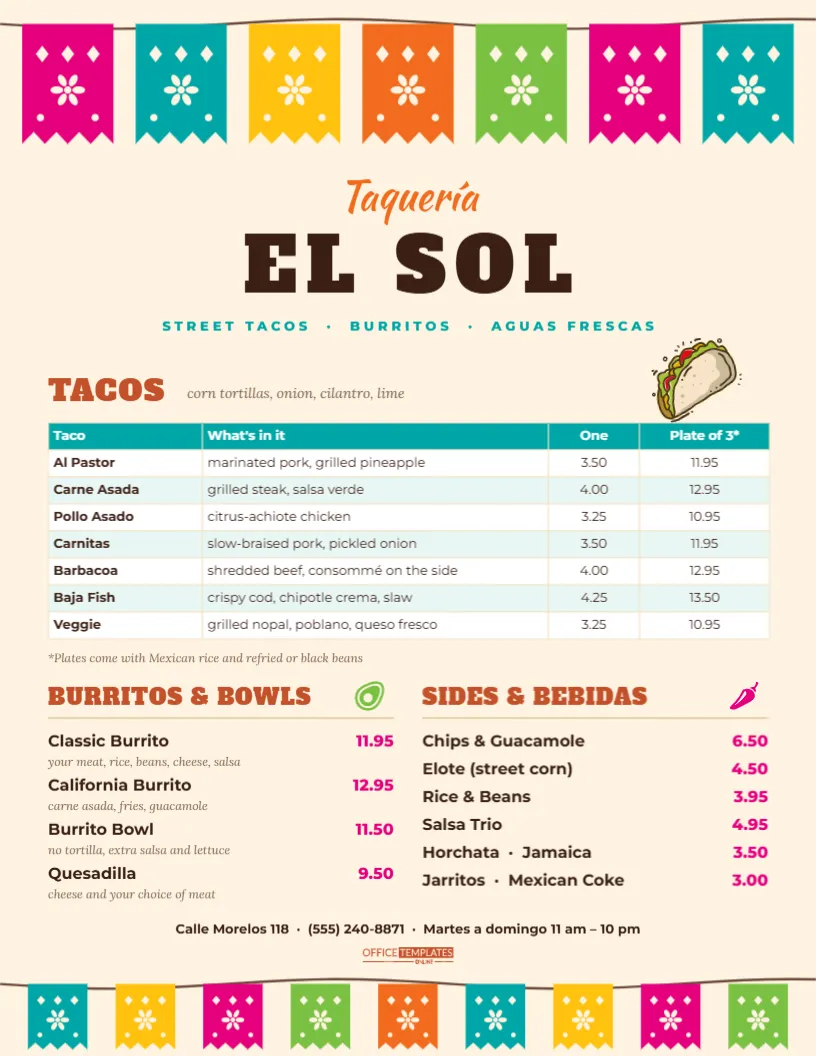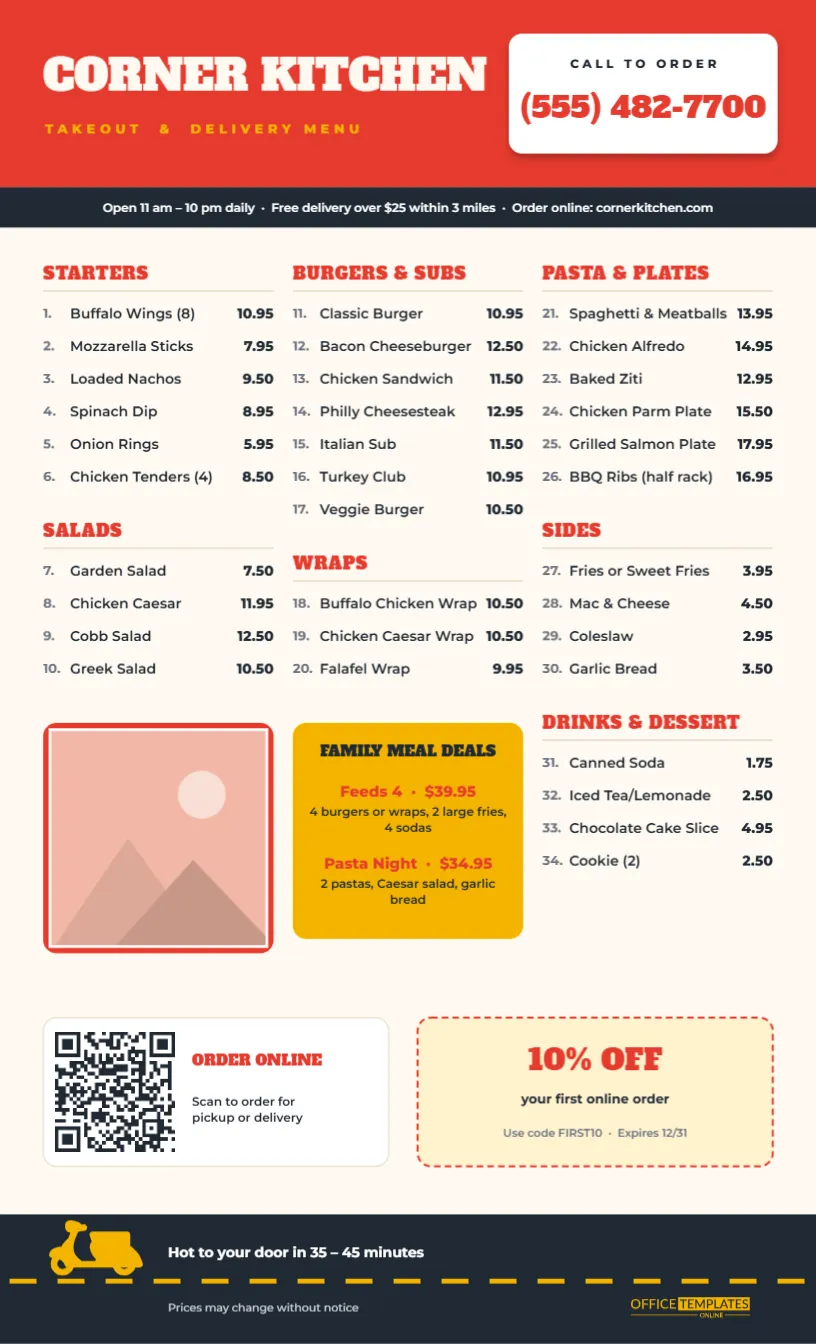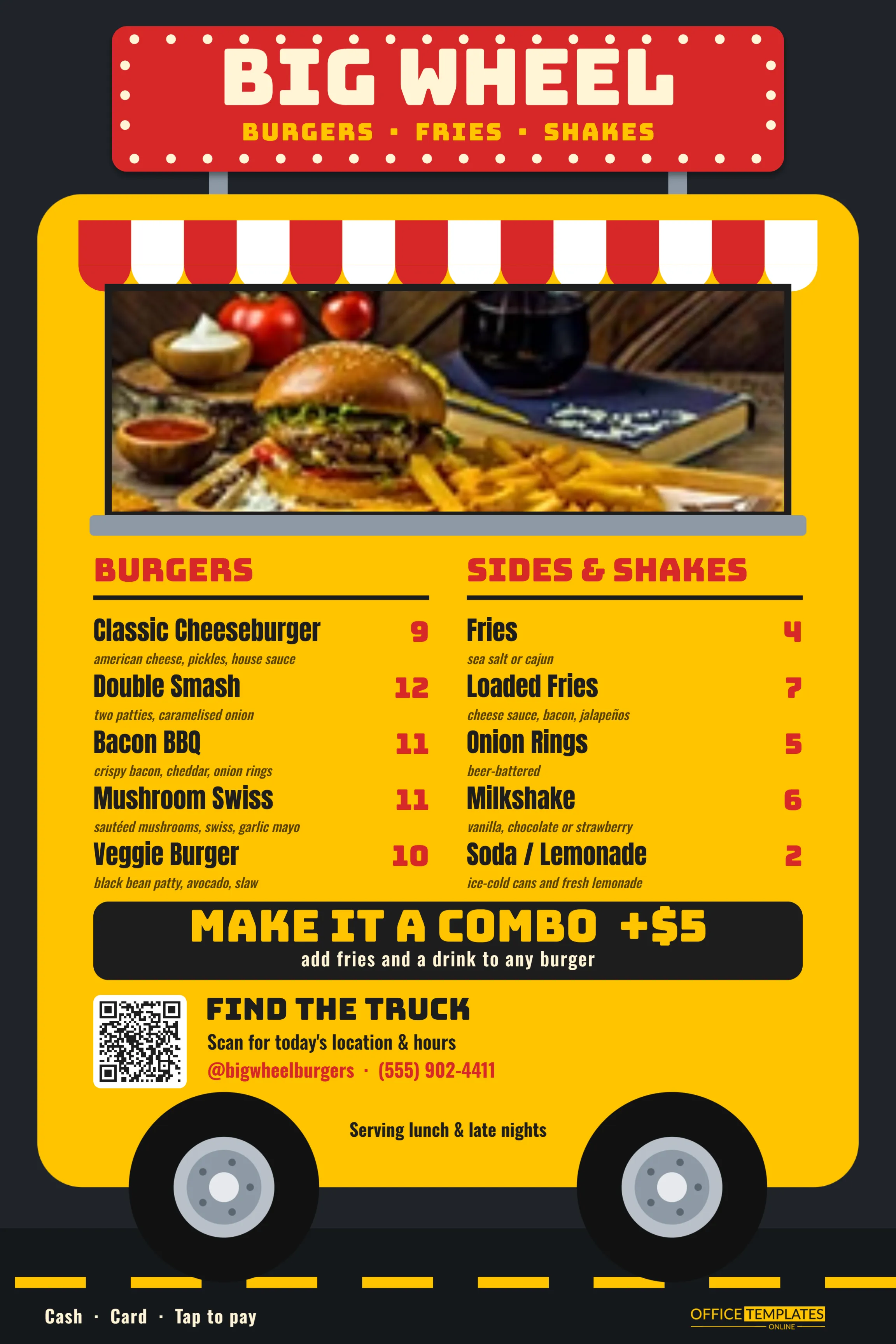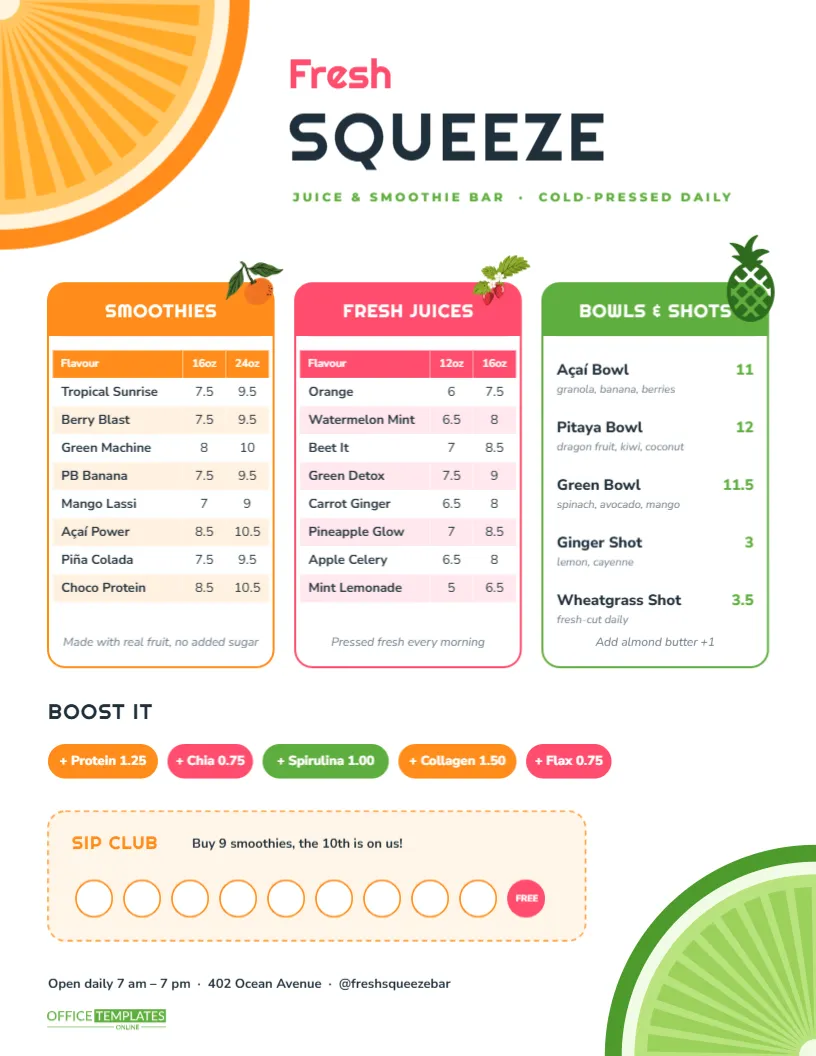
Japanese food is about balance and restraint: clean flavours, beautiful presentation, and nothing unnecessary. A sushi menu should follow the same principles. This Sushi Menu Template borrows three familiar images from Japanese craft and design: the bamboo rolling mat, the rising sun, and the seigaiha wave pattern, and arranges the menu with calm, orderly spacing, so guests can find their favourite nigiri or discover a new roll without effort.
Bamboo, Sun and Waves
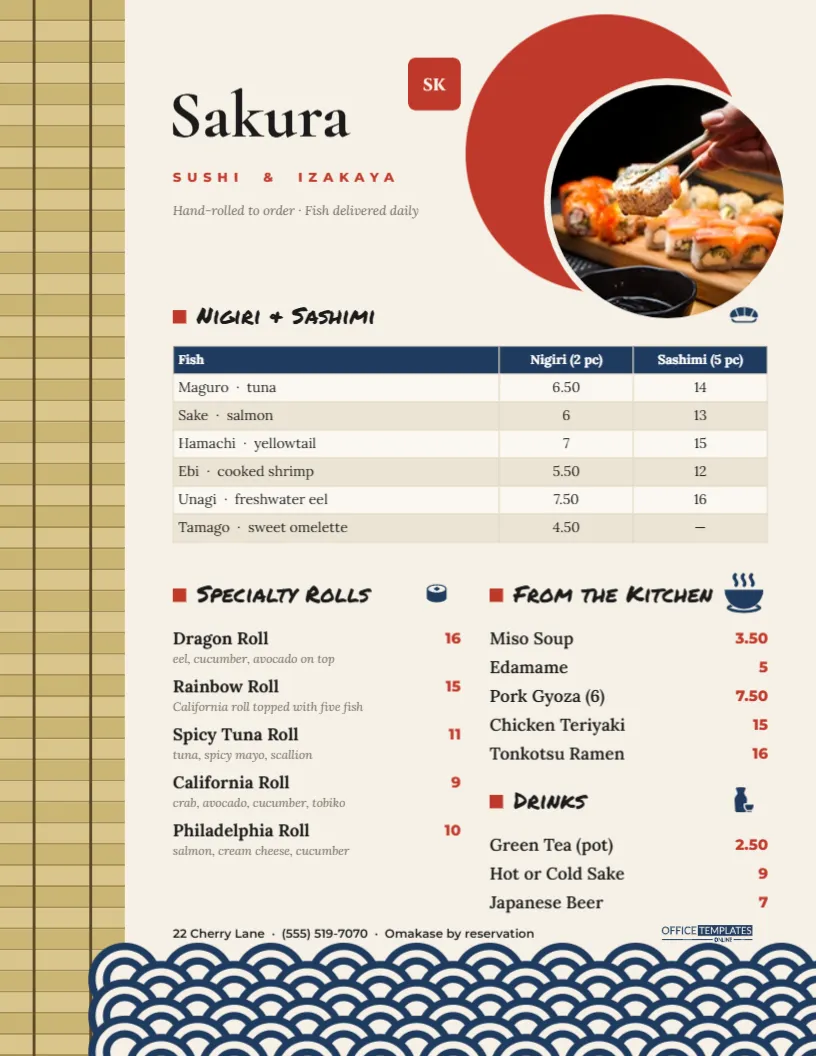
This menu is a US Letter page, 8.5 x 11 inches, in portrait orientation, on a soft rice-paper cream. Down the left edge runs a strip that looks like a makisu, the bamboo mat used to roll maki: horizontal slats in two warm bamboo tones, separated by fine lines and bound by two dark strings. It gives the page a natural, handmade border.
At the top right, a large red disc like a rising sun sits behind a round photo frame with a cream edge. The photo overlaps the sun slightly off-centre, a layered composition that makes a perfect showcase for a platter of your best sushi. Beside it, the restaurant name Sakura is set in elegant Cormorant Garamond, with SUSHI & IZAKAYA in spaced red capitals, an italic tagline, and a small red square seal in the style of a hanko stamp.
Section headings are written in a brush-marker style (Permanent Marker), each with a small red square and an indigo icon of the food:
- Nigiri & Sashimi: a price table with an indigo header and columns for Fish, Nigiri (2 pc) and Sashimi (5 pc), listing six fish with their Japanese and English names.
- Specialty Rolls: five rolls with red prices and short ingredient lists.
- From the Kitchen: miso soup, edamame, gyoza, teriyaki and ramen.
- Drinks: green tea, sake and Japanese beer.
At the bottom, the address and reservation line sit above a band of seigaiha, the traditional overlapping wave pattern, in indigo and cream. It spreads across the foot of the page from the bamboo strip to the right edge, with our logo in indigo just above it.
How Much Sushi to Order: A Guide for Guests
First-time guests often wonder how much to order. A small guide on the menu or table card helps them order confidently and helps you avoid wasted food. These are common rules of thumb:
| Appetite | A typical order per person | Roughly |
|---|---|---|
| Light lunch | Miso soup plus one roll | 6-8 pieces |
| Regular meal | One roll plus 2-3 pairs of nigiri, or two rolls | 10-14 pieces |
| Hungry | A specialty roll, a regular roll, and nigiri | 16-20 pieces |
| Sharing for the table | One roll or sashimi plate per person, plus kitchen dishes | Varies |
Standard maki rolls are usually cut into six or eight pieces, and nigiri comes in pairs, as it does in this template.
Personalizing Your Sushi Menu
- Restaurant name and seal: double-click Sakura to type your name and change the initials inside the red seal. Keep the seal to two or three characters.
- Photo: click the round frame and choose Replace Image. A top-down shot of a sushi platter or a chef’s hands at work fills the circle beautifully.
- Nigiri and sashimi table: double-click it or use Edit Table Data to change fish and prices. Press + Row for seasonal fish such as toro, hotate (scallop), or ikura (salmon roe), or use Import CSV for a larger list.
- Rolls and kitchen dishes: each item has a name, a price, and, for rolls, a description. Edit them directly.
- Colours: the icons are editable vectors that recolour from their colour swatches. The seigaiha band and the bamboo strip are each one group, so they recolour together (a teal wave or a darker bamboo, for example).
Writing Japanese Dish Names Well
- Pair Japanese and English:Hamachi · yellowtail teaches guests the name while telling them what it is, as the template does.
- Be clear about raw and cooked: Mark cooked items (ebi, unagi, tamago) so cautious guests have options. Many restaurants add a note about consuming raw fish.
- Keep roll descriptions short: Three or four ingredients is enough. Let the name carry the personality.
- Highlight the omakase: If you offer chef’s choice, say Omakase by reservation, as the footer does.
Keeping the Fish List Current
Sushi bars change their fish more often than most restaurants change anything, because the best cuts depend on the season and on what arrived that morning. Rather than reprinting the whole menu every time, many owners keep the core list on this template and add a single Today’s Catch row at the top of the nigiri table, updated with a quick edit. Others print the main menu once a season and handwrite daily fish on a small card clipped to it. Either way, the table format makes swaps quick, since the prices stay lined up however often the names change.
Printing a Calm, Clean Menu
Japanese restaurants tend to favour natural, tactile paper. Print this menu on an uncoated cream or textured stock, 80-100 lb, for a washi-like feel. The bamboo strip and wave border run to the page edges, so choose full-bleed printing at a copy shop for the neatest finish. For sushi bars where the menu stays on the counter, laminate a copy with a matte laminate to keep glare low. You can also slide the menu into a bamboo or wooden clipboard for a natural look. Download a JPG to share on your website and delivery app pages.
Sushi Restaurant FAQs
Can I add a raw-food advisory?
Yes. Add a small italic line above the address, for example, Consuming raw or undercooked seafood may increase your risk of foodborne illness. Check the exact wording your local health authority requires.
Does the design suit a ramen shop?
It does. Rename the table to Ramen with Regular and Large columns, move sushi into the kitchen list, and put a steaming bowl in the photo.
How do I show vegetarian rolls?
Add a line such as Avocado Roll · 7 or Vegetable Futomaki · 9 to the rolls list and mark them (V).
Can I use Japanese characters?
Yes, Japanese text can go in any text box. Choose a font that supports Japanese and preview the result before printing, since not every decorative font includes those characters.
Itadakimasu
Add your platter photo, fill in today’s fish and your signature rolls, and print a menu that feels as considered as your sushi. Share it online, lay it on the counter, and welcome your guests.